

A CPU below $200 can anchor a capable gaming PC, but the chip’s sticker price is only part of the bill. An AM5 processor needs DDR5 and a compatible board. An older AM4 or LGA1700 setup can use cheaper DDR4 parts if you choose the right motherboard. The money left for the graphics card may matter more than a small difference between two CPUs.
For a new gaming build that you might upgrade, start with the AMD Ryzen 5 9600X. For gaming plus heavier work, the Intel Core Ultra 5 250KF Plus is compelling when its new-item offer stays below the cap, provided you already plan to install a graphics card. The Ryzen 5 7600X is the AM5 value option. Intel’s Core i5-14400F and AMD’s Ryzen 5 5600X make more sense when a DDR4 platform cuts the total cost.
All five selected new-item listings were under $200 when checked through Amazon Creators API on November 25, 2026. That may change quickly. Use this list as a platform decision guide, then verify the live offer and the full CPU, board, RAM, and cooler total before paying.

Pros
- Zen 5 architecture delivers measurable IPC gains over Zen 4 in both gaming and lightly threaded tasks.
- 5.4 GHz single-core boost is competitive with Intel mid-range offerings without requiring LGA1700 migration.
- Unlocked multiplier and PBO support give overclocking flexibility on any X670 or B650 board.
- 38 MB cache and DDR5-5600 support keep memory latency in check for esports and mainstream creative workflows.
Cons
- Cooler not included; plan for at least a 120mm AIO or quality tower cooler to handle sustained boost clocks.
- DDR5-only AM5 platform means no reuse of existing DDR4 kits, adding cost for first-time AM5 adopters.
The AMD Ryzen 5 9600X is a mid-range AM5 desktop CPU built on the Zen 5 architecture. With six cores, twelve threads, and a 5.4 GHz max boost clock, it targets mainstream gamers and light creators who want Zen 5 IPC without paying flagship prices. It replaces the 7600X in AMD's stack on the same AM5 socket.
The single defining feature here is the Zen 5 IPC uplift. In CPU-bound scenarios at 1080p and 1440p, Zen 5 pulls ahead of equivalent Zen 4 parts by a measurable margin. The 38 MB cache and DDR5-5600 native support work together to reduce frame time variance in competitive titles. Owner reports consistently note smooth performance in popular esports and mid-weight open-world games.
Trade-offs are real. Six cores are sufficient for gaming but can become a bottleneck in heavily threaded workloads like Blender or h.265 encoding compared to eight-core alternatives at similar price points. No cooler is included, which is standard at this tier but still a line-item cost. AM5 DDR5-only requirement also rules out budget DDR4 reuse, and PCIe 5.0 NVMe speeds require a compatible motherboard with proper M.2 thermal solutions.
Buy this if you are building or upgrading an AM5 gaming rig and want Zen 5 IPC at a mid-range entry point, particularly for 1080p and 1440p titles. Skip this if your workloads are heavily threaded or if you need more than six cores for sustained production tasks such as video rendering or large Blender scenes.
Socket and Platform: The 9600X uses Socket AM5, compatible with X670, X670E, B650, and B650E motherboards. PCIe 5.0 GPU and NVMe slots are available on select boards. Upgrading from AM4 requires a new motherboard and DDR5 RAM; there is no AM4 backward compatibility.
Memory and Frequency: Native DDR5-5600 support means the FCLK runs at 1:1 ratio at that speed on validated kits. Pushing beyond DDR5-6000 typically requires EXPO or manual tuning and a quality B-die kit; results vary by board AGESA version. Staying at DDR5-5600 to DDR5-6000 is the practical sweet spot for stability and latency.
Boost and TDP: The 5.4 GHz max boost operates under AMD's PBO envelope. The processor's base TDP is 65W with a configurable boost TDP up to 88W on most boards. A cooler rated for at least 100W TDP is recommended to sustain peak boost clocks under extended gaming or lightly threaded workloads without thermal throttling.
Overclocking: The unlocked multiplier supports manual all-core and per-core overclocking alongside AMD's Curve Optimizer for per-core voltage offsets. Effective tuning typically requires a B650 or X670 board with robust VRM and a BIOS updated to a recent AGESA revision for Ryzen 9000 series compatibility.


Pros
- 5.3GHz boost clock is competitive for 1080p gaming frame rates in single-threaded workloads
- 38MB combined cache (L2 + L3) reduces latency compared to prior Ryzen 5000 series chips
- AM5 socket offers a longer upgrade path than the now-retired AM4 platform
- Integrated Radeon Graphics useful for POST testing before discrete GPU installation
Cons
- Zero verified owner reviews at time of writing - real-world reliability data is absent
- 105W TDP runs warm under load and requires a quality cooler not included in the box
- AM5 platform mandates DDR5 memory, adding cost over DDR4-compatible alternatives
The AMD Ryzen 5 7600X is a mid-range desktop CPU aimed at custom PC builders moving to the AM5 platform who want capable gaming and general productivity performance without the cost of an 8-core chip. Combining 6 Zen 4 cores with a 5.3GHz max boost clock on a 5nm process node, this processor targets 1080p and 1440p gaming builds and light multitasking workloads. It is best suited for builders pairing it with a mid-range GPU like an RTX 4060 or RX 7600, not users running heavily threaded workloads like 3D rendering or video encoding where more cores pay off.
The Zen 4 architecture is the headline story here. Moving from 7nm to 5nm compared to Ryzen 5000 series chips, AMD extracted meaningful improvements in instructions-per-clock alongside higher boost frequencies. The 5.3GHz ceiling is the highest base boost available on a Ryzen 5 chip at this tier, and third-party benchmark data from sources like GamersNexus and Hardware Unboxed has shown the 7600X trading blows with Intel's Core i5-13600K in gaming, with the outcome varying by title and memory configuration. The 32MB L3 cache, while smaller than the X3D variants, still provides a solid hit rate for gaming workloads. Pairing the chip with fast DDR5 memory matters here - slower kits can leave measurable frame rate on the table.
AMD has not bundled a stock cooler with the 7600X, which is worth noting upfront. The 105W TDP - and the chip's tendency to spike toward its 142W Package Power Tracking limit under boost - means a quality 240mm AIO or a strong tower air cooler like a Noctua NH-D15 or be quiet! Dark Rock Pro is the practical minimum for sustained performance. The AM5 platform's Socket AM5 uses LGA-style contact points, a change from AM4's PGA design, so handling requires care during installation.
There are several considerations worth flagging before purchasing. Most importantly, this listing carries no verified owner reviews at the time of writing, which makes it genuinely difficult to assess real-world quality consistency, shipping condition, or seller reliability for this specific listing. Buyers should treat this as an early or low-traffic listing and cross-reference with reviews of the same chip from other verified retailers. Additionally, the 7600X runs hotter than the non-X variant (7600) at stock settings, and some owners of the broader 7600X have reported the chip benefits from a slight power limit reduction in BIOS without meaningful performance loss - a consideration for less experienced builders. The AM5 platform's DDR5 requirement also adds to total build cost compared to B660 or B760 Intel boards that still accept DDR4.
Overall, the Ryzen 5 7600X is a technically capable mid-range CPU with a well-documented architecture and a clear place in AM5 gaming builds - but the absence of any owner feedback on this specific listing is a real gap that cautious buyers should address before committing. Check for updated reviews from verified purchasers, compare pricing against the non-X Ryzen 5 7600 which runs cooler and costs less at similar gaming performance, and confirm the seller's return policy before finalizing the order.


Pros
- Zen 3 IPC gains put it ahead of Ryzen 3000 Series in single-threaded gaming tasks
- 35MB cache helps maintain frame consistency in CPU-sensitive titles
- Wraith Stealth cooler included, adequate for stock clock operation
- AM4 platform compatibility gives existing AMD builders an easy upgrade path
- Owner ratings are consistently strong across a very large verified review sample
Cons
- DDR4 platform cap means no DDR5 support, limiting memory bandwidth versus AM5 builds
- Wraith Stealth cooler runs audibly under sustained all-core loads, a dedicated cooler is worth considering for heavy workloads
- 6-core ceiling shows strain in heavily threaded productivity tasks compared to 8-core alternatives at a similar price
The AMD Ryzen 5 5600X is a mainstream desktop CPU aimed at PC builders and upgraders who want strong gaming performance on the established AM4 platform without moving to a new socket. Combining 6 Zen 3 cores with a 4.6 GHz max boost clock and 35MB of combined cache, this processor targets high-refresh 1080p gaming and moderate productivity workloads. It is best suited for builders pairing it with a mid-to-upper-midrange GPU like the RX 6700 XT, RTX 3070, or similarly tiered cards, not for users who need heavy all-core throughput for video rendering or 3D simulation.
The Zen 3 architecture is the defining feature here. Compared to Zen 2, AMD's Zen 3 redesign unified the core complex die layout, which reduced inter-core latency and improved instructions-per-clock by a meaningful margin. In practical terms, published data from reviewers like GamersNexus and Hardware Unboxed placed the 5600X ahead of the Ryzen 5 3600X by roughly 15-20% in gaming frame rates at 1080p, particularly in CPU-sensitive titles. Paired with a capable GPU and fast DDR4-3200 or DDR4-3600 memory, the chip avoids becoming a bottleneck in most current game engines. The PCIe 4.0 support on X570 and B550 boards also means no bandwidth compromise with current-gen GPUs or Gen 4 NVMe storage.
AMD bundles the Wraith Stealth cooler in the box, which is a practical inclusion for builders running the CPU at stock settings. It keeps thermals manageable during typical gaming sessions, though under sustained all-core workloads the cooler runs at a noticeable fan speed. Builders planning to overclock or run extended rendering tasks would benefit from a budget tower air cooler like the DeepCool AK400 or similar, which adds modest cost but improves thermal headroom noticeably. The CPU itself has a 65W TDP, which keeps power draw reasonable for mid-tower and smaller form factor builds.
There are a few considerations worth noting before purchasing. The AM4 platform uses DDR4 exclusively, which means buyers cannot take advantage of DDR5 memory bandwidth gains available on AMD's newer AM5 platform with Ryzen 7000 and 9000 Series chips. For builders starting from scratch in 2025 or later, the AM5 ecosystem with a Ryzen 5 7600 or similar may offer a longer upgrade runway despite the higher initial platform cost. Additionally, the 6-core configuration shows its limits in heavily threaded workloads - video encoding, 3D rendering, and large compilation tasks will saturate the core count faster than an 8-core alternative. The Wraith Stealth cooler, while functional at stock, appears to be a noise source based on owner reports under load.
Overall, the Ryzen 5 5600X is a well-validated mid-range CPU that holds up strongly for gaming-focused AM4 builds, backed by an unusually large pool of owner feedback that shows high consistency. For buyers already on the AM4 platform upgrading from a Ryzen 3000 or older chip, the value case is clear. For new builds, weigh the AM4 versus AM5 platform decision carefully based on how long you plan to stay on the same socket before committing.
Quick Look: Budget CPU Tiers
| Tier | Processor | Platform | Best for | Main tradeoff |
|---|---|---|---|---|
| S: new gaming build | AMD Ryzen 5 9600X | AM5; DDR5 | Gaming-first PC with upgrade room | Board, DDR5, and cooler add cost |
| S: mixed workloads | Intel Core Ultra 5 250KF Plus | LGA1851; DDR5 | Gaming and parallel creator tasks | No integrated graphics; cooler required |
| A: discounted AM5 | AMD Ryzen 5 7600X | AM5; DDR5 | Value build on a current socket | 105W rating and no boxed cooler |
| A: DDR4 Intel | Intel Core i5-14400F | LGA1700; DDR4 or DDR5 board | Low-cost Intel platform | No integrated graphics; older socket |
| B: low-cost AM4 | AMD Ryzen 5 5600X | AM4; DDR4 | Cheap build or AM4 refresh | Limited future platform runway |
How We Evaluated These CPUs
We checked exact retailer listings through Amazon Creators API for a new-item offer below $200, then reviewed AMD and Intel specifications for cores, socket, memory support, power, graphics, and cooler packaging. We weighed the price of the whole platform and the use case rather than assigning an unsupported frame-rate score. No new hands-on benchmark was performed for this guide; game performance changes with GPU, resolution, memory, firmware, and the title you play.
The ranking is conditional. A processor near $200 needs a stronger reason to win than one discounted to $130, because the saved money can go to the GPU or a better display. We also separate a fresh build from a drop-in upgrade. A chip that’s smart for an existing AM4 board may be a weak choice for a brand-new PC. A different calculation. For a broader selection above this price band, read our gaming CPU guide.
S Tier: CPUs We Would Start With
AMD Ryzen 5 9600X: Best Gaming-First Choice
The Ryzen 5 9600X is our first pick for a new gaming system under this CPU cap. AMD lists six Zen 5 cores, twelve threads, a 65W default TDP, and socket AM5. It uses DDR5 memory and can sit on a compatible B650, B850, X870, or other AM5 board with the right firmware. That lets a builder spend on a modest motherboard now and consider a later CPU upgrade without replacing the entire platform. AMD says it intends to support AM5 through 2029, though that commitment does not mean every existing board will support every future chip.
The 65W rating is useful for planning, but it is not a guarantee that every cooler or case will behave the same. The selected boxed processor does not include a bundled cooler, so budget for an appropriate AM5 mount and check the case’s height or radiator space. AMD’s processor specifications provide the core count, power rating, and memory platform; the retailer listing determines the exact contents and offer you will receive.
Why put a six-core CPU above an eighteen-core Intel option for a gaming-first build? The decision is about the whole PC and its future, not a claim that core count predicts frame rates. Six fast cores are a sensible base for mainstream gaming, while AM5 gives more board and CPU choices if you later change the machine. Intel’s extra E-cores are a clearer benefit when background work is important. Don’t buy either CPU in isolation from the graphics card and display you intend to pair with it.
Check the price gap to the Ryzen 5 7600X below. If the newer 9600X is only a modest step up, it is the easier new-build choice. If the 7600X drops much farther and you are keeping a strict GPU budget, the older chip can be the better use of your cash. Also compare DDR5 kit prices; our DDR5 memory guide covers the capacity and speed decisions after you choose the socket.
Intel Core Ultra 5 250KF Plus: Best for Gaming and Heavy Background Work
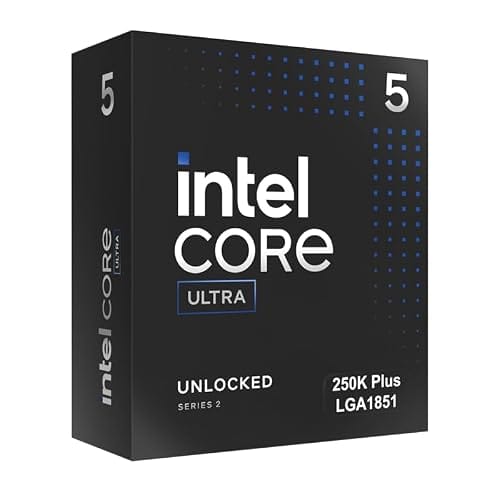
Intel’s Core Ultra 5 250KF Plus has six performance cores and twelve efficiency cores, for eighteen cores and eighteen threads total. Intel lists a 125W base power and a maximum turbo power of 159W, with LGA1851 as the socket. The selected offer was below $200 at the time of verification, which makes this a serious option for someone who plays games while encoding video, compiling code, or running several demanding apps. That workload mix is where the extra E-cores have a clear purpose.
The letters at the end matter. The 250KF Plus has no integrated graphics, so you’ll need a discrete graphics card for display output. It also needs a separate compatible CPU cooler. Add those costs before treating its lower CPU-only price as a bargain. A gaming system usually has a graphics card anyway, but no integrated display output can make troubleshooting a failed GPU or a first boot less convenient. Intel’s official specifications identify the core layout, power, and socket.
LGA1851 uses DDR5, so there is no cheap DDR4 board option for this chip. Check the motherboard’s BIOS support list for this exact processor and count the high-speed ports you need. A heavily featured Z890 board can erase the apparent CPU saving; a suitable lower-cost board may make more sense if CPU tuning and expansion are not priorities. We would also compare cooler prices, because the thermal solution is a real line item in a tight build.
Choose the 250KF Plus when the complete Intel build is well priced and you’ll put its extra cores to work. For a PC used mainly to game, we’d choose the Ryzen 5 9600X for its AM5 upgrade path. Neither choice guarantees a specific frame rate. The GPU, game engine, settings, and resolution still decide much of what you see on screen.
A Tier: Strong Choices When the Platform Price Is Right
AMD Ryzen 5 7600X: Discounted Way Into AM5
The Ryzen 5 7600X is a six-core, twelve-thread Zen 4 processor on AM5. AMD lists a 105W default TDP and support for DDR5. It remains a practical gaming chip when its offer is clearly below the 9600X and the same motherboard and memory can be used for either one. You can put the difference toward a better graphics card, a larger SSD, or a case with healthier airflow.
It is not the cheapest complete AM5 build by default. AMD says this 105W boxed processor does not include a heatsink, so include a separate cooler in your comparison. The board may also need a BIOS update for a later CPU if you plan to upgrade. Consult AMD’s 7600X specification page and the exact board CPU list. A $20 CPU saving disappears if a different cooler or memory package adds more than that back to the cart.
There is a simple buying rule here. The 7600X is the value pick when it is discounted enough to change the total build. If prices are close, buy the 9600X. The two share a socket but use different core architectures and power ratings, so don’t assume the number in the name tells the whole story. Either can support a balanced midrange gaming PC with the right graphics card.
Intel Core i5-14400F: A DDR4 Intel Route
The Core i5-14400F gives you six performance cores and four efficiency cores on LGA1700. Intel lists ten cores overall and support for either DDR4 or DDR5, depending on the motherboard. That is its strongest budget argument: a DDR4 B760 board with a sensible memory kit may cost less than a new AM5 or LGA1851 combination. The correct comparison is the full cart, not the CPU price alone.
There is no integrated graphics in the F model. Install a discrete GPU and use the graphics card’s display ports. If a system has no display on first boot, that distinction matters; the motherboard’s video outputs cannot create an image without a graphics-capable processor. Intel’s product page lists its socket and core configuration, while Intel’s platform guidance explains the DDR4 and DDR5 board choices.
Another caution: LGA1700 belongs to Intel’s older 12th, 13th, and 14th generation family. A builder should not pay a premium for this chip expecting an open-ended series of future drop-in CPUs. Existing owners with an appropriate motherboard have a clearer case for it. For a brand-new PC, choose it when the motherboard and DDR4 memory save enough money to improve another part of the build. A cheaper GPU would defeat the point of saving on the platform.
B Tier: The Cheapest Sensible AM4 Route
AMD Ryzen 5 5600X: Value for an Existing Board or Tight New Build
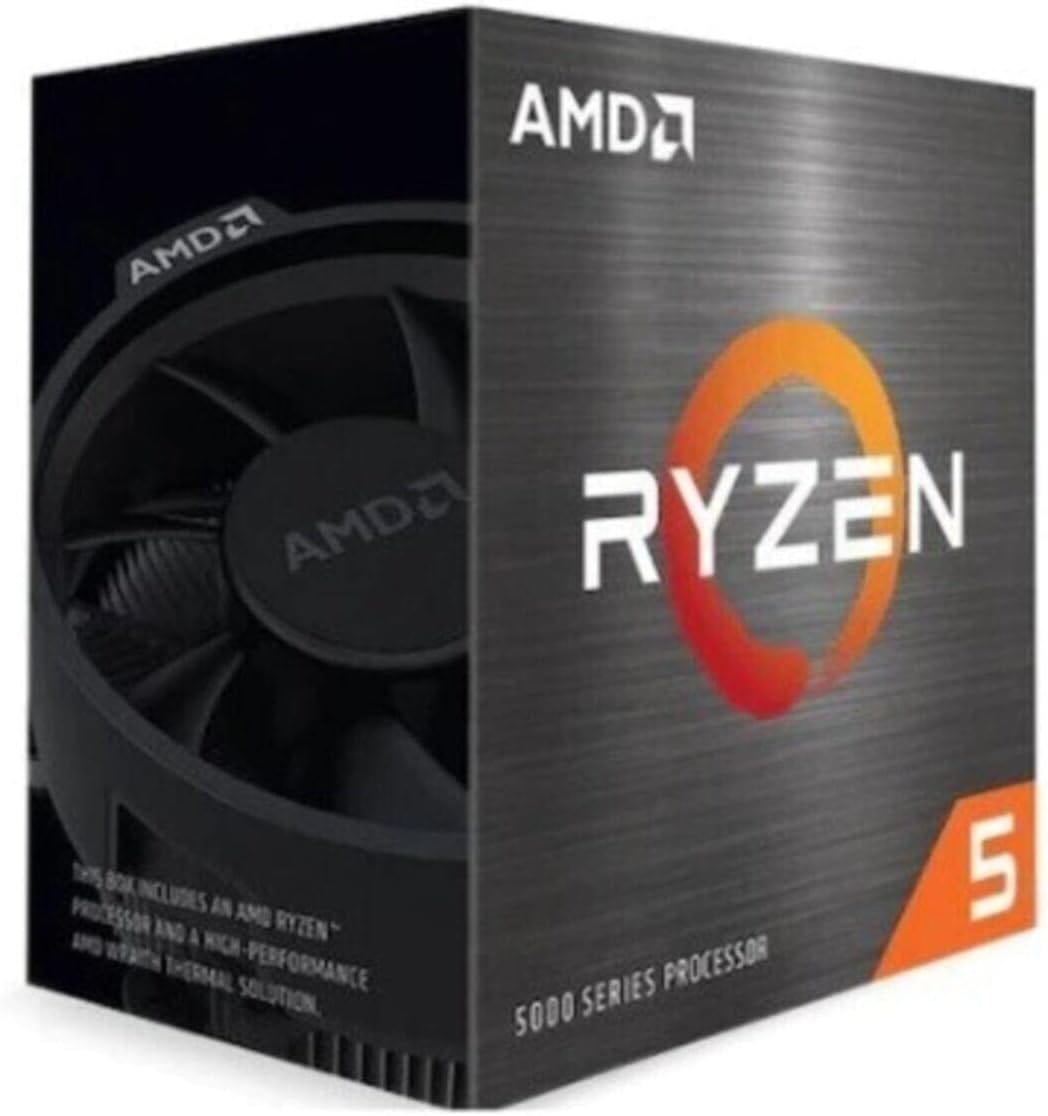
The Ryzen 5 5600X is older, but six cores and twelve threads can still support a budget gaming PC. It uses socket AM4 and DDR4 memory, and AMD lists a Wraith Stealth cooler with the boxed model. Those choices can make the total system noticeably cheaper than a new DDR5 platform, particularly if you already own a suitable AM4 motherboard and memory. A clear case for a drop-in upgrade. The CPU’s official specifications also list PCIe 4.0 support.
For a completely new PC, compare the B550 motherboard, DDR4 kit, and cooling cost with a discounted AM5 basket. AM4 has a large history of compatible parts, but its future CPU path is narrower than AM5’s. A cheap AM4 build can be smart when the saved money moves you into a stronger graphics card. It is less compelling if the finished price ends up close to a Ryzen 5 7600X system.
Watch the exact Amazon offer. The selected listing was the boxed 5600X with a cooler when checked. Marketplace titles, bundles, and packaging can change; a tray CPU or a different seller package may not include the same hardware. Check the seller and contents before relying on the included cooler. No integrated graphics here, either, so a discrete GPU is required for video output.
What the CPU Price Does Not Tell You
Budget the platform as one purchase. Write down the processor, motherboard, compatible two-stick memory kit, cooler, and graphics card. AM5 and LGA1851 require DDR5; AM4 uses DDR4. LGA1700 boards are sold in DDR4 and DDR5 versions, and a board accepts only the memory type it was built for. Buying DDR4 because the processor supports it will not help if your chosen B760 board has DDR5 slots.
Power and cooling belong in the same calculation. The 9600X and 7600X need a separate cooler in the selected boxed offers. The 250KF Plus also needs a cooler and a discrete GPU. The 5600X listing includes a Wraith Stealth cooler, which can save money, though you may still choose a quieter or larger unit. Check the case’s cooler height and PSU connections. No shortcut there. Our budget power supply guide helps with another easy-to-underestimate line item.
Then decide how long you expect to keep the board. AMD has announced AM5 support through 2029. That does not guarantee every board will accept every future processor, but it is a meaningful platform commitment. AM4 and LGA1700 can be good value today, particularly when you already own parts. For a new build, their price advantage should be clear enough to compensate for a shorter upgrade route.
Frequently Asked Questions
Which CPU under $200 is best for a new gaming PC?
Start with the Ryzen 5 9600X if the full AM5 build fits your budget. It combines a current socket, six Zen 5 cores, and a credible upgrade path. A strongly discounted Ryzen 5 7600X can be a better value if the savings improve your graphics card choice.
Is an eighteen-core Intel CPU automatically faster in games?
No. Core count alone does not predict game frame rates. The Core Ultra 5 250KF Plus has a stronger case when your PC also runs heavily threaded work, while gaming results depend on the game, GPU, memory, settings, and resolution. Compare independent measurements for your actual titles before paying for a claim of superiority.
Can I use these processors without a graphics card?
The Intel 250KF Plus and i5-14400F, along with the Ryzen 5 5600X, require a discrete GPU for display output. The Ryzen 5 9600X and 7600X have basic integrated graphics for display and setup, but a gaming PC still needs a suitable discrete card for demanding games. Check the exact processor and motherboard video-output combination.
Bottom Line
Buy the Ryzen 5 9600X for a gaming-first AM5 build unless the 7600X is discounted enough to change the total system. Consider the Core Ultra 5 250KF Plus for a mixed gaming and creator machine with a graphics card and cooler already in the plan. Use the i5-14400F or Ryzen 5 5600X when a DDR4 platform produces a real saving, especially if you already own compatible parts.
Recheck the live new-item offer before ordering. Under $200 is a moving line, and the right CPU is the one that leaves room for the rest of the PC you want to use.

























Write Your Review
No reviews yet. Be the first to share your experience!