
What To Look For In A Budget Mechanical Keyboard Explained: What It Actually Does for Your PC
A budget mechanical keyboard should give you the switch feel, layout, and durability you need without charging premium money for features you won't use.

We independently review everything we recommend. When you buy through our links, we may earn a commission. As an Amazon Associate we earn from qualifying purchases. Learn more ›
A budget mechanical keyboard should give you the switch feel, layout, and durability you need without charging premium money for features you won't use.
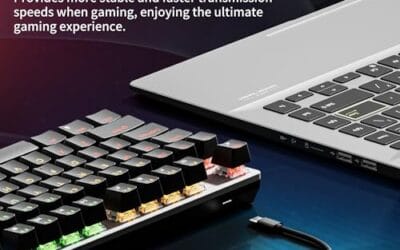
A gaming keyboard isn't just a keyboard with RGB. The parts that matter, switches, polling rate, build, and layout, decide whether your inputs land the.
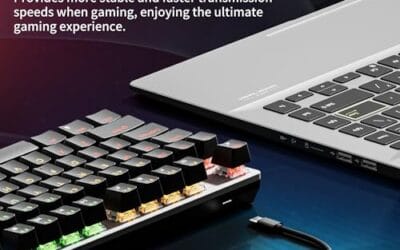
Shopping for a mechanical keyboard means wading through jargon: switches, hot-swap, keycap plastics, form factors, and a dozen sub-brands of the same color.
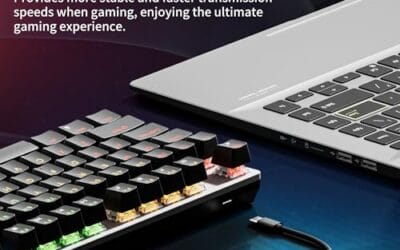
Two mechanical keyboards, similar-ish money, wildly different philosophies. The keyword frames this as a $150 versus $150 fight, but the two boards we.
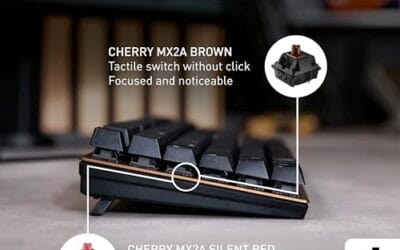
A TKL keyboard is a "tenkeyless" board, a full-size layout with the number pad chopped off the right side. That's the whole idea.
The jump from a $100 keyboard to a $150 one is where mechanical keyboards get interesting, because that extra $50 doesn't buy more keys, it buys better ones.
A 65% keyboard drops the number pad, the function row, and most of the navigation cluster, keeping arrow keys and a couple of nav buttons, and lands at.
A wireless mechanical keyboard promises the best of two worlds: the tactile, satisfying feel of real mechanical switches and a clean desk with no cable.
Mechanical keyboards used to be a $150 hobby. Now you can grab one for twenty bucks, which raises a fair question: is a budget mechanical keyboard actually.
Spend $50 on a mechanical keyboard and you get a functional typing tool. Spend $150 and you're paying for build quality, sound dampening, hot-swap sockets.