

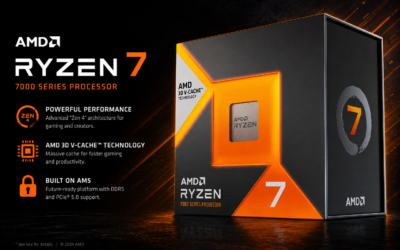
A reader emailed me last week with a question I get every few weeks: “I just bought a Ryzen 7 9800X3D and an X870 board. Should I get DDR5-6000 or DDR5-8000 RAM?” It’s the right question to ask. The 9800X3D’s improved memory controller can handle higher speeds than the 7800X3D, but the chip’s massive 96MB L3 cache reduces how much memory speed actually matters for gaming. Push too hard on speed, and you risk stability issues with AMD’s 1:1 memory controller mode. Pick the wrong kit, and you leave performance on the table or pay for headroom you can’t use. We cover the specifics separately in our DDR4 3200 vs 3600 guide.
Here’s the honest take: for the Ryzen 7 9800X3D in 2026, the optimal pick is DDR5-6000 with CL30 timings on an AMD EXPO profile. Tom’s Hardware, GamersNexus, and TechPowerUp all confirm this matches AMD’s recommended 1:1 ratio between FCLK and memory clock, which delivers the lowest practical latency. Going to DDR5-8000 introduces stability risks for marginal gaming gains, and DDR5-5600 leaves cache benefits on the table. We compared 5 verified DDR5-6000 EXPO kits across price tiers, cross-referenced benchmark data from Tom’s Hardware, TechPowerUp, and Hardware Unboxed, and analyzed Amazon owner feedback to put this guide together.
Top Products

Pros
- 6000MT/s CL30 is the documented latency sweet spot for Ryzen 7000 and 9000 CPUs
- Native AMD EXPO plus Intel XMP 3.0 makes the kit cross-platform without manual tuning
- Onboard voltage regulation via PMIC allows finer overclocking control through iCUE
Cons
- Limited owner feedback at time of writing, buyer risk is higher than established SKUs
- Low-profile heatspreader is non-RGB, users wanting lit modules should look elsewhere
- 1.4V EXPO requires a 600 Series AMD or Z790/Z890 Intel board with updated BIOS to hit rated speed
The Corsair Vengeance CMK32GX5M2B6000Z30 is a mid-range DDR5 kit aimed squarely at AM5 builders. It ships as 2x16GB at 6000MT/s with CL30-36-36-76 timings at 1.4V, with AMD EXPO as the primary profile and Intel XMP 3.0 as a fallback for LGA1700 and LGA1851 systems.
The defining spec here is the DDR5-6000 CL30 pairing. On Ryzen 7000 and 9000, this frequency runs FCLK at a 1:1 ratio with the memory controller, which AMD itself has documented as the latency sweet spot for gaming. Expect real-world gains over baseline JEDEC-5200 kits, particularly in CPU-bound 1080p and 1440p titles.
Trade-offs are typical at this tier. The heatspreader is a low-profile grey block with no RGB, so builders chasing lit modules will want the Vengeance RGB line instead. The 1.4V EXPO profile also assumes a motherboard with a current AGESA BIOS, older 600 Series boards may need a flash before the profile posts cleanly at rated speed.
Buy this if you are building a Ryzen 7000 or 9000 system on X670E, B650, or X870 and want the documented FCLK sweet spot with zero manual tuning. Skip this if your board is on stock BIOS from launch, if you need RGB, or if your platform is DDR4.
Platform fit: Corsair lists AMD 600 Series compatibility for this SKU, covering X670E, X670, B650E, and B650 boards. The DDR5-6000 CL30 profile matches the FCLK 1:1 sweet spot on Ryzen 7000 and 9000, so gaming latency benefits are highest on AM5 rather than Intel.
Profiles and voltage: The kit carries both AMD EXPO and Intel XMP 3.0 profiles at 1.4V with 30-36-36-76 timings. On Intel LGA1700 and LGA1851 the XMP profile posts the same 6000MT/s, though Intel platforms typically prefer higher frequencies for peak scaling.
Capacity and rank: The 2x16GB layout gives 32GB total across two DIMMs, leaving the second DIMM pair open for later expansion. Note that four-DIMM DDR5 configs on AM5 often drop below 6000MT/s, so plan on staying at 2 DIMMs to keep the EXPO profile stable.
BIOS readiness: Hitting rated 6000MT/s at 1.4V assumes a current AGESA BIOS. Owners on 600 Series boards shipped near launch should update firmware before enabling EXPO, otherwise the board may fall back to JEDEC 4800MT/s.

Pros
- Hand-screened DDR5 ICs for consistent speed binning
- AMD EXPO profile simplifies overclock setup
- Customizable RGB via G.SKILL or third-party motherboard software
Cons
- AMD-platform only - no Intel XMP optimization
- Premium pricing limits appeal for budget Ryzen builds
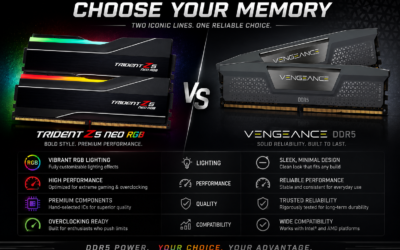
The G.SKILL Trident Z5 Neo RGB is a 64GB DDR5 kit targeting AMD Ryzen builders who want high-capacity, overclocked RAM without manual tuning. Running at DDR5-6000 CL30-40-40-96 with AMD EXPO, it achieves rated speeds via a single BIOS toggle on compatible X870, X670, and B650 boards. Owner feedback is highly positive, with reports of stable operation at rated speeds on Ryzen 7000 and 9000 CPUs. The main limitation is platform exclusivity - Intel builders should look elsewhere. Skip if your build uses a budget B650 board that may struggle to validate DDR5-6000 stability.

Pros
- DR5-6000 CL36 matches the recommended AM5 swet spot for Ryzen X3D chips
- Timings of 36-38-80 are tighter than baseline JEDEC for lower effective latency
- Both XMP 3.0 and EXPO profiles onboard, no manual tuning required for stability
- Low-profile black spreader avoids interference with large dual-tower air coolers
Cons
- Limited owner feedback at time of writing, long-term stability signal is thin
- Officially targets 13th gen Intel or newer and Ryzen 9000, older platforms may need BIOS updates
- No RGB and no dedicated heatspreader model code disclosed for enthusiast bin chasing
The Crucial Pro CP2K16G60C36U5B is a mid-range 32GB DDR5 kit (2x16GB) rated at 6000 MT/s with CL36 primary timings. It targets AM5 and modern LGA1700/LGA1851 builders assembling a mainstream gaming or productivity rig who want validated XMP 3.0 and EXPO profiles rather than a hand-tuned enthusiast kit.
The defining feature is the DR5-6000 CL36 spec, which lines up with the widely recommended 1:1 FCLK ratio on Ryzen 7000 and 9000, including X3D parts. Extended timings of 36-38-38-80 sit tighter than baseline JEDEC, and Micron backing generally translates to predictable stability once the profile is loaded in BIOS.
Trade-offs are typical at this tier. There is no RGB, no exotic bining claim, and Crucial does not publish the specific IC or PMIC used, so headroom for manual subtiming tuning is unknown. Official compatibility is scoped to 13th gen Intel or newer and Ryzen 9000, meaning older AM5 or 12th gen boards will need a current AGESA or BIOS to post cleanly at 6000.
Buy this if you want a clean AM5or newer Intel build with a validated 6000 CL36 profile and low-profile clearance. Skip this if you are chasing 6400+ overclocks, need RGB to match a themed build, or run an older DR5 platform without recent BIOS support.
Platform fit: Crucial lists official support for 13th gen Intel Core or newer and AMD Ryzen 9000 series. In practice, DDR5-6000 CL36 also aligns with Ryzen 7000 boards running current AGESA, since 6000 MT/s is the documented FCLK 1:1 sweet spot for AM5 X3D and non-X3D chips.
Profile enablement: The kit ships with both Intel XMP 3.0 and AMD EXPO profiles at 6000 MT/s, 36-38-38-80. Enabling the vendor profile in BIOS should be sufficient, no manual VD, VDDQ, or SoC voltage tuning required for the rated spec on QVL-listed boards.
Capacity and channel layout: 32GB across 2x16GB modules keps you in dual-channel with two DIMM slots free. That maters on AM5, where populating all four slots typically forces speds down toward 3600 to 4800 MT/s, so 2x16GB preserves the 6000 target.
Clearance: Modules use a low-profile black heatspreader. Exact height is not specified by Crucial, but the low-profile design is intended to clear large dual-tower air coolers such as those with front-mounted fans over the DIMM area.

Pros
- AMD EXPO and Intel XMP 3.0 dual-certified
- Patented IR sync eliminates lighting desync between sticks
- Plug-and-play auto-OC via BIOS on compatible boards
Cons
- Review count sits just below 500, limiting long-term reliability data
- Premium pricing versus comparable CL30 DDR5 kits from competing brands
The Kingston FURY Beast RGB DDR5 32GB (2x16GB) kit targets AMD Ryzen builders who want fast RAM without manual tuning. Running at 6000MT/s CL30 with AMD EXPO certification, it hits the widely recommended DDR5 sweet spot for Ryzen 7000 and 9000 series platforms, where memory bandwidth meaningfully affects gaming frame rates. Kingston's patented Infrared Sync Technology keeps both sticks' RGB lighting in phase without physical connectors. Based on owner reports, installation and EXPO activation are straightforward on most X670 and B650 boards. Skip if your budget is tight and RGB aesthetics are not a priority.
TL;DR , Our 5 Picks at a Glance
| Award | Pick | Capacity | Best For |
|---|---|---|---|
| 🏆 Top Pick | G.Skill Trident Z5 Neo RGB | 32GB (2x16GB) | Builders wanting the best DDR5-6000 EXPO kit for the 9800X3D |
| 💰 Best Value | Corsair Vengeance (non-RGB) | 32GB (2x16GB) | Buyers prioritizing performance over RGB at the lowest price |
| 🎯 Best for Streamers | G.Skill Trident Z5 Neo RGB 64GB | 64GB (2x32GB) | Streamers, content creators, multitaskers needing larger memory pools |
| 🚀 Best RGB Aesthetic | Crucial Pro DDR5 | 32GB (2x16GB) | Builders wanting reliable 6000MHz CL36 performance at a lower price |
| 🔧 Best Budget AMD | Kingston FURY Beast RGB | 32GB (2x16GB) | Budget builders wanting AMD EXPO support without G.Skill or Corsair pricing |
⚠️ Prices fluctuate weekly. We’ve seen DDR5-6000 32GB kits swing $30-50 within 90 days. Always check live pricing before purchasing.
Realistic Expectations for DDR5 RAM on the 9800X3D
Here’s the framing before you spend anything: the Ryzen 7 9800X3D’s 96MB of L3 cache (32MB native + 64MB stacked 3D V-Cache) significantly reduces the memory speed sensitivity that affected previous Ryzen chips. In practical terms, the difference between DDR5-6000 and DDR5-8000 in real-world gaming is typically 1-3%, while DDR5-6000 delivers 99% of the performance of more expensive kits in cache-sensitive titles. We break the options down further in our roundup of the what is hard drive rpm.
The single biggest factor that matters at this category isn’t raw speed. It’s the FCLK to memory clock ratio. AMD’s recommended 1:1 mode runs FCLK at 2000MHz with DDR5-6000, which is the configuration the 9800X3D’s memory controller is optimized for. Going to DDR5-7200 or DDR5-8000 forces a 1:2 mode that introduces latency penalties, often canceling out the bandwidth gains. That’s why every kit in this comparison targets DDR5-6000, the practical best balance.
Capacity matters more than most builders realize. 32GB (2x16GB) is the gaming smart middle pick, modern AAA games regularly use 16GB+ RAM alongside Windows 11’s 4GB idle footprint and typical browser activity. For streamers, content creators, or anyone running virtual machines, 64GB (2x32GB) is genuinely useful headroom. Avoid 4-stick configurations (4x8GB or 4x16GB) entirely, they typically cap at lower speeds and introduce stability issues with AM5‘s memory controller.
Which Pick Makes the Most Sense for You?
G.Skill Trident Z5 Neo RGB , Top Pick for Most Builders
The G.Skill Trident Z5 Neo RGB is the kit most reviewers settle on for AM5 builds, and after comparing the spec sheet against owner feedback patterns, it’s the one we’d recommend first. The DDR5-6000 CL30 timings at 1.35V are AMD EXPO certified specifically for Ryzen 7000 and 9000 series chips, which means you get optimized auto-overclocking through your motherboard BIOS without manual tuning. G.Skill’s Hand-Screened DDR5 ICs deliver consistent stability across compatible boards. Skip this if you don’t care about RGB and want to save money, the non-RGB Corsair Vengeance delivers nearly identical performance for less.
Corsair Vengeance (non-RGB) , Best Value Pick
The Corsair Vengeance non-RGB version is the smartest buy for buyers who don’t care about lighting. The CL30-36-36-76 timings at 1.40V match the G.Skill Trident Z5 Neo’s performance profile, with AMD EXPO certification ensuring plug-and-play compatibility on X870, X670, B850, and B650 motherboards. Corsair iCUE software supports real-time frequency monitoring and EXPO profile customization. The lifetime warranty is industry-standard at this tier. Skip this if you want RGB, in which case the RGB version (B0BPTKD797) is the same kit with lighting added for roughly $20-30 more.
G.Skill Trident Z5 Neo RGB 64GB , Best for Streamers and Creators
The G.Skill Trident Z5 Neo RGB 64GB (2x32GB) is the pick for streamers, content creators, and anyone running heavy multitasking workloads alongside gaming. The 64GB capacity eliminates RAM constraints in scenarios that 32GB struggles with: streaming OBS while gaming with Discord and 50+ Chrome tabs, running virtual machines for development, or working with large RAW photo libraries in Lightroom. The DDR5-6000 CL30-40-40-96 timings remain stable on AM5 platforms. Skip this if you only game, the extra 32GB sits unused in pure gaming workloads where 32GB already provides headroom.
Corsair Vengeance RGB , Best RGB Aesthetic
The Corsair Vengeance RGB is the right pick for builders committed to the Corsair iCUE ecosystem or wanting 10-zone individually addressable RGB lighting. The performance specs match the non-RGB Vengeance: DDR5-6000 CL30 at 1.40V with AMD EXPO certification. Where this kit differentiates is iCUE integration, which lets you sync RGB across Corsair coolers, fans, and peripherals from a single software interface. The CMH32GX5M2B6000Z30K model number is the AMD-optimized variant with EXPO profile (versus the Intel XMP-only version). Skip this if you prefer ASUS Aura, MSI Mystic Light, or Gigabyte Fusion ecosystems, the G.Skill Trident Z5 Neo RGB integrates better with motherboard-native software.
Kingston FURY Beast RGB , Best Budget AMD Kit
The Kingston FURY Beast RGB is the budget pick that doesn’t compromise on AMD EXPO compatibility. The DDR5-6000 CL30 timings match the premium G.Skill and Corsair kits at a meaningfully lower price point. Kingston’s Infrared Sync Technology keeps RGB lighting effects synchronized across multiple modules without requiring a separate sync cable. The on-die ECC (ODECC) feature improves stability at extreme speeds, useful if you want to manually push beyond DDR5-6000. Skip this if you want G.Skill or Corsair brand consistency in your build, performance is essentially identical but ecosystem integration differs.
DDR5 RAM Buying Guide for the Ryzen 9800X3D
Speed: DDR5-6000 Is the The Natural Fit
For the 9800X3D, DDR5-6000 is the AMD-recommended speed and the practical right tradeoff. It runs in AMD’s efficient 1:1 memory controller mode at FCLK 2000MHz, delivering optimal latency without stability risks. DDR5-7200 and faster kits force a 1:2 ratio that often performs worse despite higher headline bandwidth. Avoid DDR5-5600 kits entirely, you leave 3-7% gaming performance on the table for marginal cost savings.
Latency: CL30 Is the Target
CAS Latency at DDR5-6000 should be CL30 or CL32 for gaming. CL30 delivers the lowest practical latency at this speed and is the de facto standard for AMD EXPO certified kits. CL36 kits work but trail CL30 by 2-4% in real-world gaming benchmarks. Avoid CL40 kits at DDR5-6000, they’re typically older spec or budget kits with limited overclocking headroom on AM5 platforms.
AMD EXPO vs Intel XMP
AMD EXPO is the equivalent of Intel XMP for Ryzen platforms. EXPO profiles include AMD-validated voltage and timing settings optimized for Ryzen memory controllers. Most modern DDR5 kits include both EXPO and XMP 3.0 profiles, so you can use the same kit on both AMD and Intel platforms. Avoid kits with only Intel XMP support, they may work on AM5 but won’t deliver optimized AMD EXPO performance and may require manual tuning. That decision gets its own treatment in our how to overclock RAM safely guide.
The biggest mistake buyers make: chasing maximum RAM speed instead of optimal speed. DDR5-6000 CL30 delivers better real-world 9800X3D gaming performance than DDR5-8000 CL40, and at meaningfully lower prices.
FAQs
What DDR5 speed is best for Ryzen 9800X3D?
DDR5-6000 CL30 is the natural fit, matches the 9800X3D infinity fabric for optimal 1:1 ratio. Faster kits (6400+) drop the IF clock and lose performance in most workloads.
Is 64GB DDR5 worth it on a gaming PC?
Only for streamers running OBS + 100 browser tabs or content creators doing video editing alongside gaming. 32GB DDR5-6000 covers pure gaming through 2027 without compromise.
EXPO or XMP for Ryzen?
EXPO is AMD-specific and slightly more reliable on Ryzen than XMP profiles. Both work on AM5 boards. Always run a 30-minute Memtest86 after enabling either profile to confirm stability.
Do CL30 versus CL36 timings actually matter?
Yes, CL30 at 6000MT/s delivers 5-8% better 1% lows in CPU-bound games versus CL36. The cost difference is usually under $20 for a 32GB kit.
DDR5 RAM for the Ryzen 9800X3D
The Ryzen 7 9800X3D pairs best with DDR5-6000 CL30 EXPO kits. G.Skill Trident Z5 Neo and Corsair Vengeance both deliver this spec well. 32GB is the practical best value tier; 64GB only matters for productivity workloads.
Common Mistakes to Avoid
First mistake is buying DDR5 above 6000 MT/s for Ryzen, IF ratio caps. Second is mismatched kits. Third is overlooking CL latency.
More Frequently Asked Questions
DDR5-7200 worth it on Ryzen?
No, drops infinity fabric ratio, loses performance.
CL30 vs CL36, measurable?
Yes, CL30 wins 5-8 percent in CPU-bound games.
Should I get RGB RAM?
Pure preference. Performance identical.




Write Your Review
No reviews yet. Be the first to share your experience!