

Ask this question in any PC forum and you’ll get 200 replies before lunch. Prebuilt or building a PC for gaming isn’t really one debate, it’s a stack of smaller ones: warranty, time, parts pricing, and how much you actually enjoy the assembly. A $1,199 tower like the Skytech Gaming Crystal ships next-day with an RTX 5060 already seated, while a self-sourced build at the same tier means a dozen tabs, a screwdriver, and an afternoon. Both land you at 1080p and 1440p gaming. What separates them is where the money and the hours go.
We researched how the two paths compare across the roughly $1,000 to $1,300 band, the range where most first-time gaming buyers actually shop. If you’re weighing full systems, our roundups of the best AMD prebuilt gaming PC and the best budget prebuilt PC for 1080p gaming add more context on what ships ready to run.
Matchup at a glance
On one side: building yourself. You pick every part, chase sales, and pocket the labor cost as savings or as better components. When a GPU sale hits or a memory kit drops in price, the DIY builder wins that round outright. The tradeoff is time, the risk of a dead-on-arrival part, and a warranty spread across five or six separate manufacturers instead of one phone number.
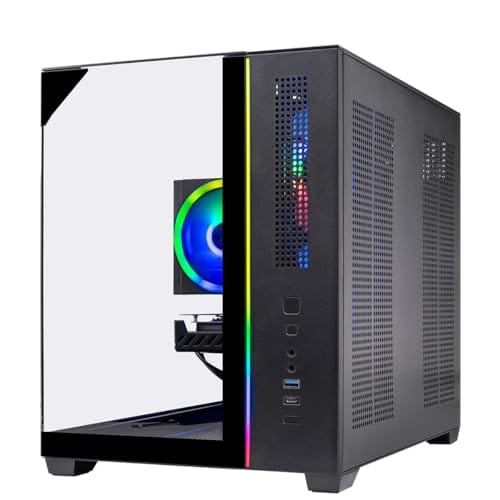
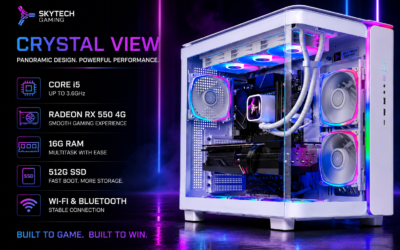
On the other side: a prebuilt like the Skytech Gaming Crystal at $1,199.99, holding a 4.4 rating. It arrives assembled, cable-managed, with Windows 11 installed and a single warranty covering the whole box. You trade the last bit of parts-picking control for time saved and one accountable seller. That’s the core of it. The rest is detail.
Spec sheet showdown
| Component | Prebuilt: Skytech Crystal | Comparable DIY build | Cost pressure | Edge |
|---|---|---|---|---|
| CPU | AMD Ryzen 7 5700, 3.7GHz | You choose (AM4 or AM5) | DIY can go newer socket | DIY on flexibility |
| GPU | NVIDIA RTX 5060 | Same card, sourced solo | GPU is the price swing | Even |
| Memory | 32GB DDR4-3200 | 16-32GB, DDR4 or DDR5 | DDR5 adds cost | DIY on ceiling |
| Storage | 1TB NVMe SSD | 1-2TB NVMe | Cheap to expand DIY | DIY on capacity |
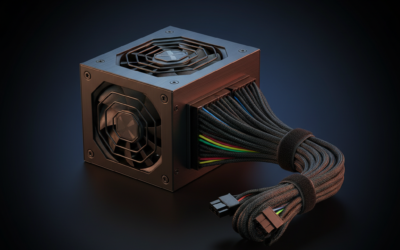
| PSU + OS | 650W Gold, Win 11, Wi-Fi | Buy PSU + license separately | OS adds ~$100 DIY | Prebuilt on bundling |
Read across those rows and the pattern shows up fast. The prebuilt bundles a Gold-rated 650W supply, a Windows 11 license, and Wi-Fi into the sticker. The DIY route lets you swap the CPU socket or jump to DDR5, but you’re paying for the operating system on top and doing the wiring yourself. Neither column is wrong. They just optimize for different things.
Building-it-yourself strengths
The strongest DIY argument is control over where every dollar lands. If you don’t need 32GB of memory on day one, drop to 16GB and route that cash into a bigger SSD or a beefier cooler. Want a newer AM5 platform so you can upgrade the CPU in two years? You can spec that from the start, something a fixed prebuilt config won’t let you change. Builders also skip any pre-installed trial software and choose their own case, so airflow and looks are entirely yours.
There’s a learning payoff too. Once you’ve seated a CPU, clipped in RAM, and routed a 24-pin cable, troubleshooting later gets far easier because you know what’s inside. The catch is real, though. Parts arrive from different sellers, so a faulty stick of RAM or a dead board means separate RMA queues. You’re the system integrator now, and that’s both the fun and the burden. Budget an afternoon, and keep a second device handy for driver downloads.
Prebuilt strengths
A prebuilt trades a little control for a lot of certainty. The Skytech Gaming Crystal shows why the category sells: Ryzen 7 5700 paired with an RTX 5060, 32GB of DDR4-3200, a 1TB NVMe boot-and-games drive, and a 650W Gold PSU, all wired and validated before it ships. You plug in one power cable, connect a monitor, and you’re in Windows 11. No compatibility spreadsheet. No worrying whether the cooler clears the RAM. For a buyer who wants to game this weekend, not next month, that’s the whole pitch.
The single-warranty angle matters more than people expect. If anything inside that 4.4-rated box fails, you call one company, not five. That RTX 5060 handles 1080p at high settings comfortably and stretches into 1440p on most titles, and the 32GB of memory gives breathing room for browser tabs, Discord, and a game at once. The honest weakness: you pay a modest assembly premium versus perfect DIY pricing, and the DDR4 platform limits future CPU jumps. For a lot of gamers, that’s an easy trade.
Pros
- 8-core, 16-thread Ryzen 7 5700 avoids CPU bottleneck for RTX 5060 at 1080p ultra
- 32GB DDR4-3200 exceeds the 16GB gaming baseline for streaming and heavy multitasking
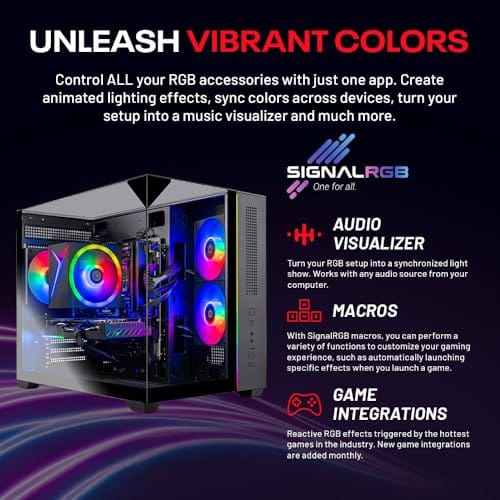
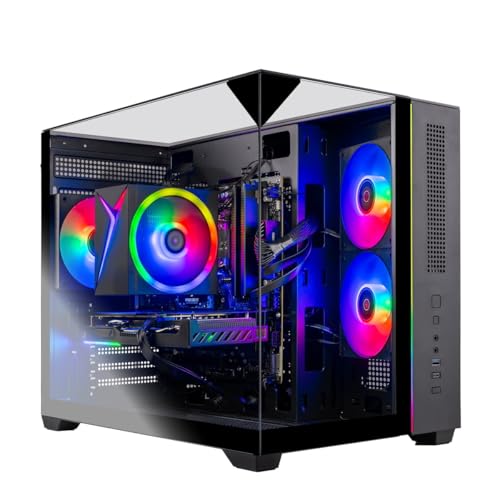
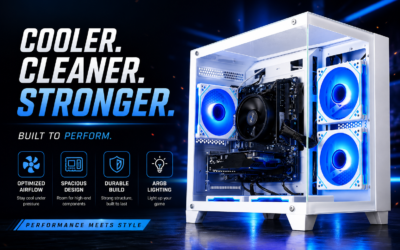
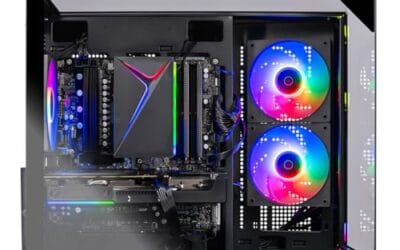
- Triple tempered glass Crystal case with ARGB airflow fans suports thermals under sustained load
Cons
- Zero owner reviews at time of writing, so long-term reliability data is unavailable
- AM4 socket is end-of-life, capping future CPU upgrades at the Ryzen 5000 series
- 650W PSU and 8GB VRAM leave limited headroom for upgrading to higher-TGP GPUs later
The Skytech Crystal is a mid-range prebuilt gaming PC pairing an 8-core AMD Ryzen 7 5700 on AM4 with an NVIDIA RTX 5060 8GB GDR7, 32GB DDR4-3200, and a 1TB NVMe SSD. It targets 1080p high-refresh esports players and AAA gamers who want a plug-and-play tower with a warranty.
The RTX 5060 8GB GDDR7 is the defining component and sits in the 1080p ultra bracket, with GPUs at this tier typically hitting 60+ FPS in modern AAA titles and well above 144 FPS in Valorant, CS2, and Overwatch 2. DLSS 4 and frame generation extend usable headroom into 1440p.
Trade-offs are real at this tier. AM4 is a dead-end socket, so future CPU upgrades stop at the 5000 series. DDR4-3200 lags the DDR5-6000 sweet spot on AM5 builds, and the 8GB VRAM buffer will pressure ray tracing at 1440p in heavier titles. The 650W PSU also limits future GPU upgrades.
Buy this if you want a 1080p ultra or 1440p DLSS-assisted gaming PC with zero build time and a one year parts warranty. Skip this if you plan to upgrade to an RTX 5070 Ti class GPU or move to DDR5, since the AM4 board and 650W PSU will bottleneck that path.
1080p Ultra: The RTX 5060 8GB GDDR7 is a 1080p-first card. Expect 60+ FPS ultra in Baldur's Gate 3, Black Myth Wukong, and ELDEN RING at native resolution, and 240+ FPS in Valorant, CS2, and Overwatch 2 paired with a high-refresh 1080p monitor.
1440p and DLSS 4: 8GB VRAM is the ceiling. 1440p is playable with DLSS Quality and frame generation in most AA titles, but path-traced or heavy ray tracing loads at 1440p can saturate the VRAM buffer in games like Alan Wake 2 and Cyberpunk 2077 Overdrive.
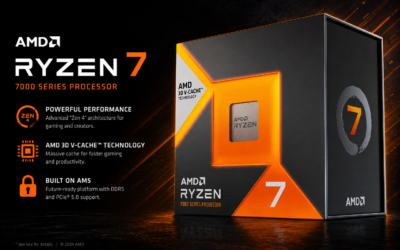
CPU pairing: The Ryzen 7 5700 is an 8-core, 16-thread AM4 chip at 3.7GHz base and 4.6GHz boost. It feeds the RTX 5060 without meaningful bottleneck at 1080p ultra or 1440p, and handles OBS NVENC streaming since encode load lives on the GPU.
Memory and storage: 32GB DDR4-3200 with heat spreaders is above the 16GB gaming baseline and covers moded Minecraft, Escape from Tarkov, and Chrome-heavy multitasking. The 1TB NVMe M.2 SSD stores roughly six to eight modern AAA installs before Call of Duty class titles force selective uninstalls.
Real-world scenarios
The first-time builder on a deadline
You want to play with friends this Friday and you’ve never opened a case. The prebuilt wins here without much argument. A ready RTX 5060 system removes the risk of a dead part stalling you for a week of returns. Skip the tutorial marathon and start playing.
The bargain hunter with time
You track GPU and SSD sales, you’ve got a free Saturday, and saving $120 feels like a win. DIY leans your way. You’ll match the Crystal’s performance and maybe route the savings into a 2TB drive. Our guide to the best budget prebuilt PC 2026 is still worth a look as a price floor to beat.
The 1440p upgrader
Aiming at a 1440p high-refresh monitor changes the math slightly. Both paths reach that resolution with an RTX 5060, though DIY lets you spec a stronger GPU if the budget flexes. If you’d rather buy it done, the best prebuilt gaming PC for 1440p lineup covers configs tuned for that panel.
Pricing and availability
At $1,199.99, the Skytech Gaming Crystal sits right where a comparable self-built RTX 5060 rig lands once you add a Windows 11 license, which runs close to $100 on its own. That license plus the value of your time is the real gap. A DIY builder chasing sales might shave $80 to $150 off the equivalent parts, assuming nothing arrives faulty and nothing gets bought at full price in a hurry.
Availability tilts toward the prebuilt too. It’s one purchase that ships as a unit, versus coordinating a GPU, board, CPU, RAM, PSU, case, and drive across sellers with their own stock and shipping windows. When any single DIY part backorders, the whole build waits. The prebuilt doesn’t have that failure point. There’s also the returns angle. If a self-sourced build won’t post, you’re isolating which of seven components is the culprit, sometimes swapping parts in and out to narrow it down. A prebuilt that arrives dead goes back as one RMA, and a good seller ships a replacement or repairs the unit under a single ticket. That difference is easy to overlook until you’re staring at a black screen at midnight.
Which to buy
Here’s the plain read. If you value your time, want one warranty, and would rather game than assemble, buy the prebuilt. The Skytech Gaming Crystal delivers a coherent 1080p and 1440p package at $1,199.99 with nothing left to figure out, and its 4.4 rating reflects buyers who got exactly what the spec sheet promised. It’s the low-stress path, and there’s no shame in that.
Build it yourself if you enjoy the process, you’ll chase deals patiently, or you want a platform you can upgrade for years. You’ll trade a weekend and some RMA risk for maximum control and a shot at real savings. Neither answer is universally right. It hinges on whether the build is a chore you want to skip or a hobby you want to start.
Pros
- 8-core, 16-thread Ryzen 7 5700 avoids CPU bottleneck for RTX 5060 at 1080p ultra
- 32GB DDR4-3200 exceeds the 16GB gaming baseline for streaming and heavy multitasking
- Triple tempered glass Crystal case with ARGB airflow fans suports thermals under sustained load
Cons
- Zero owner reviews at time of writing, so long-term reliability data is unavailable
- AM4 socket is end-of-life, capping future CPU upgrades at the Ryzen 5000 series
- 650W PSU and 8GB VRAM leave limited headroom for upgrading to higher-TGP GPUs later
The Skytech Crystal is a mid-range prebuilt gaming PC pairing an 8-core AMD Ryzen 7 5700 on AM4 with an NVIDIA RTX 5060 8GB GDR7, 32GB DDR4-3200, and a 1TB NVMe SSD. It targets 1080p high-refresh esports players and AAA gamers who want a plug-and-play tower with a warranty.
The RTX 5060 8GB GDDR7 is the defining component and sits in the 1080p ultra bracket, with GPUs at this tier typically hitting 60+ FPS in modern AAA titles and well above 144 FPS in Valorant, CS2, and Overwatch 2. DLSS 4 and frame generation extend usable headroom into 1440p.
Trade-offs are real at this tier. AM4 is a dead-end socket, so future CPU upgrades stop at the 5000 series. DDR4-3200 lags the DDR5-6000 sweet spot on AM5 builds, and the 8GB VRAM buffer will pressure ray tracing at 1440p in heavier titles. The 650W PSU also limits future GPU upgrades.
Buy this if you want a 1080p ultra or 1440p DLSS-assisted gaming PC with zero build time and a one year parts warranty. Skip this if you plan to upgrade to an RTX 5070 Ti class GPU or move to DDR5, since the AM4 board and 650W PSU will bottleneck that path.
1080p Ultra: The RTX 5060 8GB GDDR7 is a 1080p-first card. Expect 60+ FPS ultra in Baldur's Gate 3, Black Myth Wukong, and ELDEN RING at native resolution, and 240+ FPS in Valorant, CS2, and Overwatch 2 paired with a high-refresh 1080p monitor.
1440p and DLSS 4: 8GB VRAM is the ceiling. 1440p is playable with DLSS Quality and frame generation in most AA titles, but path-traced or heavy ray tracing loads at 1440p can saturate the VRAM buffer in games like Alan Wake 2 and Cyberpunk 2077 Overdrive.
CPU pairing: The Ryzen 7 5700 is an 8-core, 16-thread AM4 chip at 3.7GHz base and 4.6GHz boost. It feeds the RTX 5060 without meaningful bottleneck at 1080p ultra or 1440p, and handles OBS NVENC streaming since encode load lives on the GPU.
Memory and storage: 32GB DDR4-3200 with heat spreaders is above the 16GB gaming baseline and covers moded Minecraft, Escape from Tarkov, and Chrome-heavy multitasking. The 1TB NVMe M.2 SSD stores roughly six to eight modern AAA installs before Call of Duty class titles force selective uninstalls.
Common questions
Is building a PC cheaper than buying prebuilt in 2026?
Sometimes, and less than it used to be. A patient DIY builder chasing GPU and SSD sales can undercut a comparable prebuilt by roughly $80 to $150, but you also pay for a Windows license separately and spend the time. At $1,199.99 with the OS included, the Skytech Crystal narrows that gap considerably.
Do prebuilt gaming PCs use worse parts?
Not inherently. The Skytech Crystal ships name-brand core components: a Ryzen 7 5700, an RTX 5060, and a 650W Gold-rated PSU. Older prebuilts earned a bad reputation for weak power supplies and proprietary boards, so it’s worth reading the spec sheet. This one lists standard, upgrade-friendly parts.
Can I upgrade a prebuilt later?
Usually yes. The Crystal’s 1TB NVMe SSD and 32GB of DDR4 leave room to add storage or swap the GPU down the line. The main limit is the AM4 platform, which caps how new a CPU you can drop in. A fresh AM5 DIY build offers a longer processor upgrade runway.
How long does building a gaming PC take?
For a first-timer, plan on three to five hours including cable management and the Windows install. Experienced builders finish in about an hour. That time cost is exactly what a prebuilt buys back, which is why deadline-driven gamers lean toward assembled systems.
What resolution can an RTX 5060 system handle?
An RTX 5060 like the one in the Skytech Crystal runs 1080p at high settings very comfortably and reaches 1440p in most titles with sensible settings. Paired with 32GB of memory, it’s a capable mainstream 1080p-to-1440p machine rather than a 4K rig. That’s a strong fit for the majority of gaming monitors sold today.






Write Your Review
No reviews yet. Be the first to share your experience!