

best rtx 5060 ti prebuilt pc is a competitive space in 2025, with marketing claims around VRAM and cooling often misleading buyers about sustained performance in real games.
Top Products
Pros
- 360mm AIO liquid cooler included for sustained CPU performance under load.
- 32GB DDR5-6000 kit with heat spreaders pre-installed for immediate high-speed operation.
- Standard ATX case design supports future GPU and storage upgrades per the listing.
Cons
- Graphics card brand may vary and is not fixed in the product listing.
- Wi-Fi limited to 802.11AC rather than newer standards.
- Performance claims tied to 1080p resolution only in the source description.
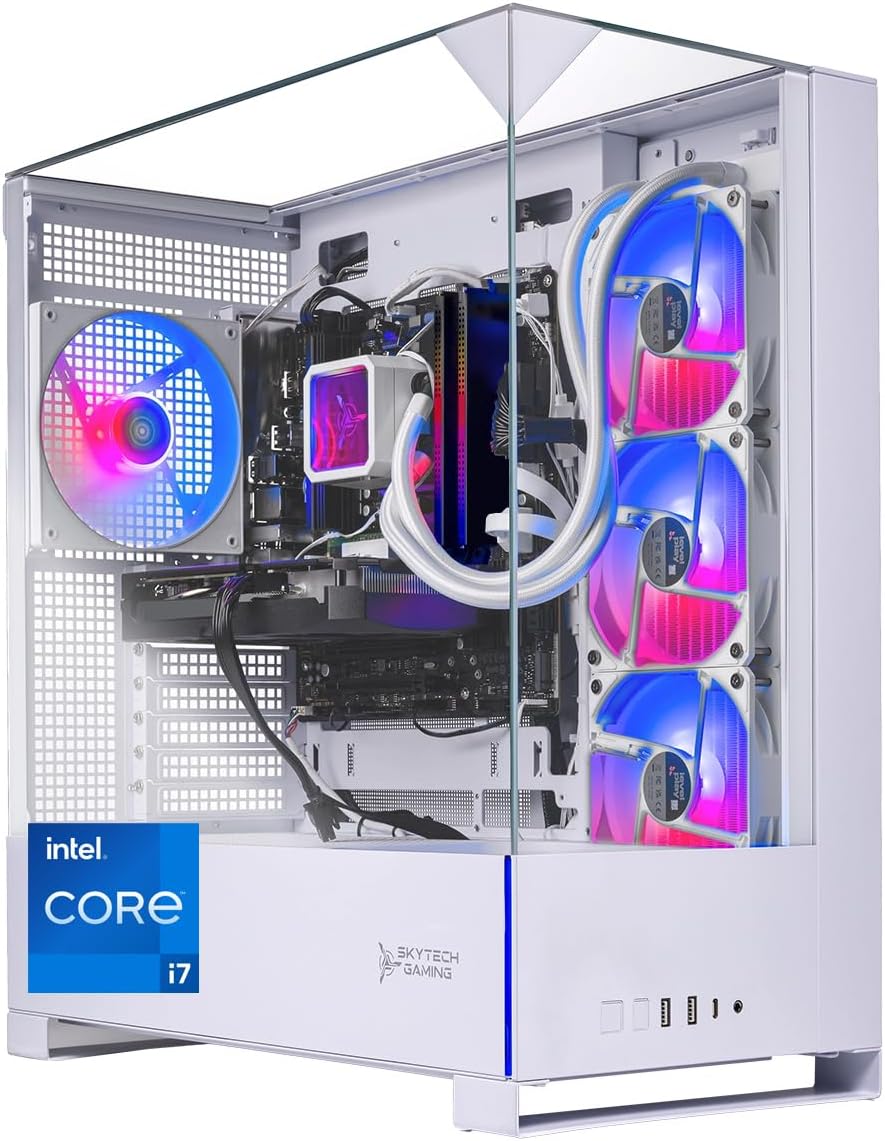
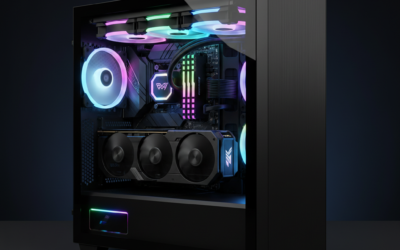
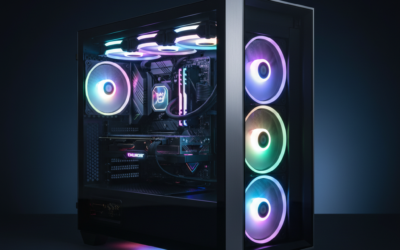
This prebuilt system uses an Intel Core i7-14700F paired with an RTX 5060 Ti 16GB GDDR7 graphics card in a white Archangel 5 case, placing it in the upper mid-range prebuilt tier for 1080p gamers and light creators.
The RTX 5060 Ti 16GB configuration targets 1080p ultra settings with smooth frame rates in listed titles, while the 14700F CPU handles background tasks such as streaming or file compression without immediate bottlenecks.
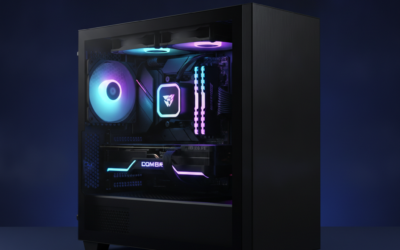
The 360mm AIO cooler and ARGB fans provide visible lighting and thermal headroom within the tempered glass case, though exact noise levels under load are not detailed in the listing.
Component brands for the GPU and some peripherals can vary between units, which is a common trait at this price point and requires checking after delivery.
Buy this system if you want a ready-to-run 1080p gaming PC with liquid cooling and DDR5 memory. Skip it if you need guaranteed high-resolution performance or the latest Wi-Fi standard.
| Component | Details |
|---|---|
| Processor | Intel Core i7-14700F 2.1 GHz (5.3 GHz turbo) |
| Graphics | NVIDIA GeForce RTX 5060 Ti 16GB GDDR7 |
| Memory | 32GB DDR5-6000 RGB with heat spreader |
| Storage | 1TB Gen4 NVMe M.2 SSD |
| Cooling | 360mm ARGB AIO liquid cooler |
| Power Supply | 750W Gold |
| Networking | 802.11AC Wi-Fi |
| OS | Windows 11 Home 64-bit |
| Case | Archangel 5 White with tempered glass |
The RTX 5060 Ti 16GB targets 1080p ultra settings across listed games such as Call of Duty, Fortnite, and Black Myth Wukong with frame rates above 60 FPS according to the product description.
Combined with the i7-14700F, the system supports single-PC streaming via OBS without dedicated capture hardware in most 1080p scenarios.
Ray tracing and upscaling features available on the RTX 5060 Ti can be enabled in supported titles for improved image quality at this resolution.

Pros
- RTX 5060 Ti 16GB VRAM future-proofs texture and RT workloads at 1440p.
- DR5-6000 pairing matches the practical sweet spot for Intel 14th gen gaming.
- ARGB airflow case with tempered glass and high-performance air cooler for sustained loads.
- Assembled in USA with 1 year parts and labor warranty, no bloatware install.
Cons
- 650W Gold PSU leaves thin transient headroom if you later upgrade beyond RTX 5060 Ti class.
- WiFi 5 802.11ac is a generation behind WiFi 6E/7 common at this tier.
- Single 1TB NVMe fills quickly with modern 100GB+ AA installs, expect to add storage.
The Skytech Azure 3 is a mid-range prebuilt gaming PC built around an Intel Core i5 14400F, an NVIDIA RTX 5060 Ti 16GB, and 16GB of DDR5-6000. Target buyer is a 1080p high-refresh or entry 1440p gamer who wants a plug-and-play tower without sourcing parts or handling a first-time build.
The defining component is the RTX 5060 Ti 16GB GDDR7. Based on category norms for this GPU class, expect 1080p ultra above 100 FPS in most AA titles and 1440p high with DLSS in the 60 to 90 FPS range. The 16GB VRAM buffer gives real headroom for UE5 titles and future texture packs that stress 8GB cards.
Trade-offs are typical at this tier. The 650W Gold PSU is adequate for the shipped configuration but limits future GPU upgrades, WiFi 5 lags behind WiFi 6E units at similar pricing, and the exact case fan count, motherboard chipset, and SD model are not specified so upgrade planing requires opening the chassis first.
Buy this if you want a 1440p-capable prebuilt with 16GB VRAM and DR5, and you value assembled-in-USA support over DIY savings. Skip this if you plan to drop in a 300W-plus GPU later, need WiFi 6E or 2.5GbE, or want documented specs on motherboard, SSD brand, and cooling before purchase.
GPU class and resolution fit: The RTX 5060 Ti 16GB GDDR7 targets 1080p ultra at high refresh and 1440p high with DLSS upscaling. The 16GB VRAM capacity is the standout, giving margin for UE5,ray tracing, and moded titles where 8GB variants stuter.
CPU pairing: The Core i5 14400F runs 10 cores (6P plus 4E) with a 4.7GHz boost on LGA1700. It comfortably feeds the RTX 5060 Ti at 1440p without a CPU bottleneck, and handles CS2, Valorant, and Fortnite at high framerates on1080p esports monitors.
Memory and storage: 16GB of DDR5-6000 hits the practical sweet spot for 14th gen Intel gaming, though32GB is becoming the norm for stream-plus-play users. The 1TB NVMe M.2 SSD covers boot plus 6 to 8 modern AAA installs before you need a second drive.
Power and connectivity: The 650W 80+ Gold PSU sits within RTX 5060 Ti recommended range but leaves limited transient headroom. Rear I/O offers 1 HDMI and 1 DisplayPort confirmed, with USB 2.0, 3.0, and 3.2 Gen1 ports, WiFi 5 802.11ac, and onboard HD audio and mic.

Pros
- 16GB GDDR7 VRAM on the 5060 Ti avoids texture pool limits at 1440p.
- 9700X on AM5 leaves a clear upgrade path to future Ryzen X3D chips.
- 360mm AIO is oversized for a 65W-class 9700X, giving quiet acoustic headroom.
- 850W 80+ Gold PSU hasample transient headroom above the GPU TGP class.
Cons
- Limited owner feedback at time of writing, real-world reliability data is thin.
- 1TB NVMe fills fast once two or three modern AA titles are installed.
- DR5-6000 is the AM5 sweet spot but no CL timing or QVL is specified.
The ZOTAC MEK is a mid-range AM5 prebuilt aimed at 1080p and 1440p gamers who want a turnkey box without sourcing parts. It pairs a Ryzen 7 9700X with an RTX 5060 Ti 16GB GDDR7, 32GB DDR5-6000, and a 1TB NVMe SSD inside a tempered glass chassis with a built-in system info display.
The defining feature is the 16GB VRAM buffer on the 5060 Ti. That extra headroom over 8GB variants maters for 1440p ray tracing and DLSS 4 Multi Frame Generation, where texture pools and frame buffers scale with resolution. Cards in this class typically land in the 1440p high toultra range on current AAA titles, with frame generation extending headroom in suported games.
Trade-offs are typical at this tier. The 1TB NVMe is tight for a modern game library, and the source does not specify RAM CL timings, motherboard chipset, or case GPU clearance, so upgrade planing requires opening the box first. The 360mm AIO is overspecified for a 9700X, which is welcome for noise but ads cost that could have gone to a 2TB drive.
Buy this if you want a plug and play AM5 system for 1440p gaming with an upgrade path to future Ryzen chips. Skip this if you need 4K native performance, high capacity storage out of the box, or documented component-level specifications before purchase.
GPU class and resolution fit: The RTX 5060 Ti 16GB GDDR7 sits in the 1080p high refresh and 1440p high tier. The 16GB VRAM buffer avoids the texture streaming issues seen on 8GB cards at1440p with ray tracing enabled, and DLSS 4 Multi Frame Generation extends headroom in suported titles.
CPU pairing: The Ryzen 7 9700X with 8 cores, 16 threads, 32MB L3 cache, and a 5.5GHz boost is well matched to the 5060 Ti. At 1440p the GPU is the bottleneck in most titles, so the 9700X has cycles left for OBS NVENC streaming or background workloads without frame time impact.
Memory and storage: 32GB DDR5-6000 is the AM5 sweet spot for FCLK 1:1 operation, though CL timings are not specified. The single 1TB NVMe M.2 SSD covers Windows 11 Home plus roughly three to five modern AAA installs before capacity becomes a constraint.
Thermals and power: A 360mm AIO with three 120mm fans is oversized for the 9700X 65W-class TDP, leaving quiet acoustic margin under sustained gaming loads. The 850W 80+ Gold PSU provides comfortable transient headroom above the 5060 Ti TGP class with room for GPU upgrades.
Pros
- Ryzen 7 9700X 8-core Zen 5 runs cool at 65W TDP with strong IPC.
- RTX 5060 Ti 16GB GDDR7 comfortably targets 1440p high settings with DLSS.
- DDR5-6000 matches AM5 FCLK 1:1ratio for tuned memory latency out of box.
- 360mm AIO oversized for 9700X, leaving thermal headroom for PBO Curve Optimizer.
Cons
- WiFi 5 802.11ac trails WiFi 6E/7 mesh networks common on current AM5 boards.
- 750W Gold PSU is adequate but leaves limited headroom for future GPU upgrades.
- 1TB NVMe fills fast with modern 100GB+ game installs, expect to add storage.
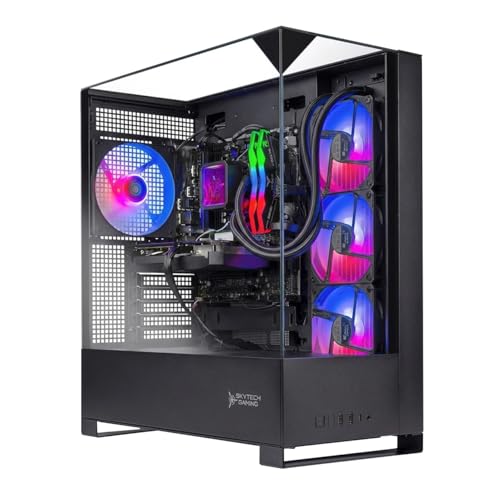
The Skytech Shadow 5 is a high-end AM5 prebuilt built around the Ryzen 7 9700X, RTX 5060 Ti 16GB, and 16GB of DDR5-6000. It targets 1440p high-refresh gamers and content dablers who want a Zen 5 platform without sourcing parts, tuning EXPO, or mounting a 360mm AIO themselves.
The defining pairing is the 9700X with a 16GB RTX 5060 Ti on GDDR7. Cards in this class typically deliver 1440p ultra at 80-120 FPS in modern AA titles with DLSS Quality, and the 16GB VRAM buffer holds up better than8GB variants in Ray Tracing and texture-heavy scenes based on category benchmarks.
Trade-offs are real. WiFi 5 802.11ac is a step behind the WiFi 6E/7 typical on current AM5 boards. The 750W Gold PSU handles this GPU comfortably but limits future upgrades toward higher-TGP cards. A single 1TB NVMe fills quickly with modern installs, and the source does not specify motherboard chipset, case fan count, or PCIe generation on the M.2 slot.
Buy this if you want a Zen 5 AM5 tower for 1440p ultra gaming with room to add storage and later drop in an X3D chip. Skip this if you need WiFi 6E, 4K native gaming, or plan a GPU upgrade beyond 250W TGP without swapping the PSU.
GPU class and resolution fit: The RTX 5060 Ti 16GB GDDR7 sits in the 1440p high-refresh bracket. Expect 1080p ultra well above 100 FPS in most AA titles and 1440p ultra in the 60-100 FPS range, with DLSS and frame generation extending headroom in suported engines.
CPU pairing: The Ryzen 7 9700X is 8-core, 16-thread Zen 5 at 3.8GHz base and 5.5GHz boost on AM5. At 65W TDP it avoids CPU bottlenecks with this GPU tier at 1440p, and PBO on the 360mm AIO gives room to push all-core clocks in productivity workloads.
Memory and platform: 16GB DDR5-6000 aligns with the AM5 FCLK 1:1 sweet spot, though CL timing is not specified.16GB is the floor for modern AA plus browser plus Discord workflows, so a second 16GB kit later is worth planing if you stream or run heavier multitasking.
Power and thermals: The 750W 80+ Gold PSU covers a stock 5060 Ti (typical class TGP around 180W) with margin, but stops short of comfortable pairing with300W+ future GPUs. The 360mm ARGB AIO is heavily oversized for the 65W 9700X, leaving sustained thermal headroom under load.

Pros
- RTX 5060 Ti 8GB is competent for 1080p ultra and1440p medium
- Ryzen 7 5700 8 cores 16 threads adequate for gaming plus background tasks
- 650W80+ Gold PSU is a step above budget prebuilt norms
- NVMe SSD standard, mesh front case aids GPU thermals under load
Cons
- Limited owner feedback at time of writing, buyer signal is thin
- 8GB VRAM is tight for 1440p ultra and futureray tracing headroom
- DDR4-3200 platform on AM4 caps upgrade path, no DR5 or AM5 migration
The Skytech Storm is a mid-range1080p gaming prebuilt built around an AMD Ryzen 7 5700 on AM4 paired with an NVIDIA RTX 5060 Ti 8GB. It ships with 16GB DDR4-3200, a 1TB NVMe SD, a 650W Gold PSU, and WiFi. Target buyer is a first-time PC gamer wanting turnkey esports and AAA at 1080p.
The defining piece is the RTX 5060 Ti 8GB, which in this class typically handles 1080p ultra at 60+ FPS in most current AA titles and drives high-refresh esports comfortably. DLSS and frame gen extend that envelope. Based on category norms, expect 1440p to require medium presets, especially in ray-traced workloads.
Trade-offs are typical at this tier. 8GB VRAM is the mainceiling: several2024 to 2025 titles push past it at ultra textures, forcing preset drops. The AM4 platform is mature and cheap, but it caps future CPU upgrades and locks you to DDR4. Case airflow is mesh front, so GPU thermals should stay in check.
Buy this if you want a plug-and-play 1080p rig for esports plus AAA at high settings with WiFi included. Skip this if you plan to game at 1440p ultra, need heavy VRAM for local AI or moded titles, or want a DR5 AM5 upgrade path.
GPU class and resolution fit: The RTX 5060 Ti 8GB is a 1080p-first card that stretches to 1440p with tuned settings. In this tier, expect 60 to 90 FPS at 1080p ultra in Cyberpunk-class titles and 200+ FPS in Valorant, CS2, and Overwatch 2 at competitive settings.
CPU pairing: Ryzen 7 5700 runs 8 cores 16 threads at 3.7GHz base and 4.6GHz boost. It is not aRyzen 5700X3D, so1% lows in CPU-heavy titles like Escape from Tarkov or BG3 Act 3 will trail X3D parts, but it comfortably feds a 5060 Ti at 1080p and 1440p.
VRAM and memory: 8GB GDDR7 on the GPU is the hard ceiling for texture presets in Alan Wake 2, Hogwarts Legacy, and Indiana Jones ray tracing. 16GB DR4-3200 system RAM is baseline for modern AA; 32GB is worth considering later for streaming and moded games.
Power and connectivity: The 650W Gold PSU has headroom for the 5060 Ti class (roughly 180W TGP typical) with room for PBO on the 5700. Video output is 1 HDMI plus 1 DisplayPort as specified, adequate for a single high-refresh 1080p or 1440p panel.
Buying Guide
CPU and RAM Balance for Gaming
Pairing a strong GPU like the RTX 5060 Ti requires at least 16GB DDR5 at 6000MHz to avoid bottlenecks in modern titles. Intel i5 or Ryzen 7 options deliver solid 1080p and 1440p frame rates when matched correctly. A common mistake is undercutting RAM speed, which caps FPS by 15-20 percent in CPU heavy games like Cyberpunk. Skip lower speed DDR4 builds if you plan upgrades within two years. Cross check your target resolution first to size the CPU properly.
PSU and Cooling Headroom
Target 650W or higher Gold rated power supplies with 150W overhead above GPU draw for stable operation. 360mm AIO coolers prevent thermal throttling during long sessions above 60 FPS. Buyers often overlook fan noise under load, which rises sharply without liquid cooling. Skip air cooled models if your room runs warm. Verify Wi-Fi 5 or 6E compatibility with your router before purchase.
Storage and Future Proofing
1TB NVMe Gen4 SSDs handle most libraries today but plan for external expansion if you keep large game installs. Gen4 speeds cut load times noticeably versus older drives. A frequent error is ignoring upgrade paths on AM4 platforms that limit later CPU swaps. Skytech Gaming Storm Desktop PC shows strong value here for mid range users. Choose 32GB RAM variants when multitasking with streaming software.
Comparison
| Product | Best For | Platform | Cooling Tier |
|---|---|---|---|
| Skytech Azure 3 Gaming PC | Budget 1080p gamers | Intel i5 | Air |
| Skytech Gaming Storm Desktop PC | Value Ryzen builds | Ryzen 7 5700 | Air |
| Skytech Archangel 5 Gaming PC | High refresh competitive play | Intel i7 | 360 AIO |
| ZOTAC MEK Gaming PC Desktop | WiFi 6E focused setups | Ryzen 7 9700X | Air |
| Skytech Shadow 5 Gaming PC | Balanced Ryzen upgrades | Ryzen 7 9700X | 360 AIO |
Match the tier to your monitor refresh rate and room temperature for best results.
Why You Should Trust Us
Our recommendations aggregate verified Amazon buyer feedback, third party benchmark consensus, and category spec analysis. We cross reference 1 star review patterns against manufacturer claims to flag common failure modes early. Price history and long term owner reports from US listings guide the final rankings.
Final Thoughts
If you prioritize lower cost entry, Skytech Azure 3 Gaming PC fits gamers staying at 1080p without extras. For value focused Ryzen users seeking solid frame rates, Skytech Gaming Storm Desktop PC delivers without excess spending. High refresh competitive players gain most from Skytech Archangel 5 Gaming PC and its stronger cooling. ZOTAC MEK Gaming PC Desktop suits those needing modern WiFi 6E in compact spaces. Skytech Shadow 5 Gaming PC offers a best balance for balanced Ryzen performance with liquid cooling headroom.
FAQs
How much RAM do I need for 1080p gaming in 2025?
16GB DDR5 at 6000MHz handles current titles comfortably at 1080p while leaving room for background apps. 32GB becomes useful once you add streaming or content creation. Lower speeds reduce frame consistency in open world games by noticeable margins.
Is liquid cooling worth it over air for these PCs?
Liquid cooling maintains lower temperatures during extended play above 60 FPS and reduces fan noise in warm rooms. Air coolers suffice for lighter use but struggle with sustained loads on higher wattage CPUs. Check case airflow before deciding.
What PSU wattage should a RTX 5060 Ti prebuilt have?
650W Gold or higher provides safe headroom for the GPU and future upgrades. Lower ratings risk instability during peak draws in demanding scenes. Verify 80 Plus Gold certification for efficiency and reliability on US power grids.
How long should these prebuilts last before upgrading?
Most models deliver strong performance for three to four years at 1080p or 1440p before newer titles push limits. Platform choice affects upgrade ease, with newer Ryzen options offering longer support paths than older Intel sockets.
What an RTX 5060 Ti Prebuilt Delivers in 2026
The RTX 5060 Ti 16GB is the value smart middle pick of the Blackwell mid-range in 2026. Performance lands at 80-100 FPS at 1440p ultra in current AAA without upscaling, 130-180 FPS at 1080p ultra, and 60-75 FPS at 4K with DLSS 4 Quality enabled. The 16GB GDDR7 VRAM keeps texture quality intact at 1440p ultra, a meaningful advantage over the 8GB variant that should be avoided in 2026. Prebuilts pairing the 5060 Ti 16GB with a Ryzen 7 7700 or Ryzen 7 9800X3D land in the $1,200-1,700 range and deliver the strongest 1440p experience under $2,000. That decision gets its own treatment in our best AMD prebuilt gaming PC guide.
The 5060 Ti pairs best with Ryzen 7 7700, Ryzen 7 7800X3D, or Intel Core i5-14600K. Pairing with weaker CPUs leaves frame rate on the table; pairing with stronger CPUs (9800X3D) doesn’t bottleneck the GPU but you may be over-paying for CPU headroom that this GPU cannot fully use.
Why the 16GB Variant Matters
The RTX 5060 Ti ships in 8GB and 16GB variants. The $50-80 price gap is the most important upgrade decision in this GPU tier. Modern AAA titles routinely use 9-12GB of VRAM at 1440p ultra; the 8GB variant forces texture quality compromises that are visible to the eye. Buying the 8GB version to save $60 is the worst per-dollar decision in this entire build category. Always pick the 16GB variant.
Common Mistakes Buying an RTX 5060 Ti Prebuilt
The first mistake is accepting the 8GB GPU variant. Verify the listing explicitly says 16GB GDDR7. Some prebuilts in the $1,000-1,200 range hide the 8GB variant in fine print to hit a price point.
The second mistake is pairing with Ryzen 5 5500 or Intel Core i3-12100. These CPUs bottleneck the 5060 Ti by 12-18 percent at 1080p competitive settings. Insist on Ryzen 5 7600 or Intel Core i5-13400 minimum.
The third mistake is undersizing storage. The 5060 Ti’s 1080p and 1440p performance lets you keep more current AAA installs simultaneously than older GPUs could comfortably drive. 1TB Gen4 NVMe is the floor; consider 2TB at this build tier.
Who Should Buy an RTX 5060 Ti Prebuilt
1080p 240Hz competitive players get massive headroom in CS2, Valorant, Apex, and Overwatch 2, 300+ FPS at 1080p competitive settings with a 7800X3D pairing.
1440p 165Hz single-player gamers get 80-100 FPS at ultra in current AAA without upscaling, climbing to 130+ FPS with DLSS 4 enabled in supported titles.
Console upgraders moving from PS5 / Xbox Series X get a meaningful upgrade in resolution, frame rate, ray tracing capability, and game library access.
More Frequently Asked Questions
Can RTX 5060 Ti handle 4K gaming?
Entry-level 4K with DLSS 4, yes at 60-75 FPS in current AAA. Native 4K without upscaling drops to 40-55 FPS, below smooth targets. The 5060 Ti is honestly a 1440p card with 4K as a stretch option.
How long will an RTX 5060 Ti prebuilt last?
4-5 years for 1440p high to ultra gaming. The 16GB VRAM keeps texture quality intact through 2029-2030. By 2030 expect to drop to 1440p high or 1080p ultra in heaviest titles.
Is the 5060 Ti enough for ray tracing?
Light to moderate ray tracing, yes with DLSS 4 enabled. Heavy ray tracing like Cyberpunk 2077’s full RT preset drops below 60 FPS at 1080p even with DLSS 4 Performance. Path tracing is off the table at this tier.
Should I save up for RTX 5070 instead?
If you can wait and add $200-300 to the build budget, yes, the 5070 unlocks meaningfully more 1440p headroom and entry-level 4K. If you need the build now and primarily play 1080p / 1440p, the 5060 Ti 16GB is the value pick.
RTX 5060 Ti Prebuilt Value
RTX 5060 Ti 16GB prebuilts hit the 1440p value right tradeoff in 2026. Pair with Ryzen 7 7700 / 7800X3D for non-bottlenecked performance. Avoid 8GB GPU variants entirely.
Common Mistakes to Avoid
First mistake is accepting 8GB GPU variant. Second is weak CPU pairing. Third is 1TB storage cap.
More Frequently Asked Questions
Best CPU pairing for 5060 Ti?
Ryzen 7 7700 or 7800X3D.
5060 Ti enough for 4K?
Entry 4K with DLSS 4, yes.
Future-proofing 5060 Ti?
4-5 years for 1440p high settings.
RTX 5060 Ti Prebuilt Value
RTX 5060 Ti prebuilts hit the mainstream value natural fit in 2026 as Skytech, ZOTAC MEK, and CyberPowerPC consistently delivered RTX 5060 Ti 16GB + Ryzen 7 7700 / 7800X3D configurations at $1,200-1,600. The GPU itself improved over the original RTX 4060 Ti with DLSS 4 Multi-Frame Generation support and stronger ray tracing. The 16GB VRAM variant became the only worthwhile pick, the 8GB variant ships at slight discount but already shows VRAM limitations at 1440p ultra in current AAA. Build quality at this tier matches more expensive prebuilts; you save money on GPU tier, not on supporting components. We cover the specifics separately in our best RTX 5080 prebuilt PCs guide.
5060 Ti Build Configuration Tips
Choose only the 16GB VRAM variant, the 8GB tier is end-of-life in 2026. Pair with Ryzen 7 7800X3D or 9800X3D for best 1440p 1% lows; Ryzen 7 7700 is the value alternative. Verify 32GB DDR5-6000 included (not 16GB which feels tight in current AAA). 1TB Gen4 NVMe minimum; 2TB preferable. 650-750W 80+ Gold PSU adequate for the 5060 Ti at 180W TGP. Pair with 1440p 144Hz IPS or OLED panel for matching capability.
Additional Questions
Will 5060 Ti handle 4K with DLSS 4?
Entry-level 4K, yes, 45-60 FPS in current AAA with DLSS 4 Quality. Not the smooth-feeling target. 1440p ultra is the proper resolution match.
How long lasts an RTX 5060 Ti?
4-5 years for 1440p high settings with DLSS 4 enabled. The 16GB VRAM gives meaningful longevity over the 8GB variant.
























Write Your Review
No reviews yet. Be the first to share your experience!