

If you’ve shopped for a gaming desktop lately, you’ve run into the term “system integrator” without anyone bothering to define it. It sounds corporate. It’s actually simple. A system integrator, or SI, is a company that buys individual PC parts, assembles them into a finished machine, and sells you the whole thing under one warranty. Skytech, NZXT, iBUYPOWER, CyberPowerPC. Those are SIs.
So does it actually matter which one builds your gaming rig, or is a prebuilt just a bag of parts with a logo on the front? It matters more than most first-time buyers expect. The integrator decides the parts pairing, the cooling, the cable job, and who picks up the phone when something dies in month three. This guide breaks down what an SI really does, when paying for one makes sense, and what to check before you buy. If you’re weighing brands, our roundup of the best AMD prebuilt gaming PCs and the picks for the best budget prebuilt PC for 1080p gaming pair well with what’s below.
The short answer
Yes, the system integrator matters, but not because of some secret sauce inside the case. It matters because the SI owns three things a bag of parts can’t give you: a single warranty covering the whole machine, professional assembly and quality checks before it ships, and one support number for when a component fails. Buy loose parts and a dead motherboard is your problem to diagnose, RMA, and replace. Buy from a good SI and it’s their problem for the length of the warranty.

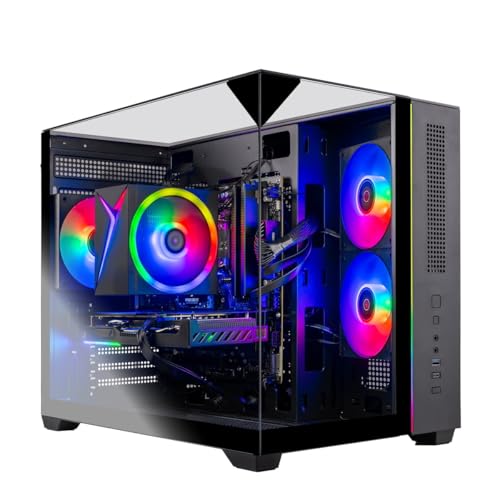
Here’s a concrete example of what an integrated build looks like. The Skytech Gaming Crystal ships at $1,199.99 with a Ryzen 7 5700, an RTX 5060, 32GB of DDR4-3200, a 1TB NVMe SSD, and a 650W Gold PSU, all under Skytech’s warranty and Win 11 ready out of the box. It carries a 4.4 rating. That’s the SI value in one line: matched parts, one box, one number to call.

Pros
- 8-core, 16-thread Ryzen 7 5700 avoids CPU bottleneck for RTX 5060 at 1080p ultra
- 32GB DDR4-3200 exceeds the 16GB gaming baseline for streaming and heavy multitasking
- Triple tempered glass Crystal case with ARGB airflow fans suports thermals under sustained load
Cons
- Zero owner reviews at time of writing, so long-term reliability data is unavailable
- AM4 socket is end-of-life, capping future CPU upgrades at the Ryzen 5000 series
- 650W PSU and 8GB VRAM leave limited headroom for upgrading to higher-TGP GPUs later
The Skytech Crystal is a mid-range prebuilt gaming PC pairing an 8-core AMD Ryzen 7 5700 on AM4 with an NVIDIA RTX 5060 8GB GDR7, 32GB DDR4-3200, and a 1TB NVMe SSD. It targets 1080p high-refresh esports players and AAA gamers who want a plug-and-play tower with a warranty.
The RTX 5060 8GB GDDR7 is the defining component and sits in the 1080p ultra bracket, with GPUs at this tier typically hitting 60+ FPS in modern AAA titles and well above 144 FPS in Valorant, CS2, and Overwatch 2. DLSS 4 and frame generation extend usable headroom into 1440p.
Trade-offs are real at this tier. AM4 is a dead-end socket, so future CPU upgrades stop at the 5000 series. DDR4-3200 lags the DDR5-6000 sweet spot on AM5 builds, and the 8GB VRAM buffer will pressure ray tracing at 1440p in heavier titles. The 650W PSU also limits future GPU upgrades.
Buy this if you want a 1080p ultra or 1440p DLSS-assisted gaming PC with zero build time and a one year parts warranty. Skip this if you plan to upgrade to an RTX 5070 Ti class GPU or move to DDR5, since the AM4 board and 650W PSU will bottleneck that path.
1080p Ultra: The RTX 5060 8GB GDDR7 is a 1080p-first card. Expect 60+ FPS ultra in Baldur's Gate 3, Black Myth Wukong, and ELDEN RING at native resolution, and 240+ FPS in Valorant, CS2, and Overwatch 2 paired with a high-refresh 1080p monitor.
1440p and DLSS 4: 8GB VRAM is the ceiling. 1440p is playable with DLSS Quality and frame generation in most AA titles, but path-traced or heavy ray tracing loads at 1440p can saturate the VRAM buffer in games like Alan Wake 2 and Cyberpunk 2077 Overdrive.
CPU pairing: The Ryzen 7 5700 is an 8-core, 16-thread AM4 chip at 3.7GHz base and 4.6GHz boost. It feeds the RTX 5060 without meaningful bottleneck at 1080p ultra or 1440p, and handles OBS NVENC streaming since encode load lives on the GPU.
Memory and storage: 32GB DDR4-3200 with heat spreaders is above the 16GB gaming baseline and covers moded Minecraft, Escape from Tarkov, and Chrome-heavy multitasking. The 1TB NVMe M.2 SSD stores roughly six to eight modern AAA installs before Call of Duty class titles force selective uninstalls.
The longer explanation
Think about everything that has to go right between a pile of components and a PC that boots into a game. The SI sources the parts, often at volume pricing you can’t get as an individual. They mount the CPU, seat the RAM, install the GPU, route the cables, mount the cooler with the right paste and pressure, flash the BIOS if needed, install Windows, and run the whole thing under load to confirm it’s stable. Then they box it so it survives a delivery truck. Each of those steps is a place a first-time builder can slip.
The integrator also makes compatibility calls you might miss. Does that 650W Gold PSU have the headroom for the GPU plus overclocking headroom? Will the cooler clear the RAM height? Is the case airflow enough to keep an RTX 5060 from throttling under a long session? On the Crystal, Skytech already answered those questions when they paired a 650W Gold unit with a mid-range Ryzen and a 5060. You don’t have to. That’s the quiet part of the SI’s job, and it’s the part people only notice when a self-built machine won’t post.
How we got here
System integrators aren’t new. Back in the beige-box era, local shops built custom PCs because buying a name-brand OEM meant proprietary parts and no upgrade path. The modern gaming SI grew out of that, then scaled up. Companies like Skytech, iBUYPOWER, and CyberPowerPC turned custom assembly into a catalog business, offering configurable builds with standard ATX parts you can later swap yourself.
The big shift was standardization. Because these machines use off-the-shelf motherboards, PSUs, and GPUs instead of locked-down proprietary boards, a prebuilt from a good SI is basically a DIY build someone else assembled for you. That’s why a $1,199.99 Crystal can be opened and upgraded like any tower. You’re not trapped. You paid the integrator for the labor and the warranty, not for a sealed black box.
Why it works this way
The single-warranty model is the whole reason SIs exist. When you buy 8 separate components, you have 8 separate warranties from 8 manufacturers, each with its own RMA process and return window. Diagnosing which part failed is on you. If the SI built it, they warranty the finished system as a unit, so a failure in year one is one email and one shipping label, not a weekend of swapping parts to isolate the culprit.
Assembly quality is the other half. A machine that’s been professionally cable-managed and load-checked before shipping tends to arrive stable. The parts were seated by someone who’s done it a thousand times. It’s not magic, but it removes the most common first-boot headaches: unseated RAM, a loose GPU, a CPU cooler mounted with too little paste. For a lot of buyers, that peace of mind is worth the modest premium over sourcing parts one by one.
When you’d want a system integrator
You want an SI when you’d rather play games than build hardware, when you don’t own the tools or the patience for a first build, or when you want a warranty that covers the entire machine instead of eight separate ones. First-time buyers, gift purchasers, and anyone who needs a working PC on day one are the core audience. If a dead part three months in sounds like a nightmare you’d rather outsource, that’s the SI’s whole pitch.
A build like the Skytech Gaming Crystal fits that buyer neatly. At $1,199.99 you get a Ryzen 7 5700 paired with an RTX 5060, 32GB of DDR4-3200, and a 1TB NVMe SSD, assembled, Windows-loaded, and warrantied. It’s aimed at solid 1080p and entry 1440p gaming, and it ships ready to run. For readers cross-shopping resolution targets, our guide to the best budget prebuilt PC for 1440p gaming lines up well against a machine like this one.
Pros
- 8-core, 16-thread Ryzen 7 5700 avoids CPU bottleneck for RTX 5060 at 1080p ultra
- 32GB DDR4-3200 exceeds the 16GB gaming baseline for streaming and heavy multitasking
- Triple tempered glass Crystal case with ARGB airflow fans suports thermals under sustained load
Cons
- Zero owner reviews at time of writing, so long-term reliability data is unavailable
- AM4 socket is end-of-life, capping future CPU upgrades at the Ryzen 5000 series
- 650W PSU and 8GB VRAM leave limited headroom for upgrading to higher-TGP GPUs later
The Skytech Crystal is a mid-range prebuilt gaming PC pairing an 8-core AMD Ryzen 7 5700 on AM4 with an NVIDIA RTX 5060 8GB GDR7, 32GB DDR4-3200, and a 1TB NVMe SSD. It targets 1080p high-refresh esports players and AAA gamers who want a plug-and-play tower with a warranty.
The RTX 5060 8GB GDDR7 is the defining component and sits in the 1080p ultra bracket, with GPUs at this tier typically hitting 60+ FPS in modern AAA titles and well above 144 FPS in Valorant, CS2, and Overwatch 2. DLSS 4 and frame generation extend usable headroom into 1440p.
Trade-offs are real at this tier. AM4 is a dead-end socket, so future CPU upgrades stop at the 5000 series. DDR4-3200 lags the DDR5-6000 sweet spot on AM5 builds, and the 8GB VRAM buffer will pressure ray tracing at 1440p in heavier titles. The 650W PSU also limits future GPU upgrades.
Buy this if you want a 1080p ultra or 1440p DLSS-assisted gaming PC with zero build time and a one year parts warranty. Skip this if you plan to upgrade to an RTX 5070 Ti class GPU or move to DDR5, since the AM4 board and 650W PSU will bottleneck that path.
1080p Ultra: The RTX 5060 8GB GDDR7 is a 1080p-first card. Expect 60+ FPS ultra in Baldur's Gate 3, Black Myth Wukong, and ELDEN RING at native resolution, and 240+ FPS in Valorant, CS2, and Overwatch 2 paired with a high-refresh 1080p monitor.
1440p and DLSS 4: 8GB VRAM is the ceiling. 1440p is playable with DLSS Quality and frame generation in most AA titles, but path-traced or heavy ray tracing loads at 1440p can saturate the VRAM buffer in games like Alan Wake 2 and Cyberpunk 2077 Overdrive.
CPU pairing: The Ryzen 7 5700 is an 8-core, 16-thread AM4 chip at 3.7GHz base and 4.6GHz boost. It feeds the RTX 5060 without meaningful bottleneck at 1080p ultra or 1440p, and handles OBS NVENC streaming since encode load lives on the GPU.
Memory and storage: 32GB DDR4-3200 with heat spreaders is above the 16GB gaming baseline and covers moded Minecraft, Escape from Tarkov, and Chrome-heavy multitasking. The 1TB NVMe M.2 SSD stores roughly six to eight modern AAA installs before Call of Duty class titles force selective uninstalls.
What to look for in a system integrator
Read the warranty terms first. Length matters, but so does what’s covered and whether labor and return shipping are included. Look for standard, non-proprietary parts so you can upgrade later, a PSU with real headroom (a 650W Gold unit is reasonable for a 5060-class card), and a named GPU and CPU rather than vague marketing. Check that RAM capacity and speed are listed plainly, like the Crystal’s 32GB DDR4-3200, not hidden behind a spec sheet you have to email for.
Support reputation is the tiebreaker. A great parts list means little if you can’t reach a human when the machine won’t boot. Owner reports and rating history help here; the Crystal’s 4.4 average is the kind of signal worth weighing. Confirm the OS is included and activated (Win 11 on the Crystal) so you’re not buying a license separately after checkout.
Common misconceptions
The biggest myth is that prebuilts from SIs are stuffed with garbage parts to hide the margin. That was truer a decade ago. Reputable integrators now list the exact GPU, CPU, PSU wattage, and RAM, like the Crystal does, so you can price the parts yourself and see what you’re paying for assembly and warranty. The second myth is that you can’t upgrade a prebuilt. With standard ATX components, you absolutely can. Swap the GPU, add RAM, drop in a bigger SSD.
The third misconception is that building yourself is always cheaper. Sometimes it is, sometimes it isn’t. SIs buy parts at volume, and during GPU shortages a prebuilt has occasionally been the cheaper way to get a specific card. Factor in your own time and the value of a single warranty, and the math gets closer than people assume.
Frequently asked
Is a prebuilt from a system integrator worth it over building my own?
It depends on your comfort level. If you value your time, want one warranty on the whole machine, and don’t want to troubleshoot a first build, an SI is worth the modest premium. Experienced builders chasing the lowest price often still DIY. A machine like the $1,199.99 Skytech Crystal targets the buyer who wants it working on arrival.
Can I upgrade a PC bought from a system integrator?
Yes, as long as it uses standard parts, which most gaming SIs do. The Skytech Crystal is a normal ATX-style tower, so you can add RAM, swap the RTX 5060 for a stronger card later, or add storage beyond the 1TB NVMe SSD. Just check that an upgrade doesn’t void the remaining warranty on untouched components.
Does buying from an SI void component warranties?
Not usually. The SI provides its own system warranty covering the whole machine, which is often simpler than chasing individual part makers. Some also honor manufacturer warranties on the components. Read the terms before you buy so you know who to call for what.
Is a 650W PSU enough for an RTX 5060 build?
For a Ryzen 7 5700 paired with an RTX 5060, a 650W Gold unit like the one in the Skytech Crystal has sensible headroom for stock operation and light overclocking. If you plan to drop in a much hungrier GPU down the road, that’s the component you’d size up first.
How do I know if a system integrator is reputable?
Check the rating history, read the warranty and support terms, and confirm the build lists real, named parts rather than vague descriptions. A transparent spec sheet, a 650W Gold PSU instead of an unnamed unit, and a solid average rating like the Crystal’s 4.4 are all good signs. If the support path is unclear before you buy, that’s a red flag.



























Write Your Review
No reviews yet. Be the first to share your experience!