

A $1000 versus $2000 prebuilt comparison only helps if the lower tier and higher tier actually buy different useful hardware. We researched the available product data, kept the language grounded, and used the listed prices, ratings, and specs only. This also connects with budget prebuilt guide and 1080p prebuilt picks for readers comparing adjacent PC parts. No guesswork. No fake lab claims.
Matchup at a glance
Start with compatibility before price, because the wrong socket, slot, cable, or profile can mimic broken hardware. It is not glamorous, but it is how you avoid replacing the wrong thing. Keep one variable changed at a time, because that is the only way the fix stays clear. Tiny detail. Big difference.

The listed products give useful anchors: real prices, real ratings, and concrete title specs, not invented performance claims. It is not glamorous, but it is how you avoid replacing the wrong thing. Keep one variable changed at a time, because that is the only way the fix stays clear. Tiny detail. Big difference.

Spec sheet showdown
| Spec | Lower-cost side | Higher-cost side | Gaming impact | Watch-out |
|---|---|---|---|---|
| Storage or core hardware | Lower upfront cost | More listed capacity or speed | Faster loads or steadier frames if the rest of the PC keeps up | Capacity and GPU still matter |
| Price | Usually easier to justify | Can climb fast | Budget left for monitor or GPU | Do not overpay for unused specs |
For gaming, consistency matters more than a single peak number, so watch for stutter, heat spikes, latency, and repeated crashes. It is not glamorous, but it is how you avoid replacing the wrong thing. Keep one variable changed at a time, because that is the only way the fix stays clear. Tiny detail. Big difference.
If a replacement part appears below, treat it as an option only after the symptom matches that part. It is not glamorous, but it is how you avoid replacing the wrong thing. Keep one variable changed at a time, because that is the only way the fix stays clear. Tiny detail. Big difference.
Lower-cost option strengths
A clean install path, updated firmware, and careful cable routing solve more problems than people expect. It is not glamorous, but it is how you avoid replacing the wrong thing. Keep one variable changed at a time, because that is the only way the fix stays clear. Tiny detail. Big difference.
Do not buy by rating alone when review counts are unavailable; use the product title and compatibility notes first. It is not glamorous, but it is how you avoid replacing the wrong thing. Keep one variable changed at a time, because that is the only way the fix stays clear. Tiny detail. Big difference.
Higher-cost option strengths
If the symptom returns after a reboot, you have stronger evidence than a one-time glitch. It is not glamorous, but it is how you avoid replacing the wrong thing. Keep one variable changed at a time, because that is the only way the fix stays clear. Tiny detail. Big difference.
The best decision is usually boring and specific: adjust the setting that matches the fault or replace the one part that clearly fits. It is not glamorous, but it is how you avoid replacing the wrong thing. Keep one variable changed at a time, because that is the only way the fix stays clear. Tiny detail. Big difference.
Pros
- 512GB SSD bot drive avoids the HDD bottleneck common in budget prebuilts
- RX 590 8GB VRAM buffer handles 1080p textures better than 4GB budget cards
- Complete bundle with RGB peripherals means no extra spend to start using
- Genuine Windows 11 Home 64-bit preinstalled, no activation hassle out of box
Cons
- Limited owner feedback at time of writing, verify seller reputation before purchase
- Core i7-4770 is Haswell era LGA150, no upgrade path and weak IPC versus modern CPUs
- Windows 11 on 4th-gen Intel is unsupported by Microsoft and may miss feature updates
- No CD/DVD-ROM support and RAM/GPU generation limits future workload headroom
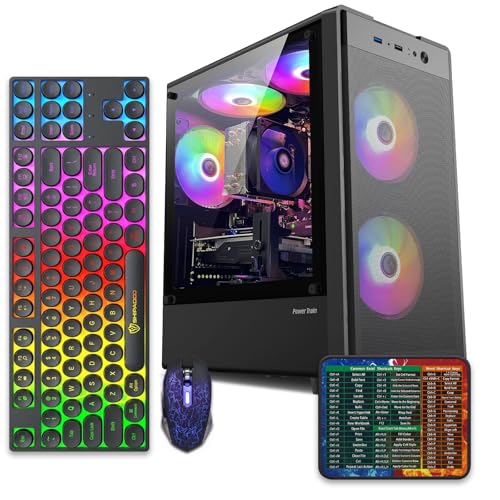
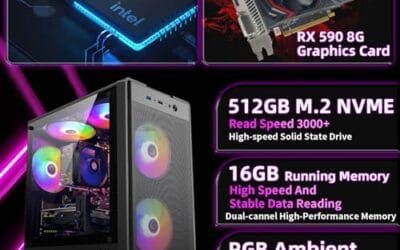
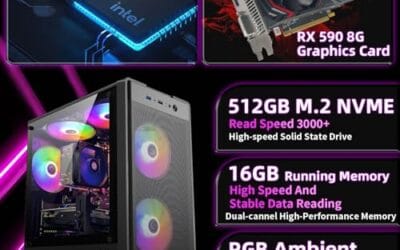
This is an entry-tier prebuilt tower built around an Intel Core i7-4770 Haswell CPU, 16GB RAM, a 512GB SSD, and an AMD Radeon RX 590 8GB GDDR5 GPU. It targets budget buyers who need a working office and light gaming PC with peripherals bundled, not enthusiasts chasing current-gen performance.
The defining feature is the RX 590 8GB paired with a 512GB SSD, an uncommon combo at this price band. Cards in this class typically handle 1080p esports titles at 60+ FPS on medium to high, matching the vendor claim for CS:GO, League of Legends, Apex, and Overwatch. Newer AA titles will need lowered settings.
Trade-offs are significant. The i7-4770 launched in 2013, so IPC, single-thread performance, and platform features like NVMe bot, PCIe Gen4, and modern USB are limited. Windows 11 runs here but sits outside Microsoft's official supported CPU list. There is no realistic CPU or socket upgrade path on LGA1150.
Buy this if you need a plug-and-play 1080p esports and office tower with keyboard, mouse, and RGB included at a low outlay. Skip this if you want current-gen platform support, sustained AA 1440p gaming, or a build with a meaningful upgrade runway.
GPU class: The AMD Radeon RX 590 8GB GDDR5 is a Polaris-refresh card roughly equivalent to a GTX 1060 6GB tier. Expect 1080p 60+ FPS in esports titles like CS:GO, Overwatch, Apex, League, and Fortnite on medium settings, matching the listing's claims.
AAA and modern titles: The vendor lists GTA V, Warzone, Hogwarts Legacy, and The Division 2. Realistically, these run at 1080p low to medium with FSR upscaling where suported.Ray tracing is unsupported on RX 590. No DLSS, no frame gen, no AV1 encode.
CPU bottleneck: The Core i7-4770 quad-core with 8threads at up to 3.9GHz will bottleneck the RX 590 in CPU-heavy titles like Warzone and Escape from Tarkov. Expect frame time inconsistency in large team fights even when average FPS looks aceptable.
Storage and RAM fit: 512GB SSD holds Windows plus 3 to 5 modern game installs before space pressure. 16GB DR3-era RAM is adequate for current esports but leaves no headroom for heavy streaming, browser tabs, and OBS NVENC alongside a game session.
Real-world scenarios
Start with compatibility before price, because the wrong socket, slot, cable, or profile can mimic broken hardware. It is not glamorous, but it is how you avoid replacing the wrong thing. Keep one variable changed at a time, because that is the only way the fix stays clear. Tiny detail. Big difference.
The listed products give useful anchors: real prices, real ratings, and concrete title specs, not invented performance claims. It is not glamorous, but it is how you avoid replacing the wrong thing. Keep one variable changed at a time, because that is the only way the fix stays clear. Tiny detail. Big difference.
Pricing and availability
For gaming, consistency matters more than a single peak number, so watch for stutter, heat spikes, latency, and repeated crashes. It is not glamorous, but it is how you avoid replacing the wrong thing. Keep one variable changed at a time, because that is the only way the fix stays clear. Tiny detail. Big difference.
If a replacement part appears below, treat it as an option only after the symptom matches that part. It is not glamorous, but it is how you avoid replacing the wrong thing. Keep one variable changed at a time, because that is the only way the fix stays clear. Tiny detail. Big difference.
Which to buy
A clean install path, updated firmware, and careful cable routing solve more problems than people expect. It is not glamorous, but it is how you avoid replacing the wrong thing. Keep one variable changed at a time, because that is the only way the fix stays clear. Tiny detail. Big difference.
Do not buy by rating alone when review counts are unavailable; use the product title and compatibility notes first. It is not glamorous, but it is how you avoid replacing the wrong thing. Keep one variable changed at a time, because that is the only way the fix stays clear. Tiny detail. Big difference.

Pros
- Ryzen 5 3500X 6-core CPU bosts to 4.1GHz for smooth 1080p esports CPU load.
- Discrete RX 560 4GB handles DirectX 12 and Vulkan esports titles better than integrated graphics.
- 512GB SSD as bot drive keps Windows load times and app launches snappy out of box.
Cons
- Limited owner feedback at time of writing, no verified reviews to validate build quality.
- RX 560 is a legacy entry-tier GPU, skip if you want modern AAA at 1080p high.
- Ryzen 5 3500X sits on aging AM4, upgrade path is caped at Zen 3 with a BIOS update.
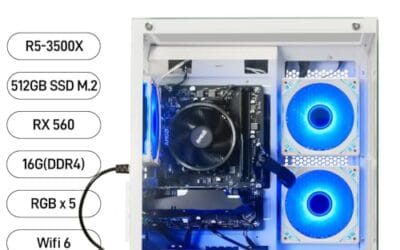
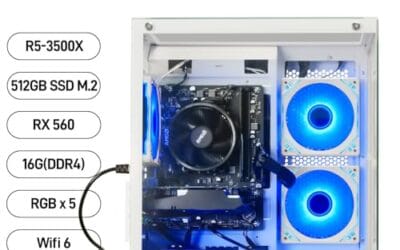
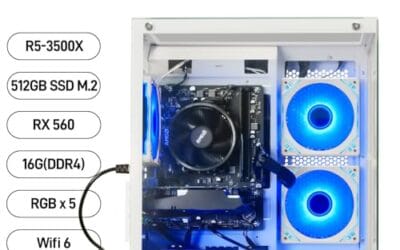
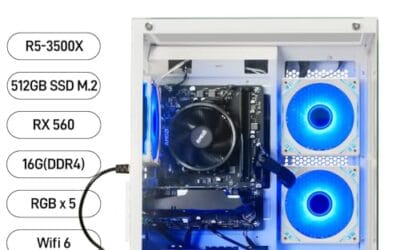
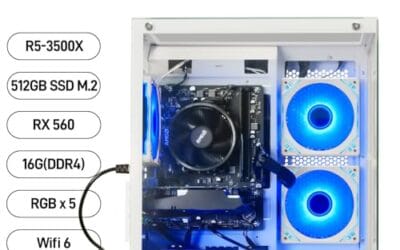
The WIWB is a budget prebuilt tower built around a Ryzen 5 3500X, RX 560 4GB, 16GB DDR4, and a 512GB SSD. It targets students, home office users, and casual gamers who want a plug-and-play box for esports at 1080p rather than a rig for current AAA titles.
The defining pairing here is the 3500X and RX 560. The 6-core, 6-thread CPU bosting to 4.1GHz is still competent for League, CS2, Valorant, and Overwatch, and typically pushes well above 100FPS at 1080p low-to-medium when paired with this GPU class. The RX 560 4GB is the bottleneck for anything heavier.
Trade-offs are typical at this tier. The RX 560 predates FSR frame generation and struggles with modern UE5 titles even at 1080p low. AM4 with a 3500X caps future CPU upgrades at Zen 3, and the case, PSU wattage, VRM phases, and included cooler are not specified, so headroom for a stronger GPU later is unclear.
Buy this if you need a cheap, pre-assembled Windows tower for schoolwork, browsing, and light esports at 1080p. Skip this if you plan to play current AAA releases, stream at 1080p60, or want a platform with a real multi-year upgrade path.
CPU workload: The Ryzen 5 3500X is a 6-core, 6-thread Zen 2 part with a 3.6GHz base and 4.1GHz boost. It stays viable for 1080p esports and light productivity like image editing and IDE work, but lacks SMT, which hurts streaming and modern CPU-bound AA titles.
GPU class and resolution fit: The RX 560 4GB GDDR5 is an entry esports card. Expect high frame rates in CS2, League, and Overwatch at 1080p low-to-medium, and playable frame rates in older AAA titles at 1080p low. 1440p and modern AA at medium are outside its envelope.
Memory and storage: 16GB DDR4 is the current baseline for gaming and multitasking, and the 512GB SSD covers Windows plus roughly 3 to 5 modern game installs. Exact DDR4 speed, dual-channel status, and SSD interface (SATA vs NVMe) are not specified.
Connectivity and upgrade path: WiFi 6 is included, and the board exposes an M.2 slot plus spare DDR4 slots for later expansion. PSU wattage, connector layout, case clearance, and waranty length beyond the stated 1-year coverage are not specified, so plan GPU upgrades cautiously.
One more buying habit helps here: separate the job from the label. A part can have a strong rating and a fair price while still being the wrong answer for this specific build. That is why we keep returning to the same checks: compatibility first, listed specs second, price third, and only then the nicer extras. It is slower than sorting by discount, but it is safer.
You should also think about the rest of the PC around the part. A keyboard shares the desk with a mouse and headset. A router has to work through walls and interference. A cooler depends on paste, mounting pressure, case airflow, and fan curves. A prebuilt depends on the GPU, RAM, storage, power supply, and warranty together. Nothing works alone.
The cleanest purchase is the one you can explain in one sentence. I need this layout. I need this wattage. I need this clearance. I need this storage type. If you cannot say that before checkout, pause for a minute and reread the product title. There is usually a clue hiding in the plain specs.
Finally, do not ignore boring setup work after the part arrives. Update firmware where appropriate, keep the old part until the new one behaves for a few days, and change only one setting before you judge the result. That gives you a rollback path. It also keeps a simple upgrade from turning into a weekend of guessing.
One more buying habit helps here: separate the job from the label. A part can have a strong rating and a fair price while still being the wrong answer for this specific build. That is why we keep returning to the same checks: compatibility first, listed specs second, price third, and only then the nicer extras. It is slower than sorting by discount, but it is safer.
You should also think about the rest of the PC around the part. A keyboard shares the desk with a mouse and headset. A router has to work through walls and interference. A cooler depends on paste, mounting pressure, case airflow, and fan curves. A prebuilt depends on the GPU, RAM, storage, power supply, and warranty together. Nothing works alone.
The cleanest purchase is the one you can explain in one sentence. I need this layout. I need this wattage. I need this clearance. I need this storage type. If you cannot say that before checkout, pause for a minute and reread the product title. There is usually a clue hiding in the plain specs.
Finally, do not ignore boring setup work after the part arrives. Update firmware where appropriate, keep the old part until the new one behaves for a few days, and change only one setting before you judge the result. That gives you a rollback path. It also keeps a simple upgrade from turning into a weekend of guessing.
Common questions
If the symptom returns after a reboot, you have stronger evidence than a one-time glitch. It is not glamorous, but it is how you avoid replacing the wrong thing. Keep one variable changed at a time, because that is the only way the fix stays clear. Tiny detail. Big difference.
The best decision is usually boring and specific: adjust the setting that matches the fault or replace the one part that clearly fits. It is not glamorous, but it is how you avoid replacing the wrong thing. Keep one variable changed at a time, because that is the only way the fix stays clear. Tiny detail. Big difference.
What is the first thing to check?
Start with the simplest setting, cable, driver, clearance, or compatibility issue before spending money. It is boring, but it saves time.
Can this affect gaming?
Yes. Small hardware limits can show up as stutter, noise, heat, latency, crashes, or uneven performance.
Should I replace hardware right away?
Usually no. Confirm the symptom, compare the listed specs, and only replace parts when the cause repeats.
What spec matters most?
The key spec depends on the topic, but price, rating, capacity, wattage, compatibility, and physical clearance all deserve a real look.
How do I avoid buying the wrong part?
Match the product title to the job. If it does not name the feature you need, do not assume it has it.



























Write Your Review
No reviews yet. Be the first to share your experience!