

Red switches and brown switches are the two mechanical keyboard choices most buyers compare first because they feel different even when the rest of the board is similar. A typical red switch is linear, light, and quiet enough for fast key repeats; a typical brown switch adds a small tactile bump so you can feel actuation without the sharper click of a blue switch. If you’re narrowing a gaming board, start with our mechanical gaming keyboard guide; if typing comfort matters more than RGB, our keyboard picks for programmers are worth a look too. The price spread in this batch is also clear: the renewed Cherry KC 200 MX with Silent Red switches sits at $56.31, while the Newmen GM325Pro wired board with linear red switches is $20.89.
Matchup at a glance
Red switches are the direct, no-bump option. Press the key, the stem travels smoothly, and the switch actuates somewhere along that travel without a tactile event telling your finger it happened. That’s why many gamers like them for repeated strafing, rapid double taps, and keys held down for long stretches. Red switches also pair well with lighter keycaps and compact layouts because the whole board can feel quick. If you’ve only used laptop scissor switches, reds may feel surprisingly soft at first, but most people adapt within a few evenings.
Brown switches are the middle path between a red linear switch and a louder clicky switch. They add a small bump near the actuation point, so you’ll get a bit more feedback while typing, but they’re not supposed to sound like old-school blue switches. For mixed work, chat, documents, spreadsheets, and games after hours, browns can feel more deliberate. The tradeoff is that the bump isn’t magic accuracy; if you bottom out hard, the board can still sound loud, and the tactile event can feel vague on cheaper switch designs.
Spec sheet showdown
| Spec | Red switches | Brown switches | Best fit | Watch-out |
|---|---|---|---|---|
| Feel | Smooth, linear travel | Light tactile bump | Red for fast repeats, brown for typing feedback | Keycap and case noise matter too |
| Sound profile | Usually quieter, especially Silent Red variants | Moderate, no click mechanism | Shared rooms and offices favor quieter reds | Bottoming out can be louder than the switch itself |
| Gaming behavior | Easy holds and repeated presses | More confirmation per press | Red for shooters, brown for mixed genres | Accidental presses can happen on very light switches |
| Typing behavior | Fast but less feedback | More noticeable actuation feel | Brown for long text sessions | Some browns feel scratchy on budget boards |
| Example product data | Newmen GM325Pro, $20.89, 4.8 rating, 104 keys, linear red switches | Cherry KC 200 MX uses MX2A Silent Red, not brown, at $56.31 with 4.0 rating | Use product data to match the actual switch listed | Don’t assume every listing offers both colors |
Red switch strengths
The best reason to buy red switches is consistency. Every press feels the same from top to bottom, so your fingers don’t have to push through a tactile bump before the key registers. In fast games, that can make movement keys feel cleaner, especially if you’re feathering A and D, crouching repeatedly, or holding Shift for long stretches. Red switches also pair well with compact layouts because the whole board can feel quick. If you’ve only used laptop scissor switches, reds may feel surprisingly soft at first, but most people adapt within a few evenings.
Red switches also make sense when sound is a concern. A linear switch has no built-in click, and a Silent Red variant adds internal dampening to reduce the sharp clack at the top and bottom of travel. The Cherry KC 200 MX listing specifically names MX2A Silent Red switches, a metal plate frame, and a renewed price of $56.31 with a 4.0 rating. That’s more office-minded than gamer-flashy. Still, remember this: silent isn’t silent. Stabilizers, desk resonance, keycap material, and how hard you type can turn a quiet switch into a noisy keyboard.
Brown switch strengths
Brown switches are strongest when you want feedback without committing to a clicky board. The tactile bump gives your fingers a cue that the key has reached actuation, which can help if you type long emails, code, or write notes while also gaming on the same PC. They’re less distracting than blue switches in an apartment, dorm, or shared office, but they still feel less slippery than reds. That’s the appeal. A little texture under each keystroke.
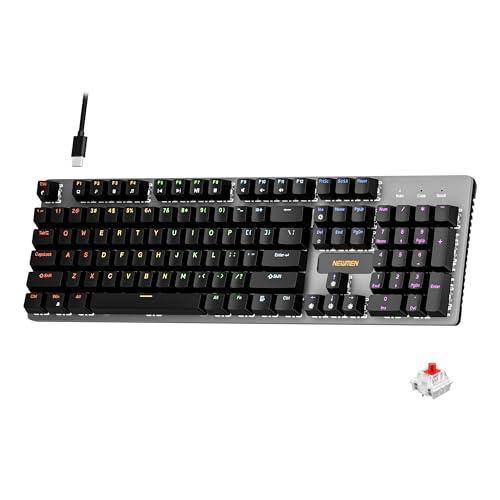
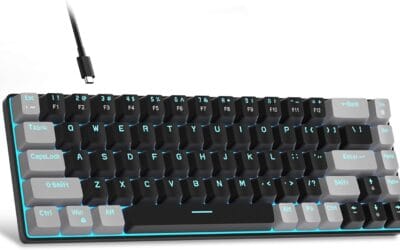
The catch is that brown switch quality varies a lot. Some boards have a crisp bump; others feel like a red switch with a bit of grit in the middle. If you’re shopping at the low end, don’t buy the word brown alone. Look for the exact switch name, board construction, stabilizer notes, and return policy. In this prompt’s product set, the two available boards are red-switch products, so the Newmen GM325Pro is better used as a budget red example rather than pretending it’s a brown board. Its $20.89 price, 4.8 rating, 104-key layout, rainbow LED backlight, hot-swap support, metal panel, ABS black keycaps, and wired Windows PC support make it a useful low-cost baseline.
Pros
- Hot-swap sockets allow switch experimentation without soldering tools or PCB risk
- Metal top plate delivers firmer typing feel than plastic budget boards at this tier
- Full-key rollover and linear red switches handle rapid inputs for casual gaming
Cons
- Limited owner feedback at time of writing, so long-term reliability is unproven
- RGB is restricted to side lighting only, per-key backlight is fixed rainbow patterns
- ABS keycaps typical at this tier tend to shine and wear faster than PBT
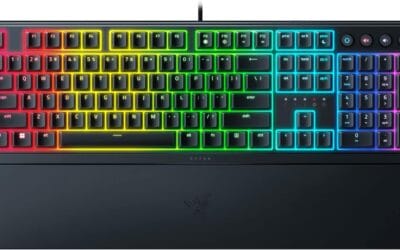
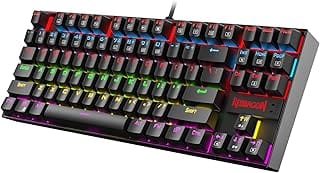
The Newmen GM325Pro is a budget full-size 104-key wired mechanical keyboard aimed at first-time mechanical buyers and casual gamers who want a hot-swap PCB without moving up to enthusiast pricing. It ships with linear red switches, a metal top plate, ABS keycaps, and side-edge RGB lighting.
The defining feature here is the hot-swap socket combined with linear red switches. That gives new users a low-friction path to swap inactile or silent switches later without soldering. Typing fel on metal-plate boards at this tier is usually firmer and less hollow than all-plastic budget pers, based on category norms.
Trade-offs are typical for the price class. Per-key RGB is not suported, only side lighting is true RGB while the top backlight runs 13 preset rainbow effects. ABS keycaps tend to develop shine within months of heavy use, and Newmen does not publish switch lifecycle, polling rate, or NKRO wired specs in the source data.
Buy this if you want a cheap full-size hot-swap platform to learn on and plan to upgrade switches or keycaps later. Skip this if you need per-key RGB, PBT caps, a documented polling rate, or a keyboard with a dep owner review history to validate QC.
Switches and layout: Linear red switches on a full 104-key ANSI layout, with full-key rollover claimed by the manufacturer. Actuation force, travel, and switch brand are not specified in the source. Linear reds typically sit near 45g actuation and 4m total travel in this category.
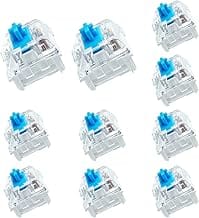
Hot-swap PCB: Sockets accept standard MX-style switches, so tactile, clicky, or silent linear options from third parties drop in without soldering. Pin compatibility (3-pin vs 5-pin) is not specified, buyers should confirm before ordering replacement switches.
Build and lighting: Metal top plate over ABS black keycaps. RGB is limited to the side edge, while the top backlight cycles through 13 preset rainbow patterns rather than per-key addressable RGB. Case material below the plate is not specified.
Connectivity and software: Wired only via a detachable 1.8m USB cable. FN combos cover F1 to F11 media and calculator shortcuts. Customization software suports key remap, macro recording, and lighting tweaks, though poling rate and software platform support are not specified.
Real-world scenarios
Competitive shooters and fast movement
Pick reds if your keyboard is mainly for shooters, battle royale games, or anything with constant movement keys. Linear travel makes repeated inputs feel easy, and the lack of a bump means your fingers won’t catch on the switch during quick corrections. You’ll still need a stable board and decent key rollover, but the switch feel won’t fight you.
Writing, coding, and school work
Browns make more sense if the keyboard spends six hours in documents and one hour in games. That tactile cue can make typing feel more intentional, especially if you don’t like the floaty feel of light reds. Not everyone types faster on browns, though. Some people bottom out every key anyway, which reduces the benefit.
Shared room, apartment, or office desk
Quiet red variants usually win here. The Cherry KC 200 MX uses MX2A Silent Red switches and a metal plate frame, so it fits a restrained desk better than a loud clicky board. Browns can be acceptable too, but the final sound depends on the case, foam, stabilizers, and typing force. If your roommate hears the spacebar through a wall, the switch color isn’t the only issue.
First mechanical keyboard under $60
For a first board, price and layout may matter more than the red-versus-brown debate. A 104-key layout keeps the numpad, dedicated function row, and navigation cluster, which helps if you’re coming from a standard office keyboard. The Newmen GM325Pro’s $20.89 price is extremely low for a mechanical-style gaming board, while the Cherry’s $56.31 renewed price buys a more office-focused design from a better-known switch brand.
Pricing and availability
The two available products in this batch both point toward the red-switch side. The Newmen GM325Pro is the bargain pick at $20.89 with a 4.8 rating and a full 104-key wired layout. It lists linear red switches, rainbow LED backlighting, hot-swap support, a metal panel, and ABS black keycaps for Windows laptop and desktop PCs. At that price, we’d treat it as a low-cost way to learn whether you like linear switches before spending more on a custom board or a name-brand gaming model.
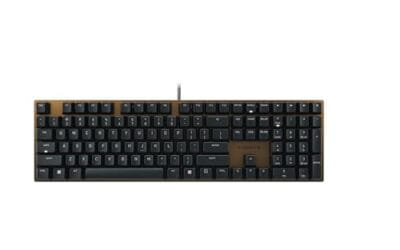
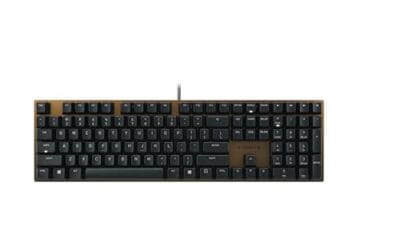
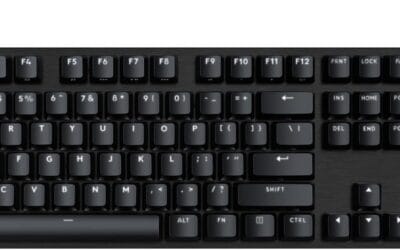
The Cherry KC 200 MX costs $56.31 renewed and carries a 4.0 rating. Its listing names MX2A Silent Red switches, a modern design, and a metal plate frame. Cherry’s switch history matters to many keyboard buyers, but renewed condition also means you’ll want to inspect the return window, key shine, stabilizer noise, and whether the layout matches the listing photos. If you specifically want browns, neither product should be treated as a true brown-switch sample. Better to wait for the right listing than buy the wrong feel.
Which to buy
Buy red switches if you play fast games, prefer a smooth keypress, share a room, or don’t want tactile feedback interrupting repeated inputs. They’re also the safer first mechanical switch for many buyers because there isn’t a bump to dislike. If noise is your main concern, prioritize Silent Red or dampened linear switches, then add a desk mat and avoid hammering the spacebar. Small changes. Big difference.
Buy brown switches if your keyboard is mostly for typing and you want a gentle signal under each press. They won’t turn a cheap board into a premium one, and they won’t guarantee fewer typos, but they can feel more controlled during long writing sessions. In this product set, the better budget red example is the Newmen GM325Pro because it lists linear red switches, a 104-key layout, hot-swap support, and a $20.89 price. If you’d rather spend more for a quieter office board, the Cherry Silent Red option is the cleaner fit.

Pros
- MX2A Silent Red linears actuate quietly, good fit for open-plan offices
- Metal plate frame keeps chassis stiff and reduces caseping under typing
- Cherry Gold-Crosspoint contacts rated for 50 million keystrokes on this variant
- Full-size layout with dedicated numpad suits data entry and spreadshet work
Cons
- Renewed unit with no owner fedback loged yet, cosmetic and wear condition varies
- Silent Red linears lack tactile bump, typists who prefer fedback should pick Brown
- Source data omits connectivity, cable type, polling rate, and dimensions
The Cherry KC 200 MX is a full-size office-focused mechanical keyboard sold here as a Renewed unit in Bronze with MX2A Silent Red linear switches. It targets office typists, developers, and finance or admin users who want Cherry switch fel and a metal plate frame without the RGB and gamer styling of enthusiast boards.
The defining feature is the MX2A Silent Red switch, Cherry's updated linear with dampened stems aimed at reducing bottom-out and return noise. Cherry rates this variant for 50 million keystrokes. Based on the linear profile, expect smooth actuation with no tactile bump, which suits fast touch typists and users on frequent video calls.
Trade-offs are typical at this tier and Renewed status. Silent Red linears are polarizing, users coming from Browns or Blues will miss the tactile feedback, and the source does not specify polling rate, connection type, cable, keycap material, or dimensions. As a Renewed listing, cosmetic condition and remaining switch life depend on the refurbisher rather than a factory-fresh baseline.
Buy this if you want a quiet full-size Cherry mechanical for office or shared-space use and value the metal plate build over RGB features. Skip this if you prefer tactile or clicky switches, need confirmed wireless or USB-C connectivity, or want a waranty profile equivalent to new stock.
Switches: Cherry MX2A Silent Red, linear with integrated dampeners, made in Germany with Gold-Crosspoint contacts. Rated for 50 million keystrokes on this variant, versus 100 million on MX2A Brown. Linear travel with no tactile bump favors light, fast keypresses over deliberate typing fedback.
Build: Metal plate frame under the switches, which stiffens the deck and cuts flex compared with plastic-only office boards. Cherry positions the KC 200 MX as a slim modern design, though exact case height, weight, and keycap material are not specified in the source data.
Layout and indicators: Full-size layout retains the dedicated numpad and function row, which maters for spreadsheet,ERP, and accounting workflows. White LED status indicators are built into Caps Lock, Scroll Lock, and Num Lock keys, avoiding a separate indicator strip and keeping the top edge clean.
Gaming fit: Silent Red linears work for casual gaming and MMO or productivity crossover use given their light linear fel, but the source does not list polling rate, N-key rollover, or onboard profiles, so competitive esports buyers should confirm specs before committing.
Common questions
Are red switches better than brown switches for gaming?
For many players, yes, reds feel better for gaming because the linear press is smooth and easy to repeat. That doesn’t mean browns are bad for games. It means reds tend to feel less busy under movement keys, especially in shooters and action titles.
Are brown switches actually quiet?
Browns are usually quieter than clicky blue switches, but they’re not automatically quiet. The bump doesn’t click, yet the keycap can still hit the top housing or bottom out against the plate. If quiet operation matters, a Silent Red board, foam, lubed stabilizers, and softer typing style help more.
Do red switches cause more accidental keypresses?
They can if you’re heavy-handed or rest your fingers on the keys. Red switches are often light, and without a tactile bump, there’s less warning before actuation. If that bothers you, browns or heavier linear switches may feel safer.
Should programmers use brown switches?
Many programmers like browns because the tactile bump adds feedback during long typing sessions. Others prefer reds because they’re smoother and less tiring. If you code for hours, layout, wrist angle, keycap profile, and sound may matter as much as the switch color.
Is a cheap red-switch keyboard worth buying first?
Yes, if you treat it as a learning purchase and not your forever board. A budget model like the Newmen GM325Pro lets you try a full-size linear red layout for $20.89. If you like the feel but want better sound later, then you’ll know what to upgrade.







Write Your Review
No reviews yet. Be the first to share your experience!