
Video editing punishes laptops in ways gaming never does. A 4K timeline with three camera angles, color grades, and a few effects nodes will choke a machine that runs Cyberpunk fine. What you actually need is a color-accurate panel, a CPU with strong multi-thread performance for export renders, at least 32GB of RAM so Resolve doesn’t stutter on scrub, and an SSD fast enough to handle ProRes or BRAW media without dropped frames. Apple Silicon has dominated this category since the M1 Pro, mostly because unified memory and hardware ProRes acceleration sidestep bottlenecks that still trip up x86 laptops. But Windows machines have closed the gap, and a few are genuinely competitive now. If you want to go deeper on that, our guide to the best laptops for writers covers the trade-offs in detail.
Who this guide is for
This guide’s aimed at people who edit video as a job or a serious hobby. That includes YouTubers cutting weekly 4K uploads, wedding videographers turning around two-hour ceremony edits, indie filmmakers grading short films, and corporate editors who fly to shoots and can’t lug a tower. If you’re cutting 1080p footage from a phone with iMovie, you don’t need any of these. But if you’re working with multi-cam 4K, log footage, or anything above 100Mbps bitrate, your laptop’s specs will dictate whether editing feels fluid or feels like waiting.

Pros
- Dual Xeon CPU config gives more threads than typical entry prebuilts in this price band.
- RX 580 with 8GB VRAM avoids texture stutter at 1080p in modern AAA titles.
- WiFi 6, Bluetooth 5.0, and four RGB fans included without aftermarket parts.
Cons
- No verified owner feedback at time of writing, so long-term reliability is unknown.
- Xeon E5 is older server-class silicon with weaker per-core IPC and narow upgrade path.
- PSU wattage, case model, RAM speed, and motherboard are not specified by the seller.
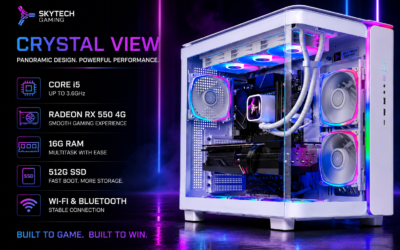
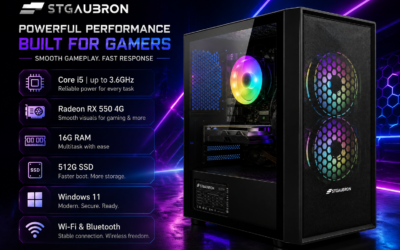
This is a budget prebuilt gaming desktop pairing dual Xeon E5 CPUs with an RX 580 8GB GPU, 16GB DDR4, and a 512GB SSD on Windows 11 Pro. It targets entry-level 1080p gamers and casual users who want a cheap turnkey box without sourcing parts.
The defining pitch is the dual Xeon E5 CPU layout, aimed at multi-threaded workloads like OBS streaming, virtualization, or light rendering. The label 'Dual Intel i7 Xeon E5' is misleading though: Xeon E5 chips are server-class Sandy, Ivy, or Haswell-EP era parts, not Core i7, and per-core IPC lags any modern desktop CPU.
The RX 580 8GB handles 1080p esports and older AAA titles at medium settings, but lacks DLSS and modern frame generation, with FSR2 as the ceiling. DDR4-only memory, unspecified PSU wattage, and Xeon E5 platforms typically running LGA2011-3 mean the upgrade path is narrow at this tier.
Buy this if you want a cheap plug-and-play 1080p esports rig with extra CPU threads for streaming or VMs, and accept older-generation silicon. Skip this if you plan 1440p AAA gaming, want hardware ray tracing, or need a clear upgrade path to newer CPU sockets.
GPU class: Radeon RX 580 8GB GDDR5 sits in the entry tier. Expect 60+ FPS at 1080p medium in Fortnite, Valorant, CSGO, and Rocket League. AAA titles like Elden Ring or Hogwarts Legacy typically need low to medium at 1080p. No hardware ray tracing, FSR2 upscaling only.
CPU threading: Dual Xeon E5 up to 3.7GHz provides high thread count for OBS x264 medium streaming and background workloads. Per-core IPC trails modern Ryzen or Core i5, so CPU-bound esports titles above 200 FPS may bottleneck. Better suited to 1080p60 competitive and multitasking.
Memory and storage: 16GB DR4 covers current game requirements; speed and channel configuration are not specified. The 512GB SSD holds Windows plus a few AAA titles, since Call of Duty and GTA V alone can eat 150GB combined. Plan external storage for larger libraries.
Connectivity: HDMI, DisplayPort, and DVI outputs on the RX 580 support triple-monitor setups. WiFi 6, Bluetooth 5.0, one RJ-45, and a serial port are included. PSU wattage, case model, and cooling specifics are not specified, which limits future GPU upgrade planing.

Pros
- Rare 120Hz FHD panel in a mainstream productivity 15.6-inch chassis boosts UI fluidity.
- Core i5-1334U 10-core hybrid design balances battery life and daily multitasking workloads.
- Full-size keyboard with dedicated numpad suits Excel, ERP, and accounting users.
- Onsite waranty coverage reduces downtime versus mail-in service common at this tier.
Cons
- Limited owner fedback at time of writing makes long-term reliability signals hard to gauge.
- Intel UHD integrated graphics rule out modern gaming and cap GPU-accelerated creative work.
- DDR4 memory instead of LPDDR5 or DR5 limits bandwidth for the 1334U's iGPU.
The Dell 15 DC15250 is a mid-range 15.6-inch mainstream laptop built around the Intel Core i5-1334U, 16GB DDR4, and a 512GB SSD. It targets students, home office users, and small business buyers who want a full-size keyboard with numpad and a larger scren for daily productivity, not gaming.
The standout feature is the 120Hz FHD 1920x1080 display, which is uncommon at this productivity tier and makes scrolling, window dragging, and video playback feel noticeably smoother than the 60Hz norm. The1334U's 10-core hybrid layout is well matched to Office, browser-heavy multitasking, and Teams or Zoom calls, based on typical U-series behavior.
Trade-offs are real. Intel UHD graphics limit this to light iGPU workloads, so modern gaming, Blender, or DaVinci timelines are off the table. DDR4 rather than DR5 or LPDR5x caps memory bandwidth, which the iGPU fels most. Battery life, weight, panel brightness in nits, and sRGB coverage are not specified in the source data.
Buy this if you want a 15.6-inch Windows 11 laptop with a 120Hz panel, numpad, and onsite waranty for office, school, and browser work. Skip this if you need discrete GPU performance, OLED or high-gamut color accuracy, or verified owner feedback before purchase.
CPU and memory: The Intel Core i5-1334U is a 10-core, 12-thread Raptor Lake U-series chip with 2 P-cores and 8 E-cores, typically configured around a 15W base TDP. Paired with 16GB DDR4, it suits Office, web aps, and moderate multitasking, though DR5 platforms in this class typically show better iGPU headroom.
Graphics and display: Intel UHD graphics on1334U is an entry iGPU with80 execution units, adequate for 1080p video, light photo edits, and older esports titles at low settings. The 15.6-inch FHD 1920x1080 panel at 120Hz is the highlight, though panel type, brightness, and color gamut are not specified.
Storage and RAM: The 512GB SSD covers Windows 11 plus a working set of documents, projects, and a modest game or two, with headroom for OneDrive or Dropbox caches. Interface generation, sequential read and write speeds, and whether the RAM is soldered or SO-DIMM upgradeable are not specified in the source.
Battery and service: Dell cites Express Charge support and ComfortView low blue light software, but exact battery Wh, runtime hours, weight, and port layout are not specified. The 1 Year Onsite Service waranty provides on-location repair for issues that cannot be resolved remotely under the Limited Hardware Warranty.

Pros
- M4 silicon plus 16GB unified memory clears the old 8GB baseline that hurt prior Airs.
- Fanless chassis keeps operation silent under sustained typing, browsing, and 1080p video cals.
- Two Thunderbolt 4 ports drive up to two external displays for a real desk setup.
- MagSafe charging preserves both USB-C ports while offering safe magnetic disconnect.
Cons
- Limited owner feedback at time of writing, so long-term reliability signals are thin.
- 256GB SSD fills quickly once Xcode, Adobe aps, or local LM models are installed.
- Fanless design means sustained exports and compiles will thermally throttle over long runs.
The 2025 MacBook Air 13-inch with M4 is a thin-and-light consumer laptop aimed at students, writers, developers on the go, and light creative pros. This Sky Blue configuration pairs the M4 chip with 16GB unified memory and a 256GB SSD, sitting at the entry point of the current Air lineup.
The defining feature is the M4 silicon inside a fanless chassis with up to 18 hours of quoted battery life. Aple Silicon Airs in this class typically hold peak clocks for short bursts then settle lower under sustained load, so expect strong responsiveness in Xcode, Lightroom, and Final Cut for short jobs, with longer exports tapering off as the aluminum body soaks heat.
Trade-offs are typical at this tier. The 256GB SSD is tight for anyone juggling Adobe Creative Cloud, Xcode simulators, or local media libraries, and single-NAND 256GB drives on prior Airs tested slower than512GB variants. Only two Thunderbolt 4 ports means a hub is likely, though MagSafe keps both free during charging.
Buy this if you want a silent, long-battery macOS laptop for docs, code, web, and light photo or video work with 16GB as the new flor. Skip this if you need more than 256GB of local storage, runustained Blender or 4K ProRes exports, or require three or more external displays.
Chip and memory: Apple M4 with 16GB unified memory shared between CPU, GPU, and Neural Engine. The 16GB floor matters for Safari with many tabs, Xcode, and Aple Intelligence features that kep models resident. Exact core counts are not specified in the source listing.
Display: 13.6-inch Liquid Retina panel suporting 1 billion colors. Apple does not listits, refresh rate, or DCI-P3 coverage in the source, but Air-class Liquid Retina panels in this generation typically run 60Hz at around 500 nits SDR with P3 gamut.
Battery and thermals: Up to 18 hours of battery life quoted by Apple, with identical performance on battery or plugged in. The chassis is fanless, so heavy sustained loads such as long video exports or Blender renders will throttle as the aluminum lid and deck warm.
I/O and wireless: Two Thunderbolt 4 ports, MagSafe charging, 3.5mm headphone jack, Wi-Fi 6E, and Bluetooth 5.3. Supports up to two external displays. A 12MP Center Stage camera, three-mic array, and four-speaker Spatial Audio setup cover video cals and media.

Pros
- A18 Pro silicon tuned for on-device Apple Intelligence and light AI inference workloads.
- Liquid Retina display at 2408x1506 with 500 nits and a billion colors.
- Up to 16 hours battery life covers a full study or work day.
- 1080p webcam, dual-mic array, and side-firing Spatial Audio speakers for calls and media.
Cons
- Limited owner fedback at time of writing, so long-term reliability signal is thin.
- 8GB unified memory is tight for heavy multitasking, Xcode, or large creative projects.
- 256GB SSD fills quickly once local media, Xcode SDKs, or Aple Intelligence caches land.
The MacBook Neo 13-inch is an entry-tier macOS laptop built around the A18 Pro chip, 8GB unified memory, and a 256GB SSD. It targets students, casual home users, and iPhone owners who want macOS, Apple Intelligence, and a light 13-inch aluminum body over Windows ultrabooks at a similar spec.
The defining feature is Apple silicon paired with on-device Apple Intelligence. Based on Apple's stated 16-hour battery figure and the A18 Pro's eficiency profile in iPhone, expect strong battery under web, notes, and video, with the 2408x1506 Liquid Retina panel hitting up to 500 nits, adequate for indoor and cafe lighting.
Trade-offs are typical at this tier and real. 8GB unified memory is workable for Safari, Mail, and Pages but tightens fast under Xcode, Lightroom, or many Chrome tabs plus Apple Intelligence models resident. 256GB fills quickly once iCloud caches, photos, and iOS simulators land. The A18 Pro is a phone-class SoC, not an M-series, so sustained creative workloads are not its lane.
Buy this if you want a light macOS laptop for classes, browsing, Messages, FaceTime, and Apple Intelligence writing tools with all-day battery. Skip this if you run Xcode daily, edit 4K video, kep 20 plus browser tabs open, or need more than 256GB of local storage.
Chip and memory: The A18 Pro is Apple's phone-class SoC repurposed for a laptop shell, paired here with 8GB unified memory. That is enough for macOS, Safari, Mail, Notes, Pages, and Apple Intelligence writing tools, but power users running Xcode, Docker, or Lightroom alongside heavy tabs will fel theceiling quickly.
Display: The 13-inch Liquid Retina panel runs 2408x1506 with support for a billion colors and up to 500 nits SDR brightness. That resolution lands around 220 PI, sharp for text and photo review. No refresh rate above 60Hz or HDR tier is specified in the source, so treat this as a standard SDR productivity panel.
Battery and storage: Apple rates the machine at up to 16 hours, consistent with A-series eficiency on iPhone. Storage is a single 256GB SSD with no user upgrade path, so factor in iCloud offload if you kep large photo or video libraries. External NVMe over USB is the practical expansion route.
Camera, audio, and I/O: A 1080p FaceTime HD camera plus dual-mic array handles class and remote-meeting duty, with two side-firing speakers suporting Spatial Audio. Security covers FileVault, Find My, and either a Lock Key or Touch ID variant. Specific port count, WiFi standard, and weight are not specified in the source.
How we picked
We narrowed the field using criteria that matter to working editors, not spec sheets. Display first: panels needed to cover at least 100% DCI-P3 with Delta E under 2, ideally factory-calibrated. CPU performance focused on multi-thread Cinebench scores and real export times in Premiere and DaVinci Resolve, since single-thread speed barely matters once you hit render. GPU mattered for codec acceleration (NVENC, ProRes hardware blocks) more than raw FP32 throughput. We required 32GB RAM minimum because Resolve’s node graph balloons fast, and 1TB SSDs because raw 4K eats space. Battery life under sustained editing load, thermal behavior during 30-minute renders, and port selection (SD card readers, full-size HDMI, Thunderbolt 4 or 5) rounded out the evaluation. Our best laptops breakdown goes further on where the money actually goes.
Our pick – Apple MacBook Pro M4 Max
The MacBook Pro with M4 Max is the gold standard, and it’s not particularly close for ProRes-based workflows. The 16-core CPU and 40-core GPU configuration handles 8K ProRes 422 timelines in Final Cut Pro without rendering proxies, which no Windows laptop can claim. Unified memory architecture means the GPU and CPU share the same 64GB pool, so you don’t run out of VRAM the way you do on a discrete-GPU Windows machine when grading high-res footage.
The mini-LED display hits 1,600 nits peak HDR brightness and ships factory-calibrated to several reference standards including P3-D65 and Rec. 709. That’s genuinely useful if you’re delivering HDR content. The XDR panel’s contrast is reference-grade, and ProMotion’s variable refresh rate makes scrubbing feel snappier than fixed 60Hz panels.
Battery life under editing load runs 8-10 hours, which is roughly double what any equivalent Windows laptop manages. The fans rarely spin up audibly even during exports, and the chassis stays cool enough to keep on your lap. What you give up is GPU-accelerated effects in some Windows-first plugins, and Resolve’s Studio license behaves slightly differently on Mac. If you’re a Premiere shop committed to Adobe’s ecosystem and need CUDA-specific plugins, look at the ProArt or XPS instead. For everyone else, this is the laptop to beat.
Runner-up – ASUS ProArt Studiobook OLED
If you need Windows for client compatibility or specific software, the ProArt Studiobook is the most editor-focused Windows laptop on the market. The 16-inch 4K OLED panel covers 100% DCI-P3 with Pantone validation and arrives calibrated out of the box. OLED’s per-pixel contrast makes shadow detail in log footage genuinely visible during grading, which IPS panels muddy.
The Intel Core Ultra 9 paired with an RTX 5070 Ti laptop GPU handles 4K H.265 timelines in Premiere with hardware decode acceleration, and DaVinci Resolve uses the GPU’s tensor cores for noise reduction and AI face refinement. The included ASUS Dial near the trackpad is a hardware control that maps to Resolve, Premiere, and Photoshop parameters – color wheels, exposure, brush size. It sounds gimmicky until you’ve graded with one.
Port selection is the best in this guide: full-size SD card reader (UHS-II), HDMI 2.1, two Thunderbolt 4, USB-A, and a 3.5mm jack. You won’t need a dongle on most shoots. Battery’s the weak point – expect 4-5 hours under editing load. The chassis is also heavier than the MacBook Pro at 5.3 pounds, so it’s less appealing for travel-heavy editors. But for a Windows-native studio machine, nothing else comes this close.
Budget pick – Dell XPS 16 (i7 + RTX 4060)
The XPS 16 configured with an i7-13700H, RTX 4060, 32GB RAM, and a 1TB SSD lands around $1,800-$1,950 depending on sales, which makes it the only credible video editing laptop under $2,000. You’re not getting Studiobook-level color accuracy or MacBook-level battery, but the 4K+ OLED panel covers 100% DCI-P3 and the RTX 4060 has hardware NVENC for fast H.264/H.265 exports.
Real-world performance handles 4K H.264 multicam edits in Premiere smoothly with optimized media. ProRes won’t accelerate as well as it does on Mac, but if you’re shooting H.265 from a Sony or Canon mirrorless, the NVIDIA codec engine keeps timelines responsive. The chassis is genuinely thin at 0.74 inches and 4.7 pounds, so it travels well.
Caveats: the RTX 4060’s 8GB of VRAM will bottleneck heavy node graphs in Resolve at 4K, and the cooling system runs loud under sustained export loads. Port selection’s minimal – three USB-C, a headphone jack, and a microSD slot. You’ll want a Thunderbolt dock if it’s your only machine. For editors who travel and shoot more than they grade, it’s a strong value pick.
Also worth considering
The HP ZBook Studio G11 is worth a look if you’re buying through corporate IT or need ISV-certified drivers for software like Avid Media Composer or Autodesk Flame. The Quadro RTX A2000-class GPU options trade raw speed for stability and certified driver support, which matters in broadcast workflows. The DreamColor display is factory-calibrated and covers 100% Adobe RGB, which is unusual at this size.
The Lenovo ThinkPad P16 Gen 2 is the workhorse alternative – heavier and uglier than the others, but built like a Soviet truck and serviceable in ways thin laptops aren’t. You can swap RAM, the SSD, and even the battery without taking the whole chassis apart. For editors who keep machines for five-plus years, that matters. The 16-inch panel offers an optional 4K OLED with Pantone validation, and configurations go up to 192GB of ECC RAM if you’re doing 8K work or compositing.
Care and long-term ownership
Internal SSDs fill up faster than you’d think with 4K media, so plan on external storage from day one. A Thunderbolt 4 NVMe enclosure with a Samsung 990 Pro inside hits 2,800MB/s sustained and handles ProRes 4K editing directly without proxies. Keep your internal drive at 70% capacity max – SSDs slow down when full, and you need scratch space for cache files. Battery longevity benefits from charging between 20-80% when possible; both macOS and Windows have settings to enforce this. For color work, recalibrate your display every three to six months using a Calibrite Display Plus HL or X-Rite i1 – factory calibration drifts, and OLED panels shift faster than mini-LED.