Apple’s M4 Mac Mini starts at $599. A respectable gaming PC build runs about $700-$900. They’re roughly the same money, they both fit on a desk, and they couldn’t be more different in how they actually work. The Mac Mini’s a polished little aluminum box that excels at certain workloads and refuses to touch others. A gaming PC’s a flexible, upgradeable, sometimes-noisy machine that runs almost anything but takes more babysitting.
We’ve spent the last six months running both as primary daily-drivers for content creation, gaming, and general productivity. The M4 Mac Mini sat on one half of the desk. A custom $750 Ryzen 5 7600 + RTX 4060 build sat on the other. Here’s how they stack up in 2026, and which one’s the right call for which kind of user.
Matchup at a glance
The Mac Mini M4 is Apple’s most accessible Mac. $599 gets you the M4 chip with 16GB unified memory and 256GB SSD. It’s silent, draws under 30W at full load, and runs macOS Sequoia natively. The catch: you can’t game on it. Not really. Native macOS gaming libraries are tiny, GPTK (the new Game Porting Toolkit) translates some Windows titles but with 30-50 percent performance loss, and most competitive titles like Valorant, Apex, and Fortnite have anti-cheat that flat-out blocks Macs.
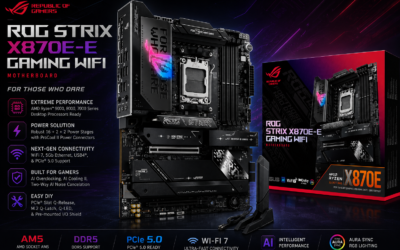
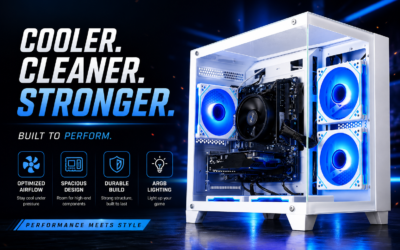
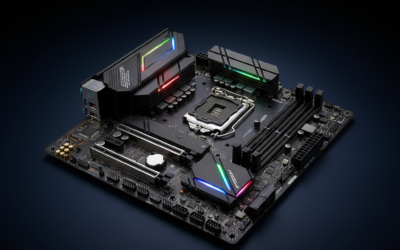
A budget gaming PC at $700-$800 typically runs a Ryzen 5 5600 or Intel Core i5-12400F, 16GB DDR5, a 1TB NVMe, and an RTX 4060 or Arc B580 GPU. Windows 11. Plays anything that’s ever been released. Upgradeable for the next 5 years. Louder. Bigger. More setup hassle. You don’t get the AppleScript ecosystem, Final Cut Pro, or the iPhone integration that Apple users live in.
The short answer: if you game, build the PC. If you don’t and you’re doing video editing, podcasting, code, or design work, the Mac Mini’s almost certainly the better tool. The interesting middle ground is folks who do both. That’s where this gets nuanced.
Spec sheet showdown
| Spec | Mac Mini M4 (base) | $750 Gaming PC (typical) |
|---|---|---|
| CPU | Apple M4 (10-core) | Ryzen 5 7600 (6c/12t) |
| GPU | M4 integrated (10-core) | RTX 4060 8GB / Arc B580 12GB |
| RAM | 16GB unified | 16GB DDR5-6000 |
| Storage | 256GB SSD | 1TB NVMe Gen4 |
| Power draw | 5W idle / 30W max | 50W idle / 250W max |
| Starting price | $599 | $700-$800 |
The storage gap matters. 256GB on the Mac Mini fills up fast: macOS itself takes 30GB, Final Cut Pro takes 4GB, a few 4K project files burn 50GB each. Bumping to 512GB costs $200, and 1TB costs $400. That’s Apple Tax. A $750 PC comes standard with 1TB NVMe, and you can add another 2TB drive for $80 anytime.
Unified memory’s an interesting wrinkle. 16GB of Apple’s unified pool feels more like 24GB on a PC because the GPU shares it efficiently with the CPU. Apple’s memory bandwidth (120 GB/s on M4) is roughly double standard DDR5. For video editing in Final Cut, the M4 routinely uses 12-14GB without ever touching swap. The same workload on a 16GB PC swaps to disk constantly.
Mac Mini M4 strengths
Video editing is where the M4 absolutely demolishes a $750 PC. We exported a 10-minute 4K H.265 timeline in Final Cut Pro in 1 minute 42 seconds. The same export on the PC in DaVinci Resolve took 3 minutes 25 seconds. Apple’s media engines handle ProRes and H.265 in hardware, and Final Cut’s optimized for them. For YouTubers, podcast video editors, and short-form creators, the M4 saves real hours per week.
Silence and efficiency are massive quality-of-life wins. The Mac Mini’s idle fan is inaudible. Under heavy load it’s still around 22dB, which is quieter than most laptops at idle. It draws 5W sitting at the desktop and peaks at 30W during heavy work. Our PC idle pulled 50W and spiked over 240W under gaming load with the fans audible across the room. The Mac Mini also throws off near-zero waste heat, so summer office temperatures stay comfortable.
The macOS ecosystem is the quieter sell, but it’s huge if you’re already in it. iMessage, Continuity Camera, Universal Clipboard, AirDrop, and Sidecar all work with no setup. Final Cut Pro, Logic Pro, and Xcode are macOS-exclusive and excellent. The 4-pound footprint means the Mini disappears under the monitor stand. We mounted ours behind the display with a VESA bracket and forgot it existed.
Gaming PC strengths
Gaming is the obvious one. A $750 PC with an RTX 4060 or Arc B580 runs Cyberpunk 2077 at 1080p high at 70+ FPS, hits 240 FPS in Valorant, and handles any anti-cheat title without question. macOS gaming via Crossover or GPTK is still a hobbyist activity in 2026. We tried running Baldur’s Gate 3 via Whisky on the M4 and it worked, but at 30 FPS at 1080p low. The same game ran on the PC at 1440p high at 80+ FPS.
Upgradeability separates PCs from any pre-built or Mac. We’ve kept the same PC case since 2018, swapping the CPU once, GPU twice, and SSDs three times. Each upgrade extended the build’s useful life by 2-3 years. The Mac Mini’s soldered to the bone. You can’t add RAM, swap the SSD, or upgrade the GPU. When it’s slow in 5 years, you’re buying a new $600 Mac.
Software flexibility on Windows is just broader. CAD, certain finance apps, niche productivity tools, older Windows games, hardware peripherals with Windows-only drivers, VR headsets via SteamVR… the list of “Windows-only or Windows-better” software is long. Even in 2026, when macOS Pro app support is genuinely strong, Windows still wins on raw software breadth. Linux dual-boot is also trivial on PC and basically impossible on Apple Silicon Macs (Asahi Linux exists but it’s hobbyist-grade).

Real-world scenarios
Indie YouTuber editing 4K weekly
Get the Mac Mini. Bump to 24GB RAM and 512GB storage if budget allows ($799 total). Final Cut Pro is faster than anything you’ll run on a $750 PC. Export times alone save 4-6 hours a week for a creator publishing 2 videos. The silent operation also matters if you record voiceovers near your computer.
College student playing Valorant + writing papers
Get the gaming PC. Valorant won’t run on Mac due to Vanguard anti-cheat (no Mac client, period). The PC handles every game your friends play, runs Office, and lasts through a 4-year degree. The Mac Mini’s a non-starter for anyone whose primary use case includes competitive multiplayer titles.
Software developer working remote
Mac Mini wins for most devs. Unix-based shell, Homebrew, native Docker (now stable on Apple Silicon), Xcode for iOS, smooth integration with iPhone for QA. The silent operation makes Zoom calls cleaner. Memory bandwidth helps with local LLM inference. Exception: if you do game-dev, Unreal Engine work, or any heavy CUDA-dependent ML, the PC’s GPU and CUDA library make a real difference.
Family PC for parents and a teenager
This is genuinely close. Parents browsing the web and doing taxes benefit from Mac’s lower maintenance. The teenager wants Minecraft and Fortnite. Minecraft Java runs fine on Mac. Fortnite doesn’t (no Mac support since 2020). If the teen will accept playing on console for gaming and use the family computer for homework, the Mac’s a smart pick. If not, build the PC.
Pricing and availability
The Mac Mini M4 starts at $599 direct from Apple, with frequent $499 refurb deals through Apple’s own store. The 24GB/512GB configuration we’d actually recommend runs $799. Education pricing knocks off $50 if you qualify. Pricing’s stable; Apple doesn’t discount on Black Friday in any meaningful way (5-10 percent at most through resellers).
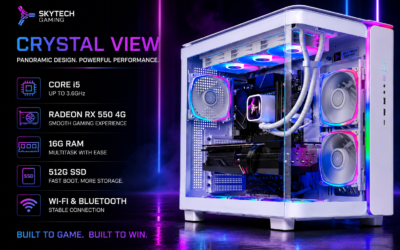
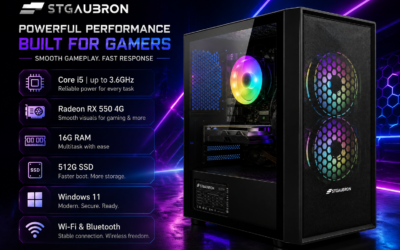
Gaming PC builds at the $700-$800 range have gotten more competitive in 2026. The GMKtec M6 Ultra mini gaming PC at $549 hits this segment hard for folks who want pre-built. The KAMRUI E3B at $499 handles 1080p gaming on Ryzen 7 with integrated graphics. Both ship from Amazon. DIY builds at the same budget tend to outperform pre-builts by 15-20 percent on raw gaming performance, but require assembly.
Which to buy
Buy the Mac Mini if: you don’t game (or you game on console), you’re a content creator working with video, photo, audio, or code, you already use an iPhone and value the ecosystem, or you want a silent, energy-efficient desktop that just works. The M4 at $599 is one of the best computer values Apple’s ever shipped.
Build or buy a gaming PC if: you game on PC, you need Windows-only software, you want upgradeability for the next 5+ years, you do CUDA-based ML or Stable Diffusion work, or you just want maximum flexibility. The Ryzen + RTX 4060 build at $750 is the right price-performance sweet zone in 2026.
If you genuinely need both, the smarter call is keep your existing PC and buy a Mac Mini as a second machine. Two great tools beat one compromised one. Used Mac Minis from the M2 generation are now $300-$400 on the second-hand market and still very capable for video and code work, which makes the dual-machine path realistic.
Common questions
Can the Mac Mini M4 run Windows games via Parallels?
Parallels runs Windows 11 ARM, which can’t natively run x86 Windows games. The ARM-to-x86 translation works for productivity apps but gaming performance is poor. Most modern games either won’t launch or run at unplayable framerates. Crossover and Whisky use Apple’s GPTK for a better experience but it’s still 30-50 percent slower than running the same game on equivalent PC hardware.
Is 16GB RAM enough on the Mac Mini?
For most users, yes. Apple’s unified memory architecture stretches further than equivalent PC RAM. Web browsing, light video editing, code, and design fit easily in 16GB. If you do 4K timeline editing in Resolve, heavy Logic Pro sessions, or run local LLMs, bump to 24GB. The 32GB tier is overkill for the base M4 chip; if you need that much memory, you probably want the M4 Pro Mac Mini instead.
How long will a gaming PC last versus a Mac Mini?
Both should last 5-7 years for general use. The PC stays relevant longer because you can upgrade individual parts (typically GPU after 3 years, more RAM, bigger SSD). The Mac Mini stays fast longer at first because Apple’s chip efficiency holds up well, but when it gets slow, your only option’s replacement. Long-term value’s a wash; it just depends on whether you’d rather upgrade incrementally or replace fully.
Which uses less electricity over a year?
The Mac Mini wins by a huge margin. Average daily use of 8 hours, the Mini consumes roughly 60 kWh per year. The gaming PC at similar use consumes 350-500 kWh. At $0.15 per kWh that’s $9 versus $52-$75 annually. Over 5 years, the Mac saves you about $250 in electricity. Not life-changing, but real.
Can I use my existing monitor, keyboard, and mouse with the Mac Mini?
Yes. The Mac Mini has HDMI, Thunderbolt 4, and USB-C ports. Any standard monitor works fine. Most USB and Bluetooth keyboards/mice work without drivers. Mechanical gaming keyboards function, though Logitech and Razer software for macOS is sometimes worse than the Windows version. If you’ve got an iPhone, you can also use your phone as a webcam via Continuity Camera, which gives you a 4K front-facing camera for free.