

Buy a new power supply in 2026 and you’ll see two labels fighting for your attention: ATX 3.0 and ATX 3.1. The spec jump sounds tiny, one tenth of a version number, yet it changed the physical connector that feeds a 600-watt graphics card. Intel published ATX 3.0 in 2022 and quietly revised it to ATX 3.1 in mid-2024 after real melted-connector reports piled up. If you’re shopping around a 4090 or 5090 class GPU, that revision matters more than the sticker suggests. Our research pulled from spec sheets and owner feedback, and the short version is that price tier and connector generation don’t always line up the way you’d expect. For deeper picks, see our roundups of the best ATX 3.1 power supply for 2026 and the best 1000W power supply.
Matchup at a glance
Both standards share the same core promise: handle sudden GPU power spikes without tripping protection. Modern graphics cards can pull double their rated draw for a few milliseconds during a load transient, and ATX 3.0 was the first spec built to swallow those excursions, up to 200 percent of rated wattage for short bursts. ATX 3.1 keeps that transient handling and layers a safer connector on top. So the “which is better” question isn’t really about raw performance. It’s about the connector, the tolerances, and how much you trust a cable that’s been reworked once already.
Here’s the wrinkle. A cheap ATX 3.1 unit isn’t automatically better than a premium ATX 3.0 unit built by a serious brand. The 3.1 revision fixed a design flaw, sure. But build quality, efficiency rating, and connector seating habits still decide whether your rig runs cool and quiet for five years. That’s the tension we’ll unpack.
One more thing worth clearing up before we dig in. Both specs also address idle power draw and low-load efficiency, which matters if your PC spends most of its life on the desktop rather than at full tilt. That part didn’t change much between the two revisions, so if someone tells you 3.1 sips less power at idle than 3.0, they’re mixing up the ATX standard with the 80 Plus efficiency rating. Two different things, and it’s an easy mistake to make when the labels sit side by side on a box.
Spec sheet showdown
| Spec | ATX 3.0 | ATX 3.1 | Corsair SF750 (ATX 3.1) | be quiet! Pure Power 13 M (ATX 3.1) |
|---|---|---|---|---|
| Year introduced | 2022 | 2024 | 2024 model | Current |
| GPU connector | 12VHPWR (16-pin) | 12V-2×6 (16-pin) | 12V-2×6 ready | PCIe 5.1 ready |
| Transient handling | Up to 200% burst | Up to 200% burst | Yes | Yes, for overclocked GPUs |
| Efficiency tier | Varies | Varies | 80 Plus Platinum | 80 Plus Gold |
| Form factor / wattage | Any | Any | SFX, 750W | ATX, 1000W |
| Typical price | Discounted stock | Current shelf | $159.99 | $139.90 |
Notice the connector row. That’s the whole ballgame. ATX 3.0 shipped the original 12VHPWR plug, while ATX 3.1 switched to 12V-2×6, which shortens the sense pins and lengthens the power terminals so a half-seated cable simply won’t deliver full current instead of arcing.
ATX 3.0 strengths
Don’t write off ATX 3.0. It brought native transient handling to consumer power supplies for the first time, which ended the era of oversizing your PSU by 300 watts just to survive GPU spikes. A quality 3.0 unit from a reputable brand still runs a 4080 or 4090 without drama, and right now those units get steep clearance discounts as retailers clear inventory for 3.1 stock. If you’re a value-focused builder who seats connectors carefully and checks them, a Platinum-rated 3.0 unit can be the smarter dollar-per-watt buy.
The catch is the original 12VHPWR connector. It works, but it’s less forgiving of a lazy install. Owner reports that circulated in 2023 pointed almost entirely at partially inserted plugs. Push it in fully, hear the click, route the cable without a tight bend near the plug, and a good 3.0 unit is reliable. You just have less margin for error. That’s the honest tradeoff.
Another point in 3.0’s favor is cable availability. Because the standard has been out since 2022, replacement and custom sleeved cables for it are everywhere and cheap. If you love a tidy build with color-matched cables, a mature 3.0 platform gives you more options than a brand-new unit that just hit shelves. Small thing, but it matters to the people who care about it.
ATX 3.1 strengths
ATX 3.1 exists for one reason: peace of mind. The 12V-2×6 connector was engineered so that a poorly seated cable fails safe, delivering reduced power rather than concentrating heat on a couple of pins. For anyone running a 5080 or 5090 that can spike hard, that’s a meaningful safety net. The spec also tightened the sensing behavior on the sideband pins, so the card knows more reliably how much power the connection can actually carry.
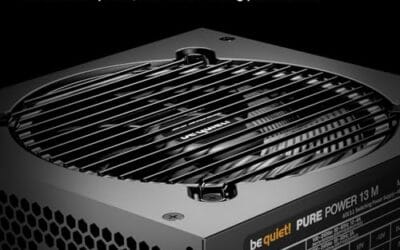
The be quiet! Pure Power 13 M 1000W is a clean example of what a modern 3.1 unit looks like at a fair price. At $139.90 with a 4.8 rating, it’s 80 Plus Gold certified, uses a single rail, and runs a semi-passive 120mm fan that stays off under light load, so your machine is silent at the desktop. It’s rated for overclocked GPUs and PCIe 5.1 cards, which means headroom for a power-hungry build without stepping up to a 1200-watt unit you don’t need. That combination of quiet operation, real wattage, and the safer connector is exactly why 3.1 keeps winning shopping carts.

Pros
- Native 12V-2x6 connector on ATX 3.1 platform ready for RTX 40 and PCIe 5.1 GPUs.
- Handles power excursions up to 2000W transient, headroom for RTX 4080 and 4090 class spikes.
- Semi-passive zero-RPM mode below moderate load keps idle acoustics near inaudible.
- LLC topology with single 12V rail delivers stable voltage regulation for overclocked GPUs.
Cons
- Limited independent owner feedback available at time of writing, riple and hold-up data unverified.
- Only four PCIe 6+2-pin connectors, tight for legacy multi-GPU or high-CPU-EPS custom lop builds.
- 80 PLUS Gold trails Platinum and Titanium units at similar wattage on sustained efficiency.
The be quiet! Pure Power 13 M 1000W is a high-end ATX 3.1 PSU aimed at builders pairing a Ryzen 7000/9000 or Core Ultra CPU with an RTX 4070Ti Super,4080 Super, 4090, or RX 7900 XTX class GPU. It targets buyers who want native 12V-2x6 wiring and transient headroom without stepping up to Platinum-tier pricing.
The defining trait is ATX 3.1 compliance with power excursion handling up to double the rated 1000W, meaning brief 2000W spikes from modern GPUs should not trip OCP. Combined with the single 12V rail and LLC topology, this suits overclocked GPUs where transient behavior, not average draw, tends to triger shutdowns on older units.
Trade-offs are typical at this tier. 80 PLUS Gold is eficient but not Platinum, soustained heavy loads generate more heat than a higher-rated unit. Four PCIe 6+2-pin connectors is standard, though builders running EATX boards with dual EPS plus a 4x8-pin GPU adapter should verify cable counts against the modular panel before buying.
Buy this if you are building a single-GPU gaming or content rig around a 250-450W TGP card and want native 12V-2x6 without paying Platinum prices. Skip this if you need sub-audible acoustics under sustained full load, or if you already own a workingATX 3.0 unit with a 12VHPWR pigtail.
ATX standard: Full ATX 3.1 compliance with native 12V-2x6 connector integration, which corects the sense-pin issue found on early 12VHPWR cables. Supports PCIe 5.1 GPUs at spec, and handles transient power excursions up to 2000W, roughly double the 1000W continuous rating.
GPU pairing: Comfortable for GPUs in the 250W to 450W TGP range, including RTX 4080 Super (320W) and RTX 4090 (450W) with headroom for overclocking. Four PCIe 6+2-pin outputs cover legacy 8-pin GPUs; the native 12V-2x6 removes the need for a 4x8-pin adapter dongle.
Efficiency and cooling: 80 PLUS Gold rated up to 94.4% at optimal load, typically around 50% utilization. The 120mm be quiet! fan runs semi-passive with zero-RPM below a load threshold not specified by the manufacturer, so idle and light workloads should remain silent.
Cabling: Fully modular design, leting builders omit unused SATA and Molex leads. Exact cable lengths and connector counts beyond the four PCIe 6+2-pin and single 12V-2x6 are not specified in source material, verify against your case routing before purchase.
Real-world scenarios
Small form factor gaming build
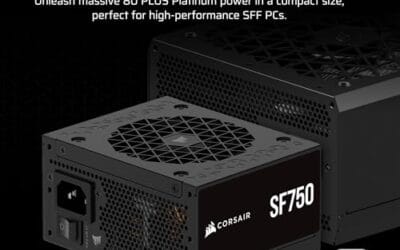
Cramming a strong GPU into an ITX case is where the Corsair SF750 shines. It’s an SFX unit, fully modular, 80 Plus Platinum, and 3.1 compliant with a bracket included for ATX mounting. In a tight case, the safer 12V-2×6 connector really earns its keep because you’re often bending that cable to clear a side panel. Less margin for a seating mistake is the last thing you want in a cramped box.
High-wattage single-GPU rig
Running a 5090 or an overclocked 5080? A 1000W ATX 3.1 unit like the be quiet! gives you burst headroom and the fail-safe connector. This is the scenario where 3.1 is worth paying for even if a 3.0 unit sits cheaper on the shelf.
Budget upgrade on older hardware
If your GPU is a 3060 or a 6700 XT with a normal 8-pin, the connector debate barely touches you. A discounted ATX 3.0 unit is fine. You won’t stress the 12VHPWR plug at all, so spend the savings elsewhere.
Pricing and availability
Price tiers have shuffled since 3.1 stock landed. ATX 3.0 units now sit on discount as brands push them out, so you’ll sometimes find a Platinum 3.0 unit cheaper than a Gold 3.1 unit of the same wattage. The Corsair SF750 at $159.99 carries a premium partly because SFX units always cost more per watt, and partly for that Platinum efficiency. The be quiet! at $139.90 undercuts it while offering 250 more watts, because ATX form factor is simply cheaper to build. Availability on 3.1 is broad now across both SFX and full ATX, so you’re not hunting for stock the way early adopters were in 2024.
Which to buy
For most people building or upgrading in 2026, buy ATX 3.1. The connector fix alone justifies it once you’re feeding any 12V-2×6 graphics card, and the price gap over clearance 3.0 stock has mostly closed. If you’re in a small case, the Corsair SF750 is the pick, that Platinum SFX unit is compact, quiet, and 3.1 ready with the bracket you need for flexible mounting. If you’ve got a roomy ATX case and a hungry GPU, the be quiet! 1000W is the better value per watt.
The only time we’d steer you toward ATX 3.0 is a genuine bargain from a top-tier brand paired with a GPU that uses standard 8-pin power, or a careful builder who’s comfortable double-checking connector seating. Otherwise 3.1 removes a variable you don’t want to think about. Pay the small premium and forget about it.

Pros
- ATX 3.1 compliant with PCIe 5.1 support, resists transient spikes from RTX 50 and RX 9000 series GPUs.
- Zero RPM Mode eliminates fan noise at low and medium loads, a real advantage in acoustically sensitive SFF builds.
- Fully modular design with short SFX cables reduces cable management friction in sub-10-liter cases.
- 105 degree C Japanese capacitors indicate quality component selection typical of high-tier SFX units.
Cons
- Limited owner feedback at time of writing; real-world noise, ripple, and transient performance are unverified by community data.
- Short SFX cables are unsuitable for mid-tower or full-tower cases without aftermarket cable extensions.
- 750W ceiling may fall short for extreme SFF builds pairing a 300W-plus TGP GPU with a high-core-count CPU.
The Corsair SF750 (2024) is a high-end SFX PSU targeting SFF builders who need substantial wattage in a compact footprint. With 80 Plus Platinum certification and ATX 3.1 compliance, it sits at the upper tier of the SFX market, aimed at builders pairing it with current-gen discrete GPUs inside sub-10-liter cases.
The most defining specification here is ATX 3.1 compliance combined with PCIe 5.1 readiness. This means the unit is rated to handle the sharp transient power spikes that RTX 50 and RX 9000 series GPUs can produce, where non-compliant PSUs may trigger overcurrent protection. At 750W, it covers most single-GPU SFF configurations without derating concerns.
The honest trade-off is the review data gap. At time of writing, no substantial owner feedback exists to validate Corsair's noise and ripple claims under real load. The Zero RPM Mode claim and 92mm fan acoustics are based on spec sheets only. Buyers should also note that SFX cable lengths are intentionally short and will not reach connectors in mid-tower or larger cases without extensions.
Buy this if you are building an SFF PC around a single high-TGP GPU and need confirmed ATX 3.1 compliance in a modular SFX unit. Skip this if you want a large ATX case build, need more than 750W for a dual-component high-wattage system, or require extensive owner testing before purchasing.
Form Factor and Mounting: This is a standard SFX form factor PSU, not SFX-L. Verify your case specifies SFX compatibility before purchasing. An SFX-to-ATX bracket is included, allowing installation in ATX-footprint cases, though short cable lengths will require extensions in anything larger than a compact SFF enclosure.
Power Standard and Connector: ATX 3.1 compliant with PCIe 5.1 readiness. The unit supports the 12V-2x6 connector standard, relevant for RTX 40 and RTX 50 series GPUs as well as AMD RX 7000 and RX 9000 cards with high transient draw. Non-ATX 3.1 units can trigger OCP shutdowns above 150 percent peak load spikes.
Efficiency and Thermal Operation: 80 Plus Platinum certification indicates roughly 92 percent efficiency at 50 percent load under 115V. The 92mm PWM fan uses a fluid dynamic bearing and Zero RPM Mode activates at low loads, which in SFF cases where airflow is restricted can noticeably reduce system acoustic output.
GPU Wattage Pairing: At 750W, this PSU pairs appropriately with GPUs up to approximately 300W TGP when combined with a mid-range CPU. For a 320W-plus TGP GPU alongside a 65W-plus CPU, headroom becomes tight and a higher-wattage SFX unit should be considered instead.
Common questions
Is ATX 3.1 backward compatible with older GPUs?
Yes. An ATX 3.1 unit still ships the standard 24-pin, CPU EPS, and PCIe 8-pin cables, so it powers any older card fine. The 12V-2×6 connector is just there for cards that need it.
Do I need a new PSU if I already own an ATX 3.0 unit?
Not necessarily. A good 3.0 unit runs current GPUs well if you seat the connector fully and route it without a sharp bend. The 3.1 upgrade is about a more forgiving connector, not more power.
Can I use a 12V-2×6 cable with a 12VHPWR card?
You can. The connectors are cross-compatible by design. The improvements live in the pin lengths and sensing, so pairing a newer cable with an older card is safe and common.
Does ATX 3.1 improve efficiency or lower my power bill?
No. Efficiency comes from the 80 Plus rating, not the ATX revision. The Corsair’s Platinum tier saves more energy than the be quiet! Gold tier, and that’s true regardless of the 3.0 versus 3.1 label.
What wattage should I pair with a high-end GPU?
For a single 5080 or 5090, 850W to 1000W covers you with transient headroom. That’s why the 1000W be quiet! is a comfortable match, and why we’d point overclockers toward our best 1000W PSU for 2026 shortlist.


























Write Your Review
No reviews yet. Be the first to share your experience!