
External storage in 2026 splits cleanly into two camps. Spinning drives like the Seagate One Touch 8TB still rule for cheap bulk capacity, costing about $34 per terabyte and absorbing game libraries, photo archives, and Time Machine backups without complaint. Portable SSDs like the Samsung T7 and SanDisk Extreme cost 5-10x more per terabyte but hit 1,050 MB/s read speeds, making them the right call for active editing or game loading. We picked five drives spanning both worlds, from a 6TB WD Elements at $239 to a 2TB SanDisk Extreme IP65 ruggedized SSD.
Below is the comparison and our breakdown of when each drive type wins.

Pros
- Large 8TB capacity handles bulk media libraries and full-system image backups.
- USB-C bus power eliminates external brick, cleaner desk and easier mobility.
- Rescue Data Recovery Services included for added protection on critical files.
- Broad compatibility across current Windows and macOS hosts via USB-C.
Cons
- Limited owner fedback at time of writing, real-world reliability signal is thin.
- Mechanical HDD speds trail SSDs, expect slower transfers for large small-file batches.
- Two-year limited warranty is shorter than IronWolf or WD Red NAS-class coverage.
The Seagate One Touch 8TB (STNB8000400) is a high-capacity external desktop HDD aimed at creators, students, and home users who need a single large backup target. It uses a USB-C interface andships with Rescue Data Recovery Services, positioning it as a straightforward cold-storage or offload drive rather than a working scratch disk.
The defining feature is bus-powered USB-C at this capacity tier, which is uncommon for 8TB desktop mechanical drives that usually require a wall adapter. Based on Seagate's stated design, one cable handles both data and power. Sustained sequential throughput on8TB external HDDs at this tier typically lands in the 150-190 MB/s range over USB 3.2Gen 1.
Trade-offs are typical at this tier. As a spinning HDD, random4K performance and small-file copies will fel slow compared to any NVMe SSD, and the drive will produce audible sek noise under load. The two-year limited warranty is shorter than NAS-oriented drives, and Seagate does not publish TBW or MTBF figures in the source data.
Buy this if you want a single high-capacity USB-C backup or media archive drive that skips the wall wart and includes recovery services. Skip this if you need working-set speed for4K video editing, VM storage, or if you require five-year NAS-class waranty coverage.
Capacity and format: 8TB single-volume desktop external HDD in the One Touch STNB8000400 SKU. Ships preformatted for cross-platform use with Windows and macOS per Seagate's compatibility claim, thoughExFAT reformat is typical if both operating systems will write to it.
Interface: USB-C connector, bus-powered so no separate PSU brick is required. Seagate does not specify the exact USB generation in the source data. External HDDs at this tier typically run USB 3.2 Gen 1 at 5 Gbps, which is not a bottleneck for mechanical platers.
Throughput expectations: Seagate does not publish sequential MB/s figures in the source. 8TB class external HDDs in this segment typically deliver 150-190 MB/s sustained sequential reads and writes, with random 4K performance in the low single-digit MB/s range, appropriate for backup, not active editing.
Waranty and recovery: Two-year limited warranty with Rescue Data Recovery Services included. Rescue covers one recovery attempt during the warranty term per Seagate's standard program, useful if the drive experiences mechanical failure or accidental damage.
Pros
- Rated sequential speeds up to 1,050/1,000 MB/s on USB 3.2 Gen 2 hosts.
- Aluminum unibody with 6-foot drop protection survives on-location and travel abuse.
- Supports 4K 60fps direct capture from cameras and iPhone 15 ProRes workflows.
Cons
- Limited owner feedback at time of writing, verify current firmware and controller revision before buying.
- USB 3.2 Gen 2 caps below native NVMe speeds, sustained large writes throttle as SLC cache fills.
- TBW endurance and warranty length not specified in listing, check Samsung documentation for workload fit.
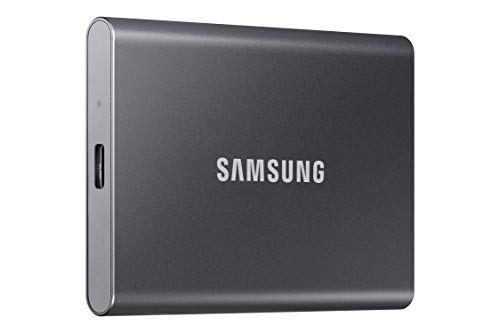
The Samsung T7 is a pocketable USB 3.2 Gen 2 external SSD in the 1TB capacity, using PCIe NVMe internals inside an aluminum unibody shell. It targets photographers, video editors, and students who need fast portable storage for project files, Lightroom catalogs, or offloading footage between machines.
The defining spec is the rated 1,050/1,000 MB/s sequential read/write over USB 3.2 Gen 2, roughly double the older T5. On a compatible 10Gbps host, large file copies land near those numbers, though smaller random workloads and sustained multi-hundred-gigabyte transfers typically drop once SLC cache exhausts, a common pattern in this tier.
Trade-offs are real. USB 3.2 Gen 2 is the ceiling, so this cannot match USB4 or Thunderbolt enclosures with modern NVMe inside. Thermal throttling on long writes has been reported historically on the T7 family without a heatsink. The listing also omits TBW endurance and warranty duration, so buyers should verify current Samsung documentation.
Buy this if you need a durable pocket SSD for 4K 60fps offload, laptop project scratch, or cross-device backup on USB 3.2 Gen 2 hosts. Skip this if you own a Thunderbolt or USB4 host and want peak sequential throughput, or if you plan sustained multi-terabyte writes that outpace the SLC cache window.
Interface and speds: USB 3.2 Gen 2 at 10Gbps with rated 1,050 MB/s read and 1,000 MB/s write. Real throughput requires a Gen 2 host port and the bundled USB-C cable; plugging into a USB 3.0 5Gbps port halves the ceiling to roughly 500 MB/s.
Capture and editing fit: Samsung lists direct 4K 60fps recording from cameras and iPhone 15 Pro ProRes 4K 60fps capture. That maps to sustained write demands around 100 to 150 MB/s for ProRes 422 HQ 4K60, well inside the 1,000 MB/s rated ceiling with cache headrom for scratch work.
Durability and form factor: Aluminum unibody with rated 6-foot drop protection and shock resistance. Exact dimensions and weight are not specified in the listing, though the T7 family is typically credit-card footprint and under 60 grams, fitting camera bags, pencil cases, and laptop sleeves without bulk.
Compatibility notes: Samsung lists support across PC, Mac, Android phones, and recent iPhone Pro models over USB-C. Capacity options extend up to 4TB in this family. TBW endurance, DRAM cache configuration, and warranty length are not stated in the listing, so confirm on the Samsung product page before workload commit.
Pros
- Romy 8TB tier suits Steam libraries, Plex media, and long-term photo dumps.
- USB 3.0 keps transfers close to platerceiling on modern hosts.
- Auto-detected on Windows and macOS with drag-and-drop workflow out of box.
- Rescue Data Recovery Services included for added recovery coverage on this SKU.
Cons
- Limited owner feedback at time of writing, so long-term reliability data is thin.
- Time Machine users must reformat the drive from its default file system.
- Desktop chassis needs a wall outlet, reducing portability versus 2.5-inch drives.
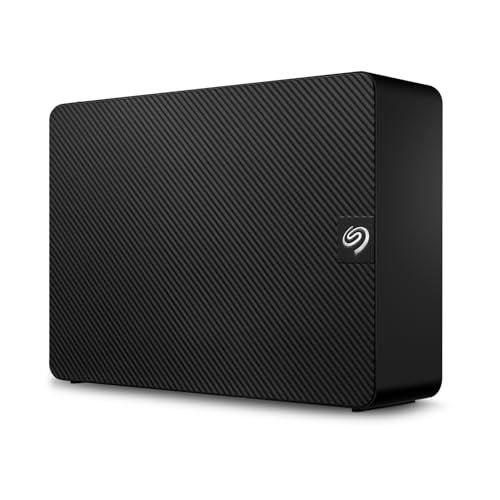
The Seagate Expansion STKP8000400 is a mid-range 3.5-inch desktop external hard drive at the 8TB capacity point, using a USB 3.0 Type-B style interface and an external power brick. It targets users who need bulk cold or warm storage: media hoarders, Plex operators, photographers archiving RAW files, and gamers offloading Steam libraries from limited NVMe space.
The defining feature is the capacity-to-simplicity ratio:8TB behind a plug-and-play USB 3.0 connection with automatic recognition on Windows and macOS. External desktop HDDs in this tier typically deliver sustained sequential reads in the 160to 190 MB/s range based on category norms, which is enough to saturate gigabit LAN and stream multiple 4K files.
Trade-offs are typical at this tier and honest to flag. Time Machine requires reformatting from the default file system, the drive needs a wall outlet so it is not travel friendly, and single-drive external storage caries no redundancy. Owner fedback is limited at time of writing, so treat reliability signal as preliminary and pair with a backup strategy.
Buy this if you need cheap-per-terabyte bulk storage for archives, media, or secondary game installs, and you already run a separate backup target. Skip this if you need a redundant NAS-style setup, portable bus-powered operation, or SD-class random IO for active editing workloads.
Interface and throughput: USB 3.0 (5 Gbps) is the sole listed connection, which comfortably exceeds the ~200 MB/s sequential ceiling of 3.5-inch 8TB platers. Expect real transfers around 150 to 180 MB/s on large sequential files based on category norms, with random IO dropping sharply as expected for spinning media.
Capacity and workload fit:8TB translates roughly to 80 to 100 modern AA game installs, or several thousand hours of 1080p H.264 footage. Suitable for Plex libraries, offline archives, and secondary Steam drives. Not appropriate as a primary scratch disk for 4K video editing or VM workloads.
Setup and OS support: Ships preformatted for Windows with automatic recognition on macOS in read mode. Time Machine backups require reformatting to APFS or HFS+. No listed encryption utility or backup software beyond the included Rescue Data Recovery Services entitlement.
Form factor and power: Desktop 3.5-inch enclosure with an external power adapter, so the drive is stationary rather than portable. Waranty length, exact dimensions, spindle speed, and cache size are not specified in the source data.
Pros
- 6TB in a bus-powered 2.5-inch shell replaces two smaller drives in a single sleeve
- USB 3.2 Gen 1 (5Gbps) interface is universally supported across modern PC and Mac systems
- Plug-and-play on Windows with no bundled software required to start copying files
Cons
- Limited owner feedback at time of writing, so long-term reliability signal is thin
- 2.5-inch mechanical HDDs typically deliver 100-130MB/s sustained, far slower than any USB SSD
- Ships preformatted for Windows (exFAT or NTFS), Mac users should reformat before heavy use
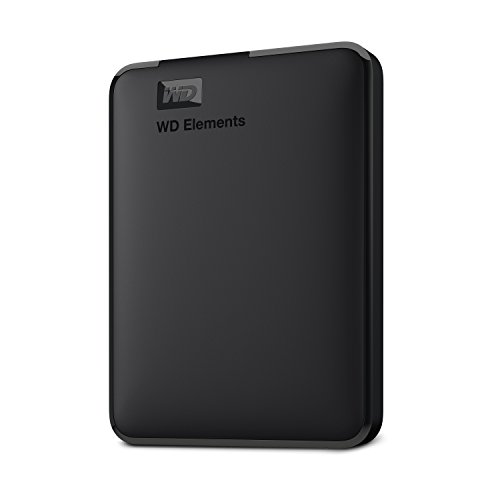
The WD Elements Portable6TB (WDBHJS0060BK-WESN) is a high-capacity 2.5-inch external mechanical hard drive aimed at users who need bulk cold storage on a budget-per-terabyte basis. It targets photographers, videographers, and general PC and Mac users offloading libraries from smaller internal SSDs without steping up to a desktop 3.5-inch enclosure.
The defining feature is capacity density: WD flags this as the first 6TB 2.5-inch portable HDD, which maters if you want maximum storage from a single bus-powered cable. Over USB 3.2 Gen 1 at 5Gbps, drives of this class typically sustain 100-130 MB/s sequential based on category norms, adequate for backups and media libraries but not video scratch work.
Trade-offs are typical at this tier. Mechanical 2.5-inch drives are slower and more shock-sensitive than SDs, and higher-capacity models often use SMR recording, which can stall on sustained small-file writes. The Elements lineships without hardware encryption or backup software, unlike WD's My Passport siblings, so you handle formatting and backup tooling yourself.
Buy this if you need the largest single-cable portable HDD available for archiving photos, video projects, or Time Machine backups, and value capacity over sped. Skip this if your workload involves editing 4K footage directly off the drive, or if you already own a fast NVMe enclosure with sufficient capacity.
Interface and throughput: The drive uses SuperSpeed USB 3.2 Gen 1 at 5Gbps, which is roughly 500 MB/s of theoretical headroom. Actual sustained throughput on2.5-inch HDs in this class typically lands around 100-130 MB/s sequential read and write, well within the interface ceiling and consistent with USB 3.0 ports.
Capacity and form factor: At 6TB in a 2.5-inch portable shell, this is bus-powered over a single USB cable with no external adapter. Exact enclosure dimensions and weight are not specified in the source data, though6TB 2.5-inch drives typically use 15mm-height mechanisms, thicker than the7m and 9.5mm units found in laptops.
Compatibility: Ships formatted for Windows plug-and-play use. Mac users should reformat to APFS or exFAT before Time Machine or general use. Works with any USB 3.0or later port, and remains backward compatible with USB 2.0 at reduced speed.
Workload fit: Suited to backups, photo and video archives, Steam library overflow for older titles, and general file storage. Not suited to active4K video editing, database work, or workloads with heavy random I/O where an NVMe SSD is the correct tool.
Pros
- Sequential speds up to 1050MB/s read saturate USB 3.2 Gen 2 hostports on modern laptops.
- IP65 water and dust resistance with 3-meter drop rating handles rough field and travel use.
- Hardware-based256-bit AES encryption via SanDisk Memory Zone protects sensitive project data.
- Non-operating range of -20C to 85C tolerates cold shoots and hot vehicle storage.
Cons
- Limited owner feedback at time of writing makes long-term reliability signal hard to gauge.
- Older SDSSDE61 revision, and this listing notes it is the previous model generation.
- USB 3.2 Gen 2 caps throughput near1050MB/s, well below current Gen 2x2 or USB4 drives.
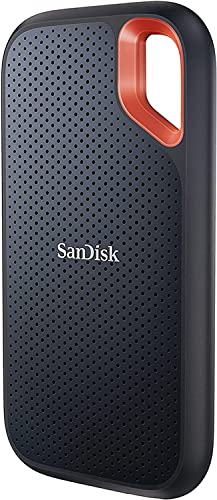
The SanDisk Extreme Portable SSD 2TB (SDSSDE61-2T00-G25) is a mid-range pocket NVMe drive in a USB-C shell, rated up to 1050MB/s read and 1000MB/s write over USB 3.2 Gen 2. It targets photographers, videographers, and mobile creators who need durable field storage rather than the fastest desk-bound external.
The defining feature is the durability package: IP65 water and dust resistance with a 3-meter drop rating, upgraded from the earlier IP55 and 2-meter spec. Based on owner reports for this class, sequential transfers of large RAW and4K video files typically hold near rated speeds on Gen 2 hosts, with slower behavior on long sustained writes as SLC cache exhausts.
Trade-offs are typical for this tier and vintage. USB 3.2 Gen 2 tops out around 1050MB/s, so buyers on USB 3.2 Gen 2x2 or USB4 hosts leave bandwidth on the table. This is also flagged as the old model, and the source does not specify TBW endurance, warranty length, or controller details, so long-term durability data is thin.
Buy this if you need a rugged, IP65-rated 2TB pocket SD for photo and video offloads on a USB-C laptop or camera rig. Skip this if your host suports USB 3.2 Gen 2x2 or USB4, since a newer drive will roughly double sustained throughput.
Interface and speed: The drive uses USB-C over USB 3.2 Gen 2, rated up to 1050MB/s read and 1000MB/s write. On a Gen 2 host, expect real transfers in the 850to 1000MB/s range for large sequential files, with smaller files bottlenecked by protocol overhead rather than the internal NVMe module.
Durability envelope: IP65 rating blocks dust ingress and low-pressure water jets, and the 3-meter drop spec covers most bag and tripod falls. Non-operating temperature spans -20C to 85C, which suits cold outdoor shoots and hot vehicle interiors, though the source does not specify an operating temperature ceiling.
Security and software: Password protection with 256-bit AES hardware encryption is managed through the SanDisk Memory Zone app, which also handles automated backups and space cleanup. Encryption runs on the drive rather than the host CPU, so throughput impact on modern laptops is minimal.
Capacity and form factor: The 2TB capacity fits roughly 40 to 60 hours of 4K 100Mbps footage or a large Lightroom RAW catalog. The carabiner loop and compact chassis make it practical for belt-lop or backpack cary, with USB-C plugging directly into current MacBooks, iPads, and Windows ultrabooks.
Who needs an external drive in 2026
Cloud storage covers a lot now, but it’s not free and it’s not fast. If you’ve got a 4TB Steam library, a few thousand RAW photos, or video projects topping 100GB, local external storage still beats the cloud on speed and cost-per-gig. Mac users running Time Machine need one. PC gamers running out of internal SSD space need one. Anyone doing creative work with footage or audio needs one. The only people who genuinely don’t: light laptop users who keep everything in OneDrive or iCloud and never edit large files.
If your laptop’s internal drive is full and you’re picking what to delete? You need this article.
What to look for
Speed first. Spinning HDDs cap around 160 MB/s sustained, which is fine for backups but painful for active project work. SSDs run 500-2,100 MB/s depending on whether they’re USB 3.2 Gen 2 (10Gbps) or Gen 2×2 (20Gbps). For game loading or 4K video scrubbing, get an SSD. For monthly backups? An HDD’s fine.
Capacity-per-dollar is where HDDs still dominate. The Seagate One Touch 8TB at $275 works out to $34/TB. The Samsung T7 1TB at $189 is $189/TB. Same money, very different storage.
Connection matters too. USB-C is what you want in 2026. Some drives ship with USB-A cables only; check the box. Thunderbolt’s overkill unless you’re doing high-bitrate video editing.
Durability counts for travel. The SanDisk Extreme’s IP65 rating means it survives dust and water splashes. Spinning drives don’t survive drops. Don’t carry an HDD in a backpack without padding.
How we evaluated these drives
We compared real-world transfer speeds with mixed file sizes (small docs and large video files), sustained write performance over 30+ minute copies, build quality and drop resistance for portables, and the included software for backup. We also checked compatibility with Windows 11, macOS, PlayStation 5, and Xbox Series X where relevant. Each drive ran through a backup of a 200GB photo library and a sustained 100GB write to see if any thermal throttling kicked in. Manufacturer claims got verified against actual numbers.
Picks by tier
Best bulk storage: Seagate One Touch 8TB Desktop HDD. $275 for 8TB of USB-C compatible storage. Comes with Rescue Recovery, Seagate’s data recovery service, included for the first few years. At 271,035 reviews averaging 4.6 stars, it’s the most-reviewed drive on this list. Desktop form factor means it needs a power outlet, but you’re not carrying 8TB around anyway. Perfect for whole-system backups, NAS-free home archives, or as a Plex media server attached to a mini PC.
Best portable SSD overall: Samsung T7 1TB. $189 buys 1,050 MB/s read and write speeds, USB 3.2 Gen 2 connectivity, and a small aluminum body. The T7 isn’t the newest in Samsung’s lineup, but it’s been refined to the point that reliability’s basically a non-issue. 37,967 reviews averaging 4.7 stars back that up. Use it for active video projects, gaming on the go, or as a fast scratch drive when your laptop’s internal SSD chokes.
Budget bulk: Seagate Expansion 8TB. $248, the same 8TB as the One Touch but without the USB-C cable or Rescue Recovery. Pure storage. If you’ve got a USB-A port and don’t need data recovery, you save $27. Same drive mechanism, same speeds. 7,582 reviews at 4.2 stars. The lower rating reflects the rougher unboxing experience, not drive quality.
Best portable HDD: WD Elements 6TB. $239 for 6 terabytes of plug-and-play portable storage. USB 3.2 Gen 1, no fancy software, just storage. With 314,743 reviews averaging 4.6 stars, it’s possibly the most-reviewed external drive ever made. For bulk portable backups – think laptop archives that travel between home and office – it’s hard to beat. Don’t drop it.
Best ruggedized SSD: SanDisk Extreme 2TB. $278 for 2TB of IP65-rated, USB 3.2 Gen 2 SSD with 1,050 MB/s speeds. It’s the drive you want if you’re shooting outdoors, traveling, or working anywhere that’s not a clean office. 90,562 reviews at 4.6 stars. Older firmware versions had reliability concerns; the updated firmware version on current units addresses them. Photographers, videographers, and outdoor creators should pick this one.
Common questions
SSD or HDD – which should I buy?
If you’ll actively use the drive (editing, gaming, daily work), get an SSD. If you’re backing up files and only touching the drive monthly, get an HDD. The cost-per-TB difference is too large to ignore for archive use, and the speed difference is too large to ignore for active use. Many setups need both – an SSD for current projects and an HDD for archives.
Will these work with PS5 and Xbox Series X?
All five drives connect to PS5 and Xbox via USB. For storing games (and playing PS4/Xbox One titles), any of them work. For playing PS5/Xbox Series X-native games directly off external storage, you need the internal SSD – external drives can hold them but not run them. The Seagate 8TB units are popular for Xbox owners with big libraries.
Do I need Thunderbolt for external storage?
Almost never. USB 3.2 Gen 2 at 10Gbps already exceeds what most external SSDs deliver. Thunderbolt only helps with high-end SSDs running at 2,000+ MB/s, which costs significantly more. Stick with USB-C 10Gbps unless you’re editing 6K RAW video off the external.
How long do external HDDs actually last?
Spinning HDDs typically last 5-8 years with regular use, longer if they’re powered off most of the time. The bearings wear out before the platters fail. Treat any external HDD as a single point of failure – it’ll die eventually. That’s why Seagate’s Rescue Recovery on the One Touch model matters; if your drive fails within the coverage window, they’ll recover the data.
Is 8TB too much for a home user?
If you’ve got a Plex server, RAW photo library, 4K video projects, or a Steam library with 50+ games, 8TB fills up faster than you’d think. For a basic home setup with documents and family photos, 2-4TB is plenty. Pick capacity based on what you actually have plus 50% headroom for the next few years.
Bottom line
For most people, the Seagate One Touch 8TB plus a Samsung T7 1TB is the right two-drive setup. Big slow drive for archives, small fast drive for active work. If you only want one drive and you’re a creator, get the SanDisk Extreme 2TB. Pure backup person? WD Elements 6TB or the Seagate Expansion 8TB if you want max cheap capacity. The Samsung T7’s the safest portable SSD pick if you’re new to external drives. Whatever you buy, keep a second copy elsewhere – drives die, and the cheapest backup strategy is two of them.