

Power supply shopping rewards patience over brand loyalty, and the be quiet! versus MSI question sends a lot of builders down a rabbit hole. Here’s the honest situation: the two units that best represent this comparison in stock right now are the be quiet! Pure Power 13 M 1000W at $139.90 with a strong 4.8 rating, and, on the compact premium side, the Corsair SF750 SFX at $159.99 with a 4.1 rating. MSI’s units weren’t the closest available match, so we’re comparing be quiet!’s full-size ATX value pick against a high-end small-form-factor alternative to show what different price and size tiers actually buy you. If you’re spec’ing a whole build, our roundups of the best 1000W power supply and the best ATX 3.1 power supply for 2026 add useful context.
Matchup at a glance
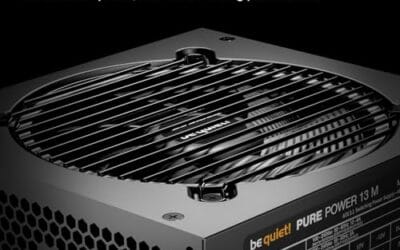
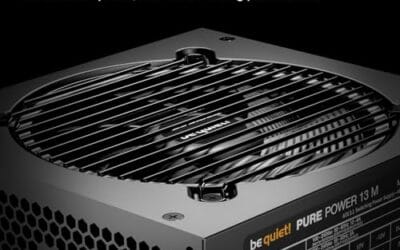
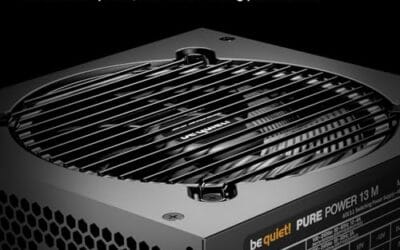
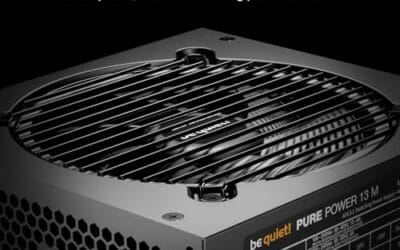
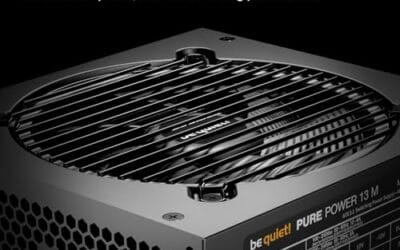
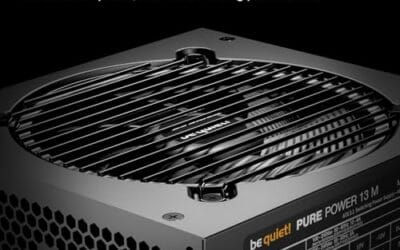
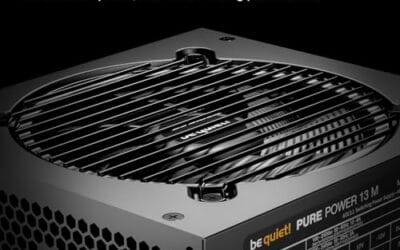
These two units aren’t trying to do the same job, and that’s what makes the comparison instructive. The be quiet! Pure Power 13 M is a standard ATX power supply built for value and quiet operation, rated at 1000W with 80 Plus Gold certification, ATX 3.1 compliance, and PCIe 5.1 support. It’s aimed at a normal tower build that wants clean power for a strong GPU without paying a premium. At $139.90, it undercuts most of its rivals while carrying that excellent 4.8 rating.

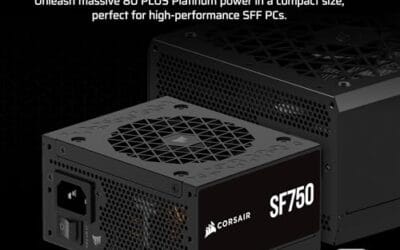
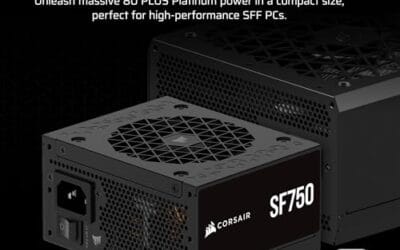
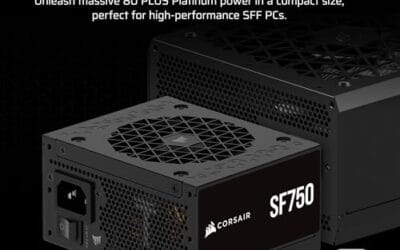
The Corsair SF750 plays a different game. It’s a fully modular SFX unit, physically much smaller, rated at 750W with the higher 80 Plus Platinum efficiency, also ATX 3.1 compliant and PCIe 5.1 ready. It exists for small-form-factor builds where a full ATX supply simply won’t fit. At $159.99 you’re paying more for less wattage, but you’re buying tiny dimensions and top-tier efficiency. So the real question isn’t which brand wins, it’s which tier your build actually needs.

Spec sheet showdown
| Spec | be quiet! Pure Power 13 M | Corsair SF750 | What it means |
|---|---|---|---|
| Price | $139.90 | $159.99 | be quiet! costs less for more watts |
| Wattage | 1000W | 750W | be quiet! powers bigger GPUs |
| Efficiency | 80 Plus Gold | 80 Plus Platinum | Corsair wastes slightly less heat |
| Form factor | Full ATX | Compact SFX | Corsair fits tiny cases |
| Rating / standard | 4.8 / ATX 3.1, PCIe 5.1 | 4.1 / ATX 3.1, PCIe 5.1 | Both modern; be quiet! rated higher |
be quiet! strengths
The be quiet! Pure Power 13 M’s biggest advantage is that it gives you more for less. A thousand watts of 80 Plus Gold power for $139.90 is genuinely strong value, and that headroom matters if you’re running a power-hungry modern GPU. It’s ATX 3.1 compliant with PCIe 5.1 support, so it’s ready for the latest graphics cards and their 12V-2×6 connectors without an adapter. That future-proofing is exactly what you want in a supply you’ll keep across two or three builds.
The name isn’t marketing fluff either. be quiet! designs around low noise, and this unit uses a semi-passive 120mm fan that stays off entirely at low loads, spinning up only when the supply gets warm. Combined with LLC technology and a single-rail design well suited to overclocked GPUs, you get a quiet, stable foundation. That 4.8 rating is the highest here, and for a value-oriented ATX unit it signals owners are consistently pleased with reliability and acoustics. If your case takes a standard ATX supply, this is a lot of quality for the money.
Corsair strengths
The Corsair SF750 wins on the things a small build cares about most: size and efficiency. As an SFX unit it’s dramatically smaller than a full ATX supply, which is the whole reason it exists. If you’re building in a mini-ITX case where every millimeter counts, a standard ATX unit like the be quiet! won’t physically fit, and the SF750 becomes the answer rather than a preference. Corsair even includes an ATX bracket so you can mount it in a normal case if you want the compact unit anyway.
On efficiency, its 80 Plus Platinum rating edges out the be quiet!’s Gold, meaning slightly less wasted energy and heat under load, which is valuable in a cramped SFF chassis where thermals are already tight. It’s fully modular, so you only connect the cables you need, a real advantage when routing in a small case. It’s also ATX 3.1 compliant and PCIe 5.1 ready, so it handles current GPUs. The 750W rating is plenty for most compact builds, and the 4.1 rating reflects a capable if pricier premium unit.

Pros
- ATX 3.1 compliant with PCIe 5.1 support, resists transient spikes from RTX 50 and RX 9000 series GPUs.
- Zero RPM Mode eliminates fan noise at low and medium loads, a real advantage in acoustically sensitive SFF builds.
- Fully modular design with short SFX cables reduces cable management friction in sub-10-liter cases.
- 105 degree C Japanese capacitors indicate quality component selection typical of high-tier SFX units.
Cons
- Limited owner feedback at time of writing; real-world noise, ripple, and transient performance are unverified by community data.
- Short SFX cables are unsuitable for mid-tower or full-tower cases without aftermarket cable extensions.
- 750W ceiling may fall short for extreme SFF builds pairing a 300W-plus TGP GPU with a high-core-count CPU.
The Corsair SF750 (2024) is a high-end SFX PSU targeting SFF builders who need substantial wattage in a compact footprint. With 80 Plus Platinum certification and ATX 3.1 compliance, it sits at the upper tier of the SFX market, aimed at builders pairing it with current-gen discrete GPUs inside sub-10-liter cases.
The most defining specification here is ATX 3.1 compliance combined with PCIe 5.1 readiness. This means the unit is rated to handle the sharp transient power spikes that RTX 50 and RX 9000 series GPUs can produce, where non-compliant PSUs may trigger overcurrent protection. At 750W, it covers most single-GPU SFF configurations without derating concerns.
The honest trade-off is the review data gap. At time of writing, no substantial owner feedback exists to validate Corsair's noise and ripple claims under real load. The Zero RPM Mode claim and 92mm fan acoustics are based on spec sheets only. Buyers should also note that SFX cable lengths are intentionally short and will not reach connectors in mid-tower or larger cases without extensions.
Buy this if you are building an SFF PC around a single high-TGP GPU and need confirmed ATX 3.1 compliance in a modular SFX unit. Skip this if you want a large ATX case build, need more than 750W for a dual-component high-wattage system, or require extensive owner testing before purchasing.
Form Factor and Mounting: This is a standard SFX form factor PSU, not SFX-L. Verify your case specifies SFX compatibility before purchasing. An SFX-to-ATX bracket is included, allowing installation in ATX-footprint cases, though short cable lengths will require extensions in anything larger than a compact SFF enclosure.
Power Standard and Connector: ATX 3.1 compliant with PCIe 5.1 readiness. The unit supports the 12V-2x6 connector standard, relevant for RTX 40 and RTX 50 series GPUs as well as AMD RX 7000 and RX 9000 cards with high transient draw. Non-ATX 3.1 units can trigger OCP shutdowns above 150 percent peak load spikes.
Efficiency and Thermal Operation: 80 Plus Platinum certification indicates roughly 92 percent efficiency at 50 percent load under 115V. The 92mm PWM fan uses a fluid dynamic bearing and Zero RPM Mode activates at low loads, which in SFF cases where airflow is restricted can noticeably reduce system acoustic output.
GPU Wattage Pairing: At 750W, this PSU pairs appropriately with GPUs up to approximately 300W TGP when combined with a mid-range CPU. For a 320W-plus TGP GPU alongside a 65W-plus CPU, headroom becomes tight and a higher-wattage SFX unit should be considered instead.
Real-world scenarios
A standard mid-tower gaming build
For a normal ATX or micro-ATX tower with a strong graphics card, the be quiet! Pure Power 13 M is the clear pick. You get 1000W of headroom, quiet operation, and ATX 3.1 readiness for $139.90, and the full-size unit drops right in. There’s no reason to pay more for a compact supply you don’t need. This is the mainstream answer for most gaming rigs, and our best budget power supply for a high-end GPU guide reaches a similar conclusion.
A small-form-factor mini-ITX build
Here the Corsair SF750 has no real competition from a full ATX unit. In a compact ITX case, an SFX supply is often the only thing that fits, and the SF750’s 750W with Platinum efficiency comfortably powers a strong small build. The size constraint decides it before efficiency or price even enter the conversation.
An overclocked high-wattage rig
If you’re pushing an overclocked GPU that demands serious sustained power, the be quiet!’s 1000W rating and single-rail design give you margin the 750W Corsair can’t match. Wattage headroom keeps the supply cool and stable under spikes. For heavy overclocking in a case that fits ATX, the be quiet! is the safer choice.
A quiet living-room or office PC
Both units run quietly, but the be quiet! is engineered around silence with its semi-passive fan that stays off at low loads. For a machine that sits near you and idles most of the day, that fanless-at-idle behavior is a genuine perk, and it’s why the brand earned its name.
Pricing and availability
At $139.90, the be quiet! Pure Power 13 M is the value leader, delivering more wattage at a lower price than the $159.99 Corsair SF750. That’s an unusual position, since you’re normally paying more for more power, but the Corsair’s premium comes from its compact SFX form factor and Platinum efficiency rather than raw output. Both are current ATX 3.1 units, so neither will feel dated soon.
Availability on both fluctuates, and quality supplies in the 750W to 1000W range tend to hold their prices well. If you spot the be quiet! near its $139.90 mark, that’s a strong deal for a 4.8-rated Gold unit. The Corsair’s price reflects the reality that small-form-factor components command a premium. Budget builders weighing other options should also skim our best budget power supply for 2026 guide before deciding.
Which to buy
For the vast majority of builders, the be quiet! Pure Power 13 M is the smarter buy. It costs less, gives you 1000W of headroom for demanding GPUs, runs quietly, and carries the best rating in this comparison at 4.8. Unless your case forces your hand, a full ATX supply is the sensible default, and this one delivers premium behavior at a value price. That combination is hard to argue with.
Choose the Corsair SF750 only when size demands it. If you’re building in a mini-ITX or small-form-factor case, the compact SFX dimensions and 80 Plus Platinum efficiency make it worth the $159.99, and the included ATX bracket adds flexibility. It’s a specialist tool for a specialist job. But for a normal tower, the be quiet! wins on price, power, and noise, and it’s the one we’d put in most builds.

Pros
- Native 12V-2x6 connector on ATX 3.1 platform ready for RTX 40 and PCIe 5.1 GPUs.
- Handles power excursions up to 2000W transient, headroom for RTX 4080 and 4090 class spikes.
- Semi-passive zero-RPM mode below moderate load keps idle acoustics near inaudible.
- LLC topology with single 12V rail delivers stable voltage regulation for overclocked GPUs.
Cons
- Limited independent owner feedback available at time of writing, riple and hold-up data unverified.
- Only four PCIe 6+2-pin connectors, tight for legacy multi-GPU or high-CPU-EPS custom lop builds.
- 80 PLUS Gold trails Platinum and Titanium units at similar wattage on sustained efficiency.
The be quiet! Pure Power 13 M 1000W is a high-end ATX 3.1 PSU aimed at builders pairing a Ryzen 7000/9000 or Core Ultra CPU with an RTX 4070Ti Super,4080 Super, 4090, or RX 7900 XTX class GPU. It targets buyers who want native 12V-2x6 wiring and transient headroom without stepping up to Platinum-tier pricing.
The defining trait is ATX 3.1 compliance with power excursion handling up to double the rated 1000W, meaning brief 2000W spikes from modern GPUs should not trip OCP. Combined with the single 12V rail and LLC topology, this suits overclocked GPUs where transient behavior, not average draw, tends to triger shutdowns on older units.
Trade-offs are typical at this tier. 80 PLUS Gold is eficient but not Platinum, soustained heavy loads generate more heat than a higher-rated unit. Four PCIe 6+2-pin connectors is standard, though builders running EATX boards with dual EPS plus a 4x8-pin GPU adapter should verify cable counts against the modular panel before buying.
Buy this if you are building a single-GPU gaming or content rig around a 250-450W TGP card and want native 12V-2x6 without paying Platinum prices. Skip this if you need sub-audible acoustics under sustained full load, or if you already own a workingATX 3.0 unit with a 12VHPWR pigtail.
ATX standard: Full ATX 3.1 compliance with native 12V-2x6 connector integration, which corects the sense-pin issue found on early 12VHPWR cables. Supports PCIe 5.1 GPUs at spec, and handles transient power excursions up to 2000W, roughly double the 1000W continuous rating.
GPU pairing: Comfortable for GPUs in the 250W to 450W TGP range, including RTX 4080 Super (320W) and RTX 4090 (450W) with headroom for overclocking. Four PCIe 6+2-pin outputs cover legacy 8-pin GPUs; the native 12V-2x6 removes the need for a 4x8-pin adapter dongle.
Efficiency and cooling: 80 PLUS Gold rated up to 94.4% at optimal load, typically around 50% utilization. The 120mm be quiet! fan runs semi-passive with zero-RPM below a load threshold not specified by the manufacturer, so idle and light workloads should remain silent.
Cabling: Fully modular design, leting builders omit unused SATA and Molex leads. Exact cable lengths and connector counts beyond the four PCIe 6+2-pin and single 12V-2x6 are not specified in source material, verify against your case routing before purchase.
Common questions
Is 750W enough for a modern gaming PC?
For most builds, yes. A 750W unit like the Corsair SF750 comfortably powers a single strong GPU and a mainstream CPU with room to spare. You’d want the be quiet!’s 1000W if you’re running the most power-hungry flagship cards or planning heavy overclocking, where the extra headroom keeps the supply cool and stable.
What does ATX 3.1 and PCIe 5.1 mean for me?
It means the supply is built for the newest graphics cards, including their 12V-2×6 power connector and the brief power spikes modern GPUs produce. Both units here are ATX 3.1 compliant and PCIe 5.1 ready, so you won’t need adapters and you’re covered for current and near-future cards. It’s a meaningful future-proofing feature.
Is 80 Plus Platinum worth it over Gold?
Platinum wastes slightly less energy as heat than Gold, which matters most in a cramped small-form-factor case or if you run the PC hard all day. For a typical build, the difference in your power bill is small. The be quiet!’s Gold rating is perfectly good, so don’t pay a big premium for Platinum unless thermals or efficiency are a priority.
Will a semi-passive fan hurt cooling?
No. The be quiet!’s fan stays off only at low loads where the unit runs cool anyway, then spins up as the load and temperature rise. It’s a proven design that trades a bit of noise for silence when you don’t need active cooling. Your supply stays protected because the fan engages before heat becomes a problem.
Can I put an SFX unit in a normal case?
Yes. The Corsair SF750 includes an ATX bracket that lets it mount in a standard ATX case. You’d rarely do this on purpose since a full ATX unit gives more watts per dollar, but it’s handy if you already own the SFX supply or plan to move it into a small build later. The flexibility is a nice touch.
























Write Your Review
No reviews yet. Be the first to share your experience!