
The 1440p vs 4K debate isn’t really about which looks better. 4K wins that. It’s about whether the visual jump justifies doubling your GPU load, halving your frame rate, and adding a few hundred dollars to the display itself. In 2026, the answer depends entirely on what GPU you’ve got, how close you sit, and whether you’re chasing frames or pixels. Let’s break down the numbers.
Matchup at a glance
1440p (2560×1440) renders 3.7 million pixels per frame. 4K (3840×2160) pushes 8.3 million, which is 2.25x the workload. On the same GPU, you’ll see roughly half the frame rate at 4K vs 1440p in modern AAA titles. The flip side: pixel density at 27 inches jumps from 109 PPI to 163 PPI, which means visibly sharper text, cleaner edges on small UI elements, and less reliance on anti-aliasing.
Here’s where most buyers land. If you’ve got an RTX 4070 or stronger and you sit within three feet of a 27-32 inch panel, 4K’s the call. Below that GPU tier, or at typical 3-foot+ desk distances on a 27-inch, 1440p at 180Hz delivers a better moment-to-moment gaming feel. The motion clarity from higher refresh outweighs the resolution bump.
Spec sheet showdown
| Spec | 1440p Gaming | 4K Gaming |
|---|---|---|
| Pixel count | 3.7M | 8.3M |
| Typical refresh | 144-240Hz | 120-160Hz |
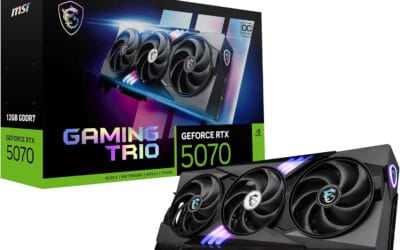
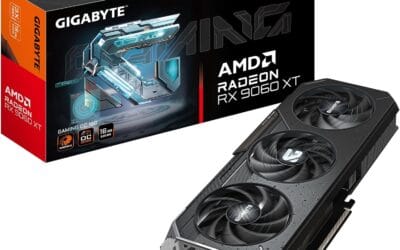
| GPU tier needed | RTX 4060 / RX 7700 | RTX 4070 Ti / RX 7900 |
| Monitor price (27″) | $160-$300 | $400-$800 |
| PPI at 27″ | 109 | 163 |
Where 1440p still wins
High-refresh 1440p is what most competitive gamers are riding in 2026. The Asus TUF Gaming VG27AQL5A pushes 210Hz with 0.3ms IPS response, the kind of clarity you can’t fake with resolution. Acer’s Nitro KG271U N3bmiipx hits 180Hz at $159, which makes it the cheapest serious gaming monitor on the market right now. You don’t need a $1500 GPU to drive it. A mid-range card hits the refresh ceiling in esports titles and lands in the 100+ FPS range in AAA games at high settings.
The other underrated angle: text quality at 1440p on a 27-inch is genuinely fine. People claim 4K is mandatory for productivity. It isn’t. 109 PPI is sharp enough for code, documents, and design work unless you’re zoomed in on pixel-level details.

Pros
- ELMB Sync enables simultaneous blur reduction and VRR, a feature absent on many IPS monitors at this tier.
- 95% DCI-P3 coverage is above average for a gaming-focused IPS panel; useful for creators doubling on gaming.
- 210Hz OC refresh rate with Fast IPS and 0.3ms GTG (min) targets competitive 1440p play above 144FPS.
- Includes height-adjustable ergonomic stand with VESA compatibility, avoiding the need for an aftermarket arm.
Cons
- Limited owner feedback at time of writing; real-world panel uniformity, backlight bleed, and OC stability unverified.
- DisplayHDR 400 certification indicates edge-lit local dimming at best; HDR contrast will not match OLED or Mini-LED displays.
- 0.3ms GTG is a minimum spec, not typical; actual average GtG at mid-gray transitions is not specified in source data.
The ASUS TUF VG27AQL5A is a mid-range 27-inch QHD Fast IPS gaming monitor targeting competitive players who want 1440p resolution above 144Hz without moving to OLED pricing. Its 2560x1440 resolution and 210Hz OC refresh rate position it for GPU pairings in the RTX 4070 or RX 7800 XT class.
The most defining feature is ELMB Sync, which lets backlight strobing and AMD FreeSync Premium run simultaneously. Most IPS monitors force a choice between the two. In fast-paced titles this combination reduces perceived motion blur and eliminates tearing without toggling between modes. The 95% DCI-P3 gamut also makes this a credible dual-use panel for color work alongside gaming.
The main trade-off is HDR implementation. DisplayHDR 400 at this tier means a typical peak brightness around 400 nits with no true local dimming, so HDR content looks marginally better than SDR at best. The 0.3ms GTG figure is a minimum spec; mid-gray transitions will be slower in practice, which is typical at this tier and not unique to this model. Owner data is sparse, so panel lottery risk and OC stability under sustained 210Hz use are not yet confirmed by the community.
Buy this if you are running a mid-to-high-tier GPU at 1440p in competitive titles and want ELMB Sync plus FreeSync Premium in one panel. Skip this if you prioritize HDR quality or need confirmed owner data before purchasing, as this is a recent release with no substantial review base yet.
Panel and Resolution: Fast IPS panel at 2560x1440 (QHD) across a 27-inch screen yields approximately 109 PPI, a density that keeps text sharp without requiring display scaling on Windows. Fast IPS sub-type reduces GtG versus standard IPS at the cost of potential overshoot, which varies by unit and requires overdrive tuning.
Refresh Rate and Response: Native refresh is not explicitly stated; 210Hz is listed as an overclocked figure. The 0.3ms GTG is a minimum specification. Monitors in this tier typically measure average GtG between 3-6ms across the full gray range, so the headline figure applies to specific transitions only. ELMB Sync operates simultaneously with FreeSync Premium within the supported VRR range.
HDR and Color: DisplayHDR 400 certification sets the peak brightness floor at 400 nits. The 95% DCI-P3 gamut is a meaningful spec for color work; sRGB coverage will exceed 99% by inference at that DCI-P3 level, though sRGB is not explicitly stated in source data. No local dimming zone count is specified.
Connectivity and Mounting: Box contents confirm a DisplayPort cable is included. Additional port count and HDMI version are not specified in source data. The stand offers height adjustment and VESA mount compatibility for aftermarket arm use.
The refresh-rate trade-off nobody talks about
A 1440p panel at 180Hz delivers smoother motion than a 4K panel at 120Hz, full stop. The human eye perceives refresh as a fluidity cue more reliably than it perceives resolution as a sharpness cue at typical desk distances. That’s why competitive gamers stayed on 1080p for so long. The frame-rate ceiling mattered more than the pixel count. 1440p in 2026 is the new compromise that lands between both worlds, giving you motion clarity and detail without forcing a trade-off.
Where 4K pulls ahead
If you’re a single-player gamer who values visual fidelity over twitch reflexes, 4K’s worth the climb. Detail in textures, foliage, and distant geometry holds up at 4K in a way 1440p can’t match. You’ll spot it in games like Cyberpunk, Red Dead 2, and Senua’s Saga. DLSS 3 and FSR 3 help close the frame-rate gap on weaker hardware too. With DLSS Quality on, an RTX 4070 can hit 80-100 FPS at 4K in most modern titles.
4K also future-proofs better. A panel you buy now will outlast two or three GPU generations. By 2028, the RTX 50-series and beyond will treat 4K the way RTX 30-series treated 1440p: entry-level.
Which one to buy
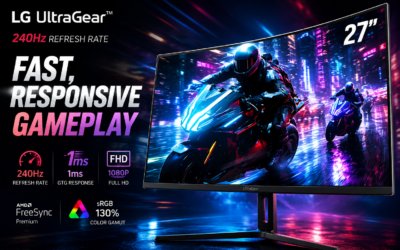
Competitive gamer on a tight budget? Grab a 1440p curved panel like the KTC H27S5C at $169 or the LG 27GS60QC-B at $185. Both deliver 144-180Hz, AMD FreeSync, and 1ms response, perfectly matched to a mid-range GPU and a 240Hz competitive feel.
Mixed-use gamer with an RTX 4070+ GPU? 1440p at 180-240Hz is still the smarter spend in 2026. You’ll feel the refresh rate more than you’ll see the extra pixels. The Acer Nitro EDA270U Pbmiipx at $199 hits 180Hz curved with HDR10. That’s the value pick.
Single-player enthusiast with a 4080-class card? Go 4K. You bought the GPU for fidelity, give it a panel that matches.
Hybrid productivity-and-gaming user? 1440p ultrawide split the difference better than either pure resolution. You get extra horizontal workspace, a single panel for code and Excel, and gaming performance that doesn’t punish your GPU. It’s not on this comparison’s spec sheet but it’s worth mentioning as the third option many buyers settle on.
One more factor worth flagging: viewing distance. At 3 feet from a 27-inch screen, the human eye can resolve roughly 60 pixels per degree. 1440p hits that ceiling. 4K exceeds it, which means a chunk of the resolution bump is invisible unless you lean in. Move to a 32-inch panel and the math flips. 4K starts paying off because pixel density at 32 inches in 1440p drops to 92 PPI, which is where you’ll see softness.

Pros
- QHD resolution on a 27-inch IPS panel
- 180Hz refresh rate at this price tier
- Strong color accuracy for creative work
Cons
- DisplayPort 1.2 limits max bandwidth headroom
- HDR 10 support lacks local dimming hardware
The Acer Nitro KG271U targets budget-focused PC gamers and creative users wanting QHD clarity without a premium price. Its 27-inch IPS panel runs at 2560x1440 with 95% DCI-P3 coverage, making colors appear accurate enough for photo editing alongside gaming sessions. AMD FreeSync syncs frame output from your GPU directly to the panel, and the 180Hz ceiling with 0.5ms GTG response keeps motion blur minimal based on owner reports. The HDR 10 badge is present, but without local dimming, contrast improvements appear modest in practice. Skip if your GPU cannot consistently push above 100 FPS at QHD resolution.
Common questions
Is 4K worth it on a 27-inch monitor?
Marginal. At 27 inches and a 3-foot viewing distance, the PPI jump from 109 to 163 is visible but not transformative. 32-inch panels show the benefit more clearly.
Can an RTX 4060 run 1440p gaming?
Yes, comfortably. You’ll see 80-120 FPS at high settings in most modern titles and 144+ FPS in esports games. It’s the right GPU floor for 1440p in 2026.
Will DLSS make 4K playable on mid-range GPUs?
DLSS Quality renders at 1440p internally and upscales to 4K. It helps, but on a card weaker than an RTX 4070 you’ll still drop into the 50-60 FPS range in demanding games.
Does 1440p look blurry compared to 4K?
Not at typical desk distances. Side-by-side on the same screen size, you’ll notice 4K’s sharper edges. But 1440p doesn’t look soft, it just looks less crisp on fine text and detailed textures.
Should I wait for 4K to get cheaper?
4K panel prices dropped 30% from 2023 to 2026 and that curve’s leveling off. If your GPU and budget can handle it now, buy. Waiting another two years saves maybe $50 on the panel itself.
Is 1440p enough for streaming?
Twitch and YouTube cap most streams at 1080p or 1440p anyway. Streaming at 4K isn’t standard practice — your viewers won’t see the difference. 1440p is the right capture resolution for streamers in 2026.