

Your PC is running fine, then without warning the screen goes black and the whole machine dies, no blue screen, no error, just gone. A few seconds later it might boot back up like nothing happened, or it might do it again the moment you load a game. Random shutdowns are among the scariest problems a builder faces because they feel catastrophic, but the culprit is very often the power supply, and PSU-related shutdowns follow patterns you can diagnose. Let’s walk through what’s actually going wrong and how to pin it down before you start replacing expensive parts you don’t need to.
A dying or undersized PSU is one of the most common causes of these hard shutdowns, especially after a GPU upgrade that pushed your power draw past what the unit can deliver. If your diagnosis points to the power supply, our guides to the best 1000W PSU for high-end GPU and the best modular PSU gaming PC 2026 can help you pick a replacement. First, though, let’s confirm the PSU is really the problem.
First check the obvious
Before blaming the power supply, rule out the two-minute stuff. Is the shutdown tied to a specific trigger? Dying only under heavy gaming or a stress load points hard at power delivery or heat, while random shutdowns at idle can mean something else entirely. Feel the case: if it’s running hot and shutting down after long sessions, thermal protection might be kicking in rather than the PSU failing.
Check the physical basics too. Make sure the power cable is firmly seated at both the wall and the PSU, and that you’re not running through a flaky surge protector or an overloaded outlet. Reseat the main 24-pin and the CPU and GPU power connectors, since a partially connected cable can cause exactly this kind of sudden death. If the machine shuts down instantly and won’t restart, versus dying only under load, note that difference; it tells you a lot about where to look next. Write down exactly what you were doing each time it happens, since a clear pattern is the single most useful clue you can bring to the diagnosis.
Cause #1: An undersized or overloaded power supply
The most common PSU-related shutdown happens when your components demand more power than the unit can supply. This shows up right after an upgrade, most often a new graphics card. A modern high-end GPU can spike well past its rated draw for brief moments, and if your PSU doesn’t have the headroom, its protection circuitry trips and cuts power to save the hardware. The result is an instant black-screen shutdown, usually mid-game or during a demanding load.
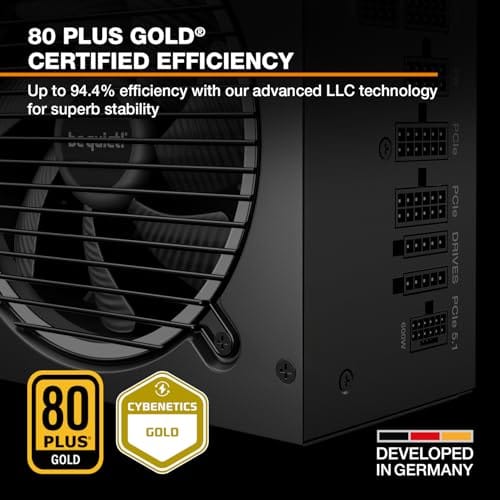
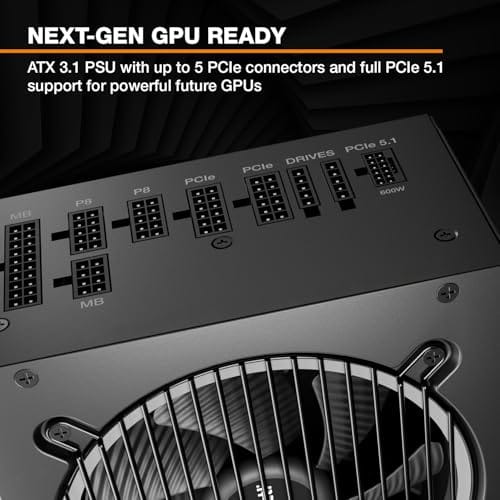
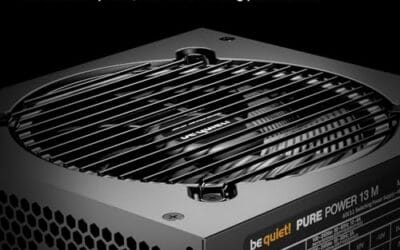
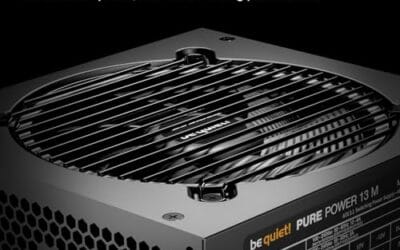
Add up your system’s power needs and compare them to your PSU’s wattage. A single high-end GPU plus a modern CPU can pull a lot under load, and running a unit with too little margin invites these trips. If your PSU is undersized, a quality higher-wattage replacement fixes it cleanly. The be quiet! Pure Power 13 M 1000W, at $139.90 with a 4.8-star rating, is an 80 Plus Gold, ATX 3.1 unit with PCIe 5.1 support and single-rail design built specifically for overclocked GPUs and their transient spikes, which makes it a solid answer for a power-starved high-end build.

Pros
- Native 12V-2x6 connector on ATX 3.1 platform ready for RTX 40 and PCIe 5.1 GPUs.
- Handles power excursions up to 2000W transient, headroom for RTX 4080 and 4090 class spikes.
- Semi-passive zero-RPM mode below moderate load keps idle acoustics near inaudible.
- LLC topology with single 12V rail delivers stable voltage regulation for overclocked GPUs.
Cons
- Limited independent owner feedback available at time of writing, riple and hold-up data unverified.
- Only four PCIe 6+2-pin connectors, tight for legacy multi-GPU or high-CPU-EPS custom lop builds.
- 80 PLUS Gold trails Platinum and Titanium units at similar wattage on sustained efficiency.
The be quiet! Pure Power 13 M 1000W is a high-end ATX 3.1 PSU aimed at builders pairing a Ryzen 7000/9000 or Core Ultra CPU with an RTX 4070Ti Super,4080 Super, 4090, or RX 7900 XTX class GPU. It targets buyers who want native 12V-2x6 wiring and transient headroom without stepping up to Platinum-tier pricing.
The defining trait is ATX 3.1 compliance with power excursion handling up to double the rated 1000W, meaning brief 2000W spikes from modern GPUs should not trip OCP. Combined with the single 12V rail and LLC topology, this suits overclocked GPUs where transient behavior, not average draw, tends to triger shutdowns on older units.
Trade-offs are typical at this tier. 80 PLUS Gold is eficient but not Platinum, soustained heavy loads generate more heat than a higher-rated unit. Four PCIe 6+2-pin connectors is standard, though builders running EATX boards with dual EPS plus a 4x8-pin GPU adapter should verify cable counts against the modular panel before buying.
Buy this if you are building a single-GPU gaming or content rig around a 250-450W TGP card and want native 12V-2x6 without paying Platinum prices. Skip this if you need sub-audible acoustics under sustained full load, or if you already own a workingATX 3.0 unit with a 12VHPWR pigtail.
ATX standard: Full ATX 3.1 compliance with native 12V-2x6 connector integration, which corects the sense-pin issue found on early 12VHPWR cables. Supports PCIe 5.1 GPUs at spec, and handles transient power excursions up to 2000W, roughly double the 1000W continuous rating.
GPU pairing: Comfortable for GPUs in the 250W to 450W TGP range, including RTX 4080 Super (320W) and RTX 4090 (450W) with headroom for overclocking. Four PCIe 6+2-pin outputs cover legacy 8-pin GPUs; the native 12V-2x6 removes the need for a 4x8-pin adapter dongle.
Efficiency and cooling: 80 PLUS Gold rated up to 94.4% at optimal load, typically around 50% utilization. The 120mm be quiet! fan runs semi-passive with zero-RPM below a load threshold not specified by the manufacturer, so idle and light workloads should remain silent.
Cabling: Fully modular design, leting builders omit unused SATA and Molex leads. Exact cable lengths and connector counts beyond the four PCIe 6+2-pin and single 12V-2x6 are not specified in source material, verify against your case routing before purchase.
Cause #2: A failing or aging power supply
Power supplies wear out. The capacitors inside degrade over years of heat cycling, and an aging unit that once handled your system fine can start delivering unstable voltage that trips shutdowns under load. This is especially common with cheap units or PSUs pushed past five or six years of heavy use. The shutdowns often grow more frequent over time, starting occasionally and becoming a daily nuisance as the unit deteriorates.
A failing PSU can also produce coil whine, a faint burning smell, or a fan that stops spinning, all warning signs worth heeding. If your unit is old, generic, or showing these symptoms alongside random shutdowns, replacement is the safe move, because a dying PSU can take other components with it when it finally fails. Don’t gamble your GPU and motherboard on a worn-out power supply; it’s the one part where cutting corners risks the whole build.
Cause #3: Overheating and thermal shutdown
Not every sudden shutdown is the PSU’s fault. If your CPU or GPU overheats, the system triggers a protective shutdown to prevent damage, and this mimics a power problem closely. The tell is timing: thermal shutdowns usually happen after sustained load once temperatures climb, not instantly at power-on. A machine that games fine for twenty minutes then dies is a prime suspect for overheating rather than a straight power fault.
Monitor your temperatures with a utility during a load, and watch whether the CPU or GPU spikes toward its thermal limit right before the shutdown. Dust-clogged coolers, dried-out thermal paste, or a failed fan are common causes. Clean the system, verify all fans spin, and reapply paste if the cooler is old. If a shutdown is caused by an overheating PSU specifically, better case airflow and a cooler-running, higher-quality unit both help. A quality SFX unit like the Corsair SF750 (2024), at $159.99 with a 4.1-star rating, is an 80 Plus Platinum, ATX 3.1 fully modular supply with low-noise operation, well suited to compact builds where cramped airflow makes heat management critical.

Pros
- ATX 3.1 compliant with PCIe 5.1 support, resists transient spikes from RTX 50 and RX 9000 series GPUs.
- Zero RPM Mode eliminates fan noise at low and medium loads, a real advantage in acoustically sensitive SFF builds.
- Fully modular design with short SFX cables reduces cable management friction in sub-10-liter cases.
- 105 degree C Japanese capacitors indicate quality component selection typical of high-tier SFX units.
Cons
- Limited owner feedback at time of writing; real-world noise, ripple, and transient performance are unverified by community data.
- Short SFX cables are unsuitable for mid-tower or full-tower cases without aftermarket cable extensions.
- 750W ceiling may fall short for extreme SFF builds pairing a 300W-plus TGP GPU with a high-core-count CPU.
The Corsair SF750 (2024) is a high-end SFX PSU targeting SFF builders who need substantial wattage in a compact footprint. With 80 Plus Platinum certification and ATX 3.1 compliance, it sits at the upper tier of the SFX market, aimed at builders pairing it with current-gen discrete GPUs inside sub-10-liter cases.
The most defining specification here is ATX 3.1 compliance combined with PCIe 5.1 readiness. This means the unit is rated to handle the sharp transient power spikes that RTX 50 and RX 9000 series GPUs can produce, where non-compliant PSUs may trigger overcurrent protection. At 750W, it covers most single-GPU SFF configurations without derating concerns.
The honest trade-off is the review data gap. At time of writing, no substantial owner feedback exists to validate Corsair's noise and ripple claims under real load. The Zero RPM Mode claim and 92mm fan acoustics are based on spec sheets only. Buyers should also note that SFX cable lengths are intentionally short and will not reach connectors in mid-tower or larger cases without extensions.
Buy this if you are building an SFF PC around a single high-TGP GPU and need confirmed ATX 3.1 compliance in a modular SFX unit. Skip this if you want a large ATX case build, need more than 750W for a dual-component high-wattage system, or require extensive owner testing before purchasing.
Form Factor and Mounting: This is a standard SFX form factor PSU, not SFX-L. Verify your case specifies SFX compatibility before purchasing. An SFX-to-ATX bracket is included, allowing installation in ATX-footprint cases, though short cable lengths will require extensions in anything larger than a compact SFF enclosure.
Power Standard and Connector: ATX 3.1 compliant with PCIe 5.1 readiness. The unit supports the 12V-2x6 connector standard, relevant for RTX 40 and RTX 50 series GPUs as well as AMD RX 7000 and RX 9000 cards with high transient draw. Non-ATX 3.1 units can trigger OCP shutdowns above 150 percent peak load spikes.
Efficiency and Thermal Operation: 80 Plus Platinum certification indicates roughly 92 percent efficiency at 50 percent load under 115V. The 92mm PWM fan uses a fluid dynamic bearing and Zero RPM Mode activates at low loads, which in SFF cases where airflow is restricted can noticeably reduce system acoustic output.
GPU Wattage Pairing: At 750W, this PSU pairs appropriately with GPUs up to approximately 300W TGP when combined with a mid-range CPU. For a 320W-plus TGP GPU alongside a 65W-plus CPU, headroom becomes tight and a higher-wattage SFX unit should be considered instead.
Preventive maintenance
Most PSU trouble is avoidable with a little foresight. Buy a quality unit with genuine headroom from the start, ideally 150 watts or more above your system’s peak draw, so transient spikes never trip the protection. Choose a reputable 80 Plus-rated supply rather than the cheapest one on the shelf, since the power supply is the component most likely to damage others when it fails. That margin and quality pay off in years of trouble-free operation. It’s the rare upgrade that you buy once and then forget about, which is exactly what you want from the part feeding power to everything else.
Keep the system clean and cool, since heat shortens a PSU’s life just as it does any component. Blow out dust regularly, ensure good case airflow, and don’t bury the machine in a sealed cabinet. When you upgrade a major part like the GPU, recalculate your power needs; a card that draws far more than its predecessor can turn a fine PSU into an undersized one overnight. A quick wattage check before an upgrade saves a lot of grief later. It takes two minutes with an online calculator, and it’s the single easiest way to avoid the whole undersized-PSU headache before it ever starts.
When to call a pro vs DIY
Swapping a power supply is well within reach for most builders. It’s mostly a matter of unplugging cables, unscrewing the old unit, and reversing the process with the new one, and modular units make the cable routing cleaner. If you built the PC yourself, you can absolutely replace the PSU yourself with a bit of care and attention to which cable goes where. Never mix cables between different PSU brands or models, though, since pinouts differ and the wrong cable can fry hardware.
Call a professional if you’re uncomfortable working inside the case, if the shutdowns persist after a PSU swap and you can’t isolate the cause, or if you smell burning or see scorch marks, which signal a more serious fault. Intermittent problems that survive multiple part swaps sometimes trace back to the motherboard or a subtle short, and those are worth expert diagnosis. There’s no shame in handing off a stubborn problem to someone with the gear to chase it down properly.
Tools and parts needed
Diagnosing and fixing PSU shutdowns takes very little. A Phillips screwdriver, a temperature-monitoring utility, and a PSU wattage calculator cover the diagnosis stage. For cleaning, a can of compressed air handles the dust that causes thermal shutdowns. That’s genuinely most of what you need to work through the causes above and decide whether the power supply is truly at fault. A multimeter is a nice extra if you own one, since it lets you spot-check voltages, but it’s optional for the basic diagnosis and most people won’t need it.
If the diagnosis lands on the PSU, a quality replacement is the main part to buy. Match the wattage to your system with headroom to spare, and pick a modular, well-rated unit for clean cable routing and reliability. For high-end builds, the be quiet! Pure Power 13 M 1000W gives ample overhead for a demanding GPU, while the compact Corsair SF750 suits small-form-factor systems that need a lot of clean power in a tiny space. Both are ATX 3.1 units built to handle modern GPU power transients.
Common questions
How do I know if my PSU is causing the shutdowns?
Look at the pattern. PSU-related shutdowns typically strike instantly under heavy load, often right after a GPU upgrade or on an aging unit, with no blue screen or warning. Rule out overheating by monitoring temperatures during a load, since thermal shutdowns usually follow sustained heat rather than hitting instantly. If your temps stay fine but the system dies hard under power draw, and especially if the PSU is old or undersized, it’s the prime suspect.
Can an undersized PSU damage my components?
It can. An overloaded power supply delivering unstable voltage, or one that fails outright, can damage the motherboard, GPU, and other parts. That’s why the PSU is the one component where quality and adequate wattage matter most. A protection trip that simply shuts the system down is the good outcome; a cheap unit failing badly can take expensive hardware with it. Sizing up with a reputable unit is cheap insurance.
How much wattage headroom should I leave?
Aim for at least 150 watts above your system’s peak draw, and more if you run a high-end GPU with big transient spikes. Modern cards can momentarily pull far beyond their rated wattage, and that headroom keeps the PSU’s protection from tripping. A unit like the be quiet! Pure Power 13 M 1000W gives a typical high-end single-GPU build comfortable margin for those spikes without running near its limit.
Why did my PC start shutting down right after a new graphics card?
Because the new card almost certainly draws more power than the old one, and your existing PSU may no longer have the headroom to cover its transient spikes. Modern GPUs pull brief bursts well past their rated wattage, and if the supply can’t keep up, its overcurrent protection trips and kills the system. Recalculate your total draw against the PSU’s wattage. If you’re close to or over the limit, a higher-capacity ATX 3.1 unit built for GPU transients resolves it.
Could something other than the PSU cause random shutdowns?
Absolutely. Overheating from a dusty cooler or dried thermal paste triggers protective shutdowns that look identical to power faults, so check temperatures first. Loose power connectors, a failing motherboard, unstable overclocks, or even bad RAM can all cause sudden death without a blue screen. The pattern matters: instant shutdowns under load with normal temps point at power, while shutdowns after sustained heat point at cooling. Rule those out before spending on a new PSU. And if the shutdowns are frequent, back up your important data early, since repeated hard cutoffs raise the small risk of file-system corruption while you diagnose.



























Write Your Review
No reviews yet. Be the first to share your experience!