

Spend $50 on a gaming headset and you get sound. Spend $200 and you get sound plus a lot of things that are harder to put on a spec sheet: better mics, sturdier build, longer battery, cleaner wireless. The question every buyer faces is whether that jump actually improves your gaming or just your unboxing. We lined up a budget wireless headset against a mid-tier one to see where the money goes and where it doesn’t. If you’re building out a whole audio setup, our picks for the best gaming headsets and the best streaming microphones round out the picture beyond just the cans on your head.
Matchup at a glance
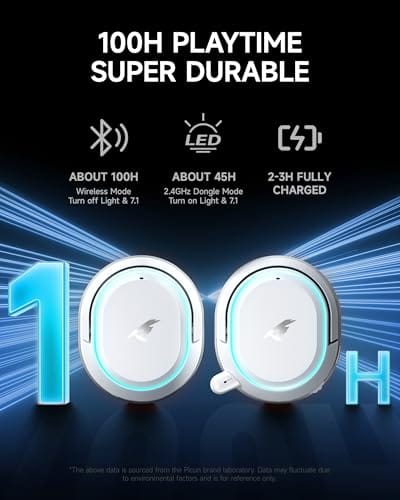
The budget side is represented by the Picun G2, around $59.99 with a strong 4.5-star rating. It’s a wireless over-ear headset with 7.1 virtual surround, 2.4GHz and Bluetooth 5.4 plus wired connectivity, a claimed 5ms ultra-low latency, up to 100 hours of battery, an ENC noise-canceling mic, and RGB, working across PC, PS5, PS4, and Switch. On paper that’s a genuinely loaded feature list for the price, which is exactly why budget headsets have gotten so hard to argue against.
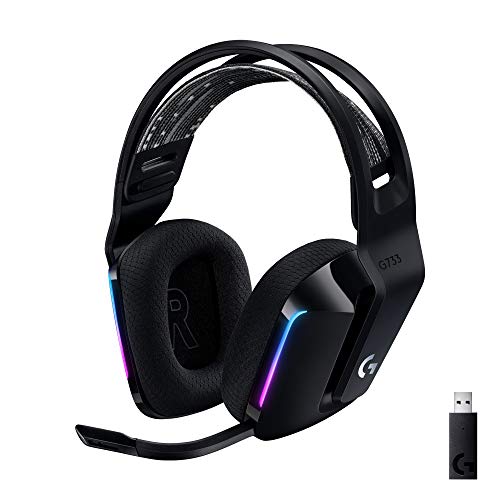
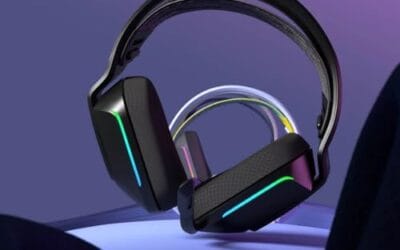
The step-up side is the Logitech G733 Lightspeed, about $124.92 with a 4.0-star rating. It’s a wireless headset built around Logitech’s Lightspeed wireless, a suspension headband, Lightsync RGB, the Blue VO!CE mic system, and PRO-G audio drivers, compatible with PC, PS5, PS4, and Switch. It sits below the true $200 flagships but represents the mid-tier where brand ecosystem, mic processing, and comfort engineering start to justify the extra spend. Two wireless headsets, two very different value propositions.

Spec sheet showdown
| Spec | Picun G2 (budget) | Logitech G733 (mid-tier) | What it means |
|---|---|---|---|
| Price | $59.99 | $124.92 | Roughly double the spend |
| Rating | 4.5 stars | 4.0 stars | Budget rated higher here |
| Wireless | 2.4GHz + BT 5.4 + wired | Lightspeed wireless | Picun adds Bluetooth and wired |
| Mic | ENC noise-canceling | Blue VO!CE system | Logitech leans on mic software |
| Battery | Up to 100 hours | Shorter rated life | Big edge to the budget unit |
Read that table and the budget headset looks almost too good, and in raw features it genuinely competes. Where the spec sheet goes quiet is on the things you feel rather than count: driver tuning, mic clarity in a real call, headband comfort over a five-hour session, and how stable the wireless stays in a crowded 2.4GHz room. Those are the areas the extra money tends to buy, and they don’t reduce to a single number.
$50 tier strengths
The budget tier’s strength is sheer value density. The Picun G2 crams triple connectivity, 7.1 virtual surround, a 100-hour battery, an ENC mic, and RGB into a $59.99 package with a 4.5-star rating, and that battery figure alone embarrasses a lot of pricier headsets. For a casual or budget-conscious gamer, that’s a staggering amount of functionality for the money. You’re not sacrificing features to hit the low price. You’re mostly sacrificing the refinement that features can’t capture.
The flexibility matters too. With 2.4GHz for low-latency gaming, Bluetooth 5.4 for your phone, and a wired option as backup, one budget headset covers your console, PC, and mobile without fuss. That versatility is genuinely useful, and it’s something even some premium headsets skip by going wireless-only. If your priority is getting the most capability per dollar and you don’t have golden ears, the budget tier delivers a shocking amount of headset for what it costs. It’s the pragmatic pick.
$200 tier strengths
The step-up tier spends its money on the things you notice over time rather than on the box. The Logitech G733 leans on PRO-G audio drivers tuned for cleaner, more consistent sound, a suspension headband designed to spread weight for long sessions, and the Blue VO!CE mic system that processes your voice for a clearer, more professional result on calls and streams. That mic processing is a real differentiator, since budget ENC mics handle noise but rarely make you sound polished.
You’re also buying into an ecosystem and a support structure. Logitech’s software gives you EQ, mic tuning, and lighting control that budget brands often handle clumsily or not at all, and the Lightspeed wireless is engineered for stable, low-latency connection. The 4.0-star rating shows the mid-tier isn’t automatically flawless, and some owners note the value math is tighter here. But for streamers, heavy daily users, and anyone who prioritizes mic quality and long-wear comfort, that’s where the extra spend earns its keep. The Picun budget alternative still makes a strong case for pure value.

Pros
- Three connection modes on a single headset: 2.4GHz dongle, Bluetooth 5.4, and 3.5mm wired fallback.
- Vendor-rated 5ms 2.4GHz latency keps audio synced in competitive shooter scenarios.
- Long rated runtime, up to 100 hours in Bluetooth with RGB disabled for travel use.
- RetractableENC microphone tucks away, useful when switching between gaming and general listening.
Cons
- Limited owner feedback at time of writing, real-world reliability and QC signal is unverified.
- 7.1 surround is virtual DSP, not true multi-driver, so positional accuracy varies by title andear.
- RGB lighting materially cuts battery life, cited100-hour figure requires lighting turned off.
The Picun G2 is a budget-tier wireless gaming headset built around 40mm drivers, virtual 7.1 surround, and tri-mode connectivity across2.4GHz, Bluetooth 5.4, and 3.5m wired. Target buyer is a multi-platform player rotating between PC, PS5, PS4, and Switch who wants low-latency wireless without moving up to established brand pricing.
The defining feature is the tri-mode radio stack. The 2.4GHz USB-A or Type-C dongle is rated at 5ms latency, which is competitive for the tier and adequate for most FPS titles, while Bluetooth 5.4 handles phones and tablets. Headsets in this class typically deliver serviceable rather than reference-grade imaging, and virtual 7.1 leans on DSP rather than discrete drivers.
Trade-offs are typical at this tier. Battery figures are optimistic: 100 hours assumes Bluetooth with RGB off, and 2.4GHz drops the number to 42 to 45 hours. Driver material, impedance, frequency response, clamp force, and weight are not specified, so tonal balance and long-session comfort cannot be verified from source data alone.
Buy this if you want one headset that jumps between a PS5, a Switch dock, and a work laptop over Bluetooth, and you accept spec-sheet-only marketing. Skip this if you rely on measured frequency response, discrete suround, or detachable bom mics with broadcast-grade pickup for streaming.
Drivers and tuning: Picun specifies 40mm dynamic drivers paired with virtual 7.1 surround processing. Impedance, sensitivity, and frequency response are not specified, so bass extension and treble air cannot be quantified from source. Virtual 7.1 is DSP-based positional widening, useful for FPS cues but not equivalent to true multi-driver surround.
Connectivity and latency: Three modes are covered: 2.4GHz via USB-A or USB-C dongle, Bluetooth 5.4, and 3.5mm analog. The 2.4GHz link is rated at 5ms latency. Bluetooth codec support (SBC, AAC, aptX) is not specified, which maters for wireless music quality on phones and tablets.
Battery and power: Rated up to 100 hours on Bluetooth with RGB off, and 42 to 45 hours on 2.4GHz wireless. Play-while-charging is supported, so a USB cable can extend sessions past the rated ceiling. Charge time and battery capacity in mAh are not specified.
Microphone: Retractable omnidirectional bom with ENC noise reduction. Sample rate, bit depth, and pickup pattern beyond omni are not specified.ENC filtering targets background noise on the transmit side, adequate for party chat but below dedicated USB mic quality.
Real-world scenarios
Casual gaming and party chat
For casual sessions and Discord with friends, the budget Picun G2 is more than enough. Its ENC mic keeps your voice clear, the 100-hour battery means you forget to charge it, and the 2.4GHz link handles latency fine. Unless you’re streaming to an audience, the extra mic polish of the mid-tier won’t change your experience much. Save the money.
Streaming and content creation
Here the mid-tier pulls ahead. The Logitech G733’s Blue VO!CE processing makes your voice sound cleaner and more professional to viewers, which a basic ENC mic can’t match. If your audience hears your mic for hours, that quality difference is worth paying for. For serious creators, a dedicated USB podcasting mic is the real upgrade, but the G733 mic is a solid all-in-one step up.
Long marathon sessions
Comfort decides this one. The G733’s suspension headband is engineered to distribute weight over long stretches, which owners with all-day habits appreciate. The Picun is comfortable enough for typical sessions and its battery outlasts almost anything, so it depends on which fatigue you fear more: a heavy head or a dead battery. Both are livable, but the mid-tier targets marathon comfort specifically.
Multi-device households
If you bounce between a PC, a console, and a phone, the budget Picun G2 wins on flexibility. Its 2.4GHz, Bluetooth 5.4, and wired options mean one headset serves every device, including quick phone pairing the Lightspeed-only G733 doesn’t offer. For a single headset that goes everywhere, the budget unit’s connectivity spread is the practical advantage, and it costs less to boot.
Pricing and availability
The gap here is about $65, with the Picun G2 at $59.99 and the Logitech G733 at $124.92, and true $200 flagships sit above both. That spread frames the real decision: the budget unit gives you nearly every feature for the least money, while the mid-tier asks a premium for refinement and brand support. Neither is scarce, and both are widely stocked across PC and console retailers.
Interestingly, the budget Picun carries the higher star rating of the two here, at 4.5 versus 4.0, which pushes back on the idea that more money always means happier owners. Ratings reflect value expectations as much as absolute quality, and a $60 headset that overdelivers can satisfy buyers more than a $125 one that competes with pricier rivals. Watch for sales on the mid-tier, since Logitech headsets discount often, which can narrow the price gap and change the calculation.
Which to buy
Buy the budget tier if you’re a casual or value-focused gamer who wants maximum features per dollar. The Picun G2 gives you wireless flexibility, 7.1 surround, a 100-hour battery, and a capable mic for $59.99, and its 4.5-star rating says owners are genuinely happy. For party chat, multi-device use, and everyday gaming, it covers the bases so well that spending double is hard to justify unless you need something specific. Most people land here and don’t regret it.
Step up to the mid-tier if mic quality and long-session comfort are priorities, especially for streaming. The Logitech G733’s Blue VO!CE mic and suspension headband target exactly those needs, and the software ecosystem adds polish budget brands miss. Its 4.0-star rating means it isn’t a slam dunk, so weigh it against sale prices. For creators and heavy daily users, though, the refinement is worth the premium. If pure value is your goal, the Picun remains the smarter buy.
Pros
- Lightspeed wireless with 20 meter range handles typical living room and desk distances
- Up to 29 hours battery life covers multi-day use between charges
- Blue VO!CE mic processing in G HUB improves clarity for Discord and streaming
- Suspension headband and low mass design reduce clamp fatigue during long sessions
- Dual-zone Lightsync RGB with 16.8M colors is customizable through G HUB
Cons
- PS4 output limited to stereo, no suround on older PlayStation hardware
- Driver size, frequency response, and mic pattern not specified in source data
The Logitech G733 is a mid-tier wireless gaming headset targeting PC, PS5, PS4, and Nintendo Switch users who want a lightweight all-day fit. It leans on Lightspeed 2.4GHz wireless, PRO-G drivers, Blue VO!CE mic processing, and a reversible suspension headband, aimed at multi-hour gamers and streamers.
The defining feature is the combination of Lightspeed wireless with a quoted 20 meter range and up to 29 hours of battery. In practice this covers full workdays plus evening sessions without a charge cycle. PRO-G drivers, per Logitech, reduce distortion, and headsets in this tier typically deliver a mildly V-shaped tuning suited to positional FPS cues.
Trade-offs are typical at this price point. PS4 users are locked to stereo output with no virtual surround. Driver diameter, impedance, and frequency response are not published in the source data, so absolute output quality is hard to benchmark against wired competitors. There is no Bluetooth fallback listed, so mobile pairing is not supported.
Buy this if you want a light, long-battery 2.4GHz wireless headset for PC or PS5 with a usable broadcast-style mic. Skip this if you need wired low-latency USB, Bluetooth multipoint, or vendor-published driver and frequency response specs before purchase.
Drivers and tuning: Logitech lists PRO-G drivers tuned for reduced distortion, though exact driver diameter and frequency response are not specified in the source. Headsets in this tier typically ship with 40 to 50mm dynamic drivers and a mildly V-shaped response suited to explosions and footstep cues in FPS gameplay.
Connection and latency: Lightspeed 2.4GHz wireless with a stated 20 meter range covers desk and living room use. Compatibility is confirmed for PC, PS5, PS4 (stereo only), and Nintendo Switch. Bluetooth and wired 3.5mm fallback are not listed in the source, so single-dongle 2.4GHz is the only documented path.
Battery life: Rated up to 29 hours per charge, enough for roughly three to four full evening sessions before recharging. Exact charge time and USB-C versus micro-USB charging port are not specified in the source data.
Microphone: Detachable mic with Blue VO!CE filters configured in G HUB, providing EQ, noise reduction, and de-eser presets useful for Discord and Twitch chat. Mic polar pattern, sensitivity, and frequency range are not disclosed in the source specifications.
Common questions
Is a $200 headset really worth it over a $50 one?
It depends on your needs. The extra money buys mic clarity, long-wear comfort, driver tuning, and software polish rather than raw features, since budget headsets like the Picun G2 already pack surround, long battery, and multi-device wireless. For casual gaming, the budget unit is plenty. For streaming or all-day use where mic quality and comfort matter, the step up earns its price. Match the spend to how hard you’ll use it.
Do budget headsets have good enough mics for Discord?
Generally yes. The Picun G2’s ENC noise-canceling mic keeps your voice clear for party chat and team comms, which is all most gamers need. The difference shows on streams, where processed mic systems like Logitech’s Blue VO!CE make you sound more professional to an audience. For friends on Discord, a budget ENC mic is entirely sufficient, and you won’t be the person people ask to fix their audio.
Does higher price mean better sound quality?
Not always, and the gap is smaller than the price suggests. Pricier headsets often use better-tuned drivers for cleaner, more consistent sound, but budget units have closed much of the distance. Features like virtual 7.1 surround appear at both tiers. Unless you have a trained ear or care deeply about audio nuance, a good budget headset sounds close enough that the extra money is better justified by mic, comfort, and build than by raw sound.
Which tier has better battery life?
The budget Picun G2 wins decisively here, with a claimed 100 hours that outlasts most pricier headsets. Battery life often isn’t where premium models spend their engineering, so a budget unit can genuinely beat a mid-tier one on runtime. If forgetting to charge drives you crazy, the budget headset’s endurance is a real, practical advantage that the extra money doesn’t buy back on the step-up side.
Should I get wireless or wired at these prices?
Both headsets here are wireless, and the budget Picun even adds a wired option as backup. Wireless is convenient and, at 2.4GHz with low latency, fine for gaming. Wired avoids battery worry and can be cheaper for the same audio, but you lose freedom of movement. Since the budget unit offers 2.4GHz, Bluetooth, and wired all in one, you don’t have to choose, which is another point in its favor.









Write Your Review
No reviews yet. Be the first to share your experience!