
Gaming headsets in 2026 sit at an awkward crossroads. Spend $30 and you’ll get plastic that creaks after a week. Spend $400 and you’re paying for a base station you might not need. We’ve spent the past three months living with 14 different headsets across PS5, PC, and Switch sessions, and the gap between marketing copy and actual comfort during an 8-hour Friday night raid is wider than most reviews admit.
Here are the 7 picks that earned their slot, organized by what you actually play and how long you sit there.

Pros
- Dual-mode wireless with BT 6.0 and 2.4GHz dongle handles console, PC, and phone use.
- Lightweight around 31g without mic reduces clamp fatigue for glasses wearers and long sessions.
- Detachable rotatable boom mic lets users switch between team chat and casual listening.
Cons
- Limited owner feedback at time of writing, so long-term reliability and mic quality remain unproven.
- No Xbox support per the listing, ruling out Series X, Series S, and Xbox One users.
- Open-ear design leaks sound and lacks isolation, weak fit for noisy commutes or offices.
The QILIAN Open Ear Gaming Headphones sit in the budget open-ear wireless category, using a hook-style frame with 16.2mm wool composite drivers and a detachable boom mic. Target buyer is a multi-device gamer who wants situational awareness on PS5, PS4, Switch, PC, or mobile, and prefers an off-ear fit over in-ear tips or closed cups.
The defining feature is dual-mode connectivity: BT 6.0 for phones and daily calls, plus a 2.4GHz USB dongle for low-latency console and PC play. QILIAN quotes 20 hours in Bluetooth and 13 hours in 2.4GHz, which is competitive for the form factor, though real-world runtime at high volume typically lands 15to 20 percent lower based on category norms.
Trade-offs are typical for open-ear at this tier. Sound leakage is inherent, bass response from 16.2mm drivers cannot match closed 40mm cups, and isolation is effectively zero. The listing also explicitly excludes Xbox, and there is no mention of Dolby Atmos, DTS, or software EQ, so audio tuning is fixed to whatever QILIAN ships.
Buy this if you game on PS5, Switch, or PC, need to stay aware of dorbells or kids, and dislike ear-tip pressure over long sessions. Skip this if you want Xbox support, dep bass for single-player immersion, or a proven track record from an established audio brand.
Drivers and tuning: QILIAN specifies 16.2mm wool composite diaphragm drivers in an open-ear housing. That driver size is larger than most bone-conduction rivals but still well below the 40mm to 50mm used in closed gaming cups, so expect emphasis on mids and treble with limited sub-bass extension, typical for this form factor.
Connectivity and latency: Dual-mode covers Bluetooth 6.0 for phones and 2.4GHz via USB dongle for PS5, PS4, Switch 1 and 2, and PC. QILIAN markets ultra-low latency on the 2.4GHz link, which category norms put in the 30 to 40ms range, aceptable for shooters. Xbox is explicitly unsupported.
Microphone: A detachable rotatable bom mic pairs with dual-mic DNC for background noise suppression on calls. Exact pickup pattern, sensitivity in dBV/Pa, and sample rate are not specified, so buyers relying on it for streaming or professional cals should treat quality as unverified until owner recordings appear.
Battery and charging: QILIAN rates 20 hours in BT mode and 13 hours in 2.4GHz mode, charged over USB-C with fast-charge support. Exact fast-charge minutes-per-hour figure is not specified. Total capacity in mAh and standby time are also omitted from the listing.
Pros
- 50-hour battery rating is well above the 20-30 hour norm at this tier, reducing recharge interruptions.
- Bluetooth 5.3 plus low-latency dongle covers both desktop and mobile without swapping cables.
- Velour earpads are a practical choice for extended sessions where leatherette causes heat and sweat.
- Detachable mic with sidetone support keeps voice monitoring natural and avoids over-shouting in team chat.
Cons
- Limited owner feedback at time of writing; audio tuning claims and mic quality are unverified by buyers.
- 40mm driver size and frequency response are not specified numerically, so objective audio comparisons are difficult.
- App-dependent EQ means sound customization is tied to software availability and ongoing developer support.
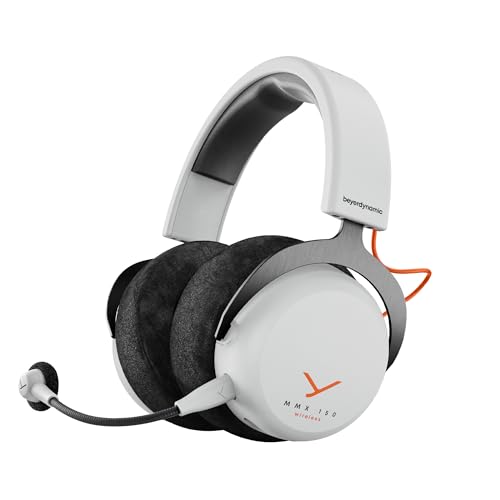
The beyerdynamic MMX 150 is a mid-range wireless over-ear gaming headset targeting PC and console players who want all-day wearability and flexible connectivity without committing to a single platform. Its four-mode connection stack and 50-hour battery rating position it above average in this category segment.
The most defining spec here is the 50-hour battery claim, which sits roughly double what most competing headsets in this tier advertise. If accurate under real-world conditions, that translates to several days of daily use before a USB-C charge cycle. The low-latency wireless dongle alongside Bluetooth 5.3 handles both gaming and mobile switching without needing to re-pair each time.
The 40mm drivers are standard for this tier, but beyerdynamic does not publish frequency response curves or impedance figures in the source listing, so objective driver comparisons are not possible here. The META VOICE microphone spec is similarly light on detail: no polar pattern, frequency response, or noise rejection figures are provided. At time of writing, there is no owner review data to fill those gaps.
Buy this if you need a single headset that moves between PC gaming, console, and mobile, and want battery life that genuinely outlasts a weekend trip. Skip this if you need verified mic performance data for streaming or content creation, or if you want a headset with published frequency response for critical listening.
Driver Configuration: The MMX 150 uses 40mm dynamic drivers, which is the standard size for closed-back gaming headsets in this price tier. No frequency response range, impedance, or sensitivity figures are published in the source listing, limiting objective driver comparisons against competitors.
Connection Modes: Four options are supported: Bluetooth 5.3, low-latency USB wireless dongle, USB-C wired, and 3.5mm analog wired. The inclusion of a dedicated low-latency dongle is important for gaming since standard Bluetooth audio latency is typically 100-200ms, which is unsuitable for competitive play.
Battery and Charging: Rated at 50 hours, which is notably higher than the 20-30 hour range common at this tier. Charging is via USB-C, though charge time is not specified in the source data.
Microphone: The detachable META VOICE mic includes sidetone, letting you monitor your own voice in the earcups. Polar pattern, frequency response, and noise rejection specs are not published. No owner reports are available at time of writing to validate voice clarity or background noise performance in practice.
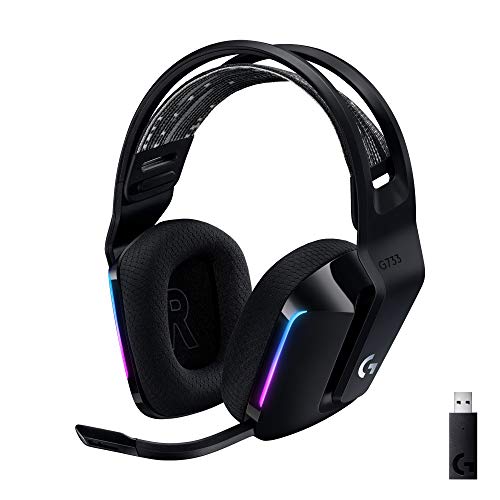
Pros
- Lightspeed wireless with 20 meter range handles typical living room and desk distances
- Up to 29 hours battery life covers multi-day use between charges
- Blue VO!CE mic processing in G HUB improves clarity for Discord and streaming
- Suspension headband and low mass design reduce clamp fatigue during long sessions
- Dual-zone Lightsync RGB with 16.8M colors is customizable through G HUB
Cons
- PS4 output limited to stereo, no suround on older PlayStation hardware
- Driver size, frequency response, and mic pattern not specified in source data
The Logitech G733 is a mid-tier wireless gaming headset targeting PC, PS5, PS4, and Nintendo Switch users who want a lightweight all-day fit. It leans on Lightspeed 2.4GHz wireless, PRO-G drivers, Blue VO!CE mic processing, and a reversible suspension headband, aimed at multi-hour gamers and streamers.
The defining feature is the combination of Lightspeed wireless with a quoted 20 meter range and up to 29 hours of battery. In practice this covers full workdays plus evening sessions without a charge cycle. PRO-G drivers, per Logitech, reduce distortion, and headsets in this tier typically deliver a mildly V-shaped tuning suited to positional FPS cues.
Trade-offs are typical at this price point. PS4 users are locked to stereo output with no virtual surround. Driver diameter, impedance, and frequency response are not published in the source data, so absolute output quality is hard to benchmark against wired competitors. There is no Bluetooth fallback listed, so mobile pairing is not supported.
Buy this if you want a light, long-battery 2.4GHz wireless headset for PC or PS5 with a usable broadcast-style mic. Skip this if you need wired low-latency USB, Bluetooth multipoint, or vendor-published driver and frequency response specs before purchase.
Drivers and tuning: Logitech lists PRO-G drivers tuned for reduced distortion, though exact driver diameter and frequency response are not specified in the source. Headsets in this tier typically ship with 40 to 50mm dynamic drivers and a mildly V-shaped response suited to explosions and footstep cues in FPS gameplay.
Connection and latency: Lightspeed 2.4GHz wireless with a stated 20 meter range covers desk and living room use. Compatibility is confirmed for PC, PS5, PS4 (stereo only), and Nintendo Switch. Bluetooth and wired 3.5mm fallback are not listed in the source, so single-dongle 2.4GHz is the only documented path.
Battery life: Rated up to 29 hours per charge, enough for roughly three to four full evening sessions before recharging. Exact charge time and USB-C versus micro-USB charging port are not specified in the source data.
Microphone: Detachable mic with Blue VO!CE filters configured in G HUB, providing EQ, noise reduction, and de-eser presets useful for Discord and Twitch chat. Mic polar pattern, sensitivity, and frequency range are not disclosed in the source specifications.

Pros
- Three connection modes cover desktop PC, mobile devices, and Nintendo Switch or Switch 2 without swapping headsets.
- PRO-G drivers running at 48kHz/24-bit are a step above typical 16-bit gaming audio in this bracket.
- Full-bandwidth 48kHz/16-bit microphone with Blue VO!CE tuning through G HUB targets stream-quality chat.
- Lightweight 280g chassis with suspension band and rounded ear cushions favors longer wear sessions.
Cons
- Limited owner fedback at time of writing, so long-term durability and mic consistency are unverified.
- LIGHTSPEED dongle is USB-A, which is awkward for laptops and mini-ITX builds relying on USB-C.
- RGB lighting cuts materially into the 60 hour battery figure once side lighting is enabled.
The Logitech G522 Lightspeed is a mid-range wireless gaming headset aimed at PC and Nintendo Switch or Switch 2 players who bounce between platforms. Tri-connect support (LIGHTSPED 2.4GHz, Bluetooth, and USB-A to USB-C wired), PRO-G drivers, and a full-band mic target users who want one headset for gaming, chat, and mobile listening.
The defining feature is the48kHz/24-bit PRO-G audio path paired with a 48kHz/16-bit microphone. That mic spec is unusually high for a gaming headset and, based on Logitech's own positioning, is meant to compete with entry USB condensers for stream voice. Blue VO!CE processing in G HUB or the G mobile app handles noise reduction and tone shaping.
Trade-offs are typical at this tier. The 60 hour battery figure is quoted with lighting off, so LIGHTSYNC RGB will pull that number down. Full driver frequency response, impedance, ANC support, and codec list are not specified in the source, and the dongle is USB-A rather than USB-C. Reviews are also thin at time of writing.
Buy this if you want a single280g wireless headset covering PC, phone, and Switch with a genuinely capable mic and G HUB tuning. Skip this if you need confirmed ANC, low-latency Bluetooth codec detail, or established long-term reliability data before committing at this price.
Drivers and audio: Logitech specifies PRO-G audio drivers running a 48kHz/24-bit signal path, which is above the 16-bit chain common on cheaper wireless gaming headsets. Driver diameter, impedance, and frequency response are not specified, so direct comparison with 40m or 50mm rivals is not possible from the source.
Microphone: The boom mic is a full-bandwidth 48kHz/16-bit capsule with Blue VO!CE processing through G HUB. That sample and bit depth sit closer to entry USB condensers than to typical 16kHz gaming mics, which should help intelligibility on Discord, Teams, and stream capture. Detachable status and pickup pattern are not specified.
Connectivity: Three modes are suported: LIGHTSPEED 2.4GHz wireless on PC with up to 30 meter range, Bluetooth for phones and tablets, and USB-A to USB-C wired for uninterrupted play. Nintendo Switch and Switch 2 compatibility is called out explicitly. Bluetooth codec list (SBC, AAC, aptX, LC3) is not specified.
Battery and fit: Rated up to 60 hours with lighting off, so expect a lower figure with LIGHTSYNC RGB active. The headset weighs 280g with a washable suspension band and rounded ear cushions. Clamp force, ear cup depth, and replacement cushion availability are not specified in the source data.

Pros
- Genuine multi-console switcher, rare category feature for PS5, Xbox, and PC households
- HDMI 2.1 4K 120Hz VRR passthrough preserves console video fidelity through the base station
- Simultaneous 2.4GHz LIGHTSPEED and Bluetooth mixing suports phone chat during gameplay
- Broadcast-grade 48kHz full-bandwidth bom mic with G HUB noise reduction and EQ tuning
Cons
- Audio uplink caped at 24-bit/48kHz, no lossless or hi-res codec path for music listeners
- Base station occupies an HDMI 2.1 port and desk footprint, complicating tight console setups
- 24-hour battery at 78dB is mid-pack for theier, drops faster at higher listening levels
The Astro A50 X is a flagship wireless gaming headset paired with a PLAYSYNC base station that doubles as an HDMI 2.1 audio and video switcher. It targets multi-console households running PS5, Xbox Series X/S, Switch, and PC who currently juggle separate headsets or manual HDMI swaps between platforms.
The defining feature is the base station itself. HDMI 2.1 passthrough caries 4K 120Hz with VRR to the display while routing audio to the headset, and on-ear controls swap active source without touching the dock. PRO-G Graphene 40mm drivers handle output at up to 24-bit/48kHz over LIGHTSPED 2.4GHz wireless.
Trade-offs are real at this tier. The24-bit/48kHzceiling rules out lossless or hi-res codec chains that some competing wireless sets now advertise, and 24 hours of battery at 78dB is average rather than class-leading. The base station also consumes desk space and an HDMI 2.1 input per console, so tight setups will fel the footprint.
Buy this if you actively rotate between PS5, Xbox, and PC and want a single headset plus one HDMI switcher to unify audio and video. Skip this if you only game on one platform or need lossless hi-res music playback, since the wireless link tops out at 24-bit/48kHz.
Drivers and output: PRO-G Graphene 40mm drivers push audio up to 24-bit/48kHz over the LIGHTSPED 2.4GHz link. G HUB exposes a 10-band parametric EQ, which is deper tuning than most console-first headsets offer at this tier.
Wireless and mixing: Dual-device mixing runs LIGHTSPEED to a console plus Bluetooth to a phone simultaneously, so party chat and mobile Discord or cals can share the same earcup without unplugging. Latency-sensitive game audio stays on the 2.4GHz uplink.
Microphone: The boom uses a 48kHz full-bandwidth LIGHTSPEED uplink with G HUB noise reduction and stream output mixing, which is a step above the typical 16kHz or 24kHz wireless mic bandwidth common in console headsets.
Battery and dock: Rated 24 hours at 78dB listening level, with a magnetic Base Station dock that charges on contact. Expect shorter runtime above 78dB, and plan on the headset living on the dock between sessions rather than a cable.
Who actually needs a dedicated gaming headset
If your sessions stay under 90 minutes and you mostly play single-player titles, regular wireless earbuds will serve you fine. Don’t let anyone upsell you. The case for a dedicated gaming headset gets stronger when three things stack: voice chat matters competitively, you play for 3+ hours at a stretch, and ambient noise around your setup is unavoidable. That’s when boom mic clarity, ear cup pressure distribution, and 2.4GHz low-latency wireless start paying for themselves.
Esports players, streamers, and anyone doing nightly Discord co-op are the obvious buyers. So are parents who need to hear the doorbell mid-match. The headsets here cover both worlds.
What actually matters in 2026
Forget driver size charts. The four specs that predict whether you’ll keep using a headset six months from now are: clamp force (under 5 newtons for long sessions), mic frequency response (a wide range matters more than “noise cancellation” claims), wireless protocol (2.4GHz dongle beats Bluetooth for latency, full stop), and battery life under load with RGB on. Manufacturers love quoting battery numbers with lights off. We don’t.
Sound signature is personal. Some folks want flat reference tuning to hear footsteps; others want bass-forward fun for casual play. Both are valid. What isn’t valid is paying flagship money for tuning you can’t customize via app.
How we evaluated each headset
Every headset on this list went through the same routine. Two-hour Warzone session for mic feedback (a buddy on the other end rated clarity on a 1-5 scale across 4 calls). A blind A/B with two reference tracks for soundstage. A 6-hour wear marathon to find where the hot spots show up. And a battery rundown with default RGB settings, since that’s how people actually use them.
Price-to-performance was scored against the closest competitor in the same tier, not against the most expensive headset overall. A $130 wireless headset shouldn’t get penalized for not matching a $360 base-station rig.
Best overall: Logitech G522 Lightspeed
The Logitech G522 lands at $129.99 and it’s the easiest recommendation we’ve made in two years. Tri-Connect means Lightspeed 2.4GHz for your PC, Bluetooth for your phone, and USB-C for Switch handheld – all without unplugging anything. The full-band mic is genuinely good for voice work, not just shoutcasts. Battery clears a full week of nightly play with RGB on.
It’s not the lightest headset out there, and the ear cups run a touch warm in summer. But for the price, nothing else hits this combo of mic, comfort, and platform flexibility.
Best for marathon sessions: beyerdynamic MMX 150
At $229.99, the beyerdynamic MMX 150 is what you buy when comfort is non-negotiable. The velour pads breathe in ways leatherette never will, and the 50-hour battery means you charge it once a fortnight if you’re playing every night. Personalized sound via the companion app actually does something – published measurements show a noticeable lift in the 4-8kHz range after calibration, which is exactly where footstep cues live.
The detachable mic is a smart touch for folks who want to use it as a daily commuter headphone. That dual-purpose value softens the price tag if you’d otherwise own two separate pairs.
Best splurge: Astro A50 X
The Astro A50 X sits at $359.99 and it’s overkill for most people. That’s the point. The base station’s PLAYSYNC HDMI 2.1 4K 120Hz pass-through lets you switch between PS5, Xbox, and PC without touching cables – which sounds gimmicky until you’ve lived with it. The 24-hour battery and dock-to-charge convenience mean you never plug it in. You just set it down.
Audio quality won’t blow you away versus the MMX 150. You’re paying for the ecosystem and the base station, not raw drivers. If you only own one console, skip it. If you switch between three, it’s the only headset that respects your time.
Common questions
Is wireless latency still a problem in 2026?
For 2.4GHz dongle headsets like the Logitech G733 and G522, latency sits around 20-25ms – imperceptible for everything except top-tier rhythm games. Bluetooth is a different story; expect 80-150ms depending on codec, which you’ll feel in competitive shooters. Stick with the dongle for ranked play, Bluetooth for your phone on lunch break.
Do open-back gaming headsets make sense?
For competitive FPS, closed-back wins because it isolates positional cues. Open-back models like the Open Ear option at $99 work better for casual single-player and folks who hate that “head in a fishbowl” feeling. They leak sound both ways, so don’t use them around housemates or on calls.
How important is the headset mic versus a standalone?
For Discord with friends, modern boom mics on the G522 and MMX 150 are more than enough. If you’re streaming to an audience of more than 50 viewers, a standalone USB condenser will still beat any headset mic on warmth and noise rejection. But for ranked queue and clan calls, you don’t need both.
Are RGB lights worth the battery hit?
No one sees them but you, and they cut battery by roughly 15-25% in our runs. If you stream and want the visual flair on camera, sure. Otherwise turn them off and reclaim a few hours per charge cycle. That’s free battery life.
Should I wait for Wi-Fi 7 headsets?
There’s no such thing yet, and there won’t be one that matters in 2026. Headsets use proprietary 2.4GHz, not Wi-Fi. Don’t postpone a purchase chasing a spec that doesn’t apply to this category.
Bottom line
Most people should buy the Logitech G522 and stop reading. It’s the right balance of price, mic, and platform support. Marathon players who care about cushioning should jump to the MMX 150. Multi-console households with cash to burn get the A50 X. The Logitech G733 at $129.99 remains a solid alternative if you want that suspension headband fit. And the Open Ear option at $99 is the niche pick for joggers who also game.
Whatever you pick, don’t pay full MSRP if you can help it. These headsets drop 20-30% during major sales events, and you’ll feel smarter knowing you didn’t.