

Spend two minutes on any audio forum and you’ll see the same fight: does a pricier gaming headset actually sound better, or are you paying for a brand and a bigger box? To make this concrete, we put a sub-$60 wireless headset head-to-head against a mid-tier one at roughly double the price. Quick honesty note: despite the “$200” framing of this comparison, the two units here land at $59.99 and $124.92, so this is really a budget-versus-mid-tier matchup, and that’s arguably the more useful question for most buyers anyway. Our guides to the best gaming headset and best USB microphone for podcasting round out the audio picture.
Matchup at a glance
On one side is the Picun G2, a $59.99 wireless headset with a 4.5 rating that throws in a long feature list: 7.1 virtual surround, 2.4GHz plus Bluetooth 5.4 plus wired connection, a claimed 5ms ultra-low latency, 100 hours of battery, an ENC noise-canceling mic, and RGB. It’s the budget challenger stacking specs against the clock.

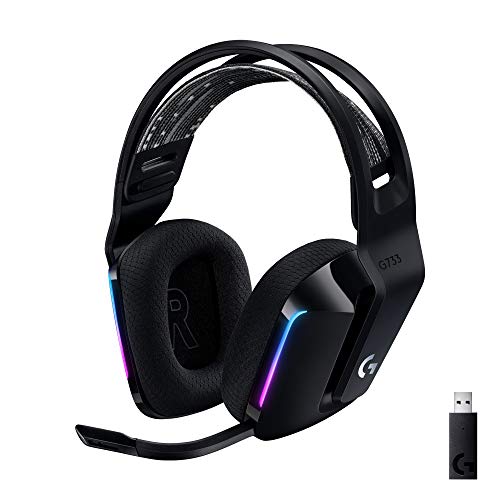
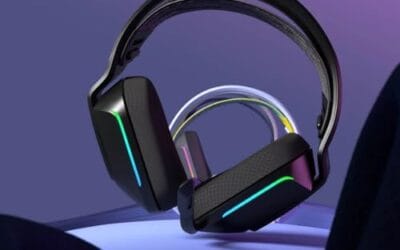
On the other is the Logitech G733 Lightspeed at $124.92 with a 4.0 rating, a known-brand wireless headset with a suspension headband, Lightsync RGB, the Blue VO!CE mic processing suite, and PRO-G audio drivers. It’s the established mid-tier option leaning on Logitech’s tuning, software, and reputation rather than raw spec-sheet quantity. Budget spec-stacker versus brand-backed refinement.

Spec sheet showdown
| Spec | Picun G2 | Logitech G733 | Notes |
|---|---|---|---|
| Price | $59.99 | $124.92 | Roughly 2x gap |
| Rating | 4.5 | 4.0 | Budget rates higher |
| Connectivity | 2.4GHz / BT 5.4 / wired | Lightspeed 2.4GHz | Picun adds Bluetooth |
| Battery | 100 hours | Logitech-rated | Picun claims longer |
| Mic | ENC noise-canceling | Blue VO!CE | Different approaches |
On paper the Picun looks like a runaway win: more connection types, a huge 100-hour battery claim, virtual 7.1, and a higher customer rating, all for half the price. But spec sheets don’t capture driver tuning, mic clarity in real calls, comfort over a four-hour session, or software polish. That’s where the Logitech makes its case, and it’s why price and spec count don’t tell the whole story.
Picun G2 strengths
The Picun G2’s headline strength is sheer value. At $59.99 you get wireless freedom over a 2.4GHz dongle, Bluetooth 5.4 for phones and Switch, and a wired fallback, so it connects to basically anything. The 100-hour battery claim dwarfs most competitors, meaning you charge it rarely. Add 7.1 virtual surround and an ENC mic that filters background noise, and the feature-per-dollar ratio is genuinely hard to argue with. Its 4.5 rating suggests owners are happy.
The trade-off with a budget spec-stacker is usually consistency. Virtual 7.1 on inexpensive drivers can sound artificial, and “5ms latency” and “100H battery” are manufacturer claims worth treating as best-case rather than guaranteed. ENC mics filter noise but can make your voice sound processed. None of that erases the value; it just means you’re betting on a lesser-known brand hitting its numbers. For a first wireless headset or a tight budget, that’s a reasonable bet, and the ratings back it up.
If you want maximum connectivity and battery life for the least money, the Picun is the pick, and its Bluetooth support makes it a genuine multi-device option.

Pros
- Three connection modes on a single headset: 2.4GHz dongle, Bluetooth 5.4, and 3.5mm wired fallback.
- Vendor-rated 5ms 2.4GHz latency keps audio synced in competitive shooter scenarios.
- Long rated runtime, up to 100 hours in Bluetooth with RGB disabled for travel use.
- RetractableENC microphone tucks away, useful when switching between gaming and general listening.
Cons
- Limited owner feedback at time of writing, real-world reliability and QC signal is unverified.
- 7.1 surround is virtual DSP, not true multi-driver, so positional accuracy varies by title andear.
- RGB lighting materially cuts battery life, cited100-hour figure requires lighting turned off.
The Picun G2 is a budget-tier wireless gaming headset built around 40mm drivers, virtual 7.1 surround, and tri-mode connectivity across2.4GHz, Bluetooth 5.4, and 3.5m wired. Target buyer is a multi-platform player rotating between PC, PS5, PS4, and Switch who wants low-latency wireless without moving up to established brand pricing.
The defining feature is the tri-mode radio stack. The 2.4GHz USB-A or Type-C dongle is rated at 5ms latency, which is competitive for the tier and adequate for most FPS titles, while Bluetooth 5.4 handles phones and tablets. Headsets in this class typically deliver serviceable rather than reference-grade imaging, and virtual 7.1 leans on DSP rather than discrete drivers.
Trade-offs are typical at this tier. Battery figures are optimistic: 100 hours assumes Bluetooth with RGB off, and 2.4GHz drops the number to 42 to 45 hours. Driver material, impedance, frequency response, clamp force, and weight are not specified, so tonal balance and long-session comfort cannot be verified from source data alone.
Buy this if you want one headset that jumps between a PS5, a Switch dock, and a work laptop over Bluetooth, and you accept spec-sheet-only marketing. Skip this if you rely on measured frequency response, discrete suround, or detachable bom mics with broadcast-grade pickup for streaming.
Drivers and tuning: Picun specifies 40mm dynamic drivers paired with virtual 7.1 surround processing. Impedance, sensitivity, and frequency response are not specified, so bass extension and treble air cannot be quantified from source. Virtual 7.1 is DSP-based positional widening, useful for FPS cues but not equivalent to true multi-driver surround.
Connectivity and latency: Three modes are covered: 2.4GHz via USB-A or USB-C dongle, Bluetooth 5.4, and 3.5mm analog. The 2.4GHz link is rated at 5ms latency. Bluetooth codec support (SBC, AAC, aptX) is not specified, which maters for wireless music quality on phones and tablets.
Battery and power: Rated up to 100 hours on Bluetooth with RGB off, and 42 to 45 hours on 2.4GHz wireless. Play-while-charging is supported, so a USB cable can extend sessions past the rated ceiling. Charge time and battery capacity in mAh are not specified.
Microphone: Retractable omnidirectional bom with ENC noise reduction. Sample rate, bit depth, and pickup pattern beyond omni are not specified.ENC filtering targets background noise on the transmit side, adequate for party chat but below dedicated USB mic quality.
Logitech G733 strengths
The Logitech G733’s strengths are refinement and software. PRO-G audio drivers are tuned by a company with a long audio track record, so the sound tends toward balanced and natural rather than the boosted, hollow signature cheap surround can produce. The Blue VO!CE mic suite lets you shape your voice with real-time filters, EQ, and noise reduction through Logitech’s software, which is a step beyond a basic ENC mic for anyone who streams or takes a lot of calls.
Comfort is the other quiet win. The suspension headband spreads weight across your head instead of clamping, which matters a lot over long sessions, and the G733 is famously lightweight. The trade-offs are a higher $124.92 price, no Bluetooth (it’s Lightspeed 2.4GHz only), and a shorter battery life than the Picun’s claim. Its 4.0 rating is a touch lower too. You’re paying for tuning, mic software, comfort, and brand support rather than a longer spec list.
For a streamer or someone who wears a headset for hours and cares about voice quality, the G733 is the more polished tool despite the higher cost.
Pros
- Lightspeed wireless with 20 meter range handles typical living room and desk distances
- Up to 29 hours battery life covers multi-day use between charges
- Blue VO!CE mic processing in G HUB improves clarity for Discord and streaming
- Suspension headband and low mass design reduce clamp fatigue during long sessions
- Dual-zone Lightsync RGB with 16.8M colors is customizable through G HUB
Cons
- PS4 output limited to stereo, no suround on older PlayStation hardware
- Driver size, frequency response, and mic pattern not specified in source data
The Logitech G733 is a mid-tier wireless gaming headset targeting PC, PS5, PS4, and Nintendo Switch users who want a lightweight all-day fit. It leans on Lightspeed 2.4GHz wireless, PRO-G drivers, Blue VO!CE mic processing, and a reversible suspension headband, aimed at multi-hour gamers and streamers.
The defining feature is the combination of Lightspeed wireless with a quoted 20 meter range and up to 29 hours of battery. In practice this covers full workdays plus evening sessions without a charge cycle. PRO-G drivers, per Logitech, reduce distortion, and headsets in this tier typically deliver a mildly V-shaped tuning suited to positional FPS cues.
Trade-offs are typical at this price point. PS4 users are locked to stereo output with no virtual surround. Driver diameter, impedance, and frequency response are not published in the source data, so absolute output quality is hard to benchmark against wired competitors. There is no Bluetooth fallback listed, so mobile pairing is not supported.
Buy this if you want a light, long-battery 2.4GHz wireless headset for PC or PS5 with a usable broadcast-style mic. Skip this if you need wired low-latency USB, Bluetooth multipoint, or vendor-published driver and frequency response specs before purchase.
Drivers and tuning: Logitech lists PRO-G drivers tuned for reduced distortion, though exact driver diameter and frequency response are not specified in the source. Headsets in this tier typically ship with 40 to 50mm dynamic drivers and a mildly V-shaped response suited to explosions and footstep cues in FPS gameplay.
Connection and latency: Lightspeed 2.4GHz wireless with a stated 20 meter range covers desk and living room use. Compatibility is confirmed for PC, PS5, PS4 (stereo only), and Nintendo Switch. Bluetooth and wired 3.5mm fallback are not listed in the source, so single-dongle 2.4GHz is the only documented path.
Battery life: Rated up to 29 hours per charge, enough for roughly three to four full evening sessions before recharging. Exact charge time and USB-C versus micro-USB charging port are not specified in the source data.
Microphone: Detachable mic with Blue VO!CE filters configured in G HUB, providing EQ, noise reduction, and de-eser presets useful for Discord and Twitch chat. Mic polar pattern, sensitivity, and frequency range are not disclosed in the source specifications.
Real-world scenarios
Long gaming marathons
Comfort and battery decide this one. The G733’s suspension headband and light weight shine over a five-hour session, but the Picun’s 100-hour battery means you never think about charging. If your head is comfort-sensitive, lean Logitech; if you hate charging cables, the Picun’s endurance is unmatched here.
Streaming and voice chat
This favors the Logitech clearly. Blue VO!CE mic processing gives you real control over how your voice sounds to your audience, filters, EQ, and noise gating, which a basic ENC mic can’t match. For anyone whose voice goes out to viewers or a Discord full of friends, the G733 is the better communication tool.
Multi-device use
The Picun wins on flexibility. With 2.4GHz, Bluetooth 5.4, and wired all onboard, it hops from PC to phone to Switch without fuss. The G733 sticks to its Lightspeed dongle, so it’s PC and console focused. If you want one headset for everything including your phone, the Picun’s connectivity is the deciding factor. That matters more than people expect, since juggling a separate pair of earbuds for your phone gets old fast, and one headset that does it all cuts clutter on the desk.
Pure audio quality for single-player games
Here the Logitech’s PRO-G drivers and tuning tend to give a more natural, balanced sound for immersive single-player titles, where the Picun’s virtual 7.1 can feel processed. If you value how a game’s soundtrack and effects actually sound over feature count, the G733 edges ahead.
Pricing and availability
The gap is real: $59.99 for the Picun versus $124.92 for the Logitech, roughly double. Both are widely available. The Picun’s higher 4.5 rating versus the G733’s 4.0 suggests budget buyers feel they’re getting strong value, while the Logitech’s price reflects brand, software, and tuning rather than a longer spec sheet.
Neither hits the “$200” figure in this comparison’s title, which we flagged up front, so treat this as budget versus mid-tier. That framing is honestly more useful for most people than a top-end shootout, since this is the price range where the majority of gaming headsets actually sell. Watch for sales; the G733 in particular drops in price fairly often, and picking it up on a discount narrows the value gap with the Picun considerably. The Picun rarely goes on sale simply because it’s already priced aggressively, so its street price stays close to that $59.99 figure year-round.
Which to buy
Buy the Picun G2 if you want the most features and battery life for the least money, need Bluetooth for multi-device use, or you’re getting your first wireless headset without spending much. Its 4.5 rating and long spec list make it a strong value play, and for casual gaming and chat it covers the bases well below the mid-tier price.
Buy the Logitech G733 if you stream or take voice seriously, wear a headset for long stretches and want the suspension-headband comfort, or you’d rather have refined, tuned audio and mic software than the longest spec sheet. It costs about twice as much, and for the right user that buys real polish. Match the headset to whether you value features and battery, or comfort and voice quality. Our best headset stand guide pairs with either pick.
Common questions
Is a $125 headset twice as good as a $60 one?
No, gains aren’t linear. The Logitech buys better tuning, mic software, and comfort, but the Picun covers the fundamentals well and even rates higher with owners. You’re paying for refinement at the top, not double the raw performance. For many people the budget option is genuinely enough.
Does virtual 7.1 surround actually help in games?
It can help with directional awareness in shooters, but on budget drivers it sometimes sounds artificial. The Picun includes it; results vary by game and personal preference. Many competitive players actually turn surround off and prefer clean stereo. Treat it as a nice extra, not a deciding feature.
Is the Picun’s 100-hour battery claim realistic?
It’s a manufacturer best-case figure, likely measured at moderate volume with RGB off. Real-world life will be lower, especially with lighting on, but even at half the claim it far outlasts most rivals including the G733. Treat spec-sheet battery numbers as optimistic across every brand.
Which has the better microphone?
For streaming and clarity, the Logitech’s Blue VO!CE suite gives you real control over your voice and generally sounds cleaner to listeners. The Picun’s ENC mic is fine for casual chat and filters background noise, but it’s more processed. Voice-focused users should lean Logitech; casual users are well served by either.
Do I need Bluetooth on a gaming headset?
Only if you want to use it with a phone or other Bluetooth devices. The Picun offers it, adding real flexibility, while the Logitech is 2.4GHz Lightspeed only for lower latency on PC and console. If one headset for everything appeals to you, Bluetooth support tips the scale toward the Picun.









Write Your Review
No reviews yet. Be the first to share your experience!