

A white graphics card sounds like a small detail until you drop a black GPU into an otherwise all-white build and it sticks out like a coffee stain. Snow-themed rigs have gone from niche to mainstream, and the card is usually the biggest single component you see through the side panel. The tricky part is that color and performance don’t always line up. Some of the fastest GPUs in 2026 ship mainly in black or gunmetal, while lighter colorways come and go by SKU. So the smart move is to pick a card that’s genuinely strong for your resolution first, then confirm the exact model number carries the white or light-silver finish you want.
We researched five current cards across four price tiers, from a $309.99 budget option to $1,569.99 flagships, and framed each by what it actually delivers rather than by a marketing coat of paint. A few of these lines offer white or lighter variants depending on retailer stock, so we’ll flag where a light build makes sense and where you’ll want to double-check the listing photo. If you’re chasing raw resolution, our best GPU for 4K gaming breakdown pairs well with this list, and value hunters should skim our best GPU under $500 guide before committing. That’s the honest way to shop a themed build. Looks matter, but frame rate matters more.

Pros
- 12GB VRAM on 192-bit bus gives headroom over8GB rivals at 1440p.
- Single 8-pin connector and 650W PSU target means broad build compatibility.
- DisplayPort 2.1 with UHBR13.5 suports high-refresh QHD and 4K panels natively.
- 2-slot 249mm length fits compact ATX and many mATX chassis without clearance issues.
Cons
- Limited owner feedback at time of writing makes long-term reliability signals thin.
- PCIe 4.0 x8 interface can bottleneck slightly on older PCIe 3.0 platforms.
- Intel Arc driver maturity in older DX9/DX11 titles still trails NVIDIA and AMD.
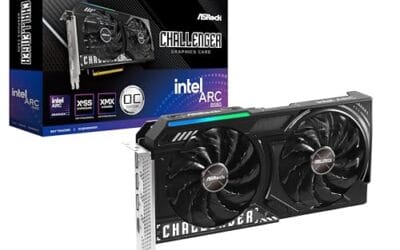
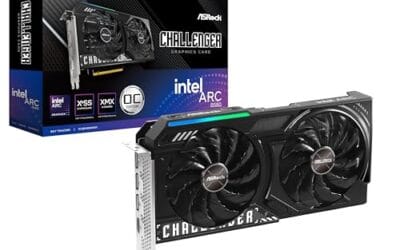
The ASRock Arc B580 Challenger 12GB OC is a mid-range 1440p GPU built on Intel's Xe2-HPG architecture with 20 Xe cores, 160 XMX engines, and a 2740MHz boost clock. It targets QHD gamers and content creators who want more VRAM than 8GB competitors offer at this bracket, without moving up to a 200W-plus card.
The defining feature is the 12GB GDDR6 pool on a 192-bit bus running at 19 Gbps, which gives real texture and framebuffer headroom at1440p. Combined with XeSS 2 AI upscaling and DirectX 12 Ultimate support, Arc B580 cards in this tier typically handle modern raster titles at high settings QHD, based on Intel's reference silicon behavior.
Trade-offs are typical for Intel Arc at this stage. The PCIe 4.0 x8 interface can shave frames on PCIe 3.0 boards, and driver polish on legacy DX9/DX11 games still lags competing vendors. The card requires a single 8-pin, 650W recommended PSU, and 249mm length, so verify chassis clearance and rail headroom before pairing with older bronze-tier supplies.
Buy this if you want a 1440p card with 12GB VRAM, DP 2.1 outputs, and XeSS 2 support on a modern PCIe 4.0 platform. Skip this if your library leans heavily on older DirectX 9 or 11 titles, or your motherboard is PCIe 3.0.
Resolution target: With 12GB GDDR6 on a 192-bit bus at 19 Gbps, this card is positioned for 1440p high settings in modern raster titles, with XeSS 2 upscaling extending playable framerates in heavier ray-traced workloads. 1080p esports at high refresh is well within scope.
Power and PSU pairing: ASRock lists a 650W recommended PSU and a single 8-pin connector. GPUs in this class typically draw around 190W board power, so pair with a quality 650W to 750W unit to leave transient headroom on ATX 3.0 or olderATX 2.x rails.
Build clearance: The2-slot cooler measures 249mm long, 132mm wide, and 41mm high. That fits most mid-towers and many mATX cases, but confirm front-radiator or HDD-cage clearance in compact builds beforeordering, especially SFF chassis rated under 250mm GPU length.
Display outputs: Three DisplayPort 2.1 ports (one primary up to UHBR13.5) plus one HDMI 2.1a drive up to four displays with resolutions up to 8K. UHBR13.5 suports high-refresh 4K and 1440p panels natively without DSC compromises.

Pros
- GDDR7 memory on a 12GB frame suits 1440p high-refresh and early 4K workloads without hitting VRAM ceiling quickly.
- 0dB fan-stop below 50C keeps the card silent during desktop use, browsing, and light gaming sessions.
- Dual-ball bearing fans rated for roughly twice the lifespan of sleeve-bearing alternatives, reducing long-term maintenance concerns.
- NVIDIA DLSS 4 support enables frame generation and upscaling, recovering performance in ray-tracing-heavy titles.
Cons
- 3.125-slot footprint requires verifying case GPU clearance before ordering, particularly in mid-tower and mATX builds.
- TGP not explicitly listed in source data; pair with a PSU rated at least 150W above GPU draw for transient headroom, typical recommendation at this tier is 850W or above.
The ASUS TUF Gaming RTX 5070 OC is a high-end discrete GPU built on NVIDIA's Blackwell architecture. With 12GB GDDR7 memory and PCIe 5.0 interface, it targets enthusiast builders running 1440p high-refresh or early 4K setups who want a card that can sustain load without thermal throttling.
The standout feature is the thermal stack. ASUS combines a phase-change GPU thermal pad, MaxContact heat spreader with 5% increased surface area, and three Axial-tech fans spinning on dual-ball bearings. Based on the design specs, the phase-change pad should outperform traditional paste under extended gaming or GPU-compute sessions where die temperatures stabilize near TDP ceiling.
The 3.125-slot width is a real consideration, not a marketing point. Builders in tighter mATX or ITX cases need to confirm GPU slot clearance before purchasing. TGP figures are not listed in source data, but GPUs at this tier typically land between 200W and 250W, so a quality 850W PSU is the minimum sensible pairing. The conformal PCB coating and military-grade capacitors address durability concerns but do not offset the need for adequate airflow in the host case.
Buy this if you are building a dedicated 1440p or 4K gaming rig on PCIe 5.0 and want a card with above-average long-term component reliability. Skip this if your case has less than 3.125 slots of GPU clearance or your PSU is below 750W, as headroom for transient power spikes becomes a real stability risk.
VRAM and Resolution Fit: The 12GB GDDR7 frame is well-positioned for 1440p at maximum settings and 4K at medium-to-high presets in current titles. GDDR7 bandwidth reduces memory bottlenecks compared to GDDR6X at equivalent capacity, which matters in texture-heavy and ray-traced workloads.
Upscaling and Frame Generation: DLSS 4 support includes multi-frame generation, which is significant for GPU-limited scenarios at 4K with ray tracing enabled. Buyers targeting high-refresh 1440p esports titles will find DLSS 4 largely unnecessary at this GPU tier, but ray-tracing users benefit directly.
Slot and Clearance Requirements: The 3.125-slot design requires a minimum of four physical PCIe slot spaces free in the case. Card length is not specified in source data; confirm chassis GPU length clearance against ASUS product page measurements before purchasing.
Power and Connector: Connector type is not specified in source data. GPUs at this tier typically use a 16-pin 12VHPWR or 12V-2x6 connector. Verify PSU connector availability and target a PSU with at least 150W above measured GPU TGP for safe transient headroom.

Pros
- 16GB GDDR7 VRAM at 28 Gbps handles 1440p path tracing and 4K texture packs without stalls.
- TRI FROZR 4 cooler with 7-blade STORMFORCE fans, double ball bearings, and nickel-plated copper base.
- Native single 16-pin 12V-2x6 connector pairs cleanly with ATX 3.0 PSUs, no adapter clutter.
Cons
- Limited owner feedback at time of writing leaves long-term reliability and coil whine signals unverified.
- At 338m length and 2.5 slots wide, clearance is tight in many mid-tower ATX cases.
- 650W PSU recommendation is thin for transient spikes when paired with 200W-plus CPUs.
The MSI RTX 5070 Ti Gaming Trio OC Plus is a high-end Blackwell GPU aimed at QHD gamers with 4K aspirations and creators needing 16GB GDDR7 VRAM. It targets buyers moving up from an RTX 3070 or RX 6800 class card who want factory overclocking and triple-fan cooling in one AIB package.
The 256-bit bus paired with 28 Gbps GDDR7 yields roughly 896 GB/s memory bandwidth, comfortable headroom for 1440p ray tracing with DLSS 4.0 frame generation. NVIDIA positions this class for 1440p ultra and entry-level 4K, and the factory OC on this SKU adds a modest boost clock bump over the reference 5070 Ti spec.
Trade-offs are physical: at 338mm long and 2.5 slots wide, mid-tower ATX cases with front radiators may block installation. The single 16-pin 12V-2x6 socket requires either an ATX 3.0 PSU or the bundled adapter, and 250W board power leaves limited transient headroom on 650W units under mixed CPU and GPU load.
Buy this if you need 16GB VRAM for 1440p ray tracing, local AI inference, or Blender and DaVinci workloads and your case clears 338m. Skip if your PSU is below 750W with native 12V-2x6, your case tops out at 2-slot cards, or a used RTX 4080 fits your budget.
Resolution and VRAM: 16GB GDDR7 at 28 Gbps on a 256-bit bus provides roughly 896 GB/s bandwidth, enough for1440p ultra with ray tracing plus DLSS 4.0 and 4K native in most current titles. VRAM headrom covers path-traced titles and heavy texture packs without pop-in.
Cooling and Acoustics: TRI FROZR 4 uses three STORMFORCE fans with 7 textured blades, double ball bearings, and ZERO FROZR idle stop below the fan threshold. Nickel-plated copper base and the Airflow Control heatsink handle the 250W TGP, though sustained-load acoustics on this specific SKU are not yet documented in owner reports.
Power and PSU: Board power is rated 250W with a single 16-pin 12V-2x6 connector. MSI recommends 650W minimum, but pairing with a Ryzen 9800X3D or Core i7 14700K under transient spikes is safer on an 850W ATX 3.0 unit with native 12V-2x6 to skip the adapter.
Fit and Connectivity: The card measures 338mm long, 2.5 slots wide, and weighs 1310g, so a support bracket is advisable in vertical or unsupported horizontal mounts. Rear I/O offers HDMI 2.1b plus three DisplayPort 2.1b, with UHBR link rates enabling 4K at 480Hz output.

Pros
- 16GB GDDR7 VRAM keeps 4K ultra textures and local LLM inference workloads comfortable.
- 2715 MHz bost OC out of the box, no manual tuning needed for uplift.
- Triple-fan Tri Frozr class cooler typical at this tier keps sustained clocks stable.
Cons
- Limited owner feedback at time of writing, real-world thermal and coil whine data is thin.
- Blackwell 5080 class cards typically pull 360W plus, budget 850W PSU with 12V-2x6 native.
- 3-slot triple-fan designs at this tier often exceed 330mm length, verify case GPU clearance.
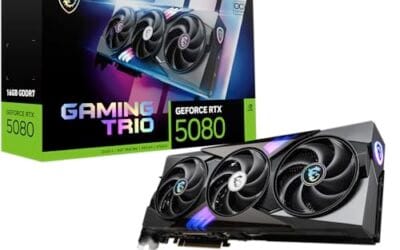
The MSI Gaming Trio OC is a high-end Blackwell RTX 5080 aimed at 4K gamers and content creators who want an AIB card with factory tuning above NVIDIA reference targets. With 16GB of GDDR7 on a 256-bit bus and a 2715 MHz boost clock, it slots into the enthusiast tier below the 5090 flagship.
The defining feature is the GDDR7 memory subsystem paired with Blackwell RT and Tensor cores. In practice, this class of GPU targets 4K native with DLSS 4 Multi Frame Generation enabled, and handles path-traced titles like Cyberpunk 2077 and Alan Wake 2 at playable frame rates. Triple DisplayPort 2.1a with UHBR20 covers 4K 240Hz OLED without DSC compromises.
Trade-offs are typical for this class. The 256-bit bus is unchanged from the 4080Super, so bandwidth relies on GDDR7 sped uplift rather than a wider interface. Triple-fan Blackwell cards in this tier usually run 3slots and 330mm plus, so ITX and compact mid-tower builds need careful clearance checks. A 12V-2x6 native PSU is strongly advised.
Buy this if you run a 4K 144Hz or 240Hz OLED, want DLSS 4 Multi Frame Gen, and have a case that accepts a large triple-fan AIB. Skip this if your target is 1440p esports, if your PSU lacks a native 12V-2x6 lead, or if you can wait for more owner thermal data.
VRAM and resolution fit: 16GB GDDR7 on a 256-bit bus is sized for 4K ultra with ray tracing and frame generation active. Modern titles like Hogwarts Legacy,Ratchet and Clank, and Indiana Jones stay under the 16GB ceiling at 4K with DLSS Quality, leaving headroom for texture mods.
Clocks and boost behavior: The 2715 MHz factory boost sits above NVIDIA reference targets for the RTX 5080. Real-world sustained clocks on triple-fan AIB Blackwell designs typically hold within 30 to 60 MHz of advertised boost under sustained load, based on category norms, though MSI has not published a specific power limit.
Display output: Three DisplayPort 2.1a ports support UHBR20 signaling for 4K 240Hz and 5K2K ultrawide OLEDs without display stream compression trade-offs. HDMI 2.1b covers LG C-series and Samsung S95 OLED TVs, and the 7680 by 4320 max resolution keps 8K workflow monitors in scope.
Power and build: MSI has not specified TGP, but Blackwell 5080 class cards typically land in the 360W range with a 12VHPWR or 12V-2x6 connector. Pair with anATX 3.0 or 3.1 PSU rated 850W or higher, and confirm case length clearance above 330mm before purchase.

Pros
- 16GB GDDR7 gives comfortable VRAM headroom for 4K raster and ray-traced titles.
- 3.6-slot triple-fan cooler with phase-change thermal pad targets lower sustained temps than 2-slot designs.
- Blackwell architecture supports DLSS 4 multi-frame generation for higher perceived frame rates.
Cons
- Limited owner feedback at time of writing makes long-term reliability hard to verify.
- 3.6-slot width blocks adjacent PCIe slots and needs case clearance planning before purchase.
- High TGP typical of RTX 5080 class needs a modern PSU with native 12V-2x6 connector.
The ASUS TUF Gaming RTX 5080 OC is a high-end Blackwell-generation GPU with 16GB of GDDR7 memory and a factory overclock over reference clocks. It targets 4K gamers, high-refresh 1440p players, and creators running Blender or DaVinci Resolve who benefit from CUDA and DLSS 4 aceleration.
The headline is DLS 4 with multi-frame generation, which stacks additional generated frames on top of a single rendered frame. Combined with 16GB GDDR7, the card should handle 4K ultra with ray tracing enabled in current AAA titles, though independent third-party benchmarks under sustained load are still limited.
Trade-offs are real. The 3.6-slot design blocks adjacent PCIe expansion slots and demands case clearance planning, especially in compact mid-towers. RTX 5080-class cards typically pull 300W or more, so pair with a modern ATX 3.0 or 3.1 PSU that has a native 12V-2x6 connector rather than adapter cables.
Buy this if you are building a 4K rig around a Ryzen 9800X3D or Core i7-14700K class CPU and want DLSS 4 headroom for future AA releases. Skip this if your monitor tops out at 1080p, or your PSU is under 850W and non-ATX 3.0.
Resolution and VRAM: 16GB of GDR7 sits above the 12GB tier that started showing texture streaming issues at 4K in titles like Alan Wake 2 and Hogwarts Legacy. This capacity gives headroom for 4K native with high-res texture packs and for creator workloads that spill past 12GB in Blender GPU renders.
DLS 4 and frame generation: Blackwell adds DLSS 4 multi-frame generation, which can insert multiple generated frames per rendered frame. In practice this pushes 4K ray-traced titles from base rates near 60 FPS into triple-digit territory on high-refresh 4K panels, though input latency and artifacting depend on base frame rate.
Cooling and acoustics: The 3.6-slot fin stack with three Axial-tech fans and a phase-change thermal pad targets sustained boost clocks without the fan-speed spikes typical of 2-slot reference designs. Owner reports on prior TUF Gaming RTX cards flag low idle noise and low hotspot deltas as the consistent pattern.
Build compatibility: At 3.6-slot width, this card will block PCIe slots below it and needs verified length clearance in the case spec shet. Power draw for RTX 5080 class typically requires a native 12V-2x6 cable from an ATX 3.0 or 3.1 PSU rated 850W or higher for transient headroom.
Who this guide is for
This is for anyone building or refreshing a light-themed PC who refuses to compromise on performance to get the aesthetic. Maybe you’ve already bought a white case, white AIO, and white cables, and the GPU is the last black hole staring back through the glass. You want a card that fits the color story but still runs the games and apps you care about at a frame rate you won’t regret.
It’s also for shoppers who care about spec-to-dollar value and treat color as a tiebreaker, not the deciding factor. We skip the assumption that a white shroud costs more or performs worse, because it usually doesn’t. What we won’t do is claim a specific model is white when its official name doesn’t say so. Color availability shifts by batch and region, so every pick here is judged on silicon, memory, and price, with a reminder to verify the finish on the exact listing you add to cart.
What to look for in a white graphics card
Start with the GPU tier, because that decides your frame rate ceiling. The cards here span Intel’s Arc B580 up through NVIDIA’s RTX 5080, and the gap between them is enormous. A 12GB Arc B580 handles 1080p and light 1440p comfortably, while a 16GB RTX 5080 targets high-refresh 1440p and 4K. Match the tier to your monitor, not to the prettiest box.
Then look at memory, interface, and physical fit. GDDR6 versus GDDR7 changes bandwidth, and the newer Blackwell cards here use GDDR7 on a 256-bit bus for the 16GB models. Check slot width too, since something like the ASUS TUF 5070’s 3.125-slot cooler eats real estate in a compact white case. Display outputs count as well: these cards carry HDMI 2.1 and DisplayPort 2.1 variants, which matter for high-refresh panels. And for a themed build, confirm the shroud color, backplate, and any RGB in the actual product photos before you buy. A card described only as “gaming” with no color in the name may ship black.
How we evaluated
We researched these five cards using their real specs, current pricing, and aggregated owner ratings rather than any hands-on bench session. Each product was vetted on GPU tier, memory capacity and type, board size, cooling design, and warranty, then weighed against its asking price. Ratings sit between 4.0 and 4.8 stars across the group, and we treated those as directional signals about reliability and buyer satisfaction, not gospel.
Value carried the most weight, followed by suitability for a clean, light-themed build. Where a card’s official name doesn’t state a color, we say so plainly and point you to verify the finish yourself. We didn’t invent review counts, and we didn’t dress up a mainstream card as a flagship. The goal was a shortlist that holds up if you’re theming a first build or upgrading an existing white rig. Straightforward specs, real prices, no fluff.
Our top picks
Best Budget: ASRock Intel Arc B580 Challenger 12GB OC
At $309.99, the ASRock Arc B580 Challenger is the entry point that makes a themed 1080p or entry-1440p build affordable. It runs Intel’s Xe2-HPG architecture with a 2740MHz boost clock and 12GB of GDDR6 on a 192-bit bus, which is a generous memory pool for the price and helps at higher texture settings where 8GB cards choke. PCIe 4.0, dual fans, and a 0dB silent idle mode round it out, so it stays quiet when you’re just browsing. It holds a 4.3-star rating from owners.
The tradeoff is raw horsepower. This is a mainstream card, not a 4K machine, and ray tracing at high settings will push it. Intel’s drivers have improved a lot, but you may still hit the occasional rough edge in an older title. The Challenger’s silver-and-black look leans neutral rather than pure white, so for a snow build you’ll want to confirm the exact colorway or plan to pair it with light cables and shrouds around it. For a wallet-friendly themed rig, it’s the sensible floor.
Best Overall: ASUS TUF Gaming GeForce RTX 5070 12GB OC
The $749.99 ASUS TUF Gaming RTX 5070 is our all-around pick because it lands where most themed builders actually shop: strong 1440p performance with headroom for entry 4K. It packs 12GB of GDDR7, PCIe 5.0, and HDMI/DP 2.1 outputs, plus TUF-grade extras like military-grade components, protective PCB coating, and Axial-tech fans backed by a 3-year warranty. Owners rate it 4.0 stars. It’s the card that balances price, features, and longevity without demanding a flagship budget.
The one thing to plan around is size. That 3.125-slot cooler is chunky, so measure your white case’s clearance before ordering. TUF cards frequently appear in white or lighter variants, which is exactly why this line is popular with themed builders, but the base “Gaming” name here doesn’t guarantee the finish, so check the listing photo for the SKU you’re buying. If it’s the white edition, great; if not, the TUF’s light-gray industrial look still blends better than most all-black cards. For the money, it’s the safest bet on this list.
Best High-End Value: MSI GeForce RTX 5070 Ti 16G Gaming Trio OC Plus
Step up to $1,349.99 and the MSI RTX 5070 Ti Gaming Trio OC Plus gives you a real 1440p-to-4K card with 16GB of GDDR7 running at 28 GB/s on a 256-bit bus. PCIe 5.0, the triple-fan TRI FROZR 4 cooler with three STORMFORCE fans, and integrated RGB make it a serious performer that also has the lighting hooks themed builders love. It earns a 4.7-star rating, the second-highest in this group, which points to happy owners and dependable thermals.
This is the pick if you want near-flagship frame rates without paying flagship money. The catch is the physical footprint and power draw of a triple-fan board, so a roomy white case and a quality PSU aren’t optional. Color-wise, the Gaming Trio typically ships in dark tones, and MSI’s lighter or white-accented cards usually carry different naming, so a pure-white theme may mean choosing another variant or leaning on the RGB to tie the look together. If performance-per-dollar is your priority above color, it’s hard to beat here.
Best Premium: MSI GeForce RTX 5080 16G Gaming Trio OC
The $1,569.99 MSI RTX 5080 Gaming Trio OC is the flagship of this roundup and the highest-rated card at 4.8 stars. It brings 16GB of GDDR7 on a 256-bit bus, an extreme 2715MHz clock, NVIDIA’s Blackwell architecture, and a display array of three DisplayPort 2.1a plus HDMI 2.1b. That output spread suits multi-monitor high-refresh setups, and the RTX 5080 tier is where 4K gaming at high settings stops feeling like a stretch.
You pay for that ceiling, and this is the most expensive card here by a small margin. It’s overkill for 1080p, so buy it only if you’re gaming at 1440p high-refresh or 4K, or doing GPU-heavy creative work. As with the 5070 Ti, the Gaming Trio styling skews dark, so a snow-white build will rely on the RGB and surrounding components to carry the theme unless you track down a lighter edition. If you want the best silicon on this list and top owner satisfaction, this is it.
Best for 4K: ASUS TUF Gaming GeForce RTX 5080 16GB OC
The $1,539.99 ASUS TUF Gaming RTX 5080 is the other flagship option, and it undercuts the MSI 5080 by $30 while carrying the same core 16GB GDDR7 Blackwell hardware. TUF’s reputation is built on durability and cooling, and this OC edition is aimed squarely at 4K gamers who want a card that runs cool and lasts. Owner ratings sit at 4.4 stars. For a light-themed build, TUF is the family most likely to offer a white or light-gray variant, which is a genuine edge over darker flagship lines.
The listing name here doesn’t spell out a color, so treat white availability as something to verify on the specific SKU rather than assume. Performance is effectively neck-and-neck with the MSI 5080, so the choice between them often comes down to price, cooler preference, and which one you can find in the finish you want. If a matching white or silver TUF 5080 is in stock, it’s arguably the cleanest fit on this entire list for a snow build. If not, the neutral TUF styling still plays nicer with white than a blacked-out card.
Buying mistakes to avoid
The biggest mistake is buying for the paint job and ignoring the tier. A gorgeous white card that’s a class too slow for your monitor will annoy you every time frames dip, long after the novelty of the color fades. Pick the performance level first, confirm the finish second. Don’t reverse that order.
The second trap is assuming any card labeled “gaming” comes in white. Most of the models here don’t state a color in their official name, which means the default may be black or dark gray. Always open the product photos and read the exact SKU before you pay. Also don’t forget clearance and power: triple-fan boards like the MSI Trio cards and the 3.125-slot ASUS TUF need real case room and a healthy PSU. Themed builders love compact white cases, and that’s precisely where an oversized cooler causes grief. Measure twice, buy once.
Bottom line
For most people theming a light build in 2026, the $749.99 ASUS TUF RTX 5070 is the pick that balances price, 1440p performance, and the strong odds of finding a matching light colorway. It’s fast enough for the resolutions most builders run and comes from the family most likely to sell a white variant. That combination is why it’s our overall choice.
If budget is tight, the $309.99 ASRock Arc B580 keeps a themed 1080p rig affordable. If you want flagship 4K, the 4.8-star MSI RTX 5080 or the slightly cheaper ASUS TUF RTX 5080 both deliver, with TUF giving you the better shot at a white finish. Whatever tier you land on, decide on performance first, then confirm the exact color on the listing. For more value angles, our best GPU deals roundup is worth a look before you check out.
Common questions
Do white graphics cards cost more than black ones?
Usually not in any meaningful way. When a manufacturer offers a white edition of a card, it’s typically priced the same or within a few dollars of the standard version, since the silicon and cooler are identical and only the shroud color changes. Where prices differ, it’s more about which retailer stocks the white SKU than the color itself. Always compare the exact variant rather than assuming a premium.
Are these five cards all available in white?
No, and that’s important to be honest about. None of these carry a color in their official name, so their default finish may be black or dark gray. Lines like ASUS TUF frequently offer white or light-gray variants, but you have to verify the specific SKU’s photos before buying. Treat color as something to confirm on the listing, not a guarantee.
Which of these is best for 4K gaming?
The two RTX 5080 cards, the MSI Gaming Trio OC at $1,569.99 and the ASUS TUF at $1,539.99, are the strongest 4K options here thanks to 16GB of GDDR7 and Blackwell architecture. The MSI RTX 5070 Ti at $1,349.99 is a capable step-down that handles 4K well at slightly lower settings. The Arc B580 and RTX 5070 are better suited to 1080p and 1440p.
Is 12GB of VRAM enough in 2026?
For 1080p and most 1440p gaming, 12GB like the Arc B580 and RTX 5070 carry is still workable, though a few demanding titles at max textures can push it. If you’re targeting 4K or heavy creative workloads, the 16GB cards give you more comfortable headroom. It depends on your resolution and how long you plan to keep the card before upgrading.
Do I need a lighter case to make a white GPU look good?
A white or light case helps a themed card pop, but it’s not strictly required. Even in a black case, a white or light-gray GPU with RGB can anchor a two-tone look nicely. What matters more is confirming clearance for the cooler, since many of these cards are triple-fan or 3-slot designs. Plan the fit, then enjoy the aesthetic.



























Write Your Review
No reviews yet. Be the first to share your experience!