

A high-end GPU is only as stable as the power supply feeding it. Drop an RTX 5080 or 4090-class card onto a cheap, no-name unit and you’ll chase random shutdowns, coil whine, and transient spikes that trip protection mid-game. The good news is you don’t need to spend $300 to power a hungry card safely. ATX 3.1 and the native 12V-2×6 connector have pushed genuinely good units down into affordable territory, and we researched five of them across price points to find where the value actually lands.
“Budget” here doesn’t mean the cheapest box on the shelf. It means the lowest price that still gets you the wattage, efficiency, and transient handling a modern GPU demands. We weighed 80 Plus and Cybenetics ratings, modular cabling, warranty length, and real listed prices to sort the genuine bargains from the false economies. If you’re pairing one of these with a fresh build, our notes on RAM for gaming in 2026 and the best DDR5 for 2026 round out the rest of the parts list. Ratings below are pulled from current listings; review counts weren’t published, so we’ve left them out.

Pros
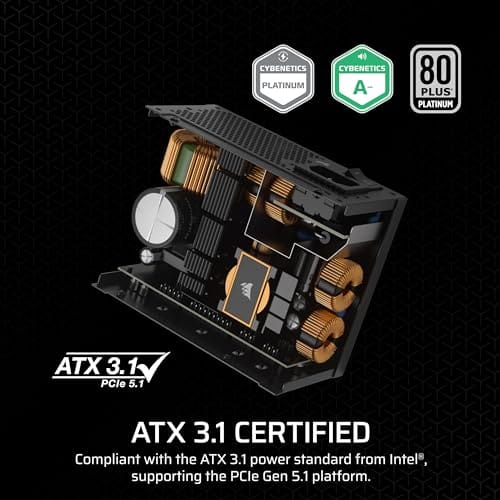
- ATX 3.1 compliant with PCIe 5.1 support, resists transient spikes from RTX 50 and RX 9000 series GPUs.
- Zero RPM Mode eliminates fan noise at low and medium loads, a real advantage in acoustically sensitive SFF builds.
- Fully modular design with short SFX cables reduces cable management friction in sub-10-liter cases.
- 105 degree C Japanese capacitors indicate quality component selection typical of high-tier SFX units.
Cons
- Limited owner feedback at time of writing; real-world noise, ripple, and transient performance are unverified by community data.
- Short SFX cables are unsuitable for mid-tower or full-tower cases without aftermarket cable extensions.
- 750W ceiling may fall short for extreme SFF builds pairing a 300W-plus TGP GPU with a high-core-count CPU.
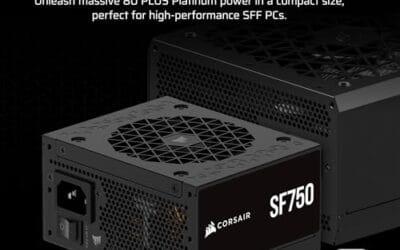
The Corsair SF750 (2024) is a high-end SFX PSU targeting SFF builders who need substantial wattage in a compact footprint. With 80 Plus Platinum certification and ATX 3.1 compliance, it sits at the upper tier of the SFX market, aimed at builders pairing it with current-gen discrete GPUs inside sub-10-liter cases.
The most defining specification here is ATX 3.1 compliance combined with PCIe 5.1 readiness. This means the unit is rated to handle the sharp transient power spikes that RTX 50 and RX 9000 series GPUs can produce, where non-compliant PSUs may trigger overcurrent protection. At 750W, it covers most single-GPU SFF configurations without derating concerns.
The honest trade-off is the review data gap. At time of writing, no substantial owner feedback exists to validate Corsair's noise and ripple claims under real load. The Zero RPM Mode claim and 92mm fan acoustics are based on spec sheets only. Buyers should also note that SFX cable lengths are intentionally short and will not reach connectors in mid-tower or larger cases without extensions.
Buy this if you are building an SFF PC around a single high-TGP GPU and need confirmed ATX 3.1 compliance in a modular SFX unit. Skip this if you want a large ATX case build, need more than 750W for a dual-component high-wattage system, or require extensive owner testing before purchasing.
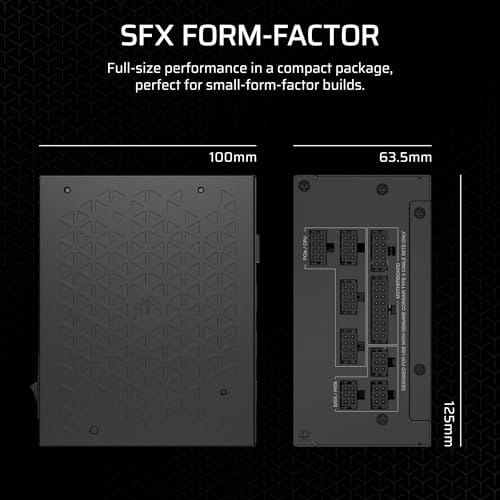
Form Factor and Mounting: This is a standard SFX form factor PSU, not SFX-L. Verify your case specifies SFX compatibility before purchasing. An SFX-to-ATX bracket is included, allowing installation in ATX-footprint cases, though short cable lengths will require extensions in anything larger than a compact SFF enclosure.
Power Standard and Connector: ATX 3.1 compliant with PCIe 5.1 readiness. The unit supports the 12V-2x6 connector standard, relevant for RTX 40 and RTX 50 series GPUs as well as AMD RX 7000 and RX 9000 cards with high transient draw. Non-ATX 3.1 units can trigger OCP shutdowns above 150 percent peak load spikes.
Efficiency and Thermal Operation: 80 Plus Platinum certification indicates roughly 92 percent efficiency at 50 percent load under 115V. The 92mm PWM fan uses a fluid dynamic bearing and Zero RPM Mode activates at low loads, which in SFF cases where airflow is restricted can noticeably reduce system acoustic output.
GPU Wattage Pairing: At 750W, this PSU pairs appropriately with GPUs up to approximately 300W TGP when combined with a mid-range CPU. For a 320W-plus TGP GPU alongside a 65W-plus CPU, headroom becomes tight and a higher-wattage SFX unit should be considered instead.

Pros
- Native 12V-2x6 connector on ATX 3.1 platform ready for RTX 40 and PCIe 5.1 GPUs.
- Handles power excursions up to 2000W transient, headroom for RTX 4080 and 4090 class spikes.
- Semi-passive zero-RPM mode below moderate load keps idle acoustics near inaudible.
- LLC topology with single 12V rail delivers stable voltage regulation for overclocked GPUs.
Cons
- Limited independent owner feedback available at time of writing, riple and hold-up data unverified.
- Only four PCIe 6+2-pin connectors, tight for legacy multi-GPU or high-CPU-EPS custom lop builds.
- 80 PLUS Gold trails Platinum and Titanium units at similar wattage on sustained efficiency.
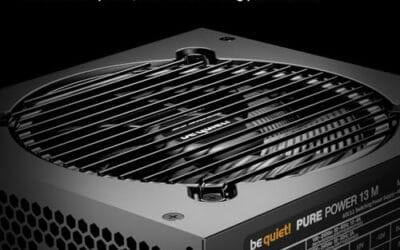
The be quiet! Pure Power 13 M 1000W is a high-end ATX 3.1 PSU aimed at builders pairing a Ryzen 7000/9000 or Core Ultra CPU with an RTX 4070Ti Super,4080 Super, 4090, or RX 7900 XTX class GPU. It targets buyers who want native 12V-2x6 wiring and transient headroom without stepping up to Platinum-tier pricing.
The defining trait is ATX 3.1 compliance with power excursion handling up to double the rated 1000W, meaning brief 2000W spikes from modern GPUs should not trip OCP. Combined with the single 12V rail and LLC topology, this suits overclocked GPUs where transient behavior, not average draw, tends to triger shutdowns on older units.
Trade-offs are typical at this tier. 80 PLUS Gold is eficient but not Platinum, soustained heavy loads generate more heat than a higher-rated unit. Four PCIe 6+2-pin connectors is standard, though builders running EATX boards with dual EPS plus a 4x8-pin GPU adapter should verify cable counts against the modular panel before buying.
Buy this if you are building a single-GPU gaming or content rig around a 250-450W TGP card and want native 12V-2x6 without paying Platinum prices. Skip this if you need sub-audible acoustics under sustained full load, or if you already own a workingATX 3.0 unit with a 12VHPWR pigtail.
ATX standard: Full ATX 3.1 compliance with native 12V-2x6 connector integration, which corects the sense-pin issue found on early 12VHPWR cables. Supports PCIe 5.1 GPUs at spec, and handles transient power excursions up to 2000W, roughly double the 1000W continuous rating.
GPU pairing: Comfortable for GPUs in the 250W to 450W TGP range, including RTX 4080 Super (320W) and RTX 4090 (450W) with headroom for overclocking. Four PCIe 6+2-pin outputs cover legacy 8-pin GPUs; the native 12V-2x6 removes the need for a 4x8-pin adapter dongle.
Efficiency and cooling: 80 PLUS Gold rated up to 94.4% at optimal load, typically around 50% utilization. The 120mm be quiet! fan runs semi-passive with zero-RPM below a load threshold not specified by the manufacturer, so idle and light workloads should remain silent.
Cabling: Fully modular design, leting builders omit unused SATA and Molex leads. Exact cable lengths and connector counts beyond the four PCIe 6+2-pin and single 12V-2x6 are not specified in source material, verify against your case routing before purchase.

Pros
- ATX 3.1 native readiness handles 12V-2x6 transient spikes on modern RTX 40and 50 series GPUs.
- 80 Plus Platinum plus Cybenetics Lambda A+ signals strong efficiency and low acoustic output.
- GaN MOSFETs and large ROG heatsinks target lower internal temperatures than reference platforms.
- Dual ball bearing fan and 0dB mode balance longevity with silent light-load operation.
- Long warranty at this eficiency tier reduces long-term ownership risk for high-end builders.
Cons
- Limited owner feedback at time of writing, so long-term coil whine and ripple data is thin.
- 1000W is overkill for mid-range GPUs like an RTX 4060or RX 7600 class card.
- Detailed specs including cable count, rail layout, and dimensions are not specified in source data.
The ROG Strix 1000W Platinum is a high-end ATX 3.1 fully modular PSU aimed at builders pairing a recent flagship or near-flagship GPU with a mainstream to high-end CPU. With 80 Plus Platinum and Cybenetics Lambda A+ ratings, it targets buyers who care about efficiency, acoustics, and transient headroom rather than the cheapest wat-per-dollar option.
The defining feature is the GaN MOSFET topology paired with ASUS' GPU-first voltage sensing. ASUS claims up to 30% better efficiency and up to 45% improved voltage delivery to the graphics card, which should translate into steadier rail behavior during GPU power spikes. Actual ripple and load-regulation numbers are not specified in source data.
Trade-offs are typical at this tier. 1000W is generous for a single RTX 4070 or 4080 class card but leaves less margin for dual high-TGP GPUs, which are rare anyway. Cable length, connector count, and dimensions are not specified, so case fitment in compact ATX or SFF chassis should be verified against the official datasheet before purchase.
Buy this if you are building a high-end ATX system around an RTX 40 or 50 series GPU and want ATX 3.1 transient tolerance with quiet 0dB behavior at idle. Skip this if your GPU sits below 250W TGP, since a 750W Gold unit will cover that load with less spend.
Standard and eficiency: ATX 3.1 compliant with 80 Plus Platinum certification and Cybenetics Lambda A+ acoustic rating. This pairing indicates high efficiency across typical 20to 100 percent load bands and low measured fan noise, which matters for builds targeting sub-30 dBA idle acoustics.
GPU pairing: 1000W total capacity leaves comfortable transient headroom for a single 320 to 450W TGP GPU such as an RTX 4080Super or RTX 4090class card. ATX 3.1 and 12V-2x6 readiness address the power excursion spec that olderATX 2.x units can trip on.
Cooling and acoustics: Uses a dual ball bearing fan with 0dB technology for passive operation under light gaming or desktop loads. ROG heatsinks over primary switching components target lower component temperatures than reference designs. Exact fan size, curve, and dB ratings are not specified in source data.
Cabling and chassis fit: Fully modular cabling reduces clutter in mid-tower and full-tower ATX builds. Exact PSU length, native 12V-2x6 cable inclusion, PCIe 8-pin count, SATA count, and Molex count are not specified in source data, so confirm against the officialASUS spec sheet before committing to compact cases.

Pros
- Native 12V-2x6 connector avoids janky adapter setups on RTX 40 and 50 series GPUs.
- ATX 3.1 spec resists PCIe 5.1 transient spikes thatip cheaper PSUs into shutdown.
- Fully modular design simplifies cable management and reduces unused cable clutter in the case.
- Cybenetics Gold eficiency translates to lower idle draw and quieter fan behavior under mixed loads.
- Low-noise tuning and flexible embossed cables suit quiet-focused ATX builds.
Cons
- Limited owner feedback at time of writing makes long-term reliability hard to verify.
- 1000W is overkill for mid-range builds pairing with an RTX 4070 or below.
- Corsair does not publish specifics like OEM platform, fan bearing, or waranty term in the source listing.
The Corsair RM1000x is a high-end 1000W ATX 3.1 PSU aimed at builders running current-gen NVIDIA and AMD GPUs that pull heavy transient loads. Fully modular cabling and a native 12V-2x6 connector target buyers assembling RTX 4080, 4090, or upcoming 5080 class rigs where adapter dongles are a known pain point.
The defining feature is ATX 3.1 with PCIe 5.1 readiness paired with the direct 12V-2x6 cable. This maters because modern GPUs can briefly spike well above rated TGP, and olderATX 2.x units often shut down under those excursions. Cybenetics Gold efficiency up to 91% suggests low fan ramp at typical gaming loads based on category norms.
Trade-offs are typical at this wattage. 1000W is more than a single-GPU RTX 4070 or 4070 Super build needs, so you pay for headroom you may not use. The source listing does not specify OEM platform, hold-up time, ripple figures, waranty length, or fan bearing type, so independent bench data is worth checking before purchase.
Buy this if you are pairing a 300W plus GPU with aRyzen 9 or Core i9 and want native 12V-2x6 with transient spike compliance. Skip this if your GPU draws under 220W, where a 750W or 850W unit covers you with room to spare.
ATX standard and PCIe support: The unit isATX 3.1 compliant with PCIe 5.1 readiness, which is the spec written to handle GPU power excursions up to roughly 3x rated TGP for short durations. That makes it a match for RTX 40 and 50 series cards without derating the PSU.
GPU connector: A native 12V-2x6 cable runs directly from the PSU to the GPU, no4x8-pin to 16-pin adapter. This is the updated H++ pin design that mitigates the seating and thermal issues seen on early 12VHPWR implementations.
Wattage pairing: 1000W is the sensible flor for RTX 4090 and future5090 class GPUs paired with a 170W plus CPU like the Core i9-14900K or Ryzen 9 9950X3D. For a 4080Super or 5080 tier build, it leaves comfortable headroom for overclocking and transients.
Efficiency and cabling: Cybenetics Gold rated up to 91% efficiency, with fully modular embossed cables and low-profile combs. Modular design lets you omit unused SATA and Molex runs, which helps airflow in mid-tower ATX cases with restricted PSU shrouds.

Pros
- 80 PLUS Gold efficiency rating is clearly stated (at 115Vac input).
- Fully modular design helps reduce cable clutter and improves build serviceability.
- Smart Zero Fan feature prioritizes low noise at idle and light loads.
- Compact 140mm depth is helpful for cases with limited PSU shroud space.
- 10-year warranty is listed, which is strong for this wattage class.
Cons
- PCIe and CPU power connector counts and types are not specified in the listing, so GPU compatibility needs verification.
- Fan size is inconsistent across the listing (12cm/120mm and 140mm both mentioned).
- ATX standard compliance (ATX 3.0/3.1, 12VHPWR or 12V-2x6) is not specified, which matters for newer GPUs.
- Protection features are mentioned but not itemized (OCP/OVP/OTP/OPP/UVP/SCP not specified).
The Thermaltake Toughpower GF1 850W is a mid-range, fully modular ATX power supply aimed at mainstream enthusiast builds that want solid efficiency and a quieter idle profile. It is a sensible fit for single-GPU gaming PCs and creator workstations where stable power delivery and tidy cabling matter more than chasing niche features.
The defining behavior here is its Smart Zero Fan mode, where the fan stays off until the PSU reaches a certain load percentage, which is a common approach to reduce idle and desktop noise. With 850W available and a single +12V rail using a DC-to-DC design, this class of unit is typically used for higher-draw CPUs and GPUs without feeling constrained by power headroom, assuming the included cable set matches your hardware needs.
Physically, the unit is listed at 150mm (W) x 86mm (H) x 140mm (D), and that shorter 140mm depth can simplify routing in cases where the PSU area is tight or the shroud is crowded with cables. Cooling is described as fluid dynamic bearing, but the fan size is inconsistent in the listing (12cm/120mm is stated in the specs, while 140mm is mentioned in the features).
The main trade-offs are around missing details that experienced builders often check first. The listing does not specify the exact connector mix (CPU EPS, PCIe 8-pin, SATA, peripheral), and it also does not state whether it targets newer ATX 3.x requirements or includes 12VHPWR/12V-2x6 cabling, which can matter depending on your GPU.
Buy this if you want a compact, fully modular 850W Gold PSU with a fan-stop mode and a long listed warranty. Skip this if you need confirmed ATX 3.x support or a specific connector layout and cable type, since those details are not provided in the listing.
| Model / P/N | MODEL: TPD-850AH2FLG; P/N: PS-TPD-0850FNFAGU-P |
| Wattage | 850W (max output capacity listed as 850W) |
| Efficiency | 80 PLUS Gold (listed as meeting Gold at 115Vac input) |
| Modularity | Fully modular |
| Rail design | Single +12V rail (high amperage) with DC-to-DC design |
| PFC | Active PFC |
| Fan and noise mode | Smart Zero Fan; Cooling system listed as 12cm FDB fan; features also mention 140mm fluid bearing fan (listing discrepancy) |
| Dimensions | 150mm (W) x 86mm (H) x 140mm (D) |
| Input voltage | 100-240V |
| Input frequency | 50Hz/60Hz |
| Power Good signal | 100-150 msec |
| Hold-up time | 17 msec |
| Operating temperature | +5°C to +40°C |
| Operating humidity | 20% to 85% |
| Storage temperature | -40°C to +55°C (listed as 40°C to plus 55°C) |
| Storage humidity | 10% to 95% |
| Low-power states | Intel C6/C7 state and ErP Ready |
| Protections | Built-in industrial grade protections (types not specified) |
| Connectors | Not specified in the listing |
| ATX version / PCIe 5 power | Not specified in the listing |
| Warranty | 10-year warranty (listed) |
| Safety approvals | FCC/cTUVus |
PC and case fit: The PSU is listed at 140mm depth, which is helpful in many mid-tower layouts and tighter PSU shrouds where extra cable slack can become a problem.
CPU and GPU pairing: An 850W unit is commonly chosen for higher-end single-GPU systems, but exact suitability depends on your CPU and GPU power targets and transient behavior. Use the PSU headroom to avoid running near maximum output under sustained workloads.
Power connectors: The listing does not specify the number or type of PCIe and EPS cables, and it does not mention 12VHPWR or 12V-2x6. Before buying, confirm the included cable set matches your GPU (and any required adapters) and your motherboard CPU power inputs.
Acoustics and airflow planning: Smart Zero Fan keeps the fan off at lighter loads, which can make a desktop or low-load workstation noticeably quieter. Ensure your case has reasonable ventilation, since fan-stop designs rely more on passive heat dissipation at idle.
Power behavior and uptime: The spec sheet lists a 17 msec hold-up time and a 100-150 msec power-good signal, which are relevant for stability during brief input dips. If you use a UPS, match it to your system draw and consider a sine-wave unit for best compatibility.
Who this guide is for
You’re running or planning a high-end GPU and you want it powered safely without overpaying. Maybe you just grabbed a current-gen card and your old 650W unit is now marginal, or you’re spec’ing a build and refuse to cheap out on the one part that can take everything else down with it. This guide is for the buyer who wants headroom and real safety certs, not RGB and marketing wattage.
It’s also for small-form-factor builders. One of our picks is a fully modular SFX unit that fits ITX cases where a standard ATX supply won’t go. What this guide skips: 1200W-plus units for multi-GPU workstations and sub-$60 gray-market supplies. If you’re feeding a single strong gaming card, everything you need sits between roughly $89 and $220 here.
What to look for in a power supply
Wattage comes first, and for a high-end single-GPU rig, 850W to 1000W is the honest range. That gives a demanding card room for transient spikes, the brief power surges that can hit well above a card’s rated draw. The ATX 3.1 standard was written specifically to handle those spikes, and every pick here except the entry Thermaltake carries it. A native 12V-2×6 connector matters too, since it powers current cards without a daisy-chain of adapters.
Efficiency ratings tell you how much wall power becomes usable DC and how little becomes heat. 80 Plus Gold is the practical baseline; Platinum, like the Corsair SF750 and ASUS ROG Strix here, runs cooler and quieter still. Fully modular cabling lets you install only the cables you need, which cleans up airflow. And watch the warranty. A 10-year warranty, which the ASUS ROG Strix carries, signals a manufacturer’s confidence in the internals.
How we evaluated
We researched five power supplies across the budget-to-midrange band by reading spec sheets, comparing efficiency certifications, and weighing each unit’s wattage and connector layout against the demands of a high-end GPU. Our approach is research-first. We didn’t bench these on a load rig; we vetted published 80 Plus and Cybenetics ratings, ATX 3.1 compliance, modularity, warranty terms, and owner-reported noise behavior.
Value drove the ranking. The question we asked each unit was simple: does its price match the safety and headroom it delivers for a strong GPU? A $140 Gold-rated 1000W ATX 3.1 unit answers that better than an $89 850W one for a truly hungry card, but the cheaper option still earns a spot for tighter builds and budgets. We ranked accordingly, with efficiency and transient handling weighted heavily.
Our top picks
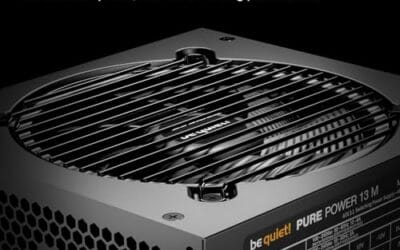
Best Overall Value: be quiet! Pure Power 13 M 1000W
At $139.90 the be quiet! Pure Power 13 M is the pick we’d steer most high-end GPU owners toward. It’s a 1000W, 80 Plus Gold, ATX 3.1 unit with PCIe 5.1 support, single-rail design, and a semi-passive 120mm be quiet! fan that stays silent under light loads. That 1000W ceiling gives even a top-tier card generous transient headroom, and the 4.8-star rating is the highest in this group. LLC technology on the secondary side helps efficiency hold up under load.
The tradeoff is that it’s semi-modular rather than fully modular on some cable runs, and it’s not the flashiest unit visually. Neither matters much for a supply that mostly lives out of sight. For the money, getting 1000W of Gold-rated, ATX 3.1 power with a genuinely quiet fan is hard to beat. If you want one recommendation and don’t want to think further, this is it.
Best Budget: Thermaltake GF1 850W
The Thermaltake GF1 is the cheapest pick at $88.99, and it’s the entry point for a high-end GPU on a tight budget. It’s a fully modular 850W unit, 80 Plus Gold certified, with a Zero RPM mode that keeps the fan off entirely at low loads for ultra-quiet operation. For a single strong card that doesn’t peak past what 850W comfortably handles, this covers the essentials without extras.
The weakness is that it’s the only pick here without stated ATX 3.1 compliance, so for the very hungriest cards with aggressive transient spikes, the higher-wattage ATX 3.1 units give more margin. Its 4.0-star rating is the lowest in the group, though still solid. Buy it if your card sits in the upper-midrange rather than the absolute top, and you want fully modular cabling for under $90. It’s a lot of supply for the price.
Best Premium: ASUS ROG Strix 1000W Platinum
The ASUS ROG Strix 1000W runs $217.99 and it’s the enthusiast pick. Fully modular, 80 Plus Platinum, ATX 3.1, with a Cybenetics Lambda A+ noise rating and GaN MOSFETs for higher efficiency in a smaller footprint. ASUS built in a GPU-first intelligent voltage stabilizer aimed squarely at demanding cards, and it backs the unit with a 10-year warranty. The 4.8-star rating matches the be quiet! unit at the top of this group.
The catch is price. At $218 it’s the most expensive supply here, and for many builders the be quiet! delivers most of the same practical safety for eighty dollars less. Where the ROG Strix earns its premium is the Platinum efficiency, GaN internals, and that decade-long warranty, which matter to overclockers and buyers who keep a PSU across multiple builds. If you want the highest-tier unit and plan to reuse it for years, this is the one.
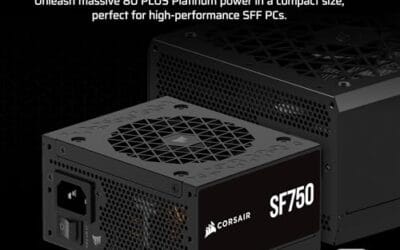
Best for Small Builds: Corsair SF750 (2024)
The Corsair SF750 costs $159.99 and it solves a specific problem: powering a high-end GPU inside a small case. It’s a fully modular SFX unit, 80 Plus Platinum, ATX 3.1 compliant and PCIe 5.1 ready, and it ships with an SFX-to-ATX bracket so it fits standard cases too. 750W is plenty for most strong single cards, and the low-noise design keeps a compact build quiet where airflow is already tight.
Its 4.1-star rating is respectable, and the tradeoff is straightforward: 750W is less headroom than the 1000W units, so the very hungriest cards are better matched to the be quiet! or ASUS. But if you’re building ITX and need Platinum efficiency in the SFX form factor, few units do it this cleanly. Buy it for small-form-factor rigs where a standard ATX supply simply won’t fit.
Best Mainstream 1000W: Corsair RM1000x ATX 3.1
The Corsair RM1000x lands at $166.24 and it’s the safe, well-rounded 1000W choice. Fully modular, ATX 3.1, PCIe 5.1 ready, with a native 12V-2×6 connector and Cybenetics Gold efficiency. The RMx line has a long track record for quiet, low-ripple operation, and the 4.4-star rating reflects that reputation. For a high-end GPU, the native 12V-2×6 connector means no adapter clutter feeding the card.
The tradeoff versus the be quiet! is price. At $166 it’s about $26 more than the Pure Power 13 M for similar 1000W ATX 3.1 capability, though the Corsair’s fully modular cabling and RMx pedigree justify some of that gap. There’s nothing to fault here; it’s simply outvalued at the very top by the cheaper be quiet! unit. Buy it if you prefer Corsair’s ecosystem and want fully modular 1000W with a proven track record.
Buying mistakes to avoid
The most common mistake is buying on wattage alone while ignoring the efficiency cert and ATX 3.1 support. A 1000W unit with no transient-spike headroom can still trip protection on a modern card, while a well-built 850W ATX 3.1 unit stays rock solid. Read the certification, not just the big number on the box. Efficiency and standards matter as much as raw watts.
The second mistake is going too cheap on the one component that can damage others. A failing supply can take a GPU or motherboard with it, so a $30 saving on a gray-market unit is a false economy next to a hardware loss. Every pick here is from a known brand with real certs. The other trap is undersizing: buy for your GPU’s transient peaks, not its average draw, and leave 150W or so of margin so the unit isn’t running flat out.
One more trap: reusing an old adapter or daisy-chaining power cables to feed a hungry card. Modern GPUs want a native 12V-2×6 connection or the correct number of separate PCIe cables, not one cable split into two ends. A poorly seated or overloaded connector runs hot and can fail. Use the cables that ship with the supply, seat them fully, and don’t mix cables between different PSU brands, since the pinouts aren’t always the same.
Bottom line
For most high-end GPU owners, the be quiet! Pure Power 13 M 1000W at $139.90 is the budget pick that isn’t really a compromise. It’s 1000W, 80 Plus Gold, ATX 3.1, quiet, and it carries the highest rating in this group. That’s the combination that keeps a demanding card stable without draining the build budget.
Tight on cash? The Thermaltake GF1 850W at $88.99 covers upper-midrange cards for under $90. Building ITX? The Corsair SF750 fits where nothing else will. Want the highest tier with a 10-year warranty? The ASUS ROG Strix Platinum. But for the money-to-safety ratio that defines a smart budget buy, the be quiet! is the one to get.
Buy once, buy right, and this is a part you won’t think about again for years.
Common questions
How many watts do I need for a high-end GPU?
For a single strong current-gen card, 850W to 1000W is the honest range. That covers the card’s transient spikes plus the rest of the system with margin to spare. The 1000W units here, like the be quiet! and Corsair RM1000x, give the most headroom for the hungriest cards.
Do I really need ATX 3.1?
For the newest high-end cards, it’s strongly recommended. ATX 3.1 was written to handle the large, brief power spikes modern GPUs produce, and the native 12V-2×6 connector powers them without adapters. Four of the five picks here carry it. Only the entry-level Thermaltake doesn’t, which is why it suits upper-midrange cards best.
Is 80 Plus Gold good enough, or should I get Platinum?
Gold is the practical baseline and perfectly fine for a gaming rig. Platinum, like the SF750 and ROG Strix, runs a few points cooler and quieter, which matters in small or silent builds. For most people the efficiency difference won’t change the bill much, so Gold is a smart value.
What’s the deal with the 12V-2×6 connector?
It’s the updated power connector for current high-end GPUs, designed for a more secure fit than the earlier 12VHPWR. The Corsair RM1000x here uses a native 12V-2×6, so the card connects directly without an adapter chain. A clean, fully seated connection reduces the risk of the contact issues that plagued early implementations.
Can I reuse a budget PSU in my next build?
Yes, and it’s smart to. A quality supply outlasts most other components, which is why warranty length matters. The ASUS ROG Strix carries a 10-year warranty, so buying one high-wattage ATX 3.1 unit now can power two or three builds down the line. That reuse changes the value math on the premium picks.
























Write Your Review
No reviews yet. Be the first to share your experience!