

Your power supply is rated for a wattage number, say 850W, but your PC almost never pulls that much. The difference between what your system actually draws and what the PSU can deliver is the headroom. It’s the cushion that keeps voltages stable when your GPU spikes, and it’s one of the most misunderstood specs in a build. Plenty of people buy way more wattage than they’ll ever use, and a few cut it dangerously close.
So what is PSU wattage headroom really doing for your machine, and how much do you actually need? If you’re sizing a supply for a new rig, our picks for the best 1000W PSU 2026 and the best modular PSU for a gaming PC pair well with the math below. Let’s make it plain.
The short answer
Wattage headroom is the gap between your system’s real power draw and your PSU’s rated output. If your PC pulls about 500W under a full gaming load and you run an 850W unit, you’ve got roughly 350W of headroom, or a load factor near 60 percent. That cushion isn’t wasted. It keeps the PSU running in its most efficient band, leaves room for transient GPU spikes that last milliseconds, and gives you space to add parts later without swapping the supply.
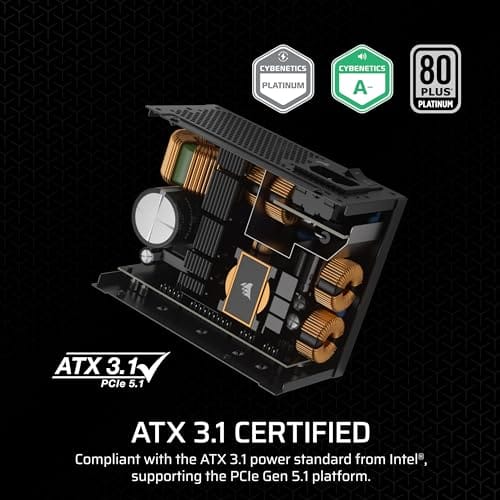
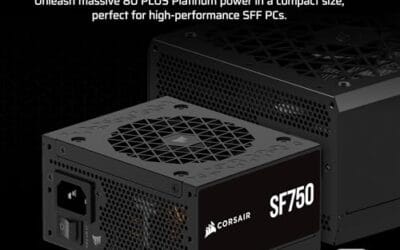
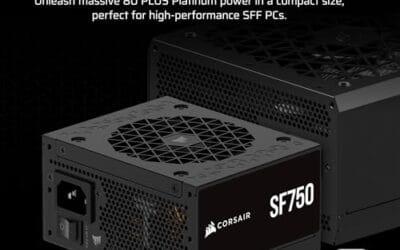
The rule of thumb most builders follow: aim to load your PSU around 50 to 70 percent of its rating at peak. That range keeps efficiency high, fans quiet, and the unit cool. A quality compact supply like the Corsair SF750, an 80 Plus Platinum SFX unit at $159.99 with ATX 3.1 compliance, gives a mid-range small-form-factor build comfortable headroom without wasting desk space.

Pros
- ATX 3.1 compliant with PCIe 5.1 support, resists transient spikes from RTX 50 and RX 9000 series GPUs.
- Zero RPM Mode eliminates fan noise at low and medium loads, a real advantage in acoustically sensitive SFF builds.
- Fully modular design with short SFX cables reduces cable management friction in sub-10-liter cases.
- 105 degree C Japanese capacitors indicate quality component selection typical of high-tier SFX units.
Cons
- Limited owner feedback at time of writing; real-world noise, ripple, and transient performance are unverified by community data.
- Short SFX cables are unsuitable for mid-tower or full-tower cases without aftermarket cable extensions.
- 750W ceiling may fall short for extreme SFF builds pairing a 300W-plus TGP GPU with a high-core-count CPU.
The Corsair SF750 (2024) is a high-end SFX PSU targeting SFF builders who need substantial wattage in a compact footprint. With 80 Plus Platinum certification and ATX 3.1 compliance, it sits at the upper tier of the SFX market, aimed at builders pairing it with current-gen discrete GPUs inside sub-10-liter cases.
The most defining specification here is ATX 3.1 compliance combined with PCIe 5.1 readiness. This means the unit is rated to handle the sharp transient power spikes that RTX 50 and RX 9000 series GPUs can produce, where non-compliant PSUs may trigger overcurrent protection. At 750W, it covers most single-GPU SFF configurations without derating concerns.
The honest trade-off is the review data gap. At time of writing, no substantial owner feedback exists to validate Corsair's noise and ripple claims under real load. The Zero RPM Mode claim and 92mm fan acoustics are based on spec sheets only. Buyers should also note that SFX cable lengths are intentionally short and will not reach connectors in mid-tower or larger cases without extensions.
Buy this if you are building an SFF PC around a single high-TGP GPU and need confirmed ATX 3.1 compliance in a modular SFX unit. Skip this if you want a large ATX case build, need more than 750W for a dual-component high-wattage system, or require extensive owner testing before purchasing.
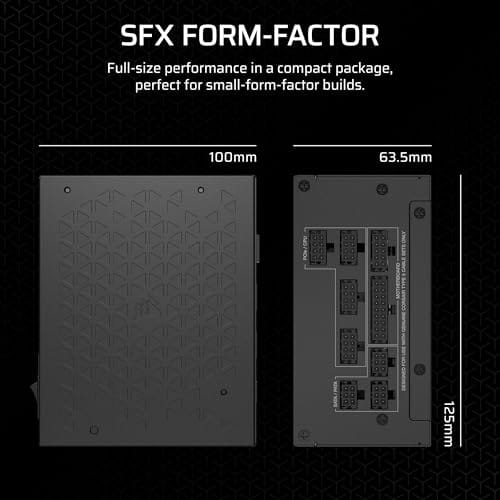
Form Factor and Mounting: This is a standard SFX form factor PSU, not SFX-L. Verify your case specifies SFX compatibility before purchasing. An SFX-to-ATX bracket is included, allowing installation in ATX-footprint cases, though short cable lengths will require extensions in anything larger than a compact SFF enclosure.
Power Standard and Connector: ATX 3.1 compliant with PCIe 5.1 readiness. The unit supports the 12V-2x6 connector standard, relevant for RTX 40 and RTX 50 series GPUs as well as AMD RX 7000 and RX 9000 cards with high transient draw. Non-ATX 3.1 units can trigger OCP shutdowns above 150 percent peak load spikes.
Efficiency and Thermal Operation: 80 Plus Platinum certification indicates roughly 92 percent efficiency at 50 percent load under 115V. The 92mm PWM fan uses a fluid dynamic bearing and Zero RPM Mode activates at low loads, which in SFF cases where airflow is restricted can noticeably reduce system acoustic output.
GPU Wattage Pairing: At 750W, this PSU pairs appropriately with GPUs up to approximately 300W TGP when combined with a mid-range CPU. For a 320W-plus TGP GPU alongside a 65W-plus CPU, headroom becomes tight and a higher-wattage SFX unit should be considered instead.
The longer explanation
Power supplies aren’t equally efficient at every load level. Plot efficiency against load and you get a curve that peaks somewhere in the middle, usually around 40 to 60 percent load, then tapers off at both extremes. Run a PSU at 95 percent of its rating and it works hard, runs hot, and its fan ramps up. Run it at 10 percent and efficiency actually dips too. Headroom parks you in that comfortable middle zone where the unit sips power and stays quiet.
There’s a second reason headroom matters, and it’s the one that trips people up. Modern GPUs pull sudden transient spikes, brief surges that can hit two or three times the card’s rated draw for a few milliseconds. A 300W graphics card might momentarily demand 600W or more. Without enough headroom, those spikes can trip the PSU’s protection and shut your system down mid-game. A generous cushion absorbs them without a hiccup. That’s why the newer ATX 3.1 spec explicitly accounts for these excursions.
How it works
Add up the rated draw of your components and you get a baseline. A modern GPU might list 300W, a CPU 150W under full load, and everything else, drives, fans, RAM, motherboard, another 75W or so. That’s roughly 525W of sustained draw at peak. Now layer the transient behavior on top. The GPU’s brief spikes push the instantaneous demand well past that steady figure, even if the average stays lower.
A well-designed PSU handles this through its capacitors and hold-up circuitry, storing a little energy to ride out the surges. The bigger the gap between your steady draw and the rated output, the more margin the unit has to smooth those transients. That’s the mechanism behind the advice to leave headroom: you’re not paying for wattage you’ll burn continuously, you’re paying for stability during the messy millisecond-scale peaks.
Why it works this way
It comes down to physics and safety margins. Electronic components degrade faster when they run hot, and a PSU pushed near its limit generates more heat from internal resistance. By keeping load in the 50 to 70 percent band, you keep temperatures down, which extends the life of the capacitors and keeps the fan off or slow. That’s why headroom often means a quieter, longer-lived supply, not just a safer one.
The efficiency ratings tie in here too. An 80 Plus Gold or Platinum badge certifies efficiency at specific load points, typically 20, 50, and 100 percent. The 50 percent figure is usually the highest, which is exactly why builders target that zone. You lose less energy as heat, your power bill dips slightly, and the room stays cooler. Headroom isn’t padding for its own sake, it’s how you land on the efficient part of the curve on purpose.
When you’d want this
You want meaningful headroom any time your build includes a power-hungry GPU or you plan to upgrade. If you’re running a high-end graphics card with big transient spikes, a supply sized well above your steady draw isn’t overkill, it’s insurance against random shutdowns. Overclockers need it even more, since pushing clocks and voltages raises both average and peak draw. Our 1000W PSU picks for overclocking lean into exactly this.
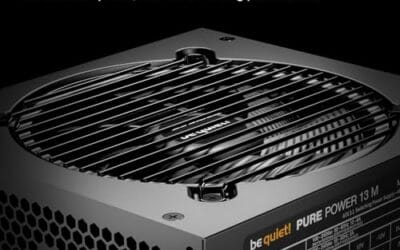
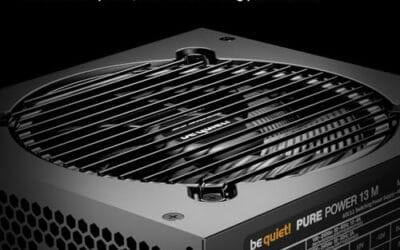
For a demanding rig, a full-size 1000W unit gives you room to grow across a GPU generation or two. The be quiet! Pure Power 13 M 1000W, an 80 Plus Gold ATX 3.1 supply at $139.90 with a 4.8 rating, PCIe 5.1 support, and a semi-passive 120mm fan, is built for overclocked GPUs and stays silent at idle because that fan doesn’t even spin until the load climbs. That’s headroom and acoustics working together.

Pros
- Native 12V-2x6 connector on ATX 3.1 platform ready for RTX 40 and PCIe 5.1 GPUs.
- Handles power excursions up to 2000W transient, headroom for RTX 4080 and 4090 class spikes.
- Semi-passive zero-RPM mode below moderate load keps idle acoustics near inaudible.
- LLC topology with single 12V rail delivers stable voltage regulation for overclocked GPUs.
Cons
- Limited independent owner feedback available at time of writing, riple and hold-up data unverified.
- Only four PCIe 6+2-pin connectors, tight for legacy multi-GPU or high-CPU-EPS custom lop builds.
- 80 PLUS Gold trails Platinum and Titanium units at similar wattage on sustained efficiency.
The be quiet! Pure Power 13 M 1000W is a high-end ATX 3.1 PSU aimed at builders pairing a Ryzen 7000/9000 or Core Ultra CPU with an RTX 4070Ti Super,4080 Super, 4090, or RX 7900 XTX class GPU. It targets buyers who want native 12V-2x6 wiring and transient headroom without stepping up to Platinum-tier pricing.
The defining trait is ATX 3.1 compliance with power excursion handling up to double the rated 1000W, meaning brief 2000W spikes from modern GPUs should not trip OCP. Combined with the single 12V rail and LLC topology, this suits overclocked GPUs where transient behavior, not average draw, tends to triger shutdowns on older units.
Trade-offs are typical at this tier. 80 PLUS Gold is eficient but not Platinum, soustained heavy loads generate more heat than a higher-rated unit. Four PCIe 6+2-pin connectors is standard, though builders running EATX boards with dual EPS plus a 4x8-pin GPU adapter should verify cable counts against the modular panel before buying.
Buy this if you are building a single-GPU gaming or content rig around a 250-450W TGP card and want native 12V-2x6 without paying Platinum prices. Skip this if you need sub-audible acoustics under sustained full load, or if you already own a workingATX 3.0 unit with a 12VHPWR pigtail.
ATX standard: Full ATX 3.1 compliance with native 12V-2x6 connector integration, which corects the sense-pin issue found on early 12VHPWR cables. Supports PCIe 5.1 GPUs at spec, and handles transient power excursions up to 2000W, roughly double the 1000W continuous rating.
GPU pairing: Comfortable for GPUs in the 250W to 450W TGP range, including RTX 4080 Super (320W) and RTX 4090 (450W) with headroom for overclocking. Four PCIe 6+2-pin outputs cover legacy 8-pin GPUs; the native 12V-2x6 removes the need for a 4x8-pin adapter dongle.
Efficiency and cooling: 80 PLUS Gold rated up to 94.4% at optimal load, typically around 50% utilization. The 120mm be quiet! fan runs semi-passive with zero-RPM below a load threshold not specified by the manufacturer, so idle and light workloads should remain silent.
Cabling: Fully modular design, leting builders omit unused SATA and Molex leads. Exact cable lengths and connector counts beyond the four PCIe 6+2-pin and single 12V-2x6 are not specified in source material, verify against your case routing before purchase.
What to look for in a PSU
Start with the right total wattage for your parts plus a 40 to 50 percent cushion over your steady draw, then check the certification. An 80 Plus Gold rating is the practical baseline for a gaming build, with Platinum a step up for efficiency-focused or compact systems. Look for ATX 3.1 and PCIe 5.1 support if you’re running a current or future GPU, since those standards handle the transient spikes gracefully and include the native 12V-2×6 connector.
Modularity, fan behavior, and single-rail design round out the checklist. A fully modular unit keeps your case tidy and airflow clean. A semi-passive fan mode means silence at low loads. And don’t chase raw wattage numbers alone, a well-built 850W Gold unit beats a cheap 1200W no-name every time. For high-end cards specifically, our 1000W picks for a high-end GPU weigh these traits.
Common misconceptions
The biggest myth is that a bigger PSU always draws more power from the wall. It doesn’t. Your PC only pulls what the components demand, so an 850W unit running a 400W system uses the same energy as a 650W unit running that system, roughly. The rating is a ceiling, not a consumption figure. Buying more wattage doesn’t inflate your electric bill on its own.
Another common mix-up: more headroom is always better. Past a point, oversizing just wastes money and can even nudge you below the efficient load band at idle. A 1600W supply on a 350W office PC spends most of its life at single-digit load, which isn’t ideal. Right-sizing beats maxing out. Aim for that 50 to 70 percent peak-load target and you’ll land in the sweet zone without overspending.
There is a practical reason headroom pays off over time, too. GPUs and CPUs tend to pull more power with each generation, so a supply sized only for today can feel tight after one upgrade. Buying a little extra now often saves a full PSU swap later, which is why many builders treat headroom as future-proofing rather than waste.
Frequently asked
How much PSU headroom do I actually need?
Aim to load your supply around 50 to 70 percent of its rating at full system draw. So if your PC peaks near 500W, an 800W to 1000W unit lands you in the efficient, stable zone. That leaves room for transient GPU spikes and a future upgrade without pushing the PSU to its limit.
Does a higher-wattage PSU raise my electric bill?
No, not by itself. Your system only draws the power its components need, so a larger PSU running the same build uses about the same energy. The wattage rating is the maximum it can deliver, not what it constantly pulls. Efficiency certification affects the bill more than raw capacity does.
What happens if my PSU has too little headroom?
You risk instability. When a GPU’s transient spike exceeds what the supply can deliver, the PSU’s protection can trip and shut the system off, often mid-game with no warning. Running near the limit also generates more heat, spins the fan up, and shortens the unit’s lifespan. Some headroom prevents all of that.
Why do GPUs need so much transient headroom?
Modern graphics cards pull brief surges that can spike to double or triple their rated draw for a few milliseconds during heavy scenes. Those excursions are too fast to show on most software readouts but real enough to trip a marginal supply. Extra headroom, plus an ATX 3.1 unit built for these spikes, absorbs them cleanly.
Is ATX 3.1 worth it for headroom?
For a current or future high-end GPU, yes. ATX 3.1 supplies are designed to handle large transient spikes within their rating, so you get effective headroom without oversizing as aggressively. They also include the native 12V-2×6 connector, which cleans up cabling for recent cards. It’s the standard worth targeting on a new build.
























Write Your Review
No reviews yet. Be the first to share your experience!