

A DAC is the tiny translator that turns digital audio data from your PC into an analog signal your headphones or speakers can play. Your motherboard, monitor, USB headset, phone, and wireless headphones all use one somewhere. The confusion starts because people use “DAC” to mean the chip, the external box, or the full DAC/amp stack. If you’re comparing gear like a DAC amp for a PC desk, a gaming headset, or even computer speakers, knowing what the DAC actually does helps you avoid paying for mystery improvements you may not hear.
The short answer
DAC stands for digital-to-analog converter. Your PC stores and sends audio as numbers, but headphones and speaker drivers move air with changing electrical voltage. A DAC converts those numbers into that voltage signal. That’s it. Important, but not magic.
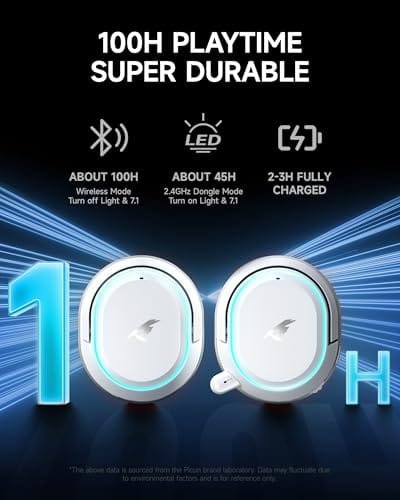
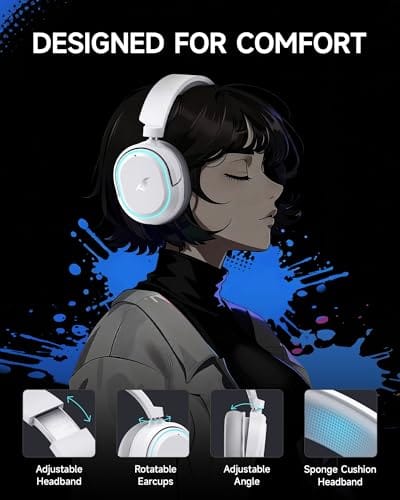
In a PC setup, the DAC might live on your motherboard, inside a USB headset dongle, inside a wireless headset receiver, in an audio interface, or in a dedicated desktop DAC. The Picun G2 wireless gaming headset, for example, works across 2.4GHz, Bluetooth 5.4, and wired modes, so its digital audio chain depends on the connection you use. At $59.99 with a 4.5 rating, it’s a reminder that DAC behavior isn’t limited to metal desktop boxes.

Pros
- Three connection modes on a single headset: 2.4GHz dongle, Bluetooth 5.4, and 3.5mm wired fallback.
- Vendor-rated 5ms 2.4GHz latency keps audio synced in competitive shooter scenarios.
- Long rated runtime, up to 100 hours in Bluetooth with RGB disabled for travel use.
- RetractableENC microphone tucks away, useful when switching between gaming and general listening.
Cons
- Limited owner feedback at time of writing, real-world reliability and QC signal is unverified.
- 7.1 surround is virtual DSP, not true multi-driver, so positional accuracy varies by title andear.
- RGB lighting materially cuts battery life, cited100-hour figure requires lighting turned off.
The Picun G2 is a budget-tier wireless gaming headset built around 40mm drivers, virtual 7.1 surround, and tri-mode connectivity across2.4GHz, Bluetooth 5.4, and 3.5m wired. Target buyer is a multi-platform player rotating between PC, PS5, PS4, and Switch who wants low-latency wireless without moving up to established brand pricing.
The defining feature is the tri-mode radio stack. The 2.4GHz USB-A or Type-C dongle is rated at 5ms latency, which is competitive for the tier and adequate for most FPS titles, while Bluetooth 5.4 handles phones and tablets. Headsets in this class typically deliver serviceable rather than reference-grade imaging, and virtual 7.1 leans on DSP rather than discrete drivers.
Trade-offs are typical at this tier. Battery figures are optimistic: 100 hours assumes Bluetooth with RGB off, and 2.4GHz drops the number to 42 to 45 hours. Driver material, impedance, frequency response, clamp force, and weight are not specified, so tonal balance and long-session comfort cannot be verified from source data alone.
Buy this if you want one headset that jumps between a PS5, a Switch dock, and a work laptop over Bluetooth, and you accept spec-sheet-only marketing. Skip this if you rely on measured frequency response, discrete suround, or detachable bom mics with broadcast-grade pickup for streaming.
Drivers and tuning: Picun specifies 40mm dynamic drivers paired with virtual 7.1 surround processing. Impedance, sensitivity, and frequency response are not specified, so bass extension and treble air cannot be quantified from source. Virtual 7.1 is DSP-based positional widening, useful for FPS cues but not equivalent to true multi-driver surround.
Connectivity and latency: Three modes are covered: 2.4GHz via USB-A or USB-C dongle, Bluetooth 5.4, and 3.5mm analog. The 2.4GHz link is rated at 5ms latency. Bluetooth codec support (SBC, AAC, aptX) is not specified, which maters for wireless music quality on phones and tablets.
Battery and power: Rated up to 100 hours on Bluetooth with RGB off, and 42 to 45 hours on 2.4GHz wireless. Play-while-charging is supported, so a USB cable can extend sessions past the rated ceiling. Charge time and battery capacity in mAh are not specified.
Microphone: Retractable omnidirectional bom with ENC noise reduction. Sample rate, bit depth, and pickup pattern beyond omni are not specified.ENC filtering targets background noise on the transmit side, adequate for party chat but below dedicated USB mic quality.
The longer explanation
Digital audio is usually stored as samples. A common PC audio stream might use 44.1kHz or 48kHz sample rates, meaning the audio waveform is represented by 44,100 or 48,000 measurements per second. Bit depth, such as 16-bit or 24-bit, describes how much resolution each sample can carry. The DAC reads those values and reconstructs a smooth electrical waveform that can feed an amplifier stage.
That amplifier stage matters because a DAC alone doesn’t always provide enough power for headphones. Many products combine both pieces and get called a DAC/amp. Headsets are different again. A wireless gaming headset often receives digital audio through a USB transmitter or Bluetooth radio, converts it internally, then powers its own drivers. So if your headset is fully digital over USB or wireless, your motherboard’s analog output may be bypassed completely. Weird at first. Normal once you see the signal path.
History / how we got here
Early PC audio was noisy because computers were electrically messy and sound hardware was often an afterthought. Fans, hard drives, power supplies, and graphics cards all lived near the audio circuitry. Moving audio conversion to an external USB device helped separate sensitive analog output from that noise. That’s one reason external DACs became popular with desktop users, streamers, and headphone fans.
Motherboard audio improved a lot, though. Modern boards often include shielded audio sections, better codecs, and cleaner front-panel routing than older machines. At the same time, USB headsets and wireless gaming headsets made the classic green 3.5mm jack less central. Today, the DAC question is less “Do I need one?” and more “Where is the DAC in my setup, and is that part causing a real problem?”
Why it works this way
Speakers and headphones are physical devices. Their drivers move forward and backward to create pressure waves, and that movement follows an analog electrical signal. A game engine, streaming app, or music file doesn’t output that kind of signal directly. It sends digital data through Windows, a driver stack, and an output device. Somewhere near the end, conversion has to happen.
The reason DAC quality can matter is that conversion isn’t the only challenge. Clocking, filtering, output impedance, shielding, and amplifier power can affect hiss, distortion, channel balance, and volume headroom. Still, those differences aren’t always dramatic. If your current headset is wireless, quiet, and loud enough, adding a separate analog DAC may do nothing because the headset might not use it. Don’t buy the wrong box.
When you’d want this
You’d want a dedicated DAC or DAC/amp when you hear hiss from the motherboard jack, your headphones are too quiet, the front-panel audio picks up GPU noise, or you want a physical volume knob and cleaner desk routing. It’s also useful when you switch between headphones and powered speakers often. For streaming, an audio interface can make more sense because it combines microphone input, monitoring, and output control in one device.
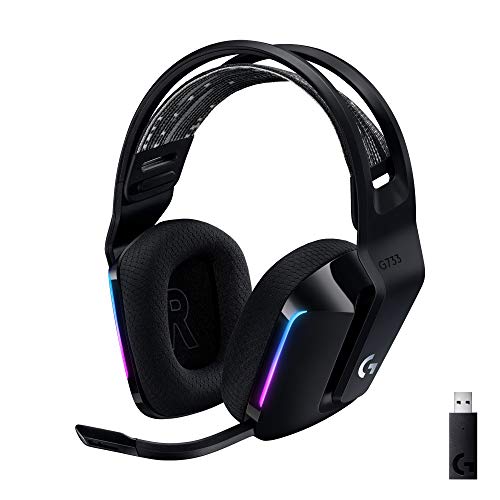
You may not need an external DAC if your headset already handles audio digitally. The Logitech G733 Lightspeed is a $124.92 wireless gaming headset with a 4 rating, PRO-G audio, Blue VO!CE mic processing, Lightsync RGB, and compatibility with PC, PS5, PS4, and Switch. Since it runs wirelessly, the practical audio chain is built around its own wireless receiver and internal electronics, not the analog output on your motherboard.
Pros
- Lightspeed wireless with 20 meter range handles typical living room and desk distances
- Up to 29 hours battery life covers multi-day use between charges
- Blue VO!CE mic processing in G HUB improves clarity for Discord and streaming
- Suspension headband and low mass design reduce clamp fatigue during long sessions
- Dual-zone Lightsync RGB with 16.8M colors is customizable through G HUB
Cons
- PS4 output limited to stereo, no suround on older PlayStation hardware
- Driver size, frequency response, and mic pattern not specified in source data
The Logitech G733 is a mid-tier wireless gaming headset targeting PC, PS5, PS4, and Nintendo Switch users who want a lightweight all-day fit. It leans on Lightspeed 2.4GHz wireless, PRO-G drivers, Blue VO!CE mic processing, and a reversible suspension headband, aimed at multi-hour gamers and streamers.
The defining feature is the combination of Lightspeed wireless with a quoted 20 meter range and up to 29 hours of battery. In practice this covers full workdays plus evening sessions without a charge cycle. PRO-G drivers, per Logitech, reduce distortion, and headsets in this tier typically deliver a mildly V-shaped tuning suited to positional FPS cues.
Trade-offs are typical at this price point. PS4 users are locked to stereo output with no virtual surround. Driver diameter, impedance, and frequency response are not published in the source data, so absolute output quality is hard to benchmark against wired competitors. There is no Bluetooth fallback listed, so mobile pairing is not supported.
Buy this if you want a light, long-battery 2.4GHz wireless headset for PC or PS5 with a usable broadcast-style mic. Skip this if you need wired low-latency USB, Bluetooth multipoint, or vendor-published driver and frequency response specs before purchase.
Drivers and tuning: Logitech lists PRO-G drivers tuned for reduced distortion, though exact driver diameter and frequency response are not specified in the source. Headsets in this tier typically ship with 40 to 50mm dynamic drivers and a mildly V-shaped response suited to explosions and footstep cues in FPS gameplay.
Connection and latency: Lightspeed 2.4GHz wireless with a stated 20 meter range covers desk and living room use. Compatibility is confirmed for PC, PS5, PS4 (stereo only), and Nintendo Switch. Bluetooth and wired 3.5mm fallback are not listed in the source, so single-dongle 2.4GHz is the only documented path.
Battery life: Rated up to 29 hours per charge, enough for roughly three to four full evening sessions before recharging. Exact charge time and USB-C versus micro-USB charging port are not specified in the source data.
Microphone: Detachable mic with Blue VO!CE filters configured in G HUB, providing EQ, noise reduction, and de-eser presets useful for Discord and Twitch chat. Mic polar pattern, sensitivity, and frequency range are not disclosed in the source specifications.
What to look for in a DAC
Start with the connection you actually use. For wired headphones, USB DAC/amps are the usual PC choice because they bypass motherboard analog output and provide their own headphone jack. For powered speakers, line outputs matter. For streamers, microphone input and direct monitoring may matter more than audiophile sample-rate claims. If you’re already shopping near our audio interface for streaming guide, you may want an interface instead of a pure DAC.
Then check headphone needs. Sensitive in-ear monitors need low noise and good channel balance at low volume. High-impedance headphones need more voltage. Low-impedance planars can need more current. For gaming headsets, compatibility often matters more: USB, 2.4GHz, Bluetooth, wired fallback, mic quality, and console support. Specs should answer a problem you have, not create a shopping rabbit hole.
Also look at the boring controls. A front volume knob is useful if Windows volume jumps from too quiet to too loud. A gain switch helps when you move between easy headsets and harder wired headphones. Separate line out and headphone out ports are handy if you keep powered speakers on the desk. Driverless USB audio is nice because it’ll work on more PCs without a software package running in the background.
Don’t overbuy for numbers alone. A DAC advertising 32-bit, 384kHz, or DSD support can still be the wrong fit if it has a scratchy pot, poor Windows behavior, or no mic path for your setup. For most desktop users, clean 24-bit 48kHz playback, enough power, sensible controls, and low noise matter more than a spec sheet built for bragging rights. Simple wins.
Common misconceptions
The biggest misconception is that every PC needs an expensive external DAC. Many don’t. If your motherboard output is clean, your headphones get loud without distortion, and you aren’t hearing electrical noise, the upgrade may be tiny. Another misconception is that higher sample rates automatically sound better in games. Most game audio and voice chat won’t benefit from extreme numbers if the drivers, fit, and tuning are mediocre.
People also mix up DACs with amps. A DAC converts the signal; an amp powers headphones or speakers. Many devices include both, which is convenient but makes the language messy. Last, a wireless headset doesn’t become better because you plug a premium analog DAC into the PC. If the headset receives audio through USB or 2.4GHz, its own internal conversion path is doing the work.
Another trap is blaming the DAC for every audio problem. Crackling can come from a bad USB port, an overloaded hub, a loose 3.5mm plug, a damaged cable, or aggressive wireless interference near a router. Voice chat problems may be the mic path, not the playback path. If Bluetooth latency bothers you, a DAC won’t fix that either because the delay is in the wireless codec and radio chain. Start with the actual symptom. Then choose the part that addresses it.
That is why DAC upgrades make the most sense when the rest of the audio chain is already decent. Cheap earbuds will not reveal much, but sensitive headphones can expose hiss, weak output, and muddy conversion fast.
Frequently asked
Does a DAC improve gaming audio?
It can, but only if your current output is the weak link. A cleaner DAC/amp may reduce hiss, add volume headroom, or improve channel balance with wired headphones. It won’t make poor headset drivers sound like studio monitors.
Do USB headsets use my PC’s DAC?
Usually no. A USB headset receives digital audio from the PC and uses its own internal conversion and amplification. That’s why changing the motherboard audio port often doesn’t affect a USB or wireless headset.
Is a DAC the same as an audio interface?
No, although an audio interface includes DAC functions. An interface also has analog-to-digital conversion for microphones or instruments, input gain controls, and monitoring features. If you record voice, stream, or use an XLR mic, an interface may fit better.
What sample rate should I use on Windows?
For most PC users, 24-bit 48kHz is a sensible setting because games, video, and voice apps commonly work around 48kHz. Higher settings are fine if your gear supports them, but they don’t guarantee audible gains.
Should I buy a DAC before better headphones?
Usually, buy better headphones or speakers first if your current output is clean and loud enough. Transducers change the sound far more than a competent DAC does. Fix noise, low volume, or connectivity problems with a DAC/amp when those problems are real.































Write Your Review
No reviews yet. Be the first to share your experience!