

Keyboard polling rate is the number that tells you how often a keyboard reports its state to your PC. It’s usually written in hertz: 125Hz, 500Hz, 1000Hz, 4000Hz, or 8000Hz. If you’re comparing boards in a mechanical gaming keyboard guide, polling rate is one of the specs that affects input latency, but it isn’t the only one that matters.
The idea is simple. A higher polling rate gives the computer more frequent updates, so a key press can be registered sooner. In real use, though, switches, firmware, scan rate, USB behavior, debounce settings, game engine timing, monitor refresh rate, and your own reaction time all sit in the same chain. Small spec. Bigger system.
The short answer
Keyboard polling rate is how many times per second a keyboard sends input information to the computer. A 1000Hz keyboard reports up to 1000 times per second, which means one report every 1 millisecond. A 125Hz keyboard reports every 8 milliseconds. That’s the clean math, and it’s why gaming keyboard boxes often put polling rate near the front.

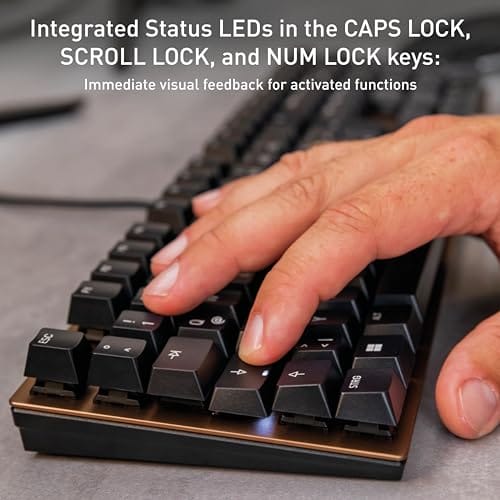
For most people, 1000Hz is already responsive. The Cherry KC 200 MX is a $56.31 renewed mechanical office keyboard with a 4.0 rating in the provided data, MX2A Silent Red switches, a metal plate frame, and a bronze finish. It isn’t pitched as an extreme esports board, but it’s a good reminder that feel, layout, switch noise, and build quality still matter when you’re choosing a keyboard for daily PC use.

Pros
- MX2A Silent Red linears actuate quietly, good fit for open-plan offices
- Metal plate frame keeps chassis stiff and reduces caseping under typing
- Cherry Gold-Crosspoint contacts rated for 50 million keystrokes on this variant
- Full-size layout with dedicated numpad suits data entry and spreadshet work
Cons
- Renewed unit with no owner fedback loged yet, cosmetic and wear condition varies
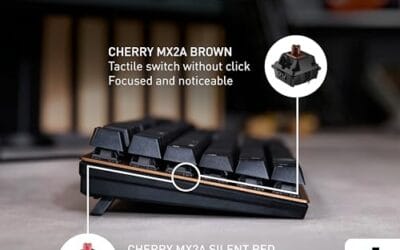
- Silent Red linears lack tactile bump, typists who prefer fedback should pick Brown
- Source data omits connectivity, cable type, polling rate, and dimensions
The Cherry KC 200 MX is a full-size office-focused mechanical keyboard sold here as a Renewed unit in Bronze with MX2A Silent Red linear switches. It targets office typists, developers, and finance or admin users who want Cherry switch fel and a metal plate frame without the RGB and gamer styling of enthusiast boards.
The defining feature is the MX2A Silent Red switch, Cherry's updated linear with dampened stems aimed at reducing bottom-out and return noise. Cherry rates this variant for 50 million keystrokes. Based on the linear profile, expect smooth actuation with no tactile bump, which suits fast touch typists and users on frequent video calls.
Trade-offs are typical at this tier and Renewed status. Silent Red linears are polarizing, users coming from Browns or Blues will miss the tactile feedback, and the source does not specify polling rate, connection type, cable, keycap material, or dimensions. As a Renewed listing, cosmetic condition and remaining switch life depend on the refurbisher rather than a factory-fresh baseline.
Buy this if you want a quiet full-size Cherry mechanical for office or shared-space use and value the metal plate build over RGB features. Skip this if you prefer tactile or clicky switches, need confirmed wireless or USB-C connectivity, or want a waranty profile equivalent to new stock.
Switches: Cherry MX2A Silent Red, linear with integrated dampeners, made in Germany with Gold-Crosspoint contacts. Rated for 50 million keystrokes on this variant, versus 100 million on MX2A Brown. Linear travel with no tactile bump favors light, fast keypresses over deliberate typing fedback.
Build: Metal plate frame under the switches, which stiffens the deck and cuts flex compared with plastic-only office boards. Cherry positions the KC 200 MX as a slim modern design, though exact case height, weight, and keycap material are not specified in the source data.
Layout and indicators: Full-size layout retains the dedicated numpad and function row, which maters for spreadsheet,ERP, and accounting workflows. White LED status indicators are built into Caps Lock, Scroll Lock, and Num Lock keys, avoiding a separate indicator strip and keeping the top edge clean.
Gaming fit: Silent Red linears work for casual gaming and MMO or productivity crossover use given their light linear fel, but the source does not list polling rate, N-key rollover, or onboard profiles, so competitive esports buyers should confirm specs before committing.
The longer explanation
A keyboard doesn’t magically send a key press the instant your finger starts moving. First, the switch actuates. Then the keyboard’s controller detects the change in the key matrix, filters out electrical chatter, packages the input, and sends it over USB or wireless. Polling rate describes one piece of that trip: how frequently the keyboard checks in with the PC over its connection.
At 125Hz, the PC gets an update every 8ms. At 500Hz, it gets one every 2ms. At 1000Hz, every 1ms. At 8000Hz, every 0.125ms. Those numbers sound huge on a spec sheet, but the benefit shrinks as you climb. Going from 125Hz to 1000Hz can be noticeable for fast players because it cuts the reporting window by 7ms. Going from 1000Hz to 8000Hz cuts less than 1ms from that specific part of the chain, so the difference is much harder to feel.
History / how we got here
Older office keyboards didn’t need flashy report-rate specs because the common workload was typing documents, navigating spreadsheets, and sending shortcuts. A tiny delay between a key press and a character appearing wasn’t a buying crisis. USB keyboards commonly ran at modest polling rates, and reliability mattered more than headline latency.
Competitive gaming changed the marketing. As mice moved from 125Hz to 500Hz, 1000Hz, and then higher, keyboards followed. Faster monitors made input lag easier to discuss, too. A 60Hz display refreshes every 16.67ms, while a 144Hz display refreshes every 6.94ms and a 240Hz display refreshes every 4.17ms. When the screen updates more often, shaving a few milliseconds off the input chain starts to sound more meaningful. Not magic. Just timing.
Why it works this way
Polling exists because USB devices report data to the host on a schedule. The keyboard has to tell the PC which keys are down, which keys were released, and sometimes whether media controls, lighting commands, or macro layers changed. A higher polling rate means the host can receive smaller time slices of that state more often.
That doesn’t mean every high-polling keyboard feels better. The keyboard’s internal scan rate can be different from its USB polling rate. Debounce behavior can add delay to avoid false double inputs. Wireless keyboards may add another layer of radio timing and power saving. The operating system and game still have to process the input, and the monitor has to show the result. That’s why a balanced setup usually beats chasing one giant number.
There’s also a resource cost to consider. Every report the keyboard sends has to be handled by the CPU. At 1000Hz that overhead is trivial on any modern PC. At 8000Hz the host is fielding eight times as many interrupts per second, and while a current gaming rig shrugs that off, an older or heavily loaded system can see a small extra load. For the vast majority of builds it won’t matter, but it’s a reason the fastest polling modes are marketed to competitive players rather than sold as a default for everyone.
When you’d want keyboard polling rate
You’d care most about polling rate if you play shooters, rhythm games, fighting games, or any title where rapid key timing matters. If you’re already using a high-refresh monitor and a low-latency mouse, a 1000Hz keyboard keeps the keyboard from being the slowest obvious link. For a compact gaming setup, our 65 percent keyboard picks for gaming are the kind of place where latency, layout, and desk space all collide.
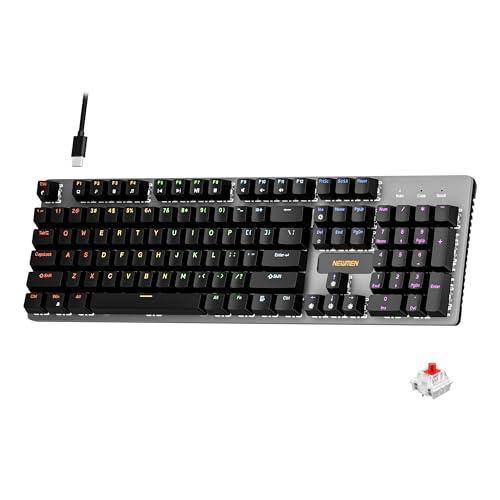
You’d care less if you mostly type, code, browse, or use your PC for school and office work. The Newmen GM325Pro is a $20.89 wired mechanical keyboard with a 4.8 rating in the provided data, 104 keys, rainbow LED backlighting, hot-swap support, a metal panel, ABS black keycaps, and linear red switches. For a budget full-size board, those physical features may matter more to many buyers than chasing 4000Hz or 8000Hz polling.
Pros
- Hot-swap sockets allow switch experimentation without soldering tools or PCB risk
- Metal top plate delivers firmer typing feel than plastic budget boards at this tier
- Full-key rollover and linear red switches handle rapid inputs for casual gaming
Cons
- Limited owner feedback at time of writing, so long-term reliability is unproven
- RGB is restricted to side lighting only, per-key backlight is fixed rainbow patterns
- ABS keycaps typical at this tier tend to shine and wear faster than PBT
The Newmen GM325Pro is a budget full-size 104-key wired mechanical keyboard aimed at first-time mechanical buyers and casual gamers who want a hot-swap PCB without moving up to enthusiast pricing. It ships with linear red switches, a metal top plate, ABS keycaps, and side-edge RGB lighting.
The defining feature here is the hot-swap socket combined with linear red switches. That gives new users a low-friction path to swap inactile or silent switches later without soldering. Typing fel on metal-plate boards at this tier is usually firmer and less hollow than all-plastic budget pers, based on category norms.
Trade-offs are typical for the price class. Per-key RGB is not suported, only side lighting is true RGB while the top backlight runs 13 preset rainbow effects. ABS keycaps tend to develop shine within months of heavy use, and Newmen does not publish switch lifecycle, polling rate, or NKRO wired specs in the source data.
Buy this if you want a cheap full-size hot-swap platform to learn on and plan to upgrade switches or keycaps later. Skip this if you need per-key RGB, PBT caps, a documented polling rate, or a keyboard with a dep owner review history to validate QC.
Switches and layout: Linear red switches on a full 104-key ANSI layout, with full-key rollover claimed by the manufacturer. Actuation force, travel, and switch brand are not specified in the source. Linear reds typically sit near 45g actuation and 4m total travel in this category.
Hot-swap PCB: Sockets accept standard MX-style switches, so tactile, clicky, or silent linear options from third parties drop in without soldering. Pin compatibility (3-pin vs 5-pin) is not specified, buyers should confirm before ordering replacement switches.
Build and lighting: Metal top plate over ABS black keycaps. RGB is limited to the side edge, while the top backlight cycles through 13 preset rainbow patterns rather than per-key addressable RGB. Case material below the plate is not specified.
Connectivity and software: Wired only via a detachable 1.8m USB cable. FN combos cover F1 to F11 media and calculator shortcuts. Customization software suports key remap, macro recording, and lighting tweaks, though poling rate and software platform support are not specified.
What to look for in a keyboard polling rate
For gaming, start at 1000Hz. It’s widely supported, easy on system resources, and fast enough that the rest of your setup will usually matter more. If a board advertises 4000Hz or 8000Hz, check whether that mode requires special software, a wired connection, a certain USB port, or reduced battery life. Some high-rate modes can also add CPU overhead on very old systems, though modern gaming PCs usually handle keyboard reports without drama.
For typing, don’t overbuy based on polling rate alone. Switch type, stabilizer quality, keycap profile, layout, case stiffness, sound, and software reliability are easier to feel every day. If you’re building a work setup, a quiet full-size or ergonomic board from our ergonomic keyboard coverage may be a better upgrade than a high-polling board with loud switches and awkward software.
It also helps to check how the polling rate is delivered. A wired connection to a rear USB port on the motherboard tends to be more consistent than a front-panel hub or a cheap extension cable. On wireless boards, the 2.4GHz dongle usually gives the best latency, while Bluetooth trades responsiveness for convenience and battery life. Read the spec sheet closely, because some keyboards only reach their headline polling rate in a specific mode, not everywhere at once.
Common misconceptions
One misconception is that 8000Hz is eight times better than 1000Hz. The report frequency is eight times higher, but the latency reduction is less than 1ms for that specific USB reporting interval. If your monitor, game settings, switch debounce, and reaction time are unchanged, you shouldn’t expect a massive jump in performance from polling rate alone.
Another misconception is that polling rate and scan rate are the same thing. They aren’t. Scan rate describes how often the keyboard controller checks the key matrix internally. Polling rate describes how often it reports to the PC. A keyboard can advertise a high USB polling rate, but if its internal scanning and firmware aren’t equally quick, the number won’t tell the whole story.
Frequently asked
Is 1000Hz polling rate good for a keyboard?
Yes. A 1000Hz keyboard reports every 1ms, which is fast enough for most gamers and more than enough for typing. Unless you’re chasing very specific competitive latency goals, 1000Hz is a sensible target.
Can I feel the difference between 1000Hz and 8000Hz?
Some highly sensitive players may notice it in controlled situations, especially on very high-refresh displays. Most people won’t feel a clear difference because the reduction is tiny compared with the rest of the input chain. You’ll usually notice switch feel and layout sooner.
Does higher polling rate improve typing speed?
Not usually. Typing speed depends more on comfort, switch preference, key spacing, stabilizers, and your own rhythm. A high polling rate won’t fix a layout you dislike or a switch that feels too heavy.
Does wireless make polling rate worse?
It can, but not always. Some 2.4GHz wireless gaming keyboards run at 1000Hz and feel very responsive, while Bluetooth often prioritizes compatibility and battery life over low latency. If latency matters, use the keyboard’s 2.4GHz dongle or wired mode instead of Bluetooth.
Should I change polling rate in keyboard software?
If your keyboard software offers the option, 1000Hz is a safe default for gaming and daily use. Lower rates can save battery on wireless boards, while higher rates may be worth trying if you have a high-refresh monitor and a competitive game that benefits from extremely fast input updates.
Does polling rate affect anti-ghosting or N-key rollover?
No, those are separate features. Anti-ghosting and N-key rollover describe how many keys the board can register at once without dropping inputs, which comes from the matrix design and controller. Polling rate only affects how often the board reports, not how many simultaneous key presses it can track.






























Write Your Review
No reviews yet. Be the first to share your experience!