

Every key on a mechanical keyboard has a moment where the press “counts,” a point on the way down where the switch tells your PC a keystroke happened. That moment is the actuation point, and it’s one of the most quietly important specs in how a keyboard feels to type or game on. Two boards can look identical and feel completely different because their switches register at different depths.
This explainer covers what the actuation point is, why it’s measured in millimeters and grams, and how it shapes typing accuracy and gaming reaction time. If you’re shopping around, our picks for the best mechanical gaming keyboard and the best mechanical keyboard for programmers put these ideas into practice with specific boards worth a look.
The short answer
The actuation point is the distance a key travels before the switch registers a press. On a typical mechanical switch, total travel is about 4mm, and the key actuates somewhere between 1.2mm and 2mm down. You don’t have to bottom the key out for it to count. Once you cross that depth, the signal fires and the character appears on screen.
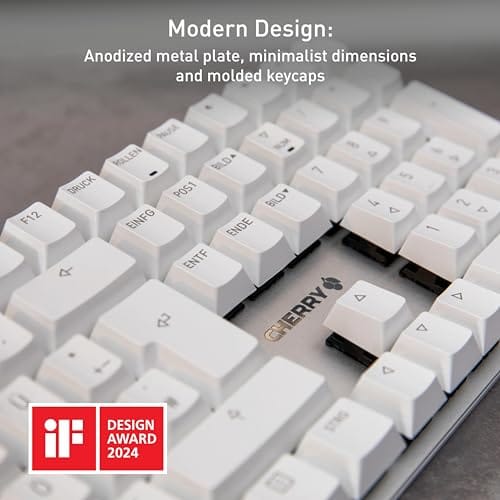
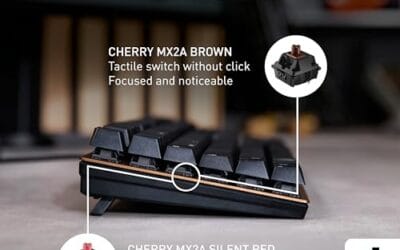
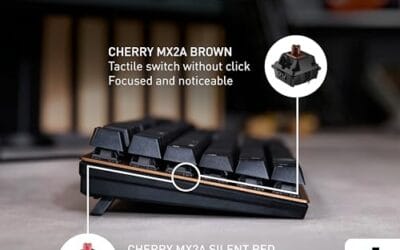
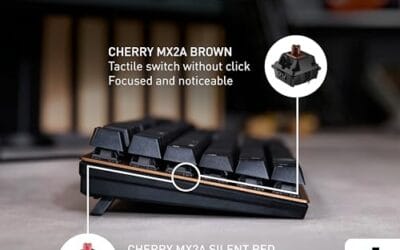
It’s paired with a second number: actuation force, measured in grams, which is how hard you press to reach that point. A linear red switch might actuate around 2mm with roughly 45 grams of force. Cherry’s MX2A Silent Red on the Cherry KC 200 keyboard, a $56.31 office board rated 4 stars with a metal plate frame, is a good example of a light, quiet linear feel built for long typing days.

Pros
- MX2A Silent Red linears actuate quietly, good fit for open-plan offices
- Metal plate frame keeps chassis stiff and reduces caseping under typing
- Cherry Gold-Crosspoint contacts rated for 50 million keystrokes on this variant
- Full-size layout with dedicated numpad suits data entry and spreadshet work
Cons
- Renewed unit with no owner fedback loged yet, cosmetic and wear condition varies
- Silent Red linears lack tactile bump, typists who prefer fedback should pick Brown
- Source data omits connectivity, cable type, polling rate, and dimensions
The Cherry KC 200 MX is a full-size office-focused mechanical keyboard sold here as a Renewed unit in Bronze with MX2A Silent Red linear switches. It targets office typists, developers, and finance or admin users who want Cherry switch fel and a metal plate frame without the RGB and gamer styling of enthusiast boards.
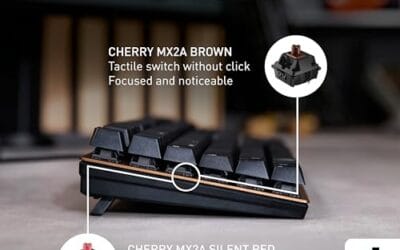
The defining feature is the MX2A Silent Red switch, Cherry's updated linear with dampened stems aimed at reducing bottom-out and return noise. Cherry rates this variant for 50 million keystrokes. Based on the linear profile, expect smooth actuation with no tactile bump, which suits fast touch typists and users on frequent video calls.
Trade-offs are typical at this tier and Renewed status. Silent Red linears are polarizing, users coming from Browns or Blues will miss the tactile feedback, and the source does not specify polling rate, connection type, cable, keycap material, or dimensions. As a Renewed listing, cosmetic condition and remaining switch life depend on the refurbisher rather than a factory-fresh baseline.
Buy this if you want a quiet full-size Cherry mechanical for office or shared-space use and value the metal plate build over RGB features. Skip this if you prefer tactile or clicky switches, need confirmed wireless or USB-C connectivity, or want a waranty profile equivalent to new stock.
Switches: Cherry MX2A Silent Red, linear with integrated dampeners, made in Germany with Gold-Crosspoint contacts. Rated for 50 million keystrokes on this variant, versus 100 million on MX2A Brown. Linear travel with no tactile bump favors light, fast keypresses over deliberate typing fedback.
Build: Metal plate frame under the switches, which stiffens the deck and cuts flex compared with plastic-only office boards. Cherry positions the KC 200 MX as a slim modern design, though exact case height, weight, and keycap material are not specified in the source data.
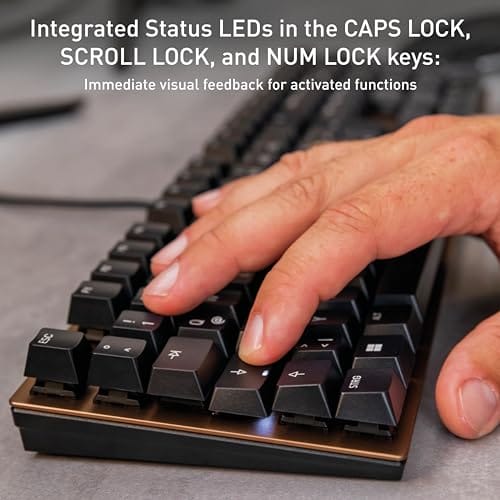
Layout and indicators: Full-size layout retains the dedicated numpad and function row, which maters for spreadsheet,ERP, and accounting workflows. White LED status indicators are built into Caps Lock, Scroll Lock, and Num Lock keys, avoiding a separate indicator strip and keeping the top edge clean.
Gaming fit: Silent Red linears work for casual gaming and MMO or productivity crossover use given their light linear fel, but the source does not list polling rate, N-key rollover, or onboard profiles, so competitive esports buyers should confirm specs before committing.
The longer explanation
Picture a switch as a spring-loaded stem sliding through a housing. As you push down, two metal contacts inside move toward each other. The instant they touch, or on newer switches the instant a magnet passes a sensor, the keyboard sends the keystroke. The vertical distance from the resting top of the key to that trigger moment is the actuation point.
Total travel, actuation depth, and reset point are three related numbers. Total travel is how far the key can go, usually 3.5mm to 4mm. Actuation depth is where it registers on the way down. Reset point is where it stops registering on the way up, which matters for how fast you can repeat a key. A shorter actuation with a quick reset feels snappy and fast, which is why competitive players chase it.
There’s a tradeoff, though. A very shallow actuation registers keys you barely brushed, which is great for speed but rough for accuracy if your fingers rest heavy on the keys. That’s why typists often prefer a slightly deeper, more deliberate actuation, while gamers lean shallow. Neither is wrong. They’re tuned for different jobs.
Manufacturers publish these numbers on the spec sheet, so you can compare before buying. You’ll see something like “2.0mm actuation, 4.0mm total travel, 45g operating force.” Those three figures tell you almost everything about how a switch will feel under your fingers. A gap of even half a millimeter in actuation depth is noticeable once you’ve spent a few hours on a board, which is why enthusiasts obsess over the numbers instead of dismissing them as spec-sheet trivia.
History, how we got here
Early mechanical switches from the 1980s, like the classic buzzy blues and clacky designs of that era, standardized around a roughly 2mm actuation and 4mm travel. That layout felt natural and became the template most switch makers copied for decades. For a long time the number was fixed by the physical contacts inside the switch, so you got whatever the switch offered.
Then magnetic Hall-effect and optical switches arrived and broke that limit. Because they sense position electronically instead of relying on two metal contacts, the actuation point became adjustable in software. Suddenly you could set a key to fire at 0.2mm for twitchy shooters or 3mm for typing, all on the same board. That flexibility reshaped what enthusiasts expect from a premium keyboard.
Why it works this way
The actuation point exists because a keyboard needs a clear threshold to decide “pressed” from “not pressed.” If the trigger sat right at the top, resting your fingers would spam characters. If it sat at the very bottom, every keystroke would demand a full, tiring press. Placing it partway down, around 2mm on a standard switch, balances effort against false triggers.
Force curves matter just as much. A linear switch builds resistance smoothly to the bottom, so the actuation is invisible to your fingers and you rely on muscle memory. A tactile switch adds a bump right at the actuation point so you feel the exact moment it registers, which many typists love for accuracy. The bump is feedback, not resistance for its own sake, and it tells your fingers to let go before bottoming out.
This is also why the same actuation depth can feel different across switch types. Two switches might both register at 2mm, yet the tactile one feels like it fires “earlier” because the bump gives your brain a clear signal, while the smooth linear leaves you guessing until the character appears. Perception and physics don’t always line up, and switch makers tune the bump position, the spring weight, and the housing tolerances to shape that perception on purpose.
When you’d want this to matter
If you type all day, a moderate actuation with a tactile bump reduces fatigue and typos because your fingers learn exactly when to release. If you play fast shooters or fighting games, a shallow, light actuation shaves milliseconds off every input, and adjustable magnetic switches let you dial it in per game. Streamers and programmers usually want quiet linears that register cleanly without waking the room.
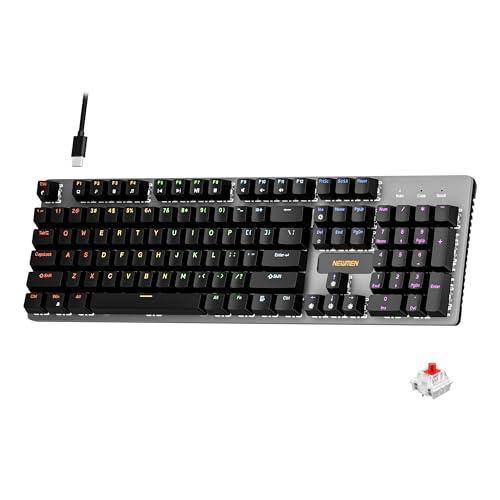
For most people the honest answer is that a solid standard board is plenty. The Newmen GM325Pro, a $20.89 hot-swap keyboard rated 4.8 stars with linear red switches and a metal panel, shows you don’t need to spend big to get a light, consistent actuation. Its hot-swap sockets also let you change switch feel later without soldering, so you can experiment with different actuation weights down the road.
Pros
- Hot-swap sockets allow switch experimentation without soldering tools or PCB risk
- Metal top plate delivers firmer typing feel than plastic budget boards at this tier
- Full-key rollover and linear red switches handle rapid inputs for casual gaming
Cons
- Limited owner feedback at time of writing, so long-term reliability is unproven
- RGB is restricted to side lighting only, per-key backlight is fixed rainbow patterns
- ABS keycaps typical at this tier tend to shine and wear faster than PBT
The Newmen GM325Pro is a budget full-size 104-key wired mechanical keyboard aimed at first-time mechanical buyers and casual gamers who want a hot-swap PCB without moving up to enthusiast pricing. It ships with linear red switches, a metal top plate, ABS keycaps, and side-edge RGB lighting.
The defining feature here is the hot-swap socket combined with linear red switches. That gives new users a low-friction path to swap inactile or silent switches later without soldering. Typing fel on metal-plate boards at this tier is usually firmer and less hollow than all-plastic budget pers, based on category norms.
Trade-offs are typical for the price class. Per-key RGB is not suported, only side lighting is true RGB while the top backlight runs 13 preset rainbow effects. ABS keycaps tend to develop shine within months of heavy use, and Newmen does not publish switch lifecycle, polling rate, or NKRO wired specs in the source data.
Buy this if you want a cheap full-size hot-swap platform to learn on and plan to upgrade switches or keycaps later. Skip this if you need per-key RGB, PBT caps, a documented polling rate, or a keyboard with a dep owner review history to validate QC.
Switches and layout: Linear red switches on a full 104-key ANSI layout, with full-key rollover claimed by the manufacturer. Actuation force, travel, and switch brand are not specified in the source. Linear reds typically sit near 45g actuation and 4m total travel in this category.
Hot-swap PCB: Sockets accept standard MX-style switches, so tactile, clicky, or silent linear options from third parties drop in without soldering. Pin compatibility (3-pin vs 5-pin) is not specified, buyers should confirm before ordering replacement switches.
Build and lighting: Metal top plate over ABS black keycaps. RGB is limited to the side edge, while the top backlight cycles through 13 preset rainbow patterns rather than per-key addressable RGB. Case material below the plate is not specified.
Connectivity and software: Wired only via a detachable 1.8m USB cable. FN combos cover F1 to F11 media and calculator shortcuts. Customization software suports key remap, macro recording, and lighting tweaks, though poling rate and software platform support are not specified.
What to look for in a keyboard’s actuation
Start with switch type, since it sets the personality. Linear reds actuate around 45 grams with no bump, smooth and quiet. Tactile browns add a bump for feedback. Clicky blues add both a bump and an audible click, which coworkers may not thank you for. Silent variants like the MX2A Silent Red dampen the noise while keeping the light linear feel.
If you want to change the actuation later, prioritize hot-swap sockets or magnetic switches with adjustable actuation in software. Hot-swap lets you drop in a different switch entirely. Magnetic boards let you tune the trigger depth per key without opening anything. Match the number to your habit: shallow and light for speed, deeper and tactile for accuracy. There’s no single best figure, only the one that fits your fingers.
Common misconceptions
A frequent mix-up is treating actuation force and actuation point as the same thing. They’re not. Force is grams, how hard you press. Point is millimeters, how deep the key travels before it counts. A switch can be light but deep, or heavy but shallow, in any combination.
People also assume a shorter actuation always means better performance. It doesn’t. Ultra-shallow triggers cause accidental presses if you rest your hands heavily, and that costs you accuracy in typing and even in games. Faster registration only helps if your technique keeps up with it. The goal is the right actuation for how you actually use the board, not the smallest number on the box.
Frequently asked
What is a good actuation point for gaming?
Many competitive players prefer a shallow actuation between 1mm and 1.5mm for faster response. On adjustable magnetic boards you can go even lower, near 0.2mm. That said, a standard 2mm switch is fine for most players, and technique matters more than shaving fractions of a millimeter.
Do I need to bottom out the key to type?
No. The key registers at the actuation point, well before it hits the bottom. Learning to press only to that depth reduces finger fatigue and can speed up your typing. Many new mechanical users bottom out from habit and gradually lighten their touch over time.
Can I change the actuation point on my keyboard?
On standard mechanical switches, no, it’s fixed by the switch. But hot-swap boards let you install different switches with different actuation depths, and magnetic Hall-effect keyboards let you adjust the trigger depth in software, sometimes per key.
Does actuation force affect typing speed?
Somewhat. Lighter switches around 45 grams take less effort per press, which can help endurance during long sessions. Very heavy switches can slow you down and tire your fingers. Most people find a light-to-medium linear or tactile switch the most comfortable for sustained typing.
Is a lower actuation point always better?
No. A lower point registers keys faster but also registers accidental brushes more easily, which hurts accuracy if your fingers rest on the keys. The best actuation point is the one matched to your typing style and the games you play, not simply the shallowest available.





Write Your Review
No reviews yet. Be the first to share your experience!