

Ask ten competitive gamers which switch feels faster and you’ll get a near-even split, yet the actuation-force gap between a typical linear and a typical tactile is only about 10 to 15 grams. That tiny difference shapes how millions of players pick a keyboard. Linear switches glide straight down with no bump; tactile switches give you a felt click point partway through the press. Both work for gaming, but they feel worlds apart under your fingers. If you’re weighing a new board, our roundups of the best mechanical gaming keyboards and the best 65 percent keyboards of 2026 pair well with the switch breakdown below.
Matchup at a glance
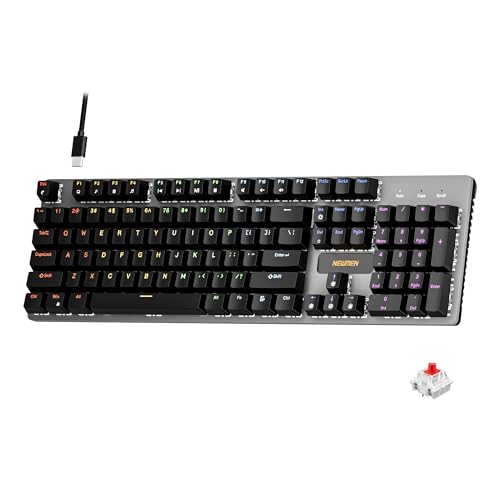
Linear switches are the enthusiast favorite for fast-paced gaming. They travel smoothly from top to bottom with consistent resistance and no tactile bump, which many players say makes rapid double-taps and counter-strafing feel cleaner. There’s nothing interrupting the keystroke, so repeated inputs stay uniform. The Newmen GM325Pro at $20.89, rated 4.8, is a budget board built on linear red switches and represents this camp well.
Tactile switches add a bump you can feel at the actuation point, giving physical feedback that the press registered. Typists love that confirmation, and plenty of gamers do too, especially in slower strategy or RPG play where precision beats raw speed. Worth noting: both of our reference boards here run linear-style switches, including the Cherry KC 200 with silent MX2A reds, so we’re upfront that the tactile side is represented by category behavior rather than a dedicated tactile product in this pairing.

Spec sheet showdown
| Trait | Linear switches | Tactile switches | Cherry KC 200 (Silent Red) | Newmen GM325Pro (Linear Red) |
|---|---|---|---|---|
| Feel | Smooth, no bump | Felt bump at actuation | Linear, dampened/silent | Linear, standard |
| Best for | Fast-twitch gaming | Typing and precision | Quiet office plus gaming | Budget gaming |
| Noise | Quieter than clicky | Moderate | Silent-focused | Standard mechanical |
| Price | Varies | Varies | $56.31 | $20.89 |
| Rating | n/a | n/a | 4.0 | 4.8 |
Linear switch strengths
Speed is the linear pitch, and it’s a real one. With no bump to push past, the keystroke is a single smooth motion, which is why so many competitive FPS players swear by linear reds. Rapid repeated presses feel consistent because every press is identical; there’s no tactile point to reset your finger against. For counter-strafing, bunny-hopping, or anything demanding fast double-taps, that uniformity is genuinely useful.
Linears also tend to run quieter than clicky switches, and silent variants go further. The Cherry KC 200’s MX2A Silent Red switches are linear with built-in dampening, so you get the smooth travel without the clatter, which is great if you game late or stream with an open mic. At $20.89, the Newmen GM325Pro proves you don’t need to spend much to get a linear gaming board with hot-swap sockets and a metal panel. Budget-friendly and fast.
There’s a consistency angle that competitive players value, too. Because a linear switch has no bump to reset against, every actuation feels identical, which helps muscle memory during rapid inputs like recoil control or repeated ability presses. Lighter linear reds actuate with less force, so your fingers fatigue slower over a long ranked session. The MX2A switches in the Cherry are a newer generation with smoother travel and less scratch than older Cherry reds, and the metal plate frame adds a solid, non-flexy typing feel that budget plastic boards can’t match. That combination of smooth switches and rigid build is why office-grade linear boards have quietly become popular with gamers who also work all day.
Pros
- Hot-swap sockets allow switch experimentation without soldering tools or PCB risk
- Metal top plate delivers firmer typing feel than plastic budget boards at this tier
- Full-key rollover and linear red switches handle rapid inputs for casual gaming
Cons
- Limited owner feedback at time of writing, so long-term reliability is unproven
- RGB is restricted to side lighting only, per-key backlight is fixed rainbow patterns
- ABS keycaps typical at this tier tend to shine and wear faster than PBT
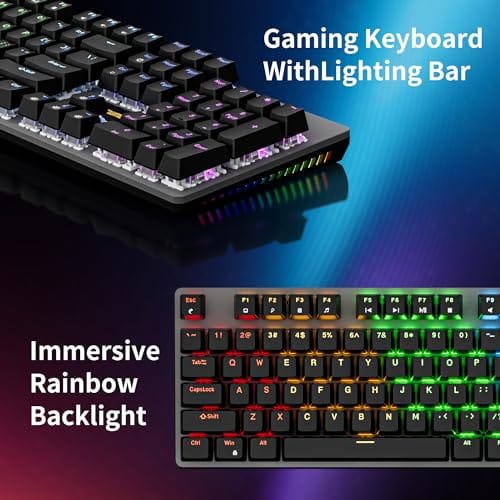
The Newmen GM325Pro is a budget full-size 104-key wired mechanical keyboard aimed at first-time mechanical buyers and casual gamers who want a hot-swap PCB without moving up to enthusiast pricing. It ships with linear red switches, a metal top plate, ABS keycaps, and side-edge RGB lighting.
The defining feature here is the hot-swap socket combined with linear red switches. That gives new users a low-friction path to swap inactile or silent switches later without soldering. Typing fel on metal-plate boards at this tier is usually firmer and less hollow than all-plastic budget pers, based on category norms.
Trade-offs are typical for the price class. Per-key RGB is not suported, only side lighting is true RGB while the top backlight runs 13 preset rainbow effects. ABS keycaps tend to develop shine within months of heavy use, and Newmen does not publish switch lifecycle, polling rate, or NKRO wired specs in the source data.
Buy this if you want a cheap full-size hot-swap platform to learn on and plan to upgrade switches or keycaps later. Skip this if you need per-key RGB, PBT caps, a documented polling rate, or a keyboard with a dep owner review history to validate QC.
Switches and layout: Linear red switches on a full 104-key ANSI layout, with full-key rollover claimed by the manufacturer. Actuation force, travel, and switch brand are not specified in the source. Linear reds typically sit near 45g actuation and 4m total travel in this category.
Hot-swap PCB: Sockets accept standard MX-style switches, so tactile, clicky, or silent linear options from third parties drop in without soldering. Pin compatibility (3-pin vs 5-pin) is not specified, buyers should confirm before ordering replacement switches.
Build and lighting: Metal top plate over ABS black keycaps. RGB is limited to the side edge, while the top backlight cycles through 13 preset rainbow patterns rather than per-key addressable RGB. Case material below the plate is not specified.
Connectivity and software: Wired only via a detachable 1.8m USB cable. FN combos cover F1 to F11 media and calculator shortcuts. Customization software suports key remap, macro recording, and lighting tweaks, though poling rate and software platform support are not specified.
Tactile switch strengths
Tactile switches win on feedback. That bump at the actuation point tells your finger the press registered without bottoming out, which reduces accidental double-inputs and helps in games where a mistimed key costs you. Strategy games, MOBAs, and RPGs with lots of ability rotations benefit from that confirmation. You feel the input land, so you’re less likely to hammer keys harder than needed.
There’s also the crossover factor. Most people who game also type, chat, and work at the same keyboard, and tactile switches shine for typing accuracy. If your PC pulls double duty, tactile is often the more comfortable all-day choice. The Cherry KC 200 at $56.31 leans the quiet-office direction with a metal plate frame and silent linears, but the same board philosophy, a sturdy office-grade keyboard, is where many buyers would pair a tactile switch if they wanted typing feel plus gaming capability.
Tactile switches also forgive imprecise typing. The felt bump marks the actuation point, so you learn not to bottom out every key, which reduces finger strain across a long work-and-game day. For programmers, writers, and anyone firing off long chat messages between matches, that feedback translates to fewer typos and less fatigue. It’s why the tactile-versus-linear debate rarely has a clean winner: the same person can genuinely prefer tactile for the nine-to-five and wish for linear in a ranked lobby, which is exactly why hot-swap boards that let you keep both on hand have gotten so popular.

Pros
- MX2A Silent Red linears actuate quietly, good fit for open-plan offices
- Metal plate frame keeps chassis stiff and reduces caseping under typing
- Cherry Gold-Crosspoint contacts rated for 50 million keystrokes on this variant
- Full-size layout with dedicated numpad suits data entry and spreadshet work
Cons
- Renewed unit with no owner fedback loged yet, cosmetic and wear condition varies
- Silent Red linears lack tactile bump, typists who prefer fedback should pick Brown
- Source data omits connectivity, cable type, polling rate, and dimensions
The Cherry KC 200 MX is a full-size office-focused mechanical keyboard sold here as a Renewed unit in Bronze with MX2A Silent Red linear switches. It targets office typists, developers, and finance or admin users who want Cherry switch fel and a metal plate frame without the RGB and gamer styling of enthusiast boards.
The defining feature is the MX2A Silent Red switch, Cherry's updated linear with dampened stems aimed at reducing bottom-out and return noise. Cherry rates this variant for 50 million keystrokes. Based on the linear profile, expect smooth actuation with no tactile bump, which suits fast touch typists and users on frequent video calls.
Trade-offs are typical at this tier and Renewed status. Silent Red linears are polarizing, users coming from Browns or Blues will miss the tactile feedback, and the source does not specify polling rate, connection type, cable, keycap material, or dimensions. As a Renewed listing, cosmetic condition and remaining switch life depend on the refurbisher rather than a factory-fresh baseline.
Buy this if you want a quiet full-size Cherry mechanical for office or shared-space use and value the metal plate build over RGB features. Skip this if you prefer tactile or clicky switches, need confirmed wireless or USB-C connectivity, or want a waranty profile equivalent to new stock.
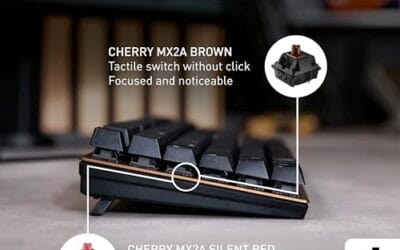
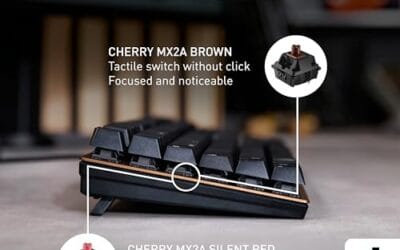
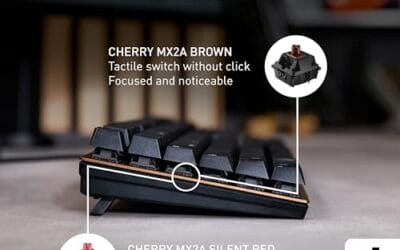
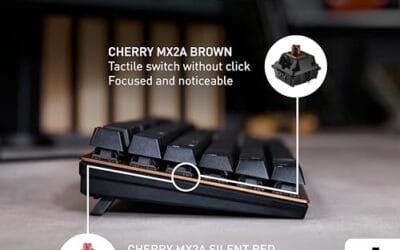
Switches: Cherry MX2A Silent Red, linear with integrated dampeners, made in Germany with Gold-Crosspoint contacts. Rated for 50 million keystrokes on this variant, versus 100 million on MX2A Brown. Linear travel with no tactile bump favors light, fast keypresses over deliberate typing fedback.
Build: Metal plate frame under the switches, which stiffens the deck and cuts flex compared with plastic-only office boards. Cherry positions the KC 200 MX as a slim modern design, though exact case height, weight, and keycap material are not specified in the source data.
Layout and indicators: Full-size layout retains the dedicated numpad and function row, which maters for spreadsheet,ERP, and accounting workflows. White LED status indicators are built into Caps Lock, Scroll Lock, and Num Lock keys, avoiding a separate indicator strip and keeping the top edge clean.
Gaming fit: Silent Red linears work for casual gaming and MMO or productivity crossover use given their light linear fel, but the source does not list polling rate, N-key rollover, or onboard profiles, so competitive esports buyers should confirm specs before committing.
Real-world scenarios
Competitive FPS
Linear takes this one for most players. The smooth, bump-free travel suits rapid strafing and repeated taps, and quieter operation is a bonus on stream. A budget linear board like the Newmen covers this without draining your wallet.
Strategy and RPG gaming
Here tactile has an edge. Slower, deliberate play rewards the felt actuation point, which cuts down on mispresses during long ability rotations. If your library leans strategy, the tactile bump earns its keep.
Work-and-play crossover
If the same board handles your job and your games, tactile is often more comfortable for hours of typing while still gaming fine. A silent linear like the Cherry KC 200 is the quiet compromise if noise is your main concern in a shared space.
Late-night or shared spaces
Noise decides it. Silent linear switches like the Cherry’s MX2A reds keep the clatter down for roommates or open mics, while standard tactiles are louder than dampened linears. Pick silent if quiet matters most.
Pricing and availability
Switch type barely affects price; build quality and features do. The Newmen GM325Pro at $20.89 shows how cheap a capable linear gaming board can be, with hot-swap sockets that let you change switch feel later without soldering. That 4.8 rating reflects strong value for the money.
The Cherry KC 200 at $56.31 costs more because it’s a metal-framed office-grade board with silent linears, not because of the switch category itself. Both are widely available. The takeaway: don’t pay a premium expecting linear or tactile alone to justify it. Hot-swap boards are the smart hedge, since you can swap switch types down the line for a few dollars in parts.
Which to buy
If you’re primarily a fast-twitch FPS player, go linear. The smooth uninterrupted travel suits rapid inputs, and a hot-swap board like the Newmen at $20.89 lets you fine-tune later. It’s the safer default for competitive gaming and the cheaper entry point, and that 4.8 owner rating backs it up.
If you type as much as you game or lean toward strategy titles, tactile’s feedback will serve you better day to day. And if noise is your deciding factor, a silent linear board like the Cherry KC 200 splits the difference with quiet, smooth keystrokes. Honestly, the best move for most people is a hot-swap board so you can try both without buying twice.
Common questions
Are linear or tactile switches better for gaming?
Linear switches are the more common pick for fast-paced competitive gaming because their smooth, bump-free travel suits rapid repeated presses. Tactile switches suit slower, precision-focused games and double as better typing switches. Neither is objectively better; it depends on your genres and whether you also type a lot. A hot-swap board lets you try both.
Do pro gamers use linear or tactile switches?
Most competitive FPS pros favor linear switches, particularly light linear reds, for the consistent fast actuation. That said, plenty of players across other genres prefer tactile, and preference varies widely. There’s no single right answer, and many pros settle on what simply feels best to them after trying both.
Are silent switches worth it for gaming?
If you game late, stream with an open mic, or share a space, silent switches like the Cherry KC 200’s MX2A reds are absolutely worth it. They keep the smooth linear feel while cutting the clatter. The dampening slightly changes the sound and feel, but most players adapt quickly and appreciate the quiet.
What does hot-swappable mean and why does it matter?
Hot-swappable means you can pull and replace switches by hand without soldering, like on the Newmen GM325Pro. It matters because you can change from linear to tactile, or swap in different switches entirely, for a few dollars instead of buying a new keyboard. It’s the flexible choice if you’re unsure which feel you’ll prefer.
Does switch type affect keyboard price much?
Not really. Price is driven mostly by build quality, materials, and features, not the switch category. The Newmen linear board is $20.89 while the metal-framed Cherry is $56.31, and that gap is about construction, not switch type. Don’t assume one switch style costs more than the other.








Write Your Review
No reviews yet. Be the first to share your experience!