
Walk into any monitor aisle in 2026 and you’ll see numbers like 1000R, 1500R, and 1800R slapped on curved displays with zero explanation. Manufacturers love throwing these specs around because “more aggressive curve” sounds premium. Here’s the thing: that R number isn’t a quality score. It’s a measurement of how tight the curve bends, and whether it helps you depends entirely on screen size, viewing distance, and what you’re actually doing on the display. We’ve sat behind enough curved panels to know when the curve pays off and when you’re paying extra for a gimmick. Let’s unpack what those ratings actually mean.
The short answer
The R number is the radius (in millimeters) of the circle your monitor’s curve would form if extended into a full loop. Lower R = tighter curve. A 1000R panel curves more aggressively than 1800R. Tighter curves feel immersive on 32-inch and larger ultrawides at close viewing distances. On a 24 or 27-inch standard 16:9 panel, the difference between 1000R and flat is mostly cosmetic. Size and seating distance matter more than the R spec itself.
The longer explanation
The physics behind curve ratings comes from a simple idea: your eyes sit roughly the same distance from the screen as the curve’s radius, so every pixel lands at an equal focal distance. A 1000R monitor is built to be viewed from about one meter away. Sit closer or farther and you’ve broken the geometry the curve was designed for.
Here’s where it gets interesting. Manufacturers picked 1800R as the early standard because it worked for typical desk setups around 1.8 meters. As gamers started sitting closer (60-80cm) on bigger panels, 1500R and then 1000R curves arrived to match that aggressive seating. The 1000R radius mirrors your peripheral vision arc more naturally at close range. You’re not consciously aware of the edges bending toward you, which is exactly the point. A well-matched curve disappears.

Pros
- QHD resolution at 32 inches hits a practical pixel density
- 165Hz refresh rate with 1ms MPRT reduces motion blur
- FreeSync support covers AMD and most NVIDIA GPU pairings
Cons
- VA panel limits viewing angles versus IPS alternatives
- No built-in speakers or USB hub on a mid-range unit
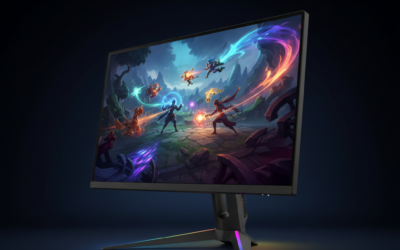
The Samsung Odyssey G55C is a 32-inch QHD curved gaming monitor for PC and console players wanting more screen than a typical 27-inch without jumping to ultrawide. The VA panel delivers 165Hz with 1ms MPRT and HDR10 support, though HDR performance is limited by the panel's brightness ceiling, based on owner reports. AMD FreeSync keeps frame pacing clean on compatible GPUs. VA technology means viewing angles are noticeably narrower than IPS options at this price tier. Skip if color-accurate work or wide-angle desk sharing matters to you.
What doesn’t matter? The R number in isolation. A 27-inch 1000R panel and a 49-inch 1800R ultrawide can deliver similar immersion levels because the larger screen needs less curve aggression to wrap around your field of view.
Why it works this way
Human peripheral vision spans roughly 200 degrees horizontally, but only the central 60 degrees handles sharp detail. The outer edges of a wide flat panel sit at a slight angle to your line of sight, which means those pixels are farther away than the center pixels. Your brain processes this as mild distortion, especially noticeable on ultrawide 21:9 or 32:9 aspect ratios. A curved panel cancels that distance variance.
This is why curves matter most on ultrawides and super-ultrawides. On a standard 27-inch 16:9 monitor, the edges aren’t far enough off-axis to cause real problems. You can sit in front of a flat 27-inch all day without eye fatigue from geometry alone. But stretch that to 34 inches at 21:9, and the edges start pulling your focal effort. That’s where a 1500R or 1000R curve earns its premium.

Pros
- Dual 27-inch 1500R curved panels in one box simplifies matched side-by-side setup
- 75Hz refresh fels smoother than 60Hz for scrolling, cursor tracking, and desktop work
- 98% sRGB coverage is adequate for general productivity and casual media consumption
Cons
- Limited owner feedback at time of writing makes long-term panel QC hard to verify
- 1080p across 27 inches gives roughly 81 PI, visibly soft next to 1440p at the same size
- 75Hz and unspecified response time rule out competitive esports or fast-paced FPS play
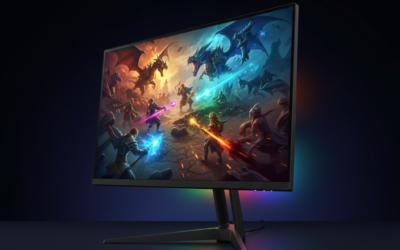
The Kado 2-Pack is a budget dual-monitor bundle built around two 27-inch 1500R curved FHD panels running at 75Hz. It targets home-office users, students, and casual multitaskers who want a matched side-by-side setup without sourcing two identical displays separately or hunting for a specific SKU pairing.
The defining feature is the bundled pair itself: two identical 27-inch 1500R curves flanking a center gap reduce peripheral distortion versus flat panels, and 98% sRGB coverage keeps everyday photo and video content looking reasonable. Monitors in this tier typically deliver 250to 300 nits SDR brightness, which is fine for indoor lighting but weak near bright windows.
Trade-offs are typical at this price. 1080p stretched across 27 inches lands near 81 PPI, so text is chunkier than 1440p at the same size. Response time is not specified, panel type is not specified, and the 75Hz ceiling with no listed adaptive sync rules out competitive gaming. Built-in speakers in this class are usually low-wattage and better treated as a backup.
Buy this if you want a low-cost, matched dual-27curved setup for browsing, documents, spreadsheets, and light media. Skip this if you need 1440p sharpness, color-accurate editing on a calibrated workflow, or high-refresh response for FPS and racing titles.
Panel and resolution: Each unit is a 27-inch 1500R curved display at 1920x1080. Panel technology (IPS, VA, or TN) is not specified in the source, though curved 1080p monitors in this price tier are most commonly VA. Pixel density lands around 81 PPI, softer than 1440p at the same 27-inch size.
Refresh and motion: Refresh rate is 75Hz, a modest step above the 60Hz office baseline that smooths cursor motion and scrolling. Response time GtG is not specified, and no adaptive sync (FreSync or G-SYNC) is listed, so expect visible ghosting in fast motion and tearing in games without a frame cap.
Color and HDR: Manufacturer-claimed color coverage is 98% sRGB, which is adequate for web content, office work, and casual photo viewing. DCI-P3 coverage, HDR certification, and factory calibration Delta-E are not specified. Treat this as a productivity-grade gamut rather than a print or video mastering reference.
Connectivity and mounting: Port selection (HDMI, DisplayPort, VGA counts) and VESA mount pattern are not specified in the source. Built-in speakers are included, wattage not specified. Confirm the exact input layout with the seller before pairing with a single-output laptop dock or older desktop GPU.
There’s also a practical benefit nobody mentions: curved panels are slightly harder to glare on. The reflection angle changes across the screen, so a ceiling light that bombs a flat panel might only catch a small section of a curved one. It’s not a huge deal, but it’s a real effect.
When you would want this
Curved monitors shine for single-player gaming, racing sims, flight sims, and any first-person experience where you want the world to feel like it’s wrapping around you. Hop into a cockpit sim on a 1000R 34-inch ultrawide and the immersion bump is genuine. Same goes for atmospheric single-player titles. The curve pulls you in.
Competitive multiplayer is trickier. Some pros prefer flat panels because they want every pixel at identical perceived distance for muscle-memory reasons. Others don’t care. If you’re playing CS, Valorant, or any title where you’ll glance at fixed HUD positions, flat is often the safer call. The curve introduces a tiny perceptual offset that some players never adjust to.

Pros
- Bundled matched pair simplifies dual-monitor setup, avoiding color and bezel mismatch across separate SKU purchases.
- 1500R curvature at 27 inches provides more immersion than flat 1080p panels of the same diagonal.
- 98% sRGB claim covers standard web, office, and video color workflows at this budget tier.
Cons
- Very limited owner feedback at time of writing makes long-term reliability and panel QC hard to verify.
- 1920x1080 stretched across 27 inches yields roughly 82 PPI, so text edges look softer than 1440p 27-inch pers.
- 75Hz trails 144Hz+ gaming panels, and adaptive sync support is not confirmed anywhere in source data.
The Kado 2-Pack is an entry-level dual-monitor bundle pairing two 27-inch curved 1500R panels at 1920x1080 native resolution and 75Hz refresh. It targets budget-conscious home office users, students, and casual gamers who want a matched two-display setup without sourcing identical units from separate SKUs or refresh cycles.
The defining spec here is the shipped pair itself, since curved 1500R panels are difficult to color-match across independent purchases. Monitors in this tier typically deliver around 250 to 300 nits SDR brightness and 3000:1 static contrast on VA-class panels, adequate for indoor use but underwhelming in bright rooms or for meaningful HDR work.
1080p across a 27-inch panel is a genuine weakness, not just a tier norm, producing roughly 82 PPI where text edges look soft next to sharper 1440p 27-inch options. Response time is described as fast but no GtG figure is stated, and adaptive sync support is not confirmed in source data.
Buy this if you want a matched 27-inch dual-monitor pair for spreadsheets, coding side panels, and light 1080p gaming on a tight budget. Skip this if you edit photos professionally, chase high-refresh esports above 75Hz, or run a 4K workflow where pixel density is a hard requirement.
Panel and Resolution: Each unit is a 27-inch curved display at 1920x1080 native resolution with 1500R curvature. Panel technology is not specified in source, but curved 27-inch monitors at this refresh tier are typically VA, offering higher static contrast around 3000:1 versus IPS at the cost of viewing-angle color shift.
Refresh and Motion: Refresh rate tops out at 75Hz, a modest step above the 60Hz office norm and enough for smoother scrolling and casual competitive play. Response time is described as fast but no GtG or MPRT figure is disclosed. FreeSync or G-Sync compatibility is not confirmed anywhere in source data.
Color and HDR: Color coverage is stated at 98% sRGB, adequate for web, office, and general video work but not covering DCI-P3 for wide-gamut content grading. HDR tier is not specified, and monitors in this bracket typically lack meaningful HDR400 or higher certification, so treat any HDR toggle as tone-mapping only.
Connectivity and Mounting: Built-in speakers are included per source, handy for basic system audio without a soundbar. Specific port count, HDMI or DisplayPort versions, USB hub, and VESA mount pattern are not listed. Confirm ports and VESA compatibility with the seller before committing to a dual-arm mount build.
What curved monitors aren’t good for: color grading, photo editing, graphic design, CAD work, and anything requiring straight reference lines. A curve bends every horizontal element in your image. You’ll see it in spreadsheets too, where long rows appear to dip slightly toward the edges. If you’re spending eight hours a day in Lightroom or Illustrator, get a flat panel. Period.
Common misconceptions
“Curved is better for productivity.” It isn’t. Productivity work usually means documents, code, browsers, and design tools, all of which contain reference lines that the curve distorts. Spreadsheets feel weirder on curved panels than gaming does. The “productivity curve” marketing pitch is just companies trying to sell premium SKUs to office workers who’d be happier with a flat ultrawide.
“Curved monitors cause eye strain.” There’s no clinical evidence supporting this. If anything, a properly-matched curve reduces strain by equalizing focal distance across the screen. The eye strain people report usually traces back to refresh rate, brightness, blue light, or sitting too close, not the curve itself.

Pros
- 165Hz refresh with FreeSync Premium supports VRR across both AMD Radeon and NVIDIA GTX 10 series and newer.
- ELMB plus Adaptive-sync active simultaneously reduces ghosting without disabling variable refresh rate.
- Shadow Boost darkens-to-detail processing aids visibility in FPS titles without requiring manual gamma tuning.
- HDMI 2.0 supports full 1080p at 165Hz, avoiding the bandwidth ceiling that limits older HDMI 1.4 monitors.
Cons
- 1080p on a 27-inch panel yields roughly 81 PPI, which is noticeably soft for desktop productivity or text work.
- D-Sub port limits usefulness to legacy systems only; modern GPU owners gain no benefit from its inclusion.
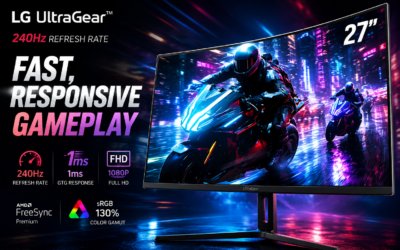
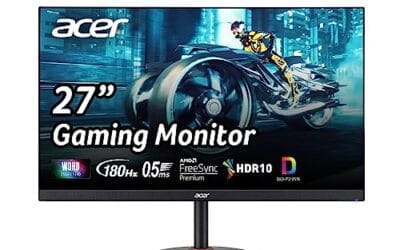
The ASUS TUF VG27VH1B is a budget-to-mid-range 27-inch curved FHD gaming monitor targeting entry-level PC builders and console-to-PC converts. Its 1500R curvature and 165Hz refresh rate position it as a high-refresh esports option for buyers running mid-range GPUs who are not yet ready to invest in QHD or IPS alternatives.
The defining feature is the combination of FreeSync Premium and ASUS ELMB, which allows simultaneous motion blur reduction and adaptive sync. At 1080p, mid-range GPUs such as an RTX 3060 or RX 6600 can sustain frame rates well within the 48-165Hz VRR window, making tearing largely a non-issue in typical esports titles. Shadow Boost adds useful dark-scene visibility without requiring per-game HDR configuration.
The core trade-off at this tier is pixel density. At 27 inches with a 1920x1080 resolution, PPI sits around 81, which is below what most users consider sharp for mixed productivity and gaming use. Buyers who split time between gaming and document work will notice softness at normal viewing distances. The panel type is not explicitly confirmed in source data, so color volume and HDR performance are not specified.
Buy this if you are pairing it with a mid-range GPU and primarily play esports titles at high frame rates where 1080p resolution is a non-issue. Skip this if you do any meaningful content creation, spend hours reading text, or are running an RTX 4070 or above where 1080p becomes the GPU bottleneck rather than the target.
Resolution and Refresh: Native resolution is 1920x1080 at a maximum 165Hz, with the product listing noting 144Hz is also supported. FreeSync Premium requires a minimum 120Hz VRR range and low-framerate compensation, placing the VRR floor behavior above basic FreeSync. HDMI 2.0 carries the full 165Hz bandwidth without compromise.
Response Time and Motion Handling: Advertised response is 1ms MPRT via ELMB technology, which is a backlight-strobing measurement, not GtG pixel transition time. GtG response is not specified in source data. ELMB and Adaptive-sync can operate together on this model, which is not universal across all ELMB-equipped ASUS panels.
Adaptive Sync Compatibility: FreeSync Premium is the primary certification. ASUS confirms compatibility with NVIDIA GeForce GTX 10 series, GTX 16 series, RTX 20 series and newer via G-Sync Compatible mode, covering the majority of discrete GPUs in active use as of this listing.
Connectivity: Ports are HDMI 2.0 and D-Sub only. No DisplayPort is included, which limits daisy-chaining and restricts users who need DisplayPort for high-refresh output from workstation GPUs or KVM switches. VESA mount compatibility is not specified in source data.
“All curves are equal.” This one’s the worst. A 1800R 27-inch panel and a 1000R 49-inch super-ultrawide deliver wildly different experiences. The 1800R 27-inch is barely curved. You’d struggle to tell it apart from flat in a blind comparison. The 1000R 49-inch wraps around your peripheral vision like a windshield. Same “curved” label, completely different products. Always check the R rating alongside the screen size and aspect ratio. A spec sheet without context tells you nothing.
Frequently asked
1000R vs 1500R – which is better?
Neither is universally better. 1000R suits close-range gaming on 32-inch or larger ultrawides where you’re sitting 60-80cm away. 1500R works better at typical desk distances around one meter on 27-34 inch panels. If you’re sitting back further on a standard-sized monitor, 1500R is the safer pick. Sitting close to a big ultrawide? 1000R justifies its existence.
Will curved monitors warp my color editing?
Yes, in a way that matters. The curve introduces subtle geometric distortion that throws off straight-line reference work and makes color grading harder to trust at the edges. Professional colorists almost universally use flat panels. If photo or video editing is your main use, don’t buy curved no matter how good the deal looks.
Do I need an ultrawide if I want curved?
No, but you’ll get more benefit from one. Curves on standard 16:9 monitors are mild improvements at best. Curves on 21:9 and 32:9 ultrawides are transformative because the wider aspect ratio puts the edges further off-axis where straightening them actually helps.
Are curved monitors worth the price premium?
For immersive gaming on 32-inch+ panels, yes. For productivity, no. For color work, definitely not. The premium is real (roughly $30-80 over equivalent flat panels), and you’re only getting value back if your use case rewards the curve. Match the panel to what you actually do.