27″ 1440p gaming monitors finally crashed below $250 in 2026, and the QD-OLED entry tier slid down to $370. That’s not a typo. Panels that ran $400-plus two years ago are sitting on shelves at prices that used to buy you a 1080p TN with bad viewing angles. We’ve pulled five deals worth grabbing this quarter, ranked by what you actually get for the money, not by which brand shouts loudest. Whether you’re chasing 240Hz QD-OLED or a sub-$120 esports panel for a second rig, there’s something here that earns the cart click.
TL;DR – the deal in one line
The Alienware AW2725DM at $239 is the 1440p IPS steal of the quarter, full stop. Samsung’s Odyssey G55C curved sits at $250 if you’d rather have VA contrast and a 1000R wrap. Acer’s Predator X27U is the splurge pick for QD-OLED picture quality. And if you just want fast pixels under $120, the Acer Nitro KG241Y 24″ 165Hz handles esports without draining the wallet. Five panels, five different budgets, no filler.
What you get
The Alienware AW2725DM is the all-rounder. 1440p, 180Hz, IPS, and it carries both G-Sync and FreeSync certification, so it doesn’t care which GPU camp you’re in. At $239 with a 4.8-star average, it’s the deal everyone’s going to point at six months from now and say they missed.
Samsung’s Odyssey G55C goes the other direction. 32 inches of 1000R curvature, VA contrast, 165Hz. It’s not the panel for twitch shooters, but for single-player immersion and HDR movie nights, the deep blacks earn their keep. $250 for a 32″ curved 1440p is wild.
The Acer Predator X27U is the splurge. QD-OLED, 240Hz, FreeSync Premium, and the response times you’d expect from an OLED panel. Premium HDR, premium motion clarity, premium price tag – but it’s the cheapest QD-OLED entry we’ve seen in this size class.
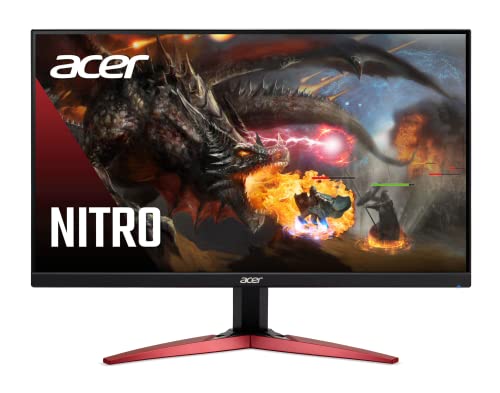
Acer’s Nitro KG241Y is the budget esports play. 24″, 1080p, 165Hz, VA, FreeSync Premium, $110. It won’t win awards for color, but for CS2 or Valorant on a second rig, it’s hard to argue against.
Samsung’s Odyssey G5 G51F rounds it out. 27″, 1440p, 180Hz IPS, $250. A balanced mid-tier pick that doesn’t make you choose between size and refresh rate.

Pros
- QHD resolution at 32 inches hits a practical pixel density
- 165Hz refresh rate with 1ms MPRT reduces motion blur
- FreeSync support covers AMD and most NVIDIA GPU pairings
Cons
- VA panel limits viewing angles versus IPS alternatives
- No built-in speakers or USB hub on a mid-range unit
The Samsung Odyssey G55C is a 32-inch QHD curved gaming monitor for PC and console players wanting more screen than a typical 27-inch without jumping to ultrawide. The VA panel delivers 165Hz with 1ms MPRT and HDR10 support, though HDR performance is limited by the panel's brightness ceiling, based on owner reports. AMD FreeSync keeps frame pacing clean on compatible GPUs. VA technology means viewing angles are noticeably narrower than IPS options at this price tier. Skip if color-accurate work or wide-angle desk sharing matters to you.

Pros
- QD-OLED panel gives per-pixel contrast and true blacks that IPS and VA cannot match.
- 240Hz refresh with 0.03ms GtG keeps motion clarity high in fast esports titles.
- Four video inputs (2x HDMI 2.1, 2x DP 1.4) simplify PC plus dual console setups.
Cons
- Limited owner feedback at time of writing makes long-term QC and burn-in tracking unclear.
- QD-OLED caries static-content burn-in risk, so mixed productivity and gaming users should weigh usage paterns.
- HDR peak brightness and VESA HDR tier are not specified, which matters for HDR mastering.
The Acer Predator X27U is a 26.5-inch WQHD QD-OLED gaming monitor running 240Hz with a rated 0.03ms GtG response time. It targets competitive 1440p players who want OLED contrast and motion clarity without steping up to a 32-inch 4K panel or paying flagship money.
The QD-OLED panel is the headline. At 2560x1440 and 240Hz, an RTX 4070 or RX 7800 XT class GPU can push most modern titles into triple-digit frame rates with DLSS or FSR enabled. Motion clarity in CS2 and Valorant should look noticeably cleaner than IPS at the same refresh rate.
Trade-offs are typical of the QD-OLED class. Static HUDs, taskbars, and streaming overlays raise burn-in risk over multi-year ownership, though the built-in image retention refresh helps mitigate wear. HDR peak brightness and VESA HDR certification tier are not specified in source data, which matters if bright-room use or HDR grading is a priority.
Buy this if you play competitive 1440p titles on an RTX 4070 or better and want OLED response times for motion clarity. Skip this if your workflow includes static productivity apps for eight-plus hours daily, or if you need certified HDR1000 peak brightness for color-critical HDR content grading.
Panel and Resolution: QD-OLED at 2560x1440 on a 26.5-inch diagonal works out to roughly 111 PPI, close to 27-inch 1440p norms. True 10-bit color and DCI-P3 99% coverage put it in creator-adjacent territory, with Delta E under 2 suggesting factory calibration should be usable out of the box.
Motion and Refresh: 240Hz refresh paired with 0.03ms GtG response time is standard for current QD-OLED gaming panels. AMD FreeSync Premium ads low-framerate compensation, useful when frame rates dip below 120 FPS in demanding titles. NVIDIA users can typically enable G-SYNC Compatible mode over DisplayPort.
Connectivity: Two DisplayPort 1.4 and two HDMI 2.1 inputs cover PC plus dual consoles without a switch. HDMI 2.1 can carry 1440p at 240Hz from PS5 and Xbox Series X, though those consoles cap output at their own native limits. USB hub features are not specified in source data.
Ergonomics: Tilt, height, pivot, and swivel adjustments are all present, which is standard at this tier and above. VESA mount size is not specified in source data. ZeroFrame styling minimizes bezel width, useful for dual-monitor setups where side-by-side alignment matters.
Pros
- 165Hz listed over DisplayPort for full refresh from compatible cards.
- Included HDMI cable reduces need for extra purchases at setup.
- NTSC 72 percent color coverage provides adequate saturation for general use.
- Low tilt range still permits basic angle tweaks for viewing comfort.
Cons
- Tilt only stand offers fewer adjustments than height or swivel models.
- VA panel can show dark scene smearing common in this price segment.
- No USB hub or speakers limits peripheral connectivity.
This is a budget tier 23.8 inch 1080p VA gaming monitor aimed at entry level gamers and general desktop users who want higher than 60Hz refresh in a small footprint.
The standout feature is the 165Hz refresh paired with AMD FreeSync Premium, which aligns frame delivery to cut tearing while keeping input lag low in variable rate scenarios typical of 1080p gaming.
Build uses a thin ZeroFrame bezel and basic tilt stand, with a matte panel that reduces reflections in typical room lighting.
Trade offs include limited ergonomic range and the motion characteristics of VA technology that can blur dark elements during rapid movement.
Buy this if you need an affordable high refresh 1080p display for everyday gaming and work. Skip this if you require height adjustment or faster pixel transitions in dark scenes.
| Panel Type | VA |
|---|---|
| Size | 23.8 inch |
| Resolution | 1920 x 1080 |
| Refresh Rate | 165Hz |
| Response Time | 1ms (VRB) |
| HDR | HDR Ready (HDR10) |
| Sync Technology | AMD FreeSync Premium |
| Ports | 1x DisplayPort 1.2, 2x HDMI 2.0 |
| Stand Adjustments | Tilt -5 to 15 degrees |
| VESA Mount | 100 x 100mm |
| Color Coverage | NTSC 72% |
Display connections: Use DisplayPort for the full 165Hz output from recent GPUs. HDMI 2.0 ports support lower rates in some configurations.
Resolution and GPU pairing: Matches well with entry level to mid range cards running 1080p at high frame rates in esports titles.
Multi monitor setups: ZeroFrame edges allow minimal bezel gaps when placing units side by side on a desk or mount.
Ergonomics and mounting: VESA 100x100 support enables monitor arms if the included tilt stand is insufficient for your posture needs.

Pros
- IPS panel with 95% DCI-P3 coverage suports both gaming and light content creation work.
- 180Hz refresh and 1ms GtG response pair well with 1440p esports and mainstream titles.
- Triple adaptive sync coverage (G-SYNC, FreSync, VESA AdaptiveSync) works across NVIDIA and AMD GPUs.
- Dedicated console mode and hardware low blue light option help marathon sessions.
Cons
- Limited owner feedback at time of writing makes long-term panel uniformity hard to confirm.
- DisplayHDR 400 is entry-level HDR, expect no meaningful local dimming or true highlights.
- Port selection, stand ergonomics, and VESA mount pattern not specified in source data.
The Alienware AW2725DM is a mid-range 27-inch QHD IPS gaming monitor running at 180Hz with a rated 1ms gray-to-gray response. It targets mainstream 1440p gamers on an RTX 4060Ti or RX 700 XT class GPU who want higher refresh than144Hz without stepping up to OLED or 240Hz tiers.
The defining spec is the 180Hz IPS panel paired with 95% DCI-P3 coverage and VESA DisplayHDR 400. At 27 inches, QHD lands near 109 PI, a common sweet spot for desktop use. Monitors in this tier typically deliver 350to 400 nits SDR brightness, which lines up with the DisplayHDR 400 certification here.
Trade-offs are typical for the tier. DisplayHDR 400 without local dimming means HDR is more a compatibility check than a visual upgrade, and 1ms GtG figures from vendors usually reflect the fastest overdrive setting rather than average pixel transitions. Port count, USB hub, and stand adjustability are not specified in the source data, worth confirming on the spec sheet.
Buy this if you run a 1440p rig with a mid-range NVIDIA or AMD GPU and want a straightforward 180Hz IPS upgrade with broad adaptive sync support. Skip this if you need proper HDR with local dimming, OLED-level response, or verified stand ergonomics before purchase.
Panel and resolution: IPS panel at 2560x1440 QHD on a 27-inch diagonal, landing near 109 PPI. IPS typically holds wider viewing angles than VA, with the trade-off of lower static contrast, usually around 1000:1 at this tier unless the source specifies otherwise.
Refresh and response: 180Hz refresh rate with a rated 1ms gray-to-gray response. Vendor 1ms GtG figures usually reflect the fastest overdrive preset, so real average transitions on IPS at this tier commonly sit in the 4 to 6ms range based on independent testing norms.
Color and HDR: 95% DCI-P3 coverage is solid for gaming and casual photo or video work, though not a substitute for factory-calibrated creator panels. VESA DisplayHDR 400 certification means400 nits peak and no local dimming requirement, treat HDR as a compatibility feature rather than a visual boost.
Sync and compatibility: NVIDIA G-SYNC compatible, AMD FreSync, and VESA AdaptiveSync are all listed, covering variable refresh across current NVIDIA and AMD GPUs. A dedicated console mode is included, useful for PS5 and Xbox Series X users who want the panel to align with console output.

Pros
- 180Hz refresh at native QHD suits RTX 4060 or RX 7600 class GPUs targeting 1440p.
- Height adjustable stand with tilt and pivot, uncommon at this price bracket for27 inch QHD.
- FreeSync support smooths variable frame rates in demanding titles without added input lag.
- Auto Source Switch+ simplifies swapping between PC, console, or laptop inputs on the fly.
Cons
- Limited owner feedback at time of writing, real-world panel uniformity and QC data is thin.
- HDR10 is entry-tier badge only, no DisplayHDR certification or peak nits figure specified.
- Panel type, port selection, and response time methodology (GtG vs MPRT) not disclosed in source.
The Samsung Odyssey G5 G51F is a budget 27 inch QHD gaming monitor aimed at 1440p high refresh play on mid-range hardware. With 180Hz refresh, 1ms response, and AMD FreeSync, it targets esports and mainstream FPS players running an RTX 4060,X 3060 Ti, or RX 7600 class GPU.
The defining feature is the1440p at 180Hz pairing on a 27 inch panel, which lands in the sweet spot for pixel density (roughly 109 PPI) without demanding a top-tier GPU. Monitors in this tier typically deliver 300 to 350 nits SDR brightness and cover roughly 95% sRGB, though Samsung does not specify panel type or measured coverage here.
Trade-offs are visible on the spec sheet. HDR10 is a signal-support badge, not a performance tier, so expect flat highlights compared to DisplayHDR 400 or better. Panel technology, contrast, port count, and speaker inclusion are not listed in source data. The 1ms figure is likely MPRT rather than GtG, typical at this tier.
Buy this if you want a straightforward 1440p 180Hz panel with height adjustment for competitive shooters on a mid-range GPU. Skip this if you need verified HDR performance, wide color coverage for content work, or confirmed IPS viewing angles before committing.
Resolution and refresh: Native 2560x1440 at 180Hz over a 27 inch diagonal yields around 109 PPI, sharper than a 1080p 27 inch panel and lighter to drive than 4K. The 180Hz ceiling suits Valorant, CS2, Overwatch 2, and Apex Legends on mid-range GPUs without dropping to 1080p upscale.
Response and sync: Samsung lists 1ms response time, most likely MPRT at this tier rather than GtG, which is standard marketing practice. AMD FreeSync handles variable refresh between roughly 48Hz and 180Hz on compatible GPUs, and works with NVIDIA cards over DisplayPort in G-SYNC Compatible mode based on typical Samsung behavior.
HDR and gaming aids: HDR10 support here means signal aceptance only, no DisplayHDR certification or peak nit figure is disclosed. Black Equalizer lifts shadow detail in dark scenes, and Virtual Aim Point overlays a crosshair, useful in tactical shooters where the game hides one.
Ergonomics and connectivity: The stand supports height, tilt, and pivot adjustments, which is above average for this price band. Exact height range, VESA mount pattern, HDMI and DisplayPort versions, and refresh rate over HDMI are not specified in source data, worth confirming before console120Hz use.
Why these prices are actually good
Let’s anchor this to reality. In 2022, a 27″ 1440p 165Hz IPS panel ran you about $300 on a good week. The Alienware AW2725DM is sitting at $239 right now, and it’s a 180Hz panel with G-Sync certification on top. That’s roughly 20% below what comparable panels were charging just a few years back, and it’s wearing an Alienware badge that usually adds a markup of its own.
32″ 1440p curved? That was a $400 segment in 2023. Samsung’s G55C is now $250. The panel tech hasn’t gotten worse; the prices have just caught up to what the displays should’ve cost in the first place.
The 24″ 1080p 165Hz tier is where it gets ridiculous. Acer Nitro at $110 with VA and FreeSync Premium – that segment used to demand $180. You’re paying 1080p TN money for a panel that’s actually decent.
QD-OLED pricing is the headline, though. Two years ago, QD-OLED meant $900-plus. Period. Now there’s a $370 entry tier, and Acer’s X27U sits a notch above that with 240Hz and a stronger HDR ceiling. It isn’t cheap, but the curve has bent hard and fast.
The catch (if any)
No deal’s perfect, so here’s what we’d flag before you click buy.
The Alienware AW2725DM’s 4.8-star average is genuine, but North American stock rotates monthly. If it’s listed in stock, don’t sit on the cart. We’ve watched it vanish for two-week stretches between restocks.
Samsung’s G55C lists 1ms MPRT, which is true under specific strobing conditions. Real-world gray-to-gray response is slower, as it is on most VA panels. For single-player and HDR, you won’t notice. For competitive shooters at the top tier, you will.
Acer’s X27U QD-OLED ships with a 3-year burn-in warranty, which is the strongest coverage in the segment. That said, if you’re running it 10 hours a day with static taskbars and Excel grids, OLED is still OLED. Treat it like a gaming display and you’re fine.
Acer’s Nitro KG241Y doesn’t carry native G-Sync. It’s adaptive-sync compatible, which works fine with most modern Nvidia cards, but it’s not a certified G-Sync panel. Worth knowing if you’ve had compatibility headaches before.
Where to grab it
Amazon’s got the best availability on the Alienware AW2725DM and the strongest discounts on Samsung Odyssey models right now. Best Buy tends to bundle Acer monitors with prebuilt PCs, so if you’re rig-shopping anyway, check there first. Newegg consistently has the sharpest pricing on Acer Predator and ASUS gaming panels, and they ship fast. We’d skip Walmart for anything above $200 – their monitor return process is rougher than the others, and you don’t want to fight a freight return on a dead-pixel panel.
Similar deals worth a look
If you’ve got more headroom, the LG UltraGear OLED tier starts around $600 and climbs from there. You’re getting WOLED instead of QD-OLED, which trades a bit of color volume for slightly better fullscreen brightness. Worth considering if Acer’s X27U is sold out.
On the budget side, there’s a solid $160-$180 bracket for pure 1440p IPS without HDR ambitions. The ASUS TUF VG27AQL5A and AOC Q27G41ZE both land there, and they’re honest panels for buyers who want 27″ 1440p at 165Hz and don’t care about HDR certifications or fancy curvature. Not flashy, but the math works.