

Memory shopping gets confusing fast when two respected brands sit five dollars apart yet ship completely different kits. Corsair’s Vengeance DDR5 16GB (2x8GB) runs $234.99, while G.SKILL’s RipjawsV DDR4 32GB (2x16GB) lands at $229.99. Same price bracket, different eras. One’s a modern DDR5 pair aimed at current AM5 and 12th-gen-plus boards; the other’s a proven DDR4 kit with double the capacity. So which brand actually hands you more for your money? We researched both kits, their specs, and how owners use them. If you’re still weighing platforms, our roundup of the best RAM for gaming in 2026 and the best budget RAM picks give useful context before you commit.
Matchup at a glance
This isn’t a straight apples-to-apples fight, and that’s the whole point. The G.SKILL RipjawsV is DDR4, rated 3600MT/s at CL18-22-22-42 on 1.35V, with 32GB split across two 16GB sticks. It carries a 4.6 rating. The Corsair Vengeance kit is DDR5, listed up to 5200MHz at CL40, 16GB across two 8GB modules, with AMD EXPO and Intel XMP 3.0 profiles baked in. It sits at 4.4. Your motherboard decides the winner before you even open the box. DDR4 boards can’t run DDR5, and DDR5 boards won’t accept DDR4.
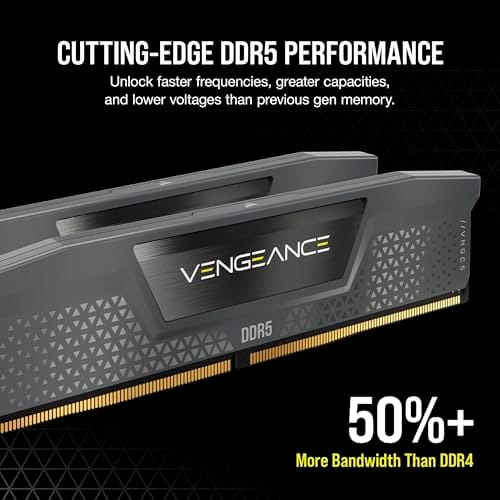
So the real question splits in two. If you already own a DDR4 platform, the G.SKILL kit is the obvious lane and you get 32GB for the money. If you’re building fresh on AM5 or a recent Intel chip, the Corsair DDR5 kit is your entry ticket, though 16GB is the tradeoff at this price. We’ll break down where each brand’s engineering earns its keep.
Spec sheet showdown
| Spec | G.SKILL RipjawsV | Corsair Vengeance | What it means | Edge |
|---|---|---|---|---|
| Memory type | DDR4 | DDR5 | Platform compatibility | Depends on board |
| Capacity | 32GB (2x16GB) | 16GB (2x8GB) | Headroom for multitasking | G.SKILL |
| Rated speed | 3600MT/s | Up to 5200MHz | Raw bandwidth ceiling | Corsair |
| Latency | CL18-22-22-42 | CL40 | Access responsiveness | G.SKILL (lower CL) |
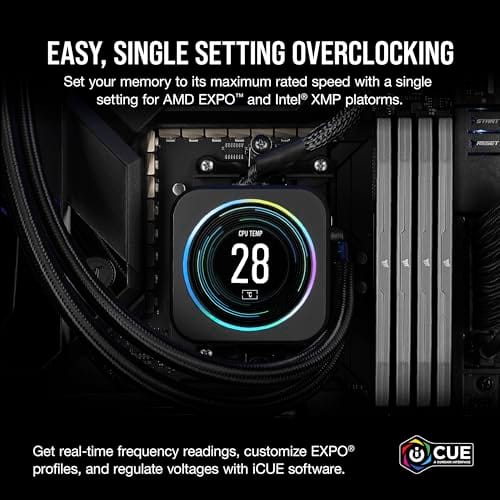
| Voltage / profiles | 1.35V, XMP | EXPO + XMP 3.0 | Auto-overclock setup | Corsair |
The table shows why this comparison is messier than a spec-for-spec race. G.SKILL wins on capacity and on paper latency, since DDR4’s CL18 timing translates to faster access cycles than DDR5’s CL40. Corsair counters with higher raw bandwidth and dual-brand auto-tuning profiles that make setup painless on either platform. Different tools for different builds.
G.SKILL strengths
The RipjawsV kit’s headline advantage is 32GB for $229.99. That’s a lot of memory for the money, and it matters more than most buyers expect. Photo editing, running a browser with forty tabs while a game loads, keeping Discord and OBS open, virtual machines, all of that eats RAM. With 32GB you rarely think about it. The 4.6 rating across owner feedback leans on that reliability, and G.SKILL’s RipjawsV line has a long track record of booting first try with XMP enabled.
There’s also the latency angle. At CL18-22-22-42 on DDR4, the true latency in nanoseconds often edges out early DDR5 kits sitting at CL40. For workloads sensitive to memory responsiveness, older DDR4 timings still hold up. The catch? It’s DDR4. You can’t drop it into a new AM5 board, and it caps your upgrade path since the platform itself is winding down. If your motherboard already speaks DDR4, though, this kit gives you capacity and proven stability without paying a premium. A dependable choice for anyone doing content work on an existing rig, as covered in our guide to the best RAM for gaming and video editing.
Corsair strengths
Corsair’s Vengeance DDR5 kit is the forward-looking pick, and it’s built for where the market is heading. Rated up to 5200MHz with both AMD EXPO and Intel XMP 3.0 support, it slots cleanly into modern AM5 Ryzen boards and recent Intel platforms alike. That dual-profile flexibility means one kit covers two ecosystems, and you won’t wrestle with manual timings to hit the rated speed. Flip on EXPO or XMP in BIOS and you’re running. The 4.4 rating reflects solid owner satisfaction, with the gray low-profile heat spreader clearing most air coolers without clearance drama.
The honest weakness is capacity. 16GB (2x8GB) is fine for gaming and everyday use in 2026, but it’s the floor, not the comfortable middle. Heavy multitaskers and creators will feel it. DDR5’s higher bandwidth helps in memory-bound scenarios and integrated-graphics setups, yet CL40 latency means you’re trading responsiveness for that ceiling. Still, if you’re building new, this kit puts you on the current standard with room to add a second 2x8GB pair later. That upgrade path is part of what makes DDR5 worth it, and our picks for the best DDR5 RAM in 2026 expand on the options.

Pros
- AMD EXPO profile activates 5200MHz CL40-40-40-77 with a single BIOS toggle on Ryzen 7000 boards.
- Low 35mm module height clears virtually any AM5 or LGA1700 tower cooler without physical conflict.
- 1.25V operating voltage sits within DDR5 spec, reducing thermal stress on integrated PMIC under sustained load.
- Aluminum heatspreader aids passive heat dissipation in open-air cases without requiring active cooling.
Cons
- 16GB total capacity is increasingly marginal for content creation workflows and modern open-world titles running texture packs.
- 5200MHz CL40 offers modest latency compared to DDR5-6000 CL30 kits that hit the Ryzen 7000 FCLK 1:1 ratio sweet spot.
The CORSAIR Vengeance DDR5 16GB 2x8GB is a mid-range DDR5 kit targeting AMD Ryzen 7000 series and Intel 12th-generation-or-newer desktop builds. It ships with both AMD EXPO and Intel XMP 3.0 profiles, making it broadly compatible across AM5 and LGA1700 or LGA1851 platforms without manual timing configuration.
The standout feature is dual-profile support at a frequency that loads with a single BIOS toggle. At 5200MHz CL40-40-40-77 and 1.25V, it sits within DDR5 JEDEC specification territory, and onboard voltage regulation on the module itself reduces dependency on motherboard power delivery for the memory rail, which matters on budget AM5 boards with fewer VRM phases dedicated to DRAM.
The honest trade-off at this tier is frequency positioning. Ryzen 7000 performs best at DDR5-6000 with CL30 timings, where FCLK and memory controller run at a clean 1:1 ratio. This kit at 5200MHz places it below that threshold, meaning buyers on AM5 leave some CPU bandwidth on the table. The 16GB total capacity is also worth scrutinizing for any workload beyond gaming or light productivity.
Buy this if you are building a budget-to-mid AM5 or Intel DDR5 system and need reliable plug-and-play EXPO or XMP activation without manual overclocking. Skip this if your platform is AM5 and you plan to run a Ryzen 7000 CPU near its performance ceiling, where DDR5-6000 CL30 kits deliver measurably better throughput and latency at comparable pricing.
Platform Requirements: DDR5 requires AMD 600-series or newer motherboards paired with Ryzen 7000 series or newer CPUs, or Intel 600-series or 700-series boards with 12th-generation Core or newer. DDR5 is not backward compatible with DDR4 slots. Verify your motherboard QVL lists this kit before purchasing.
EXPO and XMP Activation: The rated 5200MHz speed requires enabling AMD EXPO or Intel XMP 3.0 in BIOS. Without activation, the kit defaults to DDR5-4800 JEDEC. On Ryzen 7000, DDR5-6000 is the accepted 1:1 FCLK sweet spot; this kit at 5200MHz runs below that threshold, which carries a small but measurable bandwidth and latency penalty versus a tuned DDR5-6000 kit.
Physical Clearance: Module height is 35mm, which clears nearly all air coolers without conflict. The 1.25V operating voltage and onboard PMIC mean power comes from the module itself rather than solely from the motherboard, reducing stress on budget boards with lighter DRAM power stages.
Capacity and Channel Config: The 2x8GB configuration fills two slots in dual-channel. CORSAIR explicitly advises against mixing kits, so expansion to 32GB requires replacing both modules with a validated 2x16GB kit rather than adding a second 2x8GB pair.
Real-world scenarios
1440p gaming rig
For pure gaming, both kits get the job done. The Corsair 16GB DDR5 kit paired with a modern CPU delivers competitive frame pacing, and 16GB still covers nearly every current title. But if you stream or keep background apps running, the G.SKILL 32GB gives breathing room DDR5’s speed can’t buy back. Capacity wins when you’re doing more than one thing.
Content creation workstation
Here the G.SKILL RipjawsV pulls ahead on a DDR4 platform. Video timelines, large Photoshop files, and multiple render apps love that 32GB pool. Corsair’s DDR5 bandwidth helps encoding, sure, but 16GB fills up fast under a real creative load. That’s the tradeoff you feel daily.
Fresh AM5 build
On a brand-new Ryzen 7000 or 9000 board, the choice makes itself. DDR4 won’t fit, so the Corsair Vengeance DDR5 kit is the entry point. EXPO support means auto-tuning is one BIOS toggle away, and you can expand to 32GB down the road.
Budget upgrade on an old board
Got a DDR4 motherboard already? The G.SKILL kit doubles your memory for around the same cash as Corsair’s 16GB DDR5. No new board, no new CPU, just more headroom. That’s the cheapest path to a snappier machine.
Pricing and availability
The two kits sit almost on top of each other. G.SKILL RipjawsV DDR4 32GB runs $229.99, and Corsair Vengeance DDR5 16GB runs $234.99, a five-dollar gap that’s basically noise. What you’re really paying for differs completely. With G.SKILL you buy capacity on a mature platform; with Corsair you buy the current-generation standard at half the gigabytes. Both are widely stocked. DDR5 pricing has softened a lot since launch, so a 16GB kit at this price is reasonable, though DDR4 capacity per dollar remains hard to beat on legacy boards.
Which to buy
Your motherboard makes this call, not brand loyalty. If you’re running or building on a DDR4 board and want maximum usable memory, the G.SKILL RipjawsV 32GB kit is the smarter buy. You get double the capacity, lower real-world latency, and a 4.6 rating that reflects years of dependable XMP boots. It’s the pick for creators and heavy multitaskers who already own a compatible platform.
If you’re assembling a fresh AM5 or modern Intel system, DDR4 simply won’t fit, and the Corsair Vengeance DDR5 kit becomes your logical starting point with an easy path to expand later. For most people asking this question on a current build, capacity and platform longevity tilt the answer toward the higher-capacity kit that matches their board. Either way, both brands earn their reputations. For platform-specific pairings, our notes on the best RAM for the Ryzen 9800X3D help match speed to chip.

Pros
- DDR4-3600 XMP at 1.35V is the Ryzen AM4 sweet spot, aligning FCLK 1:1 at 1800MHz for best latency.
- Matched 2x16GB kit is factory-tested as a pair, reducing dual-channel instability compared to mixing sticks.
- Compatible with both Intel XMP and AMD DOCP/A-XMP BIOS profiles without manual sub-timing adjustments.
- Ships with JEDEC SPD fallback so the system always boots safe at default clocks before XMP is enabled.
Cons
- CL18 primary latency is mid-range; DDR4-3600 CL16 kits exist for buyers prioritizing tighter timings.
- No ECC support, so workstation or Threadripper ECC builds need a different kit entirely.
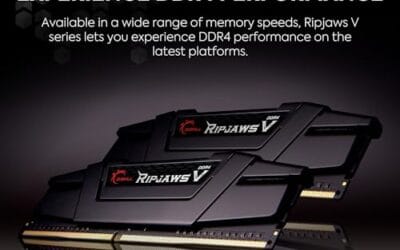
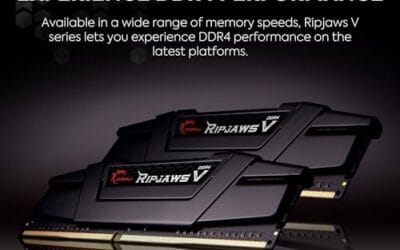
The G.SKILL RipjawsV F4-3600C18D-32GVK is a mid-range DDR4 desktop kit targeting Intel and AMD mainstream platform builders who want 32GB capacity at DDR4-3600 without overpaying for CL14 or CL16 enthusiast kits. It ships as a matched 2x16GB dual-channel pair in the standard 288-pin U-DIMM form factor.
The defining spec here is the XMP profile: DDR4-3600 at CL18-22-22-42, 1.35V. On AMD AM4 Ryzen systems, 3600MHz is the well-documented sweet spot for achieving a 1:1 FCLK ratio at 1800MHz, which keeps infinity fabric latency in check and translates to measurable gains in lightly-threaded workloads and gaming frame times compared to DDR4-3200 or lower.
CL18 is a genuine trade-off at this speed. Competing DDR4-3600 kits with CL16 or CL14 exist and offer lower absolute latency, though they typically carry a price premium. Owners report stable XMP operation across a wide range of B450, X570, and Z490/Z590 boards, but reaching rated speed on some budget AM4 boards may require manual sub-timing adjustments or AGESA microcode updates.
Buy this if you are building or upgrading an AM4 Ryzen or Intel LGA1700 desktop and want reliable 32GB DDR4-3600 dual-channel performance without tuning. Skip this if you need CL16 or tighter for competitive latency, or if your board has a limited QVL and you have not verified compatibility via G.SKILL's configurator tool first.
Platform Support: This kit uses 288-pin DDR4 U-DIMM and is compatible with Intel LGA1700 (Z690/Z790) and AMD AM4 (B450/X470/B550/X570) platforms. AM5 uses DDR5 exclusively, so this kit is not compatible with Ryzen 7000/9000 series builds on AM5 boards.
XMP and DOCP Activation: Rated speed of DDR4-3600 CL18-22-22-42 at 1.35V requires enabling XMP (Intel) or DOCP/A-XMP (AMD) in BIOS. Default JEDEC SPD boots at DDR4-2133 or DDR4-2400. On AM4, DDR4-3600 aligns FCLK at 1800MHz for a 1:1 ratio, which is the recommended operating point for Ryzen 3000 and 5000 series CPUs.
Slot Population and Mixing: Install both sticks in the recommended dual-channel slots per your motherboard manual, typically A2 and B2 in a 4-slot board. G.SKILL explicitly warns against mixing this kit with other modules; doing so voids the matched-pair guarantee and risks instability at XMP speeds.
Cooler Clearance: Exact heatspreader height is not specified in the source data, but RipjawsV modules are noted for a lower profile than Trident Z or RGB variants, reducing conflicts with wide tower coolers. Verify clearance if using a low-clearance cooler on a tight ITX board.
Common questions
Is DDR5 always faster than DDR4?
Not always in a way you’d notice. DDR5 offers higher raw bandwidth, so the Corsair kit’s 5200MHz beats DDR4’s 3600MT/s on paper. But the G.SKILL kit’s tighter CL18 timings mean lower true latency, which helps in latency-sensitive tasks. Real gains depend on the workload and your CPU.
Can I mix a Corsair kit with a G.SKILL kit?
You shouldn’t, and often can’t across memory generations since DDR4 and DDR5 aren’t interchangeable. Even within the same type, mixing brands or kits risks instability. If you want 32GB later, add a matching second kit of the same model rather than pairing these two.
Is 16GB enough for gaming in 2026?
For most games alone, yes, 16GB still runs current titles fine. The Corsair Vengeance 16GB kit handles pure gaming without trouble. It gets tight if you stream, run browser-heavy sessions, or do creative work alongside a game. That’s where the G.SKILL 32GB earns its keep.
Does EXPO or XMP matter for these kits?
They make setup painless. The Corsair kit ships with both AMD EXPO and Intel XMP 3.0 profiles, so one BIOS toggle hits rated speed on either platform. The G.SKILL kit uses XMP to reach its 3600MT/s spec. Without enabling a profile, either kit runs at slower default speeds.
Which brand is more reliable?
Both G.SKILL and Corsair are top-tier memory makers with strong track records. Owner ratings back that up, with the RipjawsV at 4.6 and the Vengeance at 4.4. Reliability comes down more to the specific kit and your platform match than the badge on the heat spreader. You can’t go wrong with either name here, so buy the one whose speed, capacity, and price line up with your board and your budget.




Write Your Review
No reviews yet. Be the first to share your experience!