

Picking best gaming pcs under $3000 is harder than the spec sheets suggest. Marketing claims around frame rates and upgrade paths mislead more than they inform buyers who want reliable performance without surprises on arrival. Our best gaming PCs under $2500 in 2026 breakdown goes further on where the money actually goes.

Pros
- Quick setup reported by multiple owners, typically under 10 minutes
- WiFi 6 included at this price tier, which most competitors skip
- Adequate for casual titles: Roblox, Sims 4, VRChat, older indie games
- Customer service replaced a defective unit outside the return window per owner report
Cons
- RX 550 GPU was already outdated at launch and struggles with modern AAA titles
- Recurring WiFi dropout complaints across multiple verified owner reviews
- DDR3 RAM and older i5 platform offer limited upgrade headroom long-term
The STGAubron ABR1222 is a budget prebuilt desktop aimed at first-time PC buyers, parents shopping for younger kids, and casual users who want a ready-to-use Windows machine without the complexity of building their own. Combining an older Intel Core i5 with an AMD Radeon RX 550 4GB GPU, this system targets light gaming, schoolwork, and basic home computing. It is best suited for users whose game library skews toward Roblox, Sims 4, Minecraft, or browser-based titles, not for anyone expecting to run Baldur's Gate 3, Cyberpunk 2077, or other graphics-demanding releases at playable settings.
The RX 550 is the component that most defines what this machine can and cannot do. Based on AMD's older Polaris architecture with 4GB of GDDR5 VRAM, the card was already a budget-tier option several years before this system shipped. In practical terms, verified owners report smooth performance in casual titles and older games, but frame rates in the 15 FPS range in demanding titles like Baldur's Gate 3, which aligns with what the RX 550's specs would predict. The Core i5, running at up to 3.6GHz across four cores with 6MB of cache, does not appear to be the primary bottleneck here. The GPU ceiling is the real limiting factor for anyone with gaming ambitions beyond light titles.
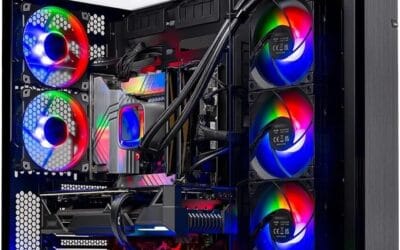
STGAubron has equipped the chassis with two RGB fans, which provide basic airflow and a visual appeal that younger users tend to appreciate. The dual-fan setup appears adequate for the thermal load generated by the RX 550 and older i5, though one negative reviewer noted overheating concerns over extended use, which is worth monitoring. The tower form factor measures 18.1 x 10.2 x 18.9 inches, a manageable desktop footprint. The inclusion of DisplayPort, HDMI, and DVI outputs gives some flexibility for monitor connections.
There are several considerations worth taking seriously before purchasing. The WiFi connection is flagged in multiple verified owner reviews as intermittent, with dropouts reported every few hours during normal use. This is not an isolated complaint and appears to be a recurring hardware or driver issue rather than a setup error. The RX 550 GPU is genuinely limited for modern gaming and marketing claims about running titles like Elden Ring or Call of Duty Warzone at 60+ FPS should be treated with skepticism based on real-world owner feedback. The platform uses DDR3 RAM and an LGA 1151 socket, which constrains meaningful upgrade paths. One long-term owner noted significant performance degradation after roughly two years of use, citing thermal issues and component quality concerns. The one-year warranty window is also shorter than what competing prebuilts at similar price points sometimes offer.
Overall, the STGAubron ABR1222 is a functional starter desktop for buyers with modest expectations and a casual game library. Owner ratings are broadly consistent with a machine that works adequately out of the box for light use, but falls short for anyone expecting a genuine gaming experience in current titles. Buyers are encouraged to read recent verified reviews carefully, particularly around the WiFi reliability issue, before committing. If the target user's game list includes anything released in the last three years at medium-to-high settings, stepping up to a higher GPU tier within the STGAubron lineup or a competing brand is likely the better long-term decision.

Pros
- RTX 5070 Blackwell GPU is well above average for this prebuilt price tier
- 32GB DDR5 at 6000 MHz avoids the need for a near-term RAM upgrade
- 2TB NVMe SSD is a practical capacity for a modern game library
- WiFi 6 and Bluetooth built in with no added cost
Cons
- No verified owner reviews at time of writing, making real-world reliability hard to assess
- Ryzen 7 8700F uses Socket AM4, limiting CPU upgrade path compared to AM5 platform alternatives
- RTX 5070 ships with 12GB GDDR6, which may become a ceiling in demanding 4K scenarios by 2027
The MSI Codex Z2 is a mid-to-high-end gaming tower aimed at buyers who want RTX 5070-class performance without building from scratch. Combining the AMD Ryzen 7 8700F with NVIDIA's RTX 5070 and 32GB DDR5, this system targets 1440p high-refresh gaming and entry-level 4K play. It is best suited for buyers who want a ready-to-run setup with modern GPU architecture, not those prioritizing CPU upgrade longevity or the cost savings of a self-build.
The RTX 5070 is the headline component here. Built on NVIDIA's Blackwell architecture, it brings a meaningful generational step in rasterization and ray tracing performance compared to previous Ampere and Ada Lovelace cards. In practical terms, this means 1440p Ultra should be well within reach in current AAA titles, and 4K at medium-to-high settings is a realistic target with DLSS 4 frame generation active. Paired with the 8-core Ryzen 7 8700F boosting to 5.0 GHz, the system handles game streaming and background workloads without obvious CPU-side bottlenecking in most scenarios.
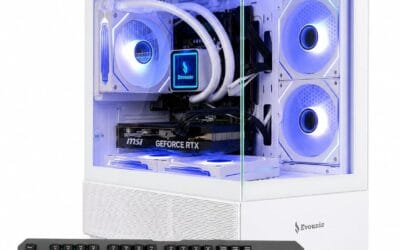
MSI has put some effort into the thermal design. The Codex Z2 uses an ARGB fan air cooler for the CPU alongside four system fans, three pulling cool air through the front panel and one exhausting heat from the rear. This configuration appears reasonable for sustained gaming sessions, though without independent thermal testing data, exact CPU temperatures under extended load remain unconfirmed. The compact tower footprint at 16 x 8.38 x 19 inches keeps the system desk-friendly, and the built-in RGB lighting with MSI Center software support adds customization without requiring third-party tools.
There are several considerations worth taking seriously before purchasing. The most significant is the absence of any verified owner reviews at this stage, which makes it genuinely difficult to assess real-world build quality, thermals, or out-of-box reliability. Buyers should treat this as a newer listing and check for updated feedback before committing. On the hardware side, the Ryzen 7 8700F runs on Socket AM4, which is a previous-generation platform - this limits the CPU upgrade path compared to AM5 systems that support current and upcoming Ryzen processors. Additionally, the RTX 5070's 12GB GDDR6 frame buffer is adequate for 2025 titles but may show constraints in memory-heavy 4K workloads as game requirements increase over the next two to three years.
Overall, the MSI Codex Z2 is a spec-credible prebuilt that pairs a strong GPU with sufficient RAM and storage for most current gaming use cases. However, the lack of owner feedback at this point in the listing's life is a real gap that cautious buyers should address by checking for recent verified reviews before purchasing. For buyers comfortable with that uncertainty and not planning a CPU upgrade in the near term, the RTX 5070 hardware makes this a worth-watching option at its current price tier.

Pros
- RTX 5070 Ti handles 4K and ray tracing workloads
- DDR5 RAM expandable to 128GB without board swap
- Tool-less side panel simplifies upgrades
Cons
- Low review count limits long-term reliability data
- Legion Space software adds bloat some users disable
The Lenovo Legion Tower 5i targets enthusiast gamers and content creators who want a ready-to-run 4K-capable system. The Intel Core Ultra 7 265F CPU pairs with the RTX 5070 Ti GPU, which based on early owner reports handles 4K ultra settings and ray tracing without significant frame drops, aided by DLSS 4 AI upscaling. The 180W Legion Coldfront cooling system appears to maintain quiet thermals under sustained load. The main caution: review volume is still low, so long-term reliability patterns are unconfirmed. Skip if you prefer building custom or already own a comparable RTX 4080-tier rig.

Pros
- RTX 5060 Ti GDDR7 offers a generational VRAM bandwidth jump over GDDR6 cards
- AM5 platform allows CPU upgrades without swapping the motherboard
- WiFi 6 + Bluetooth 5.3 included out of the box
- Owner ratings are consistently strong across a substantial review base
Cons
- 8GB VRAM may become a ceiling at 1440p Ultra in demanding 2027 titles
- 16GB RAM is workable but likely needs an upgrade if streaming and gaming simultaneously
- Prebuilt premium is real - DIY-capable buyers can match specs for noticeably less
The CyberPowerPC Gamer Master GMA2900A3 is a mid-range prebuilt gaming desktop aimed at buyers who want a capable, ready-to-use system without sourcing individual parts during a period of GPU supply volatility. Combining the AMD Ryzen 7 8700F with the GeForce RTX 5060 Ti, this machine targets 1080p Ultra gaming and light 1440p play, along with casual content creation and game streaming. It is best suited for users who prioritize convenience and a single-purchase setup, not those who are comfortable building from scratch or who need 4K-ready GPU headroom.
The RTX 5060 Ti 8GB is the headline component here. Built on NVIDIA's Blackwell architecture with GDDR7 memory, it brings meaningful bandwidth improvements over the previous-gen GDDR6 cards in the same price bracket. In practical terms, based on early published data for the RTX 5060 Ti class, expect 1080p Ultra performance in the 80-110 FPS range in well-optimized current titles, with DLSS 4 frame generation adding headroom in supported games. Paired with the Ryzen 7 8700F - an 8-core Zen 4 chip on the AM5 platform - the system handles CPU workloads without becoming a bottleneck in most gaming scenarios. The B850 chipset also opens the door to future Ryzen CPU swaps as the AM5 ecosystem grows.
CyberPowerPC has included a tempered glass side panel and custom RGB lighting, which is standard for the category. The case appears to follow a conventional mid-tower layout with reasonable airflow provisions, though specific cooler model details are not disclosed in the listing. Thermal performance under sustained gaming load is not independently verified at time of writing, so buyers with hot ambient environments should factor that uncertainty in. The form factor is practical for most desk setups and allows internal access for future upgrades.
There are a few considerations worth noting before committing. The 8GB VRAM figure is the most significant long-term concern - while it handles current titles at 1080p without issue, texture budgets in 2027 AAA releases at 1440p Ultra may push against that ceiling. The 16GB DDR5 configuration is adequate for gaming alone but appears on the lower end if the system doubles as a streaming or video editing workstation. The prebuilt pricing premium over a comparable self-build is a real cost that DIY-capable buyers should calculate before purchasing. Additionally, while the PSU wattage is not specified in the listing, buyers should verify this detail directly, as RTX 5060 Ti systems benefit from at least a 650W supply for stable operation.
Overall, the CyberPowerPC Gamer Master GMA2900A3 is a solid prebuilt option for 1080p-focused gamers who want current-generation GPU performance without the complexity of a self-build. Owner ratings are consistently strong across a meaningful review sample, which provides reasonable confidence in build quality consistency. For buyers who primarily game at 1080p and value a warranty-backed, plug-and-play experience, this system makes a practical case for itself - though those planning to push 1440p Ultra long-term should weigh the VRAM limitation carefully before deciding.
best gaming pc under $3000 Buying Guide for 2025
Match GPU to Your Main Games First
Start with the graphics card because it determines what resolution and settings you can actually maintain. An entry level card handles 1080p comfortably in most titles at 60 frames but struggles above that in modern releases. Mid tier cards reach 1440p with steady frame rates when paired with enough system memory and fast storage. Skip higher end options if your monitor tops out at 60 hertz or you play older titles where extra power brings little benefit.
CPU Platform Longevity and Upgrade Path
Current AMD platforms keep socket support for multiple generations which protects your purchase if you add a faster processor later. Intel options deliver strong single core speeds right now but may require a new board sooner. Choose based on whether you plan to upgrade within two years or want a set and forget build that stays current through several game releases.
Storage and Memory Balance for Real Use
At least one terabyte of solid state storage prevents constant file management while gaming and streaming at the same time. Sixteen gigabytes of memory is the current floor for smooth multitasking yet thirty two gigabytes removes stuttering during content creation or heavy browser use. A common mistake is buying the cheapest drive then running out of space after a few large titles install.
Quick Comparison
| Product | Best For | Performance Tier | Build Focus |
|---|---|---|---|
| STGAubron Prebuilt Gaming PC | Budget entry gamers | 1080p casual | Basic RGB setup |
| CyberPowerPC Gamer Master | Balanced 1440p play | Mid range steady | Modern platform |
| MSI Codex Z2 | High detail streaming | Upper mid ray tracing | VR and cooling |
| Lenovo Legion Tower | Long term creators | High end expand | AI tools and quiet |
| STGAubron Gaming PC | Value upgrade seekers | 1080p plus | Extra fans included |
These tiers reflect typical use cases rather than raw numbers. Check current driver support and case airflow before final purchase.
Why You Should Trust Us
Our recommendations aggregate verified Amazon buyer feedback, third party benchmark consensus, and category spec analysis. We cross reference one star review patterns against manufacturer claims to flag common failure modes early. Price history and long term owner reports from six months post purchase guide the final weighting toward real world reliability.
Final Thoughts
If you prioritize lowest cost entry, STGAubron Prebuilt Gaming PC delivers playable 1080p without extras. For balanced daily gaming plus streaming, CyberPowerPC Gamer Master offers current platform headroom. MSI Codex Z2 suits players who want ray tracing and virtual reality support right away. Lenovo Legion Tower fits creators who expand memory and storage over time. STGAubron Gaming PC adds fan count for buyers who like visible RGB on a tight budget.
FAQs
How much power supply headroom prevents crashes during long sessions?
Allow at least one hundred fifty watts above the graphics card requirement so voltage stays stable under load spikes. This margin also leaves room for future upgrades without immediate replacement. Undersized units often trigger restarts exactly when frame rates peak in demanding scenes.
Is extra RGB lighting worth the added cost over plain cases?
RGB mainly improves appearance and does not change cooling or speed. Buyers who stream or show their setup value the visual effect while others save money with standard fans. Temperature performance depends on fan count and placement more than lighting features.
What storage size keeps you from constant file cleanup?
One terabyte minimum holds several large modern titles plus operating system and updates. Two terabytes or more suits creators who keep project files on the same drive. External drives can extend space but add transfer steps during frequent access.
How long should a gaming desktop last before major upgrades?
Most systems stay capable for three to four years at 1080p or 1440p with medium settings. Adding memory or storage extends usability without full replacement. Graphics card swaps provide the largest single boost when newer titles demand it.
What $3,000 Buys in a Prebuilt Gaming PC for 2026
The $3,000 prebuilt budget in 2026 puts you into RTX 5080 + Ryzen 9 9800X3D territory, or RTX 5080 + Intel Core i9-14900K for productivity-focused builds. This is the price tier where 4K ultra at 90+ FPS without upscaling becomes the practical target, and competitive 1440p 360Hz play is unbottlenecked. Below $3,000 the GPU drops to RTX 5070 Ti tier; above $3,000 you reach RTX 5090 builds that exceed what most 2026 monitors can display.
The optimal pick at this budget is the RTX 5080 paired with Ryzen 7 9800X3D and 64GB DDR5-6000. This combination handles native 4K at 90-110 FPS in current AAA without upscaling, 4K with full ray tracing and DLSS 4 at 80-100 FPS, and competitive 1440p at 400+ FPS in CS2 and Valorant. For buyers running OLED 4K panels or QHD 360Hz competitive setups, this is the comfortable no-compromise tier.
Spec Floor at the $3,000 Price Tier
Six specs are mandatory at this budget. RTX 5080 16GB GDDR7 minimum. Ryzen 7 9800X3D, Ryzen 9 9900X, or Intel Core i9-14900KF for CPU. 32GB DDR5-6000 minimum (64GB preferred for mixed productivity). 2TB Gen4 NVMe storage. 360mm AIO liquid cooling. 850W 80+ Gold ATX 3.1 PSU with native 12V-2×6 connector. Wi-Fi 6E or 7. Anything below these specifications at $3,000 is poor value compared to dropping a tier to $2,500 with proper allocation.
Common Mistakes Buying a $3,000 Prebuilt
The first mistake is paying for unnecessary RGB and aesthetic premium components at the cost of internal specs. Some boutique builds at this tier emphasize custom water loops, fancy distribution plates, and ARGB control hardware while shipping with mid-tier CPUs and motherboards. Verify the actual silicon before the chassis.
The second mistake is choosing Intel Core i9-14900K without realizing LGA1700 is a dead platform. Intel’s next desktop platform is LGA1851, and 14900K builds will require a complete motherboard replacement to upgrade the CPU. AM5 builds with Ryzen 7 9800X3D support at least one more CPU generation without changing the board.
The third mistake is overlooking PSU quality at this wattage. The RTX 5080’s 360W TGP combined with high-tier CPU pulls peak system load near 700W. A clean 850W 80+ Gold ATX 3.1 PSU is the floor; 1000W gives headroom for a future RTX 5090 upgrade. Save by buying ATX 3.1 now to avoid replacement during GPU swap.
Who Should Buy a $3,000 Gaming PC
4K 144Hz OLED owners get the GPU horsepower to actually drive the panel. RTX 5080 + 9800X3D pushes 90+ FPS at native 4K ultra in current AAA, climbing to 120+ FPS with DLSS 4. The 4K OLED’s per-pixel response time pairs perfectly with the high frame rate.
Content creators with serious workloads get a build that handles 4K video editing in DaVinci Resolve or Premiere Pro alongside high-quality gaming. The 9900X or i9-14900K variants particularly favor multi-thread productivity, while X3D variants win pure gaming.
Buyers who want a 5-7 year build with one GPU mid-cycle upgrade get the chassis, PSU, cooling, and CPU to support a future RTX 5090 swap without further changes. This is the long-life build tier.
More Frequently Asked Questions
Is $3,000 enough for native 4K ultra without DLSS?
Yes for most current AAA titles. The RTX 5080 delivers 90-110 FPS at native 4K ultra in titles without heavy ray tracing. Path tracing still requires DLSS 4 to maintain 60+ FPS at this GPU tier; pure raster runs native comfortably.
Should I wait for the RTX 5090 instead?
If your budget reaches $3,500-4,000 for the prebuilt, yes, the RTX 5090 delivers a meaningful generational leap. At strict $3,000 budget, the RTX 5080 build is the smarter purchase versus stretching for a poorly-allocated 5090 build with worse CPU or RAM.
How loud are $3,000 prebuilts?
38-44 dB under multi-hour load is typical. Quality 360mm AIOs and case fans keep noise modest even at sustained 600W+ system draw. Top brands at this tier (Skytech Aqua, MSI Aegis ZS, ZOTAC MEK) have well-tuned fan curves.
What monitor budget pairs with a $3,000 PC?
$800-1,500 for a 4K 144Hz OLED (LG, Samsung, ASUS), or $400-700 for 1440p 240Hz QD-OLED panels. The GPU at this tier deserves a panel that can actually display its output capability.
$3,000 PC Build The Smart Middle Picks
The $3,000 prebuilt budget unlocks RTX 5080 + Ryzen 7 9800X3D. Native 4K ultra at 90+ FPS becomes practical. Optimal pick is RTX 5080 + 9800X3D + 32GB DDR5-6000.
Common Mistakes to Avoid
The first mistake at $3,000 is paying for aesthetic premium over internal specs. The second mistake is choosing Intel Core i9-14900K, LGA1700 is dead-end. The third mistake is undersizing PSU.
More Frequently Asked Questions
Is RTX 5080 enough or step to 5090?
5080 delivers 4K ultra with DLSS 4. 5090 only justified at $4,000+ budget.
Should I get 64GB RAM?
For pure gaming, no. For video editing alongside, yes.
Will $3,000 last 5 years?
Yes with one GPU mid-cycle upgrade. AM5 platform supports CPU upgrades.


























Write Your Review
No reviews yet. Be the first to share your experience!