A workstation isn’t a fancy gaming PC with extra RGB. It’s a machine tuned for sustained throughput, where the clock that matters is wall-time on a render queue, not the frame counter in the corner of a monitor. Gaming rigs sprint. Workstations run marathons. Once you’ve watched a Blender frame chew six hours on a mid-range build, the priorities shift fast.
For 2026, workstation builds split into three lanes: creators editing 4K timelines and rendering 3D scenes, developers compiling huge repos and juggling VMs, and AI tinkerers running local LLMs on consumer hardware. The parts overlap, but the bottlenecks don’t. Here’s how to spec each one without overpaying.
What this build targets
This guide assumes you’re running multi-hour workloads that punish weak components. We’re talking 4K timeline editing in DaVinci Resolve or Premiere Pro, full Blender scene renders with denoising, local LLM inference on 7B to 70B parameter models, and code compilation for repos the size of Chromium or the Linux kernel. None of that’s a quick burst. It’s sustained load, often overnight.
RAM is the first wall most people hit. Thirty-two gigs gets you started, but 64GB is the floor for serious work, and 128GB isn’t overkill if you’re running a couple of VMs alongside your IDE. Storage strategy matters just as much. You’ll want tiered storage: a fast NVMe scratch drive for active project files, bulk SATA SSDs for archived work, and either a NAS or cloud sync for offsite backup. Lose a week of color grading because a single drive died, and you’ll never skip the backup tier again.
Thermals are the silent killer. A CPU that boosts beautifully for ten minutes and then throttles down to base clock isn’t doing you any favors on a four-hour render. Sustained performance is what we’re optimizing for, not benchmark sprints.
The core three (CPU, GPU, RAM)
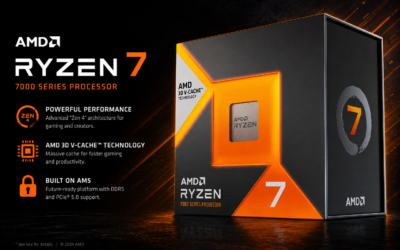
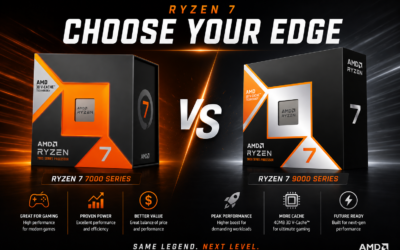
The CPU is where workstation builds diverge hardest from gaming. For pure multi-thread grunt, the Ryzen 9 9950X at roughly $549 gives you 16 Zen 5 cores and respectable single-thread for the occasional lightly-threaded task. If you’re doing serious 3D rendering or running concurrent VMs, step up to a Threadripper 7960X at around $1500 for 24 cores and quad-channel memory. Intel’s Core Ultra 9 285K stays competitive with 24 hybrid cores (8P + 16E) and strong efficiency on mixed loads.
GPU choice depends on workload. For CUDA-accelerated workflows (AI inference, OptiX rendering, AI upscaling), the RTX 5080 hits a strong middle ground, and the RTX 5090 is the no-compromise pick if budget allows. If you’re rendering for paying clients and need ECC video memory plus certified drivers in Maya or Solidworks, a Pro-class card like the RTX A4000 or higher is worth the premium.
For RAM, don’t go below 64GB DDR5-6000 with decent latency. Push to 128GB if you’re juggling multiple Docker containers, a Windows VM, and an LLM at once. Threadripper Pro platforms support ECC, which you’ll appreciate the first time a bit-flip doesn’t corrupt a 30-hour render.
If you’d rather skip the build entirely, these prebuilts cover most of the same ground:

Pros
- RTX 5060 8GB GDDR7 delivers meaningful VRAM and bandwidth upgrade over prior-gen at the same GPU tier.
- Core Ultra 7 265F 20-core design handles simultaneous game streaming and background encoding without core starvation.
- WiFi 6E plus Bluetooth 5.3 included, no separate adapter needed for tri-band or modern wireless peripherals.
- 3-year limited hardware warranty and lifetime technical support are above average for a pre-configured system at this tier.
Cons
- Only two reviews available at time of writing, so long-term reliability and thermal data remain unverified.
- RTX 5060 8GB may feel constrained at 4K or in VRAM-heavy workloads like high-res texture rendering.
- PSU wattage, case airflow design, and SSD sequential read/write specs are not disclosed in the source listing.
The EmpoweredPC HP OmniDesk is a mid-range prebuilt desktop built around Intel's Core Ultra 7 265F and the RTX 5060 8GB, assembled in the USA and aimed at buyers who want a configured system with warranty coverage rather than a DIY build. It targets 1080p-to-1440p gamers and light creative professionals.
The RTX 5060 with 8GB GDDR7 is the defining component here. GDDR7 provides higher bandwidth than the GDDR6X used in prior-gen cards at this price band, which helps at 1440p in bandwidth-sensitive titles. Paired with Core Ultra 7 265F's 20 cores, NVENC-based streaming and encode tasks should run concurrently without heavy CPU-side frame drops, based on the chip's spec sheet.
The key trade-offs are transparency issues. PSU wattage, SSD brand and sequential speeds, case model, and thermal solution are all unspecified in the listing. At this tier, those omissions matter: an undersized PSU under a sustained RTX 5060 load is a real concern, and SSD endurance varies widely. The 8GB VRAM buffer is also a ceiling for 4K textures and large-model AI inference work.
Buy this if you want a warranty-backed 1080p-1440p gaming or light editing machine without sourcing individual components. Skip this if you need verified thermal performance data, transparent PSU specs, or plan to run 4K workloads where 8GB VRAM becomes a hard constraint.
GPU Tier and Resolution Fit: The RTX 5060 8GB GDDR7 is positioned for 1080p high-refresh and 1440p medium-to-high settings. DLSS 4 with frame generation is supported, which can extend effective frame rates in supported titles. At native 4K without upscaling, 8GB VRAM is a practical ceiling in texture-heavy games.
CPU and Streaming Headroom: Core Ultra 7 265F runs 20 cores at up to 5.2GHz boost. For gaming plus simultaneous OBS NVENC streaming, the core count provides enough headroom to avoid the streaming-induced frame drops common on 8-core CPUs. AV1 encode is available via the RTX 5060's hardware encoder.
Memory and Storage: DDR5-5600 at 32GB covers dual-channel bandwidth needs for the Core Ultra 7 265F platform. The 2TB NVMe SSD eliminates the need for a secondary drive for most game libraries. Exact sequential read/write speeds are not specified in the listing, so SSD tier is unverified.
Connectivity for Peripherals: DisplayPort 1.4a and HDMI 2.1 outputs support monitors up to 4K 144Hz or 1440p 240Hz. The 10Gbps USB-C port supports fast external SSD transfers for video project offloading alongside gaming use.

Pros
- Core Ultra 7-265 20-core design handles threaded office workloads and light video editing without throttling.
- 32GB single-stick DDR5 at 5600MT/s leaves one DIMM slot free for a future capacity upgrade.
- Front USB 3.2 Type-C port and SD card reader simplify camera offloads without rear-panel access.
- Wi-Fi 6 and 1Gbps Ethernet onboard; no expansion card needed for standard connectivity.
Cons
- No owner reviews available at time of writing; real-world reliability and thermal data are unverified.
- Intel UHD integrated graphics cannot drive demanding 3D workloads or any gaming above casual titles.
- Single 32GB stick runs in single-channel mode until a second DIMM is added, limiting memory bandwidth.
The Dell ECT1250 is a mid-range compact tower prebuilt targeting home office users, hybrid workers, and light creative workflows. It ships with an Intel Core Ultra 7-265, 32GB DDR5 at 5600MT/s, and a 1TB M.2 NVMe SSD. The form factor and port layout make it a reasonable desk replacement for productivity-focused buyers who do not need a discrete GPU.
The Core Ultra 7-265 is a 20-core Arrow Lake desktop processor with integrated Intel UHD graphics. For document editing, video conferencing, web research, and light photo work in applications like Lightroom, the CPU is well-provisioned. AV1 decode support in the integrated GPU is useful for streaming and media playback. Sustained CPU workloads like long Premiere exports may be constrained by PSU and chassis thermal headroom, which Dell has not published specs for.
The single-channel RAM configuration is the most notable trade-off. One 32GB DDR5 stick means memory bandwidth runs at roughly half of what a matched dual-channel pair would deliver. This matters for integrated GPU tasks, which share system memory bandwidth. The second DIMM slot is open, and adding a matched 32GB stick would noticeably improve integrated graphics throughput. Three PCIe expansion slots are present, but PSU wattage is not specified, which limits discrete GPU upgrade planning.
Buy this if you need a reliable, upgradeable office tower with modern connectivity and do not require discrete graphics. Skip this if you intend to add a mid-range or higher GPU later, since PSU wattage is unconfirmed and may not support cards above entry level.
Integrated Graphics Baseline: The Core Ultra 7-265 ships with Intel UHD Graphics. There is no discrete GPU included. Integrated graphics can handle casual 2D titles and older esports games at 1080p with reduced settings, but sustained 3D workloads are not viable. No FPS data is available from Dell or owner reports at this time.
Display Output: One HDMI 2.1 port and one DisplayPort 1.4a port are onboard. HDMI 2.1 supports 4K at up to 120Hz; DisplayPort 1.4a supports 4K at 60Hz or up to three FHD displays via daisy chaining on compatible monitors. Two 4K displays can run simultaneously using both ports.
Expansion Limitations: Three PCIe slots are present for a future discrete GPU, but Dell does not publish PSU wattage for this unit. Buyers planning a GPU upgrade should verify PSU capacity before purchasing a card with TGP above 75W, as entry-level GPUs that draw only slot power are the safer assumption here.
Memory Bandwidth Impact: Integrated GPU performance depends directly on system memory bandwidth. The single 32GB DDR5 stick limits bandwidth to single-channel rates. Adding a second 32GB DDR5 5600MT/s DIMM would roughly double bandwidth available to the iGPU, improving integrated graphics performance in bandwidth-sensitive scenarios.

Pros
- 50 TOPS NPU via XDNA 2 handles on-device AI inference workloads without external accelerator.
- 64GB LPDDR5X at 8000MHz gives CPU and iGPU shared high-bandwidth pool, useful for quantized LLM inference.
- 4.4L form factor is genuinely compact for a workstation-class x86 system with this CPU TDP range.
- RDNA 3.5 iGPU with up to 48GB vRAM allocation handles GPU-compute tasks discrete-GPU users typically need a separate card for.
Cons
- Limited owner feedback at time of writing makes real-world thermals, fan noise, and sustained-load behavior unverified.
- No discrete GPU slot in this form factor; GPU-intensive rendering or training beyond iGPU compute is not an option.
- Upgradeability is constrained by the compact chassis; RAM is LPDDR5X soldered, so 64GB is the ceiling for this configuration.
The Corsair AI Workstation 300 is a high-end compact prebuilt in a 4.4L chassis, targeting AI developers, ML engineers, and professionals running local LLMs or RDNA 3.5 GPU-compute workloads. The base configuration ships with an AMD Ryzen AI Max 385 CPU, 64GB LPDDR5X at 8000MHz, and a 1TB M.2 SSD.
The defining feature is the unified memory architecture: the LPDDR5X pool is shared between CPU, iGPU, and NPU, allowing up to 48GB of Variable Graphics Memory for the Radeon 8050S iGPU. This matters for quantized LLM inference, where keeping model weights in fast, contiguous memory directly affects token throughput. The XDNA 2 NPU adds up to 50 TOPS for supported AI acceleration tasks on top of that.
The honest trade-off is the form factor itself. A 4.4L chassis with LPDDR5X means soldered RAM with no upgrade path beyond the shipped capacity, no PCIe slot for a discrete GPU, and thermal headroom that is unverified under sustained compute load given the limited owner data available at time of writing. Sustained LLM inference workloads can push integrated silicon harder than typical office tasks, and how the dual-fan cooling handles prolonged load is not yet documented by independent reviewers.
Buy this if you need a space-constrained workstation for local LLM inference, AI development, or RDNA 3.5 GPU-compute and do not require discrete GPU capability. Skip this if your workloads demand a dedicated GPU, PCIe expansion, or upgradeable RAM beyond 64GB.
iGPU Compute: The AMD Radeon 8050S uses RDNA 3.5 architecture and can draw up to 48GB from the unified LPDDR5X pool as Variable Graphics Memory. LPDDR5X at 8000MHz provides the memory bandwidth that RDNA 3.5 compute units depend on, making this more capable for GPU-compute tasks than prior integrated solutions with bandwidth-limited LPDDR4X.
AI Acceleration: The XDNA 2 NPU delivers up to 50 TOPS of dedicated AI inference throughput. For workloads that route through the NPU, this offloads the CPU and iGPU, allowing concurrent task execution. NPU utilization depends on software stack support, which varies by framework and application at this time.
Display Output and Gaming: Discrete gaming at 1440p or 4K is not a realistic target for an iGPU in this class; RDNA 3.5 at this TDP tier is more suited to 1080p casual gaming or GPU-compute tasks than high-refresh esports or AAA rasterization. Corsair's product positioning reflects this, targeting AI and creative workflows rather than gaming frame rates.
Storage: The 1TB M.2 SSD supports fast model and dataset loading, though sequential read and write speeds are not specified in source data. M.2 2280 form factor is typical at this tier.

Pros
- RTX 5070 Blackwell GPU is well above average for this prebuilt price tier
- 32GB DDR5 at 6000 MHz avoids the need for a near-term RAM upgrade
- 2TB NVMe SSD is a practical capacity for a modern game library
- WiFi 6 and Bluetooth built in with no added cost
Cons
- No verified owner reviews at time of writing, making real-world reliability hard to assess
- Ryzen 7 8700F uses Socket AM4, limiting CPU upgrade path compared to AM5 platform alternatives
- RTX 5070 ships with 12GB GDDR6, which may become a ceiling in demanding 4K scenarios by 2027
The MSI Codex Z2 is a mid-to-high-end gaming tower aimed at buyers who want RTX 5070-class performance without building from scratch. Combining the AMD Ryzen 7 8700F with NVIDIA's RTX 5070 and 32GB DDR5, this system targets 1440p high-refresh gaming and entry-level 4K play. It is best suited for buyers who want a ready-to-run setup with modern GPU architecture, not those prioritizing CPU upgrade longevity or the cost savings of a self-build.
The RTX 5070 is the headline component here. Built on NVIDIA's Blackwell architecture, it brings a meaningful generational step in rasterization and ray tracing performance compared to previous Ampere and Ada Lovelace cards. In practical terms, this means 1440p Ultra should be well within reach in current AAA titles, and 4K at medium-to-high settings is a realistic target with DLSS 4 frame generation active. Paired with the 8-core Ryzen 7 8700F boosting to 5.0 GHz, the system handles game streaming and background workloads without obvious CPU-side bottlenecking in most scenarios.
MSI has put some effort into the thermal design. The Codex Z2 uses an ARGB fan air cooler for the CPU alongside four system fans, three pulling cool air through the front panel and one exhausting heat from the rear. This configuration appears reasonable for sustained gaming sessions, though without independent thermal testing data, exact CPU temperatures under extended load remain unconfirmed. The compact tower footprint at 16 x 8.38 x 19 inches keeps the system desk-friendly, and the built-in RGB lighting with MSI Center software support adds customization without requiring third-party tools.
There are several considerations worth taking seriously before purchasing. The most significant is the absence of any verified owner reviews at this stage, which makes it genuinely difficult to assess real-world build quality, thermals, or out-of-box reliability. Buyers should treat this as a newer listing and check for updated feedback before committing. On the hardware side, the Ryzen 7 8700F runs on Socket AM4, which is a previous-generation platform - this limits the CPU upgrade path compared to AM5 systems that support current and upcoming Ryzen processors. Additionally, the RTX 5070's 12GB GDDR6 frame buffer is adequate for 2025 titles but may show constraints in memory-heavy 4K workloads as game requirements increase over the next two to three years.
Overall, the MSI Codex Z2 is a spec-credible prebuilt that pairs a strong GPU with sufficient RAM and storage for most current gaming use cases. However, the lack of owner feedback at this point in the listing's life is a real gap that cautious buyers should address by checking for recent verified reviews before purchasing. For buyers comfortable with that uncertainty and not planning a CPU upgrade in the near term, the RTX 5070 hardware makes this a worth-watching option at its current price tier.
Foundation (case, PSU, storage)
The case isn’t glamorous, but it shapes how the rest of the build behaves. Go full-tower with sound dampening. The Fractal Define 7 and be quiet! Silent Base 802 are the obvious picks; both swallow noise, fit Threadripper-class motherboards, and have the drive bays you need for tiered storage. Skip the mesh-front gaming cases. They’re loud, and you’ll hear them for eight hours straight.
For power, an 850W to 1000W 80+ Platinum unit is the right call. Don’t cheap out here. Platinum efficiency saves real money over years of sustained load, and the better units have quieter fan curves that idle silently. Seasonic, Corsair RMx, and be quiet! Dark Power are all safe picks.
Storage tiers go like this: 1TB Gen5 NVMe for the OS and active applications, 2TB Gen4 NVMe for current project files (you want IOPS, not just sequential speed), 4-8TB SATA SSD for the archive of finished work, and a NAS or external array for offsite backup. The Gen5 OS drive is mostly about responsiveness; the Gen4 scratch drive is where you’ll feel the difference loading 200GB Resolve projects. Don’t put your archive on the same drive as your active work. When it fills up, and it will, you’ll be glad they’re separate.
Cooling and airflow
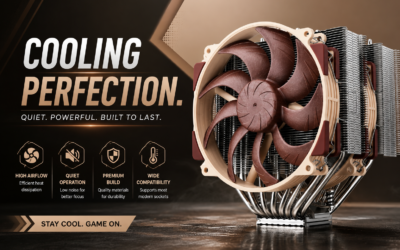
A 360mm AIO is mandatory at this tier. Air coolers can handle a Ryzen 9 in bursts, but on a sustained all-core load pushing 230W or more, you’ll throttle. A Threadripper at full tilt can pull 280W or higher, and that’s not heat your case is going to passively dissipate.
Noise is the underrated variable. You’re sitting next to this machine for eight or ten hours at a stretch. The difference between a quiet build and a loud one isn’t comfort, it’s whether you can think. Use 140mm case fans where possible (they move more air at lower RPM), pair them with the sound-dampened case mentioned earlier, and tune your fan curves so the system stays quiet at idle.
Airflow layout: two front intakes, one rear exhaust, one top exhaust. Positive pressure keeps dust out of the case, which matters more than you’d think over a three-year ownership window. Clean filters monthly. Replace AIO pumps when they start ticking.
Optional add-ons
These aren’t required, but they’re the difference between a competent workstation and one that actually fits your workflow.
A capture card (a clean UVC unit, not a gaming-oriented one) is useful if you stream tutorials, record screencasts of legacy hardware, or need to ingest footage from a camera that doesn’t do clean HDMI. A 10GbE NIC pays for itself the first time you move a 400GB project folder between machines instead of waiting on gigabit. If you’re running serious storage workloads, a dedicated NVMe RAID controller (Highpoint’s SSD7000 series is the standard pick) lets you pool multiple drives without choking the CPU’s PCIe lanes.
A dedicated audio interface matters if you’re mixing or mastering. Onboard audio’s gotten better, but it’s still onboard. And a UPS, even a small 1500VA unit, is cheap insurance against the brownout that nukes an hour of unsaved work. Battery backup isn’t optional if you’re billing clients for the work happening on this machine.
Total cost breakdown
A DIY build with a Threadripper, RTX 5080, 128GB ECC, full-tower silent case, 360mm AIO, and tiered storage lands in the $2,500 to $4,000 range depending on GPU choice. A prebuilt workstation in the OmniDesk AI tier runs $1,700 to $2,000 and skips the assembly headache.
| Component | Pick | Price |
|---|---|---|
| CPU | Ryzen 9 9950X / Threadripper 7960X | $549 / $1500 |
| GPU | RTX 5080 | $1199 |
| RAM | 64GB DDR5-6000 | $220 |
| Storage | 1TB Gen5 + 2TB Gen4 | $320 |
| Case + PSU + Cooling | Define 7 + 850W Platinum + 360 AIO | $560 |
Upgrade path over 3 years
One of the reasons workstation builds pay off long-term is depreciation curves. A 16-core Threadripper isn’t going to feel slow in three years. It probably won’t feel slow in five. CPU upgrades on workstation platforms are rare; the cores you buy today carry you through multiple GPU generations.
GPUs are the opposite story, especially if you’re doing AI work. Local LLM inference is the fastest-moving target in computing right now. Expect to swap GPUs annually if you’re chasing model sizes. Creators and developers can stretch a GPU to three years comfortably.
RAM is the easiest upgrade. Threadripper platforms scale to 256GB or more, so starting at 64GB and adding sticks as your projects grow is a sensible path. Storage tiers expand naturally: each year you’ll add a drive somewhere, whether it’s a bigger archive SSD or a second NAS chassis. The chassis and PSU, though? Those last a decade. Buy the good ones once, and they’ll outlive two or three CPU swaps. That’s where the real value of going workstation-grade shows up.