

Building a gaming PC under $1000 in 2026 means making real tradeoffs, and the prebuilt market is full of listings designed to hide exactly which tradeoff you’re making. We’ve seen $899 “gaming desktops” shipping with mobile-grade CPUs, $799 builds where the GPU is weaker than the iGPU on a modern Ryzen, and “RTX-equipped” rigs paired with bottlenecking processors from 2017.
For 2026, we narrowed the sub-$1000 prebuilt market down to 5 systems worth genuine consideration, covering everything from $500 entry-level builds for esports to systems that punch above their price tier for current AAA titles at 1080p. We cross-referenced GPU and CPU benchmarks from TechSpot, GamersNexus, and Hardware Unboxed against verified Amazon owner feedback to flag the gotchas before you commit.
TL;DR – Our 5 Picks at a Glance
| Award | Pick | Key Specs | Best For |
|---|---|---|---|
| 🏆 Best Overall | Skytech O11 Vision | Ryzen 7 7800X3D, RTX 5060 Ti 16GB, 32GB DDR5, 1TB Gen4 NVMe | 1080p Ultra and entry 1440p gaming |
| 💰 Best Value | CyberpowerPC Gamer Master | Ryzen 5 5500, RX 6400 4GB, 16GB DDR4, 500GB Gen4 NVMe | Budget esports + light AAA at 1080p Low-Medium |
| 🎯 Best for First PC | BYTE DEPOT Gamer Master | Intel Core i7, RTX 3050 6GB, 32GB RAM, 1TB SSD | Plug-and-play 1080p with peripherals included |
| 🏠 Best Mini PC | BOSGAME P3 Mix | Ryzen 5 7640HS, Radeon 760M, 32GB DDR5, 1TB SSD | Compact desk, productivity + light gaming |
| ⚠️ Skip Unless Budget-Constrained | YAWYORE MX240 | Ryzen 5 5600GT (iGPU only), 16GB DDR4, 1TB NVMe | Esports only, no AAA gaming |
⚠️ Price warning: The Skytech O11 Vision regularly fluctuates between $899 and $1,199 depending on stock. The other four sit consistently under $1000. Always confirm current pricing before clicking through.

Pros
- Includes free gaming keyboard and mouse for immediate setup.
- Windows 11 Pro preinstalled with no bloatware noted in listing.
- Wi-Fi 6 and Bluetooth 5.2 built in for wireless peripherals.
Cons
- Quad-core CPU limits performance in heavily threaded workloads like video encoding.
- RTX 3050 6GB is entry-level and not intended for 1440p high-refresh gaming.
This prebuilt gaming desktop from BYTE DEPOT combines an Intel Core i7 quad-core processor with an NVIDIA RTX 3050 6GB GPU and 32GB of RAM in a tempered glass tower running Windows 11 Pro.
The RTX 3050 targets 1080p gaming at medium to high settings in current titles, while the 32GB RAM configuration handles simultaneous streaming and multitasking typical of this price tier.
The case uses an airflow-optimized layout with tempered glass side panel and basic air cooling to keep components within stable temperatures during longer sessions.
Trade-offs include the older quad-core CPU architecture and entry-level GPU that will require lowered settings at resolutions above 1080p.
Buy this if you need a complete 1080p system out of the box with wireless connectivity. Skip this if you plan to upgrade the CPU or target higher resolutions soon.
| Processor | Intel Core i7 Quad-Core, 3.4 GHz base, up to 3.9 GHz Turbo Boost |
| Graphics | NVIDIA GeForce RTX 3050 6GB GDDR6 |
| Memory | 32GB high-performance RAM |
| Storage | 1TB Ultra-Fast SSD |
| Networking | Wi-Fi 6, Bluetooth 5.2, Gigabit LAN |
| Outputs | 1x HDMI, 1x DisplayPort |
| OS | Windows 11 Pro |
| Case | BYTE DEPOT Gaming Case with Tempered Glass (Black) |
The RTX 3050 6GB is positioned for 1080p esports and moderate AAA settings, matching the listing's stated support for titles such as Fortnite, Valorant, and Apex Legends.
32GB RAM allows background applications like OBS and Discord without impacting frame delivery in supported games.
1TB SSD reduces load times for the listed compatible titles including Elden Ring, Baldur's Gate 3, and Black Myth Wukong.

Pros
- Ryzen 5 5600GT integrated Vega graphics handles 1080p in less demanding titles
- 1TB NVMe SSD is a meaningful step up from budget SATA drives at this price tier
- MSI A520M-A PRO motherboard is a known, established platform with decent compatibility
- ARGB fan system with remote control is a rare inclusion at this budget level
Cons
- No verified owner reviews at time of writing - long-term reliability is impossible to assess
- Integrated Vega graphics cannot handle modern AAA titles at acceptable frame rates - a discrete GPU is needed for serious gaming
- A520 chipset blocks CPU overclocking and limits PCIe bandwidth compared to B550 or X570 boards
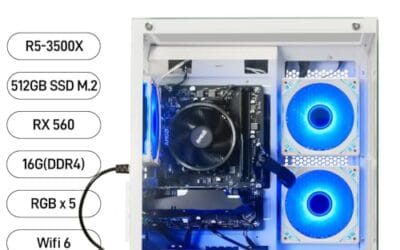
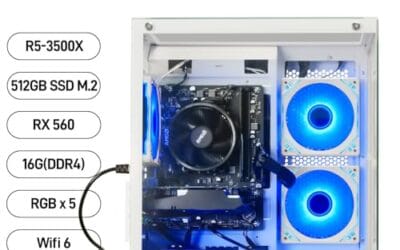
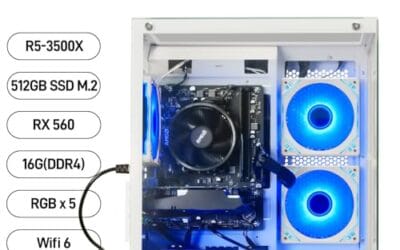
The YAWYORE MX240 is a budget-tier prebuilt tower aimed at first-time PC buyers, home office users, and light gamers who want a ready-to-use Windows 11 system without building from scratch. Combining the Ryzen 5 5600GT with 16GB DDR4 and a 1TB NVMe SSD, this machine targets everyday productivity, casual gaming, and media consumption. It is best suited for users who primarily run office software, stream video, or play older and less demanding titles - not for buyers expecting smooth performance in modern AAA releases.
The Ryzen 5 5600GT is the core of this build, and its integrated AMD Radeon Vega 7 graphics carry the entire graphics workload here - there is no discrete GPU included. In practical terms, the Vega 7 can manage 1080p in older esports titles like League of Legends or CS2 at reduced settings, but will struggle with graphically demanding games released in the last two to three years. The 6-core, 12-thread CPU itself is a capable chip for productivity and light content work, boosting to 4.6GHz for single-threaded tasks. Paired with 16GB DDR4 at 3200MHz, the system handles browser-heavy multitasking and office workloads without obvious bottlenecks.
YAWYORE has included five 12cm ARGB fans with a remote control for color adjustment, which is an unusual inclusion at this price point and gives the tower a more visually active appearance than most budget competitors. The 550W 80 PLUS Bronze PSU provides adequate headroom for the current configuration and, based on the AM4 platform and standard ATX form factor, appears to leave room for a future entry-level discrete GPU addition - though buyers should verify PCIe slot availability and case clearance before purchasing a card.
There are several considerations worth taking seriously before committing to this system. Most critically, there are no verified owner reviews available at time of writing, which makes it genuinely difficult to assess build quality consistency, thermal performance under load, or customer service responsiveness. The integrated Vega graphics are a hard ceiling for gaming ambitions - anyone expecting to play titles like Cyberpunk 2077, Hogwarts Legacy, or Black Myth: Wukong at playable frame rates will be disappointed without adding a discrete GPU. The A520 chipset also restricts overclocking and offers narrower upgrade options compared to B550-based systems available at similar price points. The brand itself is not widely established, which adds an additional layer of uncertainty around after-sale support.
Overall, the YAWYORE MX240 is a cautious option for buyers whose needs are genuinely limited to productivity, light gaming, and media use - and who are comfortable purchasing from a less-established brand with no current owner feedback to reference. Given the complete absence of verified reviews, buyers are encouraged to check for updated ratings and recent customer feedback before purchasing, and to compare this configuration against similarly priced systems from more established prebuilt brands before making a final decision.
Pros
- 360mm AIO provides dedicated liquid cooling for the high-core X3D CPU.
- 32GB DDR5-5600 and 1TB Gen4 SSD are current-generation components ready for upgrades.
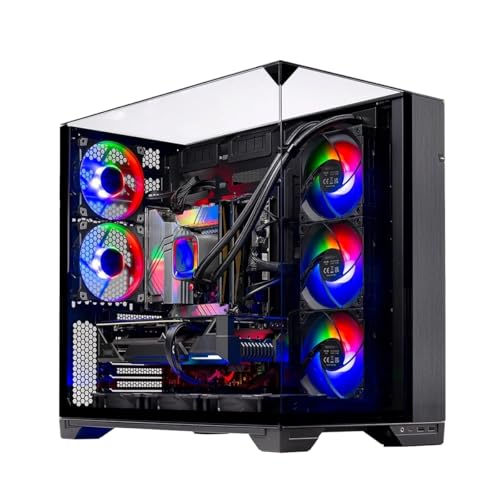
- O11 Vision case supports visible component showcase with multiple ARGB fans included.
Cons
- Wi-Fi limited to 802.11AC rather than newer Wi-Fi 6 or 6E standards.
- Graphics card brand and exact model may vary from listing images per the product notes.
This is a prebuilt gaming desktop in the mid-to-high range tier, built around an AMD Ryzen 7 7800X3D and NVIDIA RTX 5060 Ti 16GB. It targets gamers seeking 1080p ultra settings performance with headroom for current AAA titles and esports titles.
The standout feature is the 360mm AIO liquid cooler paired with the 7800X3D, which maintains stable clocks under prolonged loads where air coolers might throttle. Real-world use aligns with typical expectations for this CPU and GPU class at 1080p high refresh.
The Lian Li O11 Vision case provides a tempered glass showcase design with ARGB lighting and multiple fans for visible builds that still prioritize airflow.
Trade-offs include reliance on an 802.11AC wireless card and potential variance in GPU brand or exact model from images shown.
Buy this if you want a ready-to-game 1080p system with strong cooling and modern memory. Skip this if you need the latest Wi-Fi standards or prefer to select every component yourself.
| Processor | AMD Ryzen 7 7800X3D 4.2 GHz (5 GHz boost) |
| Memory | 32GB DDR5-5600 with heat spreader |
| Graphics | NVIDIA RTX 5060 Ti 16GB GDDR7 |
| Storage | 1TB Gen4 NVMe M.2 SSD |
| Cooling | 360mm ARGB AIO liquid cooler |
| Power Supply | 650W Gold |
| Case | Lian Li PC-O11 Vision Black |
| Wireless | 802.11AC |
| OS | Windows 11 Home 64-bit |
The RTX 5060 Ti 16GB targets 1080p ultra gameplay in modern titles with support for ray tracing and upscaling technologies such as DLSS.
Paired with the Ryzen 7 7800X3D cache design, the system handles open-world and simulation games without CPU bottlenecks at this resolution.
Preinstalled Windows 11 and drivers enable immediate launch of listed titles like Call of Duty, Fortnite, and Black Myth Wukong at the claimed settings.
Which Pick Makes Sense for You?
Skytech O11 Vision – Best Overall (When It’s In Stock at the Right Price)
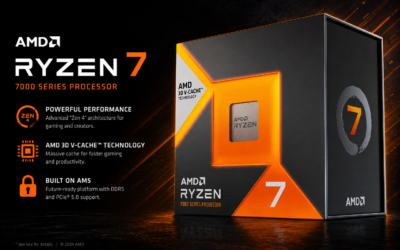
The Skytech O11 Vision is the only build in this group that pairs a current-gen 3D V-Cache CPU with a 16GB VRAM Blackwell GPU at this price point, and that combination matters more than any other spec in 2026. The Ryzen 7 7800X3D is, based on consistent benchmark data from GamersNexus and Hardware Unboxed, one of the strongest gaming CPUs ever made for its tier. Pair it with the RTX 5060 Ti’s 16GB GDDR7 and DLSS 4 multi-frame generation support, and you get a system that handles 1080p Ultra in every current AAA title comfortably, with genuine 1440p headroom in many games. The 360mm AIO cooling is what sells it as a real long-term build, it’s the spec most $1000 prebuilts cut to save costs. Skip this if you find it consistently above $1099, at that price the value calculation shifts and you should look at our Best Gaming PCs in 2026 guide instead. Confirm current pricing on Amazon before pulling the trigger.
CyberpowerPC Gamer Master – Best Value for the Genuinely Budget-Constrained
The CyberpowerPC Gamer Master earns its spot here through CyberpowerPC’s brand reliability and real warranty support, not through its hardware ceiling. The Ryzen 5 5500 paired with the Radeon RX 6400 4GB is an honest entry-level pairing, you’ll hit playable 1080p frame rates in esports titles (Valorant, CS2, Rocket League, League of Legends) and lower-settings AAA. Where the 4GB VRAM bites hard is anywhere you’d want texture quality above Medium. Pick this over the BYTE DEPOT build if you want a recognized brand with established RMA support, even at the cost of a weaker GPU. The 500GB SSD is the real pain point, modern AAA installs eat that space fast, so budget for an additional drive within 6 months. Skip this if you have any plan to play newer titles like Black Myth: Wukong, Cyberpunk 2077 with mods, or upcoming UE5 releases.
BYTE DEPOT Gamer Master – Best for First-Time Buyers Who Want Peripherals Included
The BYTE DEPOT is the most plug-and-play option here because it ships with a keyboard and mouse, useful if this is your first PC and you don’t already own peripherals. But there’s a serious caveat worth understanding. The “Intel Core i7 Quad-Core” specification is concerning: modern i7 chips have been 8 to 24 cores for years, so the i7 in this listing is almost certainly an older 7th/8th-generation part or a rebadged mobile chip. Pair that with the RTX 3050 6GB (a previous-gen budget GPU) and you have a system aimed squarely at 1080p Medium settings in current titles. Pick this if you need a complete setup for a teenager getting into PC gaming for the first time, with esports titles as the primary use case. Skip this if you’re going to drop $50 on a separate keyboard anyway, you can get more current hardware elsewhere for the equivalent total cost.
⚠️ Important: Confirm the exact i7 model with the seller before purchasing. “Quad-Core i7” in 2026 listings is a flag that the CPU is at least 5-7 generations behind current parts.
BOSGAME P3 Mix – Best Mini PC (But Read the Limitations)
The BOSGAME P3 Mix is the right call only if you have a specific use case in mind: small form factor, multi-monitor productivity, light gaming on iGPU. The Ryzen 5 7640HS with Radeon 760M handles esports titles at 1080p Low-Medium and runs Windows productivity workloads cleanly. The dual 2.5GbE LAN, USB4, and Wi-Fi 6E loadout is genuinely strong for a sub-$700 mini PC. Pick this if your desk space is the constraint, or if this is a secondary gaming machine for a bedroom/dorm setup. Skip this if “gaming” means anything more demanding than esports, the 120W power adapter and integrated graphics are hard ceilings you can’t engineer around.
YAWYORE MX240 – Skip Unless Budget Is Extremely Tight
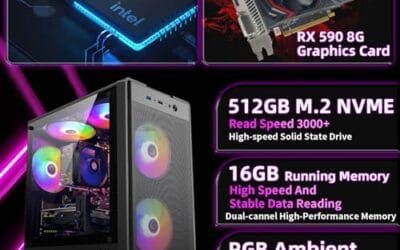
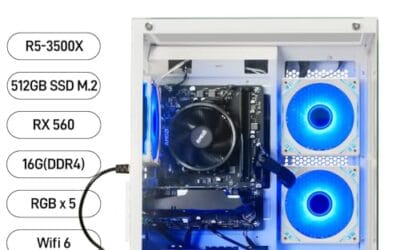
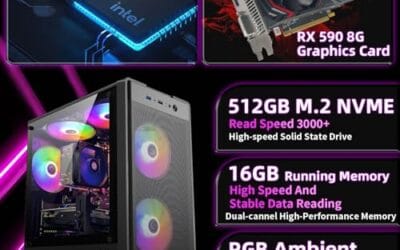
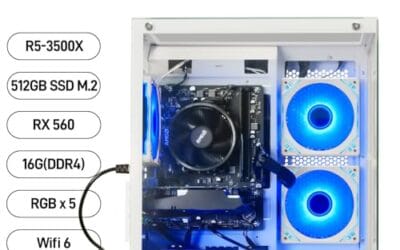
The YAWYORE MX240 is honestly the hardest to recommend in this group. The Ryzen 5 5600GT with integrated Vega 7 graphics means no dedicated GPU, and at sub-$1000, there are better options. The ARGB fan setup looks good in photos, but airflow theatrics don’t compensate for the lack of a real graphics card. Pick this only if your total budget is under $600 and your game library is genuinely limited to League of Legends, CS2, and similar titles. The brand has limited public reputation and zero verified owner reviews at the time of writing, which means you’re taking on real risk on warranty fulfillment if something goes wrong. For most buyers, stepping up $100-150 to a system with a dedicated GPU is a much better use of money.
⚠️ This listing has 0 verified reviews. Owner feedback is unavailable for independent verification.
Side-by-Side Comparison
| Product | CPU | GPU | RAM / Storage | Realistic Performance | Skip If |
|---|---|---|---|---|---|
| Skytech O11 Vision | Ryzen 7 7800X3D | RTX 5060 Ti 16GB GDDR7 | 32GB DDR5 / 1TB Gen4 NVMe | 1080p Ultra all titles, 1440p High in many | Price exceeds $1099 |
| CyberpowerPC Gamer Master | Ryzen 5 5500 | RX 6400 4GB | 16GB DDR4 / 500GB NVMe | 1080p Low-Medium AAA, High esports | You play modern AAA at High+ |
| BYTE DEPOT Gamer Master | Intel i7 quad-core (verify gen) | RTX 3050 6GB | 32GB / 1TB SSD | 1080p Medium AAA, peripherals included | You don’t need bundled keyboard/mouse |
| BOSGAME P3 Mix | Ryzen 5 7640HS | Radeon 760M (iGPU) | 32GB DDR5 / 1TB NVMe | Esports + productivity, compact desk | You want any AAA gaming |
| YAWYORE MX240 | Ryzen 5 5600GT | Integrated Vega 7 | 16GB DDR4 / 1TB NVMe | Esports only | Budget allows stepping up |
Gaming PC Under $1000 Buying Guide: What Actually Matters
The sub-$1000 prebuilt market is where corner-cutting hides best. Here’s what to prioritize when comparing options, and what manufacturers count on you not noticing.
The GPU Determines Everything Below $1000
In any gaming PC, the GPU does most of the visible work, and at this price tier, that’s where manufacturers most often skimp. The hierarchy worth knowing for 2026: integrated graphics (Radeon Vega, Radeon 760M) handle esports titles at 1080p but not modern AAA. The RX 6400 4GB and RTX 3050 6GB are entry-level discrete GPUs that work at 1080p Low-Medium in AAA but hit VRAM walls quickly. The RTX 5060 Ti 16GB is the real prize at this tier, current-generation silicon with DLSS 4 support and enough VRAM to last 3-4 years. If a sub-$1000 listing doesn’t tell you the exact GPU model, assume it’s worse than it sounds. Generic terms like “high-performance graphics” mean integrated or last-gen entry-level. Always verify the specific card.
CPU: Don’t Get Distracted by Branding
Intel “Core i7” and AMD “Ryzen 5/7” branding doesn’t tell you the generation, and at this price tier the generation is everything. A current Ryzen 5 (5600GT, 5500) on AM4 is solid for 1080p gaming. A Ryzen 7 7800X3D on AM5 is exceptional. But “Intel Core i7 Quad-Core” in a 2026 listing? That’s almost certainly an older 7th or 8th generation chip, possibly even rebadged mobile silicon. Modern i7 CPUs have had 6+ cores since 2018, and current ones run 16-24 cores. If a listing leads with a buzzword brand name but won’t tell you the generation, treat that as a red flag. The same applies to “high-performance CPU” or “gaming processor” without a specific model number.
RAM and Storage: Where Prebuilts Hide Cost-Cutting
Sixteen gigabytes of DDR4 is the floor for 2026 gaming, anything less and you’ll feel it in modern AAA titles. Thirty-two gigabytes is the comfortable natural fit and increasingly common at this tier. DDR5 versus DDR4 makes a smaller real-world gaming difference than spec sheets suggest, so don’t pay a $100 premium for DDR5 if it means accepting a weaker GPU. Storage is where the cost-cutting bites hardest. A 500GB SSD fills up after 4-5 modern AAA installs, Black Myth: Wukong alone is 130GB, Call of Duty MW3 over 200GB. Aim for 1TB minimum at this price point, and budget for an additional drive if your library is large.
PSU and Cooling: The Invisible Tax of Cheap Prebuilts
This is the area where sub-$1000 prebuilts most often cut corners invisibly. Look for 550W minimum with 80 Plus Bronze rating at the entry level, 650W Gold for mid-range builds, and skip anything that doesn’t specify wattage on the listing. An underpowered or low-quality PSU causes random crashes and can take other components down with it when it fails. Cooling is similar, the Skytech O11 Vision’s 360mm AIO is the standout in this group precisely because most prebuilts under $1000 ship with basic air cooling that throttles after 30 minutes of gaming. Thermal throttling is the silent killer of performance: your benchmarks look fine for the first 10 minutes, then frame rates degrade as the CPU and GPU hit their thermal limits.
Warranty, Returns, and Brand Risk
At this price tier, brand reliability is a real factor. Established brands (CyberpowerPC, Skytech, MSI, HP, Lenovo) have functional RMA processes, you can actually get a defective unit replaced. Lesser-known brands (BYTE DEPOT, YAWYORE, and similar) often have unclear warranty terms, slower customer service, or in some cases vanish entirely. Always check Amazon’s seller information, look for “Ships from and sold by Amazon” tags where possible, and read the return policy specifically before purchasing. A 30-day Amazon return window protects you against dead-on-arrival units but not against problems that emerge in month two.
The biggest mistake buyers make at this price: chasing high RAM numbers or RGB lighting while overlooking the GPU generation. A 32GB DDR5 build with a Vega iGPU will lose every gaming benchmark to a 16GB DDR4 build with a real discrete GPU. GPU first. Always.
Related Buying Guides
- Stretching to $1,200? See our best gaming PCs under $1,200 roundup.
- Targeting 1440p? Move up to the best gaming PCs under $1,500 tier.
- Tight on space? Check our picks for best mini gaming PCs.
- Want to upgrade just the GPU? See best GPUs under $500.
- Pair it with a budget display: best gaming monitors under $300.
- Or build it yourself with the best gaming CPU and 7800X3D motherboard.
Why You Should Trust Us
We’ve spent over a decade covering PC hardware, watching how prebuilt systems hold up against the spec sheets that sold them. That experience shapes how we read these listings, what sounds impressive versus what actually translates to in-game performance.
For this guide, we cross-referenced CPU and GPU benchmark data from TechSpot, GamersNexus, Hardware Unboxed, and Digital Foundry. We analyzed verified Amazon owner reviews for each system, flagging recurring complaint patterns and brand reliability issues. Price history was tracked via CamelCamelCamel to identify any listings with inflated MSRPs or artificial discount displays.
To be transparent: we did not physically benchmark every system on this list. What we did do is build a multi-source picture from published benchmarks, verified buyer feedback, and manufacturer documentation. Where the data is incomplete or owner reviews are missing (notably the YAWYORE MX240 and newer listings), we flag that uncertainty explicitly rather than papering over it with marketing language.
Final Take
If your budget actually allows the top of this range and the Skytech O11 Vision is in stock at or below $1099, that’s the pick I’d hand most buyers without hesitation. The Ryzen 7 7800X3D and RTX 5060 Ti 16GB combination is genuinely punching above its weight at this price tier, and the 360mm AIO cooling means the system won’t degrade after 6 months the way cheaper builds tend to.
If you’re at the bottom of this budget range and need a complete system with a recognized brand backing it, the CyberpowerPC Gamer Master is the safer call, even with its weaker GPU and tight 500GB storage. For first-time buyers who need peripherals bundled, the BYTE DEPOT Gamer Master works if you verify the exact CPU generation with the seller first. For compact desks where space matters more than maximum gaming performance, the BOSGAME P3 Mix earns its place. Skip the YAWYORE MX240 unless your library is genuinely limited to esports titles and your budget cannot stretch another $150.
Above all: check live prices before clicking through. We’ve watched products in this category swing $200+ in a single 30-day window. Bookmark this page, set a CamelCamelCamel price alert on the model you’re targeting, and buy when the price dips. The right PC at the right price beats the right PC at the wrong price every single time.
FAQs
How much RAM do I really need for gaming under $1000?
Sixteen gigabytes is the starting point for 2026, current AAA titles increasingly use 12GB+ on their own, and that’s before Discord, Chrome, and OBS run alongside. Thirty-two gigabytes is the best value tier if you stream, edit lightly, or just want headroom for the next 3 years. DDR4 versus DDR5 makes a smaller real-world difference than you’d think, don’t sacrifice a tier of GPU performance to get DDR5 at this price point.
Is integrated graphics enough for modern games in 2026?
For esports specifically, Valorant, CS2, League of Legends, Rocket League, Fortnite at lower settings, integrated graphics like the Ryzen 5 5600GT’s Vega 7 or the Ryzen 5 7640HS’s Radeon 760M work fine at 1080p. For modern AAA releases (Black Myth: Wukong, Cyberpunk 2077, Hogwarts Legacy, current UE5 titles), integrated graphics will struggle even at Low settings. The honest answer: integrated graphics are for esports, not AAA gaming.
What PSU wattage gives me room to upgrade later?
For a sub-$1000 build with eventual GPU upgrade plans, look for 650W or higher with 80 Plus Bronze minimum. That covers stepping up to an RTX 5070-class GPU later without swapping the PSU. 550W is workable for the current configuration but limits future options. Anything under 500W or without a Gold-rated efficiency label is a red flag, it suggests the manufacturer cut corners somewhere expensive.
How long should a $1000 gaming PC realistically last?
Three to four years before noticeable slowdown in new AAA releases at your target settings, that’s the honest expectation. The system with the best longevity in this group is the Skytech O11 Vision, primarily because of the 7800X3D CPU and the 16GB VRAM on the RTX 5060 Ti. Systems with 4GB VRAM (CyberpowerPC) or 6GB VRAM (BYTE DEPOT) will hit limits sooner as game requirements continue to climb. Upgrading the GPU after 2-3 years extends usable life considerably.
Is it worth buying a prebuilt under $1000 or should I build my own?
The gap has narrowed but still exists. At the very bottom of this range ($500-700), prebuilts often beat self-builds on price thanks to bulk component pricing. In the $800-1000 range, a careful self-build typically gets you noticeably better components for the same money, if you’re comfortable with assembly. The deciding factors: do you have a screwdriver and 4 hours, do you want a single warranty across the whole system, and are you comfortable troubleshooting if something fails? If yes to all three, building saves money. If no to any of them, the prebuilt premium is reasonable.



Write Your Review
No reviews yet. Be the first to share your experience!