

Two CPUs can both advertise 5.8 GHz and still deliver wildly different frame rates. That gap confuses a lot of shoppers, and it usually traces back to one metric that rarely shows up on the box: instructions per clock, or IPC. It’s the reason a newer chip at 4.5 GHz can outrun an older one at 5.0 GHz, and it’s the single number that explains why raw clock speed stopped being the whole story years ago.
If you’ve ever compared spec sheets while shopping for the best gaming CPU and wondered why the higher-clocked part lost benchmarks, IPC is the missing piece. This guide breaks down what IPC actually measures, why architecture drives it, and when it matters for the way you use a PC. We researched how the metric behaves across recent Intel and AMD generations so you can read a spec sheet without getting fooled by the big gigahertz number.
The short answer
Instructions per clock is the average number of instructions a single CPU core completes in one clock cycle. Clock speed tells you how many cycles happen each second. IPC tells you how much useful work each of those cycles gets done. Multiply the two together and you get real throughput, which is why performance roughly equals IPC times frequency times core count for parallel work.
Here’s the practical version. A cycle isn’t guaranteed to finish one instruction. Modern cores can retire several instructions per cycle when the pipeline stays fed, or they can stall and finish zero while waiting on memory. IPC is the real-world average across a workload, not a fixed rating. That’s why the same chip shows different IPC in a game versus a video export.
Keep that framing and a spec sheet stops lying to you. Gigahertz is cycles per second. IPC is work per cycle. Neither one alone predicts speed. A part that wins on frequency can still lose the benchmark if its cores do less each tick, and that scenario plays out constantly when older chips face newer ones.

Pros
- Industry-leading 6.0GHz out-of-the-box boost clock for single-threaded applications.
- Massive 32-thread capacity excels in multi-threaded workloads like 4K video rendering and 3D modeling.
- Compatible with existing LGA 1700 motherboards via BIOS updates, extending the life of 600-series boards.
- Integrated Intel UHD Graphics 770 provides a fallback for troubleshooting and QuickSync hardware acceleration.
- Highly binned silicon offers significant tuning potential for users with high-end cooling solutions.
Cons
- High 253W maximum turbo power requires premium 360mm or 420mm AIO liquid cooling for sustained loads.
- Aggressive stock voltage curves can lead to thermal throttling on standard air coolers or entry-level AIOs.
- Final generation for the LGA 1700 socket, limiting future CPU upgrade paths without a motherboard change.
- Significant power draw necessitates a high-quality PSU with sufficient 12V EPS overhead.
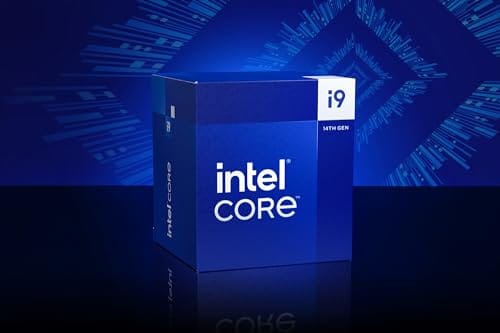
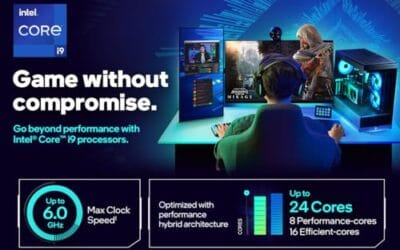
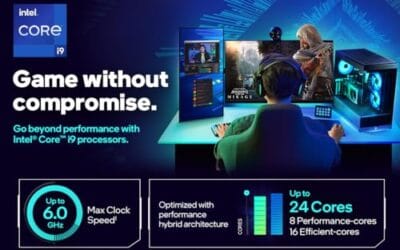
The Intel Core i9-14900K represents the enthusiast-tier peak of the Raptor Lake Refresh lineup, targeting professional creators and gamers who require the highest possible clock speeds. With 24 cores and 32 threads, it is designed to handle simultaneous gaming, streaming, and recording without the performance degradation typically seen on lower-core-count processors.
Technical performance is defined by its 6.0GHz Thermal Velocity Boost, a milestone frequency that pushes the limits of the LGA 1700 platform. In real-world gaming, this translates to high frame ceilings in 1080p and 1440p scenarios, while the 16 Efficient-cores provide the necessary throughput for background tasks and heavy multi-threaded productivity suites like Adobe Premiere Pro and DaVinci Resolve.
Build quality and reliability are consistent with Intel's high-end silicon, though the chip is notoriously demanding regarding thermals. The integrated heat spreader (IHS) must dissipate significant heat during 250W+ bursts, making the choice of thermal interface material and mounting pressure critical for maintaining stability under full load.
The primary trade-off for this level of performance is power consumption and heat. Users should expect the processor to hit its thermal junction maximum (TjMax) quickly during synthetic stress tests if paired with inadequate cooling. It is a processor that requires manual tuning of power limits (PL1 and PL2) to balance efficiency and performance effectively.
Final verdict: Buy this processor if you are an enthusiast with a high-end Z790 motherboard and a 360mm+ liquid cooler who needs the absolute fastest gaming and multitasking performance currently available on the Intel platform. Skip this if you prefer a plug-and-play experience with low power draw or are building in a small form factor case with limited cooling clearance.
| Cores / Threads | 24 (8P + 16E) / 32 |
| Max Turbo Frequency | 6.0 GHz |
| Intel Smart Cache (L3) | 36 MB |
| Total L2 Cache | 32 MB |
| Processor Base Power | 125 W |
| Max Turbo Power | 253 W (Listed as 250W in specs) |
| Socket Support | LGA 1700 |
| Memory Support | DDR5 5600 / DDR4 3200 |
| PCIe Lanes | 20 Total (Up to Gen 5.0) |
| Integrated Graphics | Intel UHD Graphics 770 |
Motherboard and Chipset: The i9-14900K requires an LGA 1700 socket. While it is compatible with older Z600-series motherboards, a BIOS update is mandatory for the system to POST. For optimal power delivery and PCIe 5.0 support, a high-end Z790 motherboard with robust VRMs is strongly recommended to handle the 250W+ power excursions.
Cooling Requirements: Due to the 6.0GHz boost clock and high TDP, air cooling is generally not recommended for this tier unless using a flagship dual-tower cooler with a contact frame. A 360mm or 420mm All-In-One (AIO) liquid cooler is the standard recommendation to prevent thermal throttling during intensive rendering or compilation tasks.
Memory Selection: This CPU supports both DDR4 and DDR5, but the motherboard determines which one you must use. For maximum performance in modern titles and professional apps, pairing this with a DDR5-7200+ kit on a Z790 platform is the ideal configuration, though DDR4 remains a viable cost-saving path for those upgrading from 12th gen.
Power Supply Guidance: Given the potential for 300W+ spikes from the CPU alone, especially when overclocked, a high-quality 850W or 1000W 80 Plus Gold PSU is recommended. Ensure your PSU has at least two 8-pin EPS (CPU) connectors to provide stable voltage to the motherboard's power phases.
Operating System: To properly utilize the Intel Thread Director and the hybrid core architecture, Windows 11 is the recommended operating system. Windows 10 may not efficiently schedule tasks between the P-cores and E-cores, potentially leading to inconsistent performance in multitasking scenarios.
The longer explanation
Think of a clock cycle as one tick of a metronome. On an old in-order design, the core tried to handle one instruction per tick and often waited. On a modern out-of-order core, the front end fetches and decodes multiple instructions, reorders them to dodge stalls, and dispatches them to several execution units at once. When everything lines up, that core finishes four, five, or more instructions in a single tick. When it hits a cache miss and has to reach out to system RAM, it can burn dozens of ticks doing nothing useful.
This is why two chips at identical frequency can post different scores. The one with wider decode, more execution ports, smarter branch prediction, and a larger cache keeps its pipeline busier, so its average IPC climbs. Intel’s Core i9-14900K, for example, pairs high clocks with a hybrid layout of performance and efficient cores, and the design choices behind that layout matter as much as the 469 dollar price when you’re judging what it delivers per cycle.
History: how we got here
For most of the 1990s and early 2000s, the industry chased frequency. Chips climbed from 100 MHz toward 4 GHz, and marketing leaned hard on that number. Then physics pushed back. Power and heat scale roughly with the square of voltage and frequency, so cranking clocks higher hit a thermal wall around the mid-2000s. The Pentium 4 era showed the limits of the megahertz race in painful fashion.
So designers pivoted. Instead of one screaming core, they widened each core to do more per cycle and added more cores to the die. Every architecture jump since then, Intel’s Core revival, AMD’s Zen rebuild, has leaned on IPC gains. AMD famously delivered a 52 percent IPC uplift with the first Zen, and later Zen generations kept adding double-digit percentages. Those gains are why a modern midrange chip embarrasses a decade-old flagship at the same clock.
Why it works this way
Frequency and IPC are two levers, and they trade off. Push clocks and you fight voltage, heat, and diminishing returns. Widen the core for higher IPC and you spend transistors, die area, and design effort, but you gain performance that doesn’t cost extra power the way raw frequency does. Smart designs balance both, then add cores for workloads that split cleanly across threads.
There’s a catch, and it’s a big one. IPC is workload dependent. Code with predictable branches and data that fits in cache lets a wide core stretch its legs. Code that jumps around memory unpredictably starves the pipeline, and all that extra execution hardware sits idle. That’s why a chip can look dominant in one benchmark and merely fine in another. No single IPC figure describes every task, which is the point people miss most often.
Cache is the quiet hero in all of this. Every trip out to system RAM costs the core hundreds of idle cycles, so the more data a chip keeps close in fast on-die cache, the fewer stalls it hits and the higher its effective IPC climbs. That’s why big cache pools show up on high-end parts, and why faster memory can lift performance even when the core design hasn’t changed. Feed the pipeline and it does more per tick. Starve it and the widest core in the world grinds.
When you’d want this
IPC matters most where a workload leans on a few threads and cares about latency. Gaming is the classic case. Most games depend heavily on one or two threads, so per-core throughput drives your minimum frame rate more than core count does. If you’re building around fast frames, a high-IPC core at a healthy clock will beat a many-core chip that clocks lower per core. Shoppers hunting the best CPU for gaming or a value-focused pick from our budget gaming CPU roundup should weight IPC and single-core clock over sheer thread count.
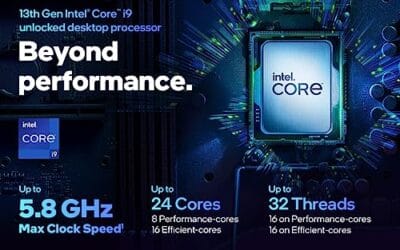
Heavy multithreaded work flips the priority a little. Rendering, code compiling, and batch encoding scale across cores, so total throughput becomes IPC times frequency times however many cores you can keep fed. The Intel Core i9-13900K shows the combination well: 24 cores split into 8 performance and 16 efficient cores, 36 MB of cache, and boost up to 5.8 GHz. At 587.77 dollars with a 4.8 rating from owner reports, it’s a chip that leans on both strong per-core work and a high core count for mixed workloads.
Pros
- Massive multi-threaded performance for 4K video editing, 3D rendering, and complex data science workloads.
- High 5.8 GHz peak frequency provides excellent single-core performance for gaming and CAD applications.
- Integrated UHD Graphics 770 serves as a reliable backup for troubleshooting or non-gaming productivity setups.
- Broad platform compatibility across two motherboard generations and two different memory standards.
Cons
- High 125W base power and significant peak wattage require a high-end 360mm AIO or custom loop cooling.
- Requires a BIOS update on many Intel 600 series motherboards before the system will POST.
- Platform longevity is limited as LGA1700 is an established socket nearing the end of its release cycle.
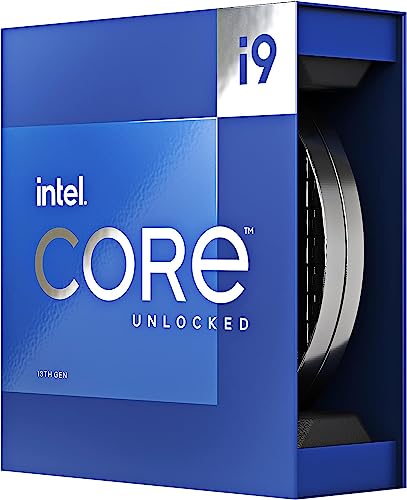
The Intel Core i9-13900K represents the pinnacle of the 13th Gen Raptor Lake lineup, positioned as a flagship solution for users who refuse to compromise. With a total of 24 cores and 32 threads, it is specifically engineered for enthusiast gamers, streamers, and heavy content creators who frequently run demanding applications like Adobe Premiere Pro, DaVinci Resolve, or Blender.
The standout technical achievement here is the refined hybrid architecture. By pairing 8 high-frequency Performance-cores with 16 Efficiency-cores, the 13900K manages heavy compute loads without sacrificing the responsiveness of background applications. In real-world gaming, this typically translates to higher 1% low frame rates and smoother overall performance, especially when multitasking with OBS or Discord in the background.
Thermal management is a critical consideration for this chip. While the 125W base power seems manageable, the processor is designed to scale its power consumption significantly to maintain the 5.8 GHz boost clock. Users should expect high operating temperatures under sustained all-core loads, necessitating a robust cooling solution and a high-airflow case to prevent thermal throttling.
An honest trade-off for this level of performance is the power draw and the resulting heat output. This is not a 'set and forget' chip for budget cooling or small form factor builds without careful undervolting or power limiting. Additionally, while the support for DDR4 is a welcome cost-saving measure, the highest performance tiers are only unlocked when paired with high-frequency DDR5 memory.
Buy this if you are building a top-tier workstation or gaming rig and already have a 360mm liquid cooler and a high-wattage power supply. Skip this if you are primarily gaming at 4K where the GPU is the bottleneck, or if you prefer a more power-efficient system with lower cooling requirements.
| Feature | Specification |
|---|---|
| Core Count | 24 (8 P-cores + 16 E-cores) |
| Thread Count | 32 |
| Max Turbo Frequency | 5.8 GHz |
| P-core Base Frequency | 3.0 GHz |
| E-core Base Frequency | 2.2 GHz |
| Intel Smart Cache (L3) | 36 MB |
| Total L2 Cache | 32 MB |
| Processor Base Power | 125 W |
| Memory Support | DDR5 5600 / DDR4 3200 |
| PCIe Revision | 5.0 and 4.0 |
| Total CPU PCIe Lanes | 20 |
| Socket Support | LGA1700 |
| Integrated Graphics | Intel UHD Graphics 770 |
Socket and Chipset: This processor uses the LGA1700 socket. It is natively compatible with Intel 700 series motherboards (Z790, H770, B760). While it works with 600 series boards (Z690, H670, B660, H610), a BIOS update is almost certainly required for the system to boot if the board was manufactured before the 13th Gen launch.
Cooling Requirements: Given the 5.8 GHz boost clock and high core count, a premium 360mm or 420mm All-In-One (AIO) liquid cooler is strongly recommended. High-end dual-tower air coolers may suffice for gaming but will likely lead to thermal throttling during intensive multi-threaded rendering or stress testing.
Memory Selection: The i9-13900K supports both DDR4 and DDR5, but this is determined by your motherboard choice. For a flagship build, pairing this CPU with DDR5 5600MT/s or higher is recommended to avoid bandwidth bottlenecks in memory-sensitive applications and modern games.
Power Supply Guidance: Due to the high transient power spikes typical of i9 processors, ensure your PSU has sufficient headroom. For a build featuring this CPU and a high-end GPU like an RTX 4080 or 4090, a minimum of an 850W or 1000W 80 Plus Gold power supply is advised.
Operating System: To properly utilize the Intel Thread Director for efficient task scheduling between P-cores and E-cores, Windows 11 is highly recommended. While Windows 10 is supported, it may not always assign tasks to the optimal core type, potentially impacting performance.
What to look for in a CPU
Don’t shop on gigahertz alone. Compare chips from the same generation first, since IPC is roughly constant within an architecture and clocks tell a fair story there. Across generations, look for independent benchmarks in the software you actually run. A newer core at lower clocks often wins on IPC gains, so the raw frequency comparison misleads you.
Cache size, memory support, and single-core boost clocks all feed real-world IPC, so read those lines carefully. For mixed use, check both single-core and multi-core benchmark numbers, because they answer different questions. And match the chip to your workload. A rendering box and a gaming rig want different balances, and the same logic runs through our picks for the best budget CPU for productivity.
Common misconceptions
The biggest myth is that more gigahertz always means a faster PC. It doesn’t. A 5.0 GHz chip from 2016 loses to a 4.5 GHz chip from 2024 in most work because the newer core does far more per cycle. Frequency only compares fairly inside one architecture.
Another mix-up: people treat IPC as a fixed spec, like it’s stamped on the die. It’s an average that shifts with the code you run. A third myth is that more cores automatically help. For lightly threaded games, eight strong cores usually beat sixteen weaker ones. Cores only pay off when your software can actually use them.
Frequently asked
Is higher IPC always better?
Higher IPC is generally good, but it’s only half the equation. Real performance comes from IPC combined with clock speed and, for parallel work, core count. A core with great IPC but very low clocks can still lose to a balanced design. Look at final benchmark numbers in your workload rather than any single metric.
How do I compare IPC between Intel and AMD?
You can’t read it off a spec sheet directly, since neither company publishes a clean IPC figure. The reliable method is to check independent benchmarks at matched clock speeds, or just compare the final scores in the apps you use. Reviewers often normalize clocks to isolate IPC, and those articles are your best reference.
Does IPC matter for gaming?
Yes, a lot. Most games rely on one or two heavy threads, so per-core throughput drives frame rates and especially your one percent lows. That’s why gaming reviews lean so hard on single-core performance. A high-IPC chip at a solid clock tends to deliver smoother frames than a lower-IPC part with more cores.
Why has clock speed barely moved in years?
Power and heat scale sharply with frequency, so pushing much past roughly 5 to 6 GHz gets brutally inefficient. Designers hit that wall in the mid-2000s and shifted toward wider cores and more of them. Most of the gains you’ve seen since then came from IPC and core-count growth, not from big clock jumps.
Can I improve IPC on a CPU I already own?
Not really, since IPC is baked into the core’s architecture. You can raise clock speed a little through overclocking and feed the chip faster RAM to reduce stalls, which lifts effective throughput. But the per-cycle work capacity itself is fixed. A meaningful IPC jump means moving to a newer architecture, and our budget CPU picks for 2026 are a fair starting point.






Write Your Review
No reviews yet. Be the first to share your experience!