
Linear Vs Tactile Switches: Which Price Tier Actually Buys You More
Press a key and you'd think it's a small decision. It isn't. A busy typist can rack up well over a million keystrokes a year, and the switch under each cap.

We independently review everything we recommend. When you buy through our links, we may earn a commission. As an Amazon Associate we earn from qualifying purchases. Learn more ›
Press a key and you'd think it's a small decision. It isn't. A busy typist can rack up well over a million keystrokes a year, and the switch under each cap.

Every key on a mechanical keyboard has a moment where the press "counts," a point on the way down where the switch tells your PC a keystroke happened.

Ask ten people which keyboard connection they trust and you'll get a near even split, but the numbers tell a sharper story.
Keyboard polling rate is the number that tells you how often a keyboard reports its state to your PC.
A 65 percent keyboard usually keeps about 66 to 68 keys, while a 75 percent board often lands near 80 to 84 keys by adding the function row and a tighter.

What is a 75 percent keyboard? It's a compact keyboard layout that keeps the function row, number row, letters, modifiers, arrow keys, and a small navigation.

If you've shopped for a mechanical keyboard lately, you've probably seen "hot-swappable" stamped on the box and wondered what you're actually paying for.
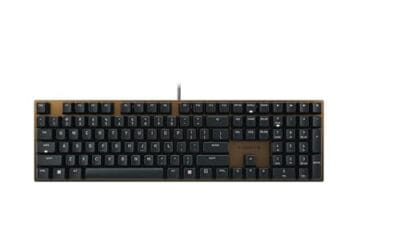
A full-size keyboard runs roughly 440mm to 450mm wide because it carries all 104 keys, including that 17-key number pad on the right.

Pop a keycap off any gaming keyboard and you'll find a small plastic tower sitting under it.

Red switches and brown switches are the two mechanical keyboard choices most buyers compare first because they feel different even when the rest of the board.