

IPS vs VA panel buying gets confusing because the price gap is smaller than it used to be: one 27-inch VA option here is $109.99 with FHD 1920×1080 and up to 200Hz, while a curved 27-inch QHD VA monitor from LG is $159.99 with 2560×1440 and 180Hz. That $50 step-up matters more than the panel acronym. If you’re also comparing resolution and size, our 27-inch 1440p monitor picks, 1440p gaming monitor guide, and gaming monitors under $400 can help frame the rest of the decision.
Matchup at a glance
IPS panels are usually the safer pick for color consistency, wide viewing angles, and mixed desk use. If you edit photos casually, share the screen with someone beside you, or hate seeing colors shift when you lean back, IPS has the cleaner everyday feel. The technical reason is how the liquid crystals rotate: IPS crystals shift in-plane, parallel to the glass, so the image holds up when you view it off-axis. Many midrange gaming and creator displays still lead with IPS even when their contrast numbers aren’t exciting, because most buyers notice a color shift faster than they notice a shallow black.
VA panels fight back with contrast and price. Blacks tend to look deeper and dark scenes feel less gray. A typical VA panel posts a native contrast ratio around 3000:1 to 4000:1, while a lot of IPS displays sit closer to 1000:1, and that difference is easy to see in a dim room. The catch is motion handling: dark transitions can look softer on weaker VA displays. Not always. But it’s the tradeoff that matters most if you play fast shooters or scroll through high-contrast text all day.
Spec sheet showdown
| Spec | IPS panel | VA panel | Gawfolk 27″ Curved VA | LG 27GS60QC-B Ultragear VA |
|---|---|---|---|---|
| Typical strength | Viewing angles and color consistency | Contrast and dark-room depth | Budget curved gaming | Sharper QHD curved gaming |
| Resolution example | Often FHD, QHD, or 4K depending on tier | Often FHD or QHD in budget gaming models | FHD 1920×1080 | QHD 2560×1440 |
| Refresh example | Commonly 144Hz to 180Hz in affordable gaming | Commonly 165Hz to 200Hz in affordable gaming | 180Hz/200Hz listed | 180Hz listed |
| Curve | Usually flat, though curved IPS exists | Common on gaming monitors | 1800R curve | 1000R curve |
| Price shown here | Depends heavily on model and resolution | Lower entry pricing is common | $109.99, 4-star rating | $159.99, 4.5-star rating |
IPS strengths
IPS still wins when the screen has to look stable from normal desk angles. Colors don’t wash out as quickly when viewed off-center, and brightness stays more even from corner to corner, which helps if your monitor sits beside a laptop, if you use a dual-display layout, or if someone else watches from the side. IPS also tends to cover more of the sRGB gamut out of the box, so photos and video look closer to how the creator intended without heavy calibration. For office work, browsing, and content creation, that consistency can matter more than a contrast number on a spec sheet.
IPS is also easier to recommend for buyers who don’t want surprises. Motion performance varies by model, but affordable IPS gaming monitors often feel clean at 144Hz or 165Hz, especially in bright scenes where fast gray-to-gray transitions keep trailing to a minimum. The classic weakness is the “IPS glow,” a faint wash in the corners on a dark background, though it rarely bothers you in normal daylight use. If you’re shopping around a smaller setup, a sharp flat IPS can pair well with options from our 24-inch monitor guide. Simple. Predictable. That’s the appeal.
VA strengths
VA’s biggest strength is contrast. In dark games, black letterbox bars, night maps, and shadow-heavy scenes tend to look richer than they do on many budget IPS monitors, and there’s less of that grayish haze over the darkest parts of the image. A curved VA panel can also feel more immersive at 27 inches because the edges wrap toward you instead of sitting flat across the desk. That deeper black point is also why VA usually looks more convincing when a monitor claims HDR support, since HDR leans on the gap between the brightest highlight and the darkest shadow. For single-player games, racing, RPGs, and movie watching, that’s a real advantage.
The value angle is just as important. The Gawfolk 27″ Curved Gaming Monitor lists FHD 1920×1080, an 1800R curve, FreeSync, built-in speakers, HDMI, VESA mounting, a 1ms response-time claim, and 180Hz/200Hz refresh-rate language at $109.99 with a 4-star rating. The LG 27GS60QC-B Ultragear steps up to QHD 2560×1440, 180Hz, HDR10, AMD FreeSync, two HDMI ports, DisplayPort, and a 1000R curve at $159.99 with a 4.5-star rating. Treat the 1ms figure as a best-case gray-to-gray claim rather than a promise about every transition, because dark-scene response is where VA panels work hardest.

Pros
- 200Hz VA panel at FHD handles fast shooters without visible ghosting per spec.
- 1800R curve on a 27-inch screen improves viewing immersion at typical desk distances.
- FreeSync tears down scren tearing across compatible AMD and NVIDIA GPUs.
- Joystick OSD control simplifies menu navigation versus older button clusters.
Cons
- Limited owner feedback at time of writing, so long-term panel uniformity is unverified.
- 1920x1080 across27 inches yields low pixel density, roughly 81 PI, text looks soft.
- VA panels typically show slower dark-to-dark transitions, expect smearing despite 1ms marketing.
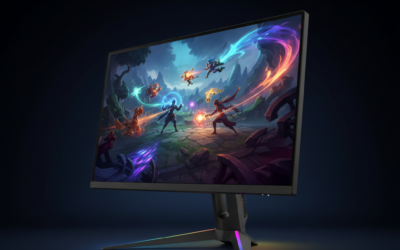
The Gawfolk 27-inch curved monitor is a budget-tier 1080p gaming display built around an 1800R VA panel running up to 200Hz with FreeSync. It targets first-time PC builders, dorm setups, and console players on Xbox Series S or PS5 who want a white-themed high-refresh screen without stretching the parts budget.
The defining feature is the 200Hz VA panel paired with a 1ms response spec. For esports titles at 1080p on a GPU like an RTX 3060 or RX 6600, frame delivery should stay smooth, and the VA contrast gives deper blacks than budget IPS. Owner-verified motion clarity is not yet available at this tier.
Trade-offs are typical for the price. 1080p on 27 inches lands near 81 PPI, so text and UI elements look softer than on a 24-inch 1080p or 27-inch 1440p panel. VA response times often trail their headline1ms figure in dark transitions, and HDR, sRGB coverage, and brightness in nits are not specified.
Buy this if you want a white 200Hz curved scren for casual and competitive 1080p gaming and can accept low pixel density. Skip this if you sit closer than 60cm, need color-accurate work, or already run a GPU strong enough for 1440p high-refresh.
Panel and curvature: A27-inch VA panel with an 1800R curve, chosen for higher static contrast than IPS at this price. VA panels in this tier typically deliver 3000:1 to 4000:1 contrast, giving noticeably deper blacks in dark scenes, though viewing angle shift is more visible than on IPS.
Resolution and refresh: Native 1920x1080 at up to 200Hz, with a 180Hz mode also listed. At 27 inches,1080p works out to about 81 PPI, aceptable for gaming from70cm plus, but soft for text-heavy productivity. A mid-range GPU can push 200 FPS in most esports titles at high settings.
Motion and sync: Rated 1ms response, likely MPRT rather than true GtG, so expect some dark-scene smearing typical of VA. FreeSync is supported for variable refresh over HDMI, which also works as G-SYNC Compatible on most NVIDIA GPUs, though NVIDIA certification is not specified.
Connectivity and mounting: HDMI input is confirmed, with dual built-in speakers for basic audio. The panel is VESA mountable, useful for arm setups, though exact VESA pattern (75x75 or 100x100) is not specified. DisplayPort, USB hub, and HDR tier are not called out in the source data.
Real-world scenarios
Competitive shooters
If you mostly play shooters and chase motion clarity, don’t buy by panel type alone. Refresh rate, overdrive behavior, resolution, and input feel all matter. IPS often has an edge here because its response times stay more consistent across bright and dark transitions, so fast pans leave less smearing behind moving objects. Many players will still prefer a clean IPS at high refresh, but a well-priced VA can make sense if you want a curve and strong contrast and you can accept a bit more dark trailing. For the fastest displays, compare against our 360Hz gaming monitor picks.
Single-player and cinematic games
VA feels more convincing in darker cinematic games because blacks usually look less washed out and the higher contrast gives shadow detail more punch. A 1000R or 1800R curve can pull you into racing cockpits, open-world night scenes, and ultradark menus. When you sit centered, VA’s viewing-angle weakness matters less, and the slower dark transitions are easier to forgive in slower-paced games. That’s the key condition.
Work, browsing, and school use
IPS is usually friendlier for mixed productivity because text and colors stay more consistent when you move around, and the corners hold the same brightness as the center across a big spreadsheet. VA can still work well, especially at QHD, but weaker VA panels may show more dark smearing when scrolling white text on black backgrounds, and colors can shift slightly if the panel is close to your face and your eyes drift toward the edges. If your day is mostly documents, browser tabs, and spreadsheets, IPS remains the lower-risk pick.
Budget gaming desk
At the low end, VA often buys a bigger-looking feature list: curve, high refresh, FreeSync, and 27-inch size for less money. That’s appealing if you don’t need premium color work, and the deep blacks make budget VA panels feel more expensive in a dark room. Before buying, check current pricing against our gaming monitor deals, because discounts can flip the value quickly.
Pricing and availability
The two product examples show why price tier matters more than the IPS vs VA label by itself. At $109.99, the Gawfolk monitor is about getting a 27-inch curved VA screen, FHD resolution, FreeSync, built-in speakers, VESA support, and a high listed refresh rate for as little money as possible. It’s a budget-first spec sheet, and the FHD resolution keeps the demand on your graphics card low, which is part of why the refresh numbers can run so high at this price.
At $159.99, the LG 27GS60QC-B asks for about $50 more but brings QHD 2560×1440, 180Hz, HDR10, AMD FreeSync, two HDMI ports, DisplayPort, and a tighter 1000R curve. For many 27-inch buyers, the resolution jump from 1920×1080 to 2560×1440 is the bigger upgrade than changing panel families, because at 27 inches the extra pixels sharpen text edges and fine game detail you can see from a normal seating distance. If you want more pixels for modern GPUs, also compare our 4K G-Sync monitor guide before stretching the budget.
Which to buy
Choose IPS if you want the safest all-purpose monitor: stable color, wide viewing angles, even brightness, and fewer worries about dark-scene motion artifacts. It’s the better default for shared screens, productivity-heavy desks, light creative work, and anyone who values consistency over deeper blacks. You won’t always get the best contrast, but you’ll usually get a display that’s easier to live with day to day.
Choose VA if your budget is tight or your priority is immersive gaming and stronger contrast. Between the two VA examples here, the LG 27GS60QC-B is the more balanced buy for a 27-inch gaming setup because QHD 2560×1440 is visibly sharper than FHD at this size, and it still lists 180Hz, AMD FreeSync, HDR10, and a 4.5-star rating at $159.99. The Gawfolk makes more sense when $109.99 is the hard ceiling. No shame there.

Pros
- 180Hz QHD refresh pairs well with mid-range 1440p GPUs like RTX 4060
- 1000R curve and three-side borderless design work for immersive single-panel battlestations
- Black Stabilizer, FPS Counter, and Crosshair overlays give useful competitive tools
Cons
- Limited owner feedback at time of writing, buyer risk on long-term panel uniformity
- 99% sRGB and HDR10 tag indicate entry HDR, no DisplayHDR certification specified
- Only tilt adjustment listed, no height or swivel, VESA mount support not specified
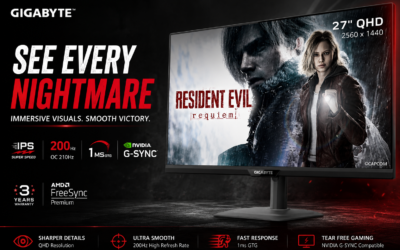
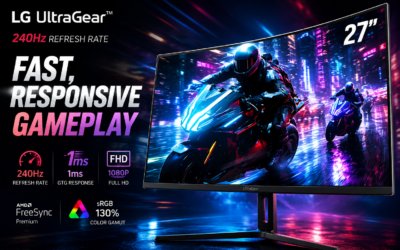
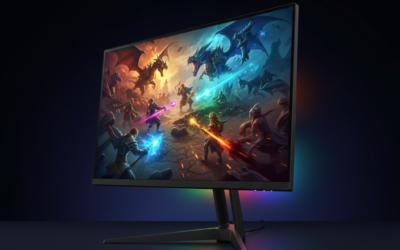
The LG 27GS60QC-B is an entry-level 27-inch QHD curved gaming monitor in the UltraGear line, running 2560x1440 at 180Hz with a 1ms GtG rating and a step 1000R curve. It targets 1440p esports and mixed-genre players who want high refresh over color-critical accuracy or OLED contrast.
The defining pairing here is QHD at 180Hz on a curved VA-style gaming panel, which lines up with GPUs around RTX 4060,X 4060 Ti, or RX 7600 XT for competitive titles at high settings. LG cites 99% sRGB and HDR10 support, which appears in line with typical entry 1440p gaming monitors that deliver 300to 350 nits SDR brightness.
Trade-offs are typical at this tier. The stand is described as tilt adjustable only, with no height or pivot mentioned, and HDR10 without a DisplayHDR tier usually means limited peak brightness and no local dimming. Panel type, exact contrast, color depth, and VESA mount pattern are not specified in the source data, so long-term uniformity claims lean on category norms.
Buy this if you want a 1440p 180Hz curved panel for FPS and racing on a mid-range GPU, and value features like Black Stabilizer and FPS Counter. Skip this if you need color-accurate work, ergonomic height adjustment, or verified HDR performance above HDR10 taging.
Panel and resolution: A 27-inch curved panel at 2560x1440 with a 1000R curvature, which is among the steeper curves on the market and best viewed from a single centered seating position around arm's length. Panel technology is not specified in the source, though curved 1440p gaming monitors in this tier are typically VA.
Motion and refresh: Native 180Hz refresh with a 1ms GtG response rating, paired with AMD FreeSync for tear-free variable refresh gameplay. LG also lists Dynamic Action Sync for reduced input lag and Black Stabilizer to lift shadow detail, which are useful for competitive FPS at higher frame rates.
Color and HDR: Coverage is listed at 99% sRGB with HDR10 input support. No DCI-P3 figure, peak nits, or DisplayHDR tier is specified, so treat HDR as a signal compatibility feature rather than a true HDR experience. Adequate for gaming and general use, not intended for color-graded work.
Connectivity and ergonomics: Two HDMI inputs plus one DisplayPort cover PC and dual consoles. The stand is described as tilt adjustable with three-side virtually borderless design. Height, swivel, pivot, VESA mount pattern, weight, and power draw are not specified in the source data.
Common questions
Is IPS better than VA for gaming?
IPS is often better for motion clarity and color consistency because its response times stay steady across bright and dark transitions, but it isn’t automatically better for every gamer. VA can look more dramatic in dark scenes thanks to stronger contrast. If you play fast esports titles, lean IPS unless a specific VA model has well-vetted motion performance. If you play slower cinematic games, VA can be the more enjoyable choice.
Is VA bad for office work?
VA isn’t bad for office work, but it’s more dependent on the exact panel. Text can look fine, especially at QHD, and the stronger contrast can be pleasant for dark mode. The issue is motion during scrolling and the viewing-angle shift from the sides, where colors can gamma-shift on a curved panel. If you share the screen or sit off-center, IPS is safer.
Is 1080p enough on a 27-inch monitor?
FHD 1920×1080 works on a 27-inch monitor if price and gaming speed matter more than sharpness. You’ll see larger pixels than on a 24-inch FHD screen or a 27-inch QHD screen, which softens text edges a little. For desk work and modern games, QHD 2560×1440 is a meaningful upgrade at 27 inches. Your GPU also has to handle the extra pixels.
Does a curved VA monitor make sense?
Yes, especially at 27 inches and above when you sit centered. VA panels are common in curved gaming monitors, and the curve can make the screen feel more enveloping while keeping every part of the panel a similar distance from your eyes. A 1000R curve is more aggressive than 1800R, so it feels stronger up close. For shared viewing, flat IPS is usually easier.
Should I spend more for QHD instead of chasing panel type?
Often, yes. At 27 inches, the jump from FHD 1920×1080 to QHD 2560×1440 can be more visible than the difference between IPS and VA in everyday use. You’ll get sharper text, cleaner game detail, and more desktop space. If the price gap is modest and your graphics card can keep up, QHD is usually money well spent.





Write Your Review
No reviews yet. Be the first to share your experience!