

If you’ve shopped for a prebuilt or scrolled through a marketplace listing, you’ve probably seen a graphics card labeled “OEM” and wondered whether it’s a downgrade, a scam, or just a cheaper way to get the same silicon. The short version: an OEM GPU uses the same GPU chip as its retail cousin, but it’s built and sold under different rules. Those rules can affect your warranty, your cooler, and sometimes your clock speeds, but they rarely change the raw gaming horsepower in the way people fear.
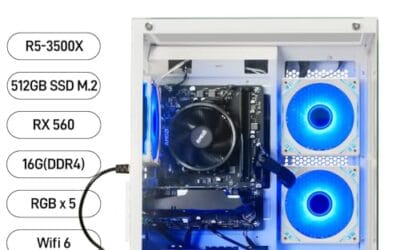
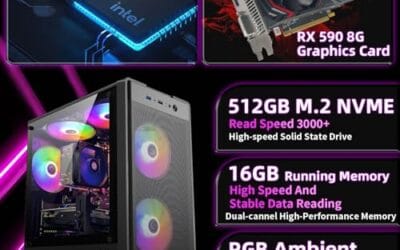
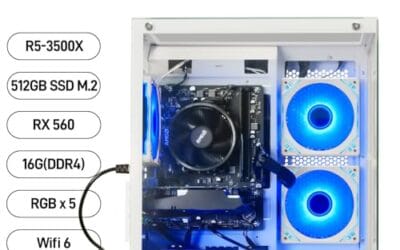
This matters most when you’re buying a machine assembled by someone else. A lot of the value in a system depends on what card sits inside it, which is why we dig into GPU sourcing when we research builds like the best AMD prebuilt gaming PC or a prebuilt tuned for 1440p. Budget shoppers eyeing the best budget prebuilt PC for 2026 run into OEM cards constantly, so it’s worth knowing exactly what the label does and doesn’t mean before you hand over your money.
The short answer
An OEM GPU is a graphics card that NVIDIA or AMD sells to a system builder or integrator rather than to you in a retail box. It’s the same GPU die, the same memory type in most cases, and the same driver support. What changes is the packaging: no fancy retail box, often a plainer cooler, sometimes a shorter or non-transferable warranty, and occasionally slightly different clock speeds than the flashy overclocked retail models. For actual gaming, the chip is what counts, and the chip is identical.

So does it matter? For frame rates, barely. For long-term ownership, resale, and cooling headroom, it can. If you’re buying a standalone card today and want the full retail experience with a strong warranty, a retail AIB model like the ASUS Dual RTX 5060 is the safer pick at $369 with its 3-year warranty and 4.6 rating.


Pros
- GDDR7 memory provides meaningfully higher bandwidth than GDDR6 at a comparable price tier
- 0dB fan technology keeps the card completely silent during light loads and desktop use
- 2.5-slot SFF-Ready form factor fits cases where full 3-slot coolers cannot
- Dual BIOS gives users hardware-level control over thermal and noise priorities without software
Cons
- No buyer reviews available at time of writing, so real-world thermal and noise performance cannot be independently verified
- 8GB VRAM may become a limiting factor in GPU-heavy titles at 1440p as texture budgets increase
- RTX 5060 sits at the lower end of the RTX 50 series lineup, so users targeting high-refresh 1440p or 4K gaming should consider stepping up
The ASUS Dual RTX 5060 8GB OC Edition is a mid-range GPU built on NVIDIA's Blackwell architecture, targeting 1080p and entry-level 1440p gamers who want modern AI features in a compact chassis. Its 2.5-slot SFF-Ready design makes it one of the more accessible Blackwell cards for small form factor builds. DLSS 4 with multi-frame generation and 623 AI TOPS are the headline specs, and the GDDR7 memory bus delivers a real bandwidth advantage over the GDDR6 cards it replaces at this price tier.
Based on ASUS's published specifications, the dual Axial-tech fans with 0dB technology and dual ball bearings suggest a well-engineered cooling solution, and the dual BIOS switch adds practical flexibility. However, with no owner reviews available at the time of writing, thermal and noise claims cannot yet be independently confirmed. Skip this card if you need verified reliability data before purchasing, or if your workloads regularly push beyond 8GB VRAM at higher resolutions.
Architecture: NVIDIA Blackwell
VRAM: 8GB GDDR7
Boost Clock (OC Mode): 2565 MHz
Boost Clock (Default Mode): 2535 MHz
AI Performance: 623 AI TOPS
Interface: PCIe 5.0
Display Outputs: HDMI 2.1b, DisplayPort 2.1b
Slot Width: 2.5-slot
Fan Technology: Dual Axial-tech with 0dB mode (stops below 50C, restarts above 55C)
Fan Bearings: Dual ball bearings
BIOS Modes: Performance and Quiet via hardware switch
Backplate: Vented, with stainless steel grade 304 bracket
Manufacturing: ASUS Auto-Extreme single-pass soldering
SFF-Ready: Yes
Who should consider this GPU: Builders upgrading from RTX 30 or older RTX 40 cards who want DLSS 4 and GDDR7 bandwidth gains without moving to a larger or more expensive card. The 2.5-slot design is a genuine advantage for ITX and mATX cases where 3-slot coolers physically cannot fit.
Who should look elsewhere: If you primarily game at 1440p with high texture settings or plan to run GPU-accelerated creative workloads, 8GB VRAM may create bottlenecks sooner than expected. Users targeting high-refresh 1440p or any 4K gaming should budget for an RTX 5070 or higher. Additionally, buyers who rely on a large pool of verified owner feedback before purchasing should wait until more reviews accumulate for this specific model.
Pairing recommendations: This card pairs well with a mid-range CPU such as a Ryzen 5 or Intel Core i5 to avoid CPU bottlenecks at 1080p. A 650W to 750W PSU is a reasonable target based on NVIDIA's guidance for the RTX 5060 platform.
The longer explanation
“OEM” stands for original equipment manufacturer, and in GPU land it describes cards produced for companies that put PCs together, think Dell, HP, Lenovo, and the smaller boutique integrators. Those companies buy in volume and don’t need retail packaging, bundled cables, or splashy marketing coolers. NVIDIA and AMD, along with board partners, produce trimmed-down versions to fit that channel. The result usually costs the builder less per unit, and some of that saving reaches you as a lower system price.
Here’s where it gets nuanced. Not every OEM card is a plain-jane reference model. Some are simply retail boards sold without the retail box. Others are genuinely different: a two-fan cooler where the retail card has three, a lower power target, or a memory bus that’s been trimmed on a specific variant. The infamous cases, like older cards that shipped with fewer memory chips under the same name, are the exception, not the rule. Most OEM cards you’ll find inside a modern prebuilt run the advertised spec. You just won’t get the retail bells and whistles.
The driver situation is where OEM cards shine and confuse people at the same time. They use the same NVIDIA or AMD drivers as retail cards, so features like DLSS 4 and the standard control panel work exactly the same. There’s no separate, crippled driver branch for gaming performance. That’s the part owners worry about most, and it’s the part that’s genuinely a non-issue.
History: how we got here
The OEM channel is almost as old as the discrete graphics card itself. Back when Dell and Gateway shipped millions of desktops a year, they needed a supply of cards that fit tight budgets and small cases. GPU makers obliged with cut-cost variants, low-profile boards, and reference coolers stamped out by the pallet. Gamers of that era learned to sniff out the difference because some OEM cards really were slower, running lower clocks or narrower memory to hit a price.
Over the years the gap narrowed. Manufacturing got cheaper, retail and OEM boards started sharing more design DNA, and the big integrators grew picky about performance because their customers benchmark everything now. Today an OEM RTX or Radeon card inside a reputable prebuilt is often just a board-partner design without the retail carton. The horror stories still circulate because they’re memorable, not because they’re common. That history is why the “OEM” label carries baggage it mostly no longer deserves.
Why it works this way
It all comes down to how these companies make money. A retail board partner earns margin on the box you buy at a store, so it invests in a beefy triple-fan cooler, RGB, a factory overclock, and a warranty it manages directly with you. An OEM board serves a different customer: the system builder who wants the lowest reliable cost and handles support themselves. Strip the retail extras and the price drops. That’s the whole economic story.
Cooling and warranty are the two places this trade-off actually reaches your gaming experience. A leaner cooler can mean higher temperatures and slightly lower sustained boost clocks under a long session, which might cost you a handful of frames, not a tier of performance. Warranty is the bigger one. An OEM card’s coverage usually flows through the system builder, not the GPU maker, so if the prebuilt company is small or vanishes, you can be stuck. Buy the same silicon as a retail card and that warranty is yours to register and transfer.
When you’d want this
OEM GPUs make sense in a few real situations. If you’re buying a prebuilt from a name-brand integrator with solid support, the OEM card inside is fine, and you’re often paying less than you would for the boxed version. Same goes if you snag a used OEM card at a steep discount and you understand the warranty is limited. For a secondary rig, a home theater box, or a machine you’ll upgrade in a year anyway, the savings can be smart.
When you’d steer clear: if you want the strongest cooling, the highest factory clocks, a warranty registered in your own name, and clean resale value, buy the retail board yourself. A card like the GIGABYTE RTX 5060 WINDFORCE OC, at $349.99 with its dual-fan WINDFORCE cooler and 8GB of GDDR7, gives you that ownership and a 4.3 rating to lean on. It’s the kind of standalone purchase that sidesteps every OEM caveat.

Pros
- WINDFORCE system with graphene-lubricated fans offers extended lifespan and quieter operation.
- Direct-contact cooling design moves heat quickly from both GPU and VRAM to the heatsink.
Cons
- 8 GB VRAM capacity may limit texture settings in future 4K or heavily modded titles.
- 128-bit memory bus is narrower than higher-tier cards in the same generation.
The GIGABYTE GeForce RTX 5060 WINDFORCE OC is a mid-range graphics card built on NVIDIA Blackwell architecture and aimed at 1440p gamers and light content creators.
Its most notable feature is the combination of 8 GB GDDR7 memory and DLSS 4 support, which allows the card to generate additional frames in compatible titles while maintaining visual quality typical of this performance tier.
The WINDFORCE cooler uses Hawk fans with graphene lubricant, a direct-contact copper plate, and alternate-spinning blades to balance thermals and acoustics under sustained loads.
At this price point buyers should expect trade-offs in VRAM capacity and memory bus width compared with higher-tier RTX 50-series cards when running maximum settings at 4K.
Buy this card if you play at 1440p and want DLSS 4 features with efficient cooling, skip it if you need more than 8 GB of VRAM for heavy 4K workloads or future-proofing.
| GPU Architecture | NVIDIA Blackwell |
| Memory | 8 GB GDDR7, 128-bit |
| Interface | PCIe 5.0 |
| Outputs | DisplayPort, HDMI |
| Cooling | WINDFORCE with Hawk fans, direct contact copper plate, composite heat pipes |
| Features | DLSS 4, enhanced RT Cores, Tensor Cores |
PCIe slot requirement: The card uses a PCIe 5.0 interface and fits in any PCIe 4.0 or 5.0 x16 slot on current motherboards.
Power connector: Not specified in the listing, so confirm the required connector type against your PSU before purchase.
Case clearance: The WINDFORCE cooler uses a dual-fan layout, verify available length and height in your case before ordering.
Display outputs: Ships with DisplayPort and HDMI ports, sufficient for most multi-monitor 1440p setups.
What to look for in a GPU inside a prebuilt
When a listing says a system ships with a specific card, dig past the model name. Check the exact variant and whether the spec matches the retail part: memory size and type, bus width, and the number of cooling fans. Both the ASUS Dual and GIGABYTE WINDFORCE examples above pair 8GB of GDDR7 on a 128-bit bus over PCIe 5.0, and that’s the baseline you want to confirm on any RTX 5060 build, OEM or not. If a listing is vague about VRAM or bus width, ask.
Also weigh who backs the warranty and how long it runs. Retail AIB cards often carry 3 years registered to you; OEM cards lean on the system builder’s policy. Look at the cooler, too, since a card crammed into a small case with one fan will run hotter than a two- or three-fan design. None of these change the DLSS 4 feature set or the driver, but they shape temperatures, noise, and how confident you can be years down the line. It’s the difference between a card that’s technically identical and one that’s actually pleasant to live with.
Common misconceptions
The biggest myth is that OEM cards are slower at gaming by design. They’re not. The GPU die and memory spec drive frame rates, and those usually match the retail part. Any real-world gap comes from cooling or a modestly lower power target, and it’s small. Another misconception is that OEM cards run special drivers, they use the same public NVIDIA or AMD drivers everyone else does.
People also assume “OEM” always means “worse deal.” Sometimes it’s the opposite, since you’re not paying for retail packaging and marketing. The genuine catches are warranty and resale, not raw speed. And don’t assume every OEM card is a stripped reference blower; plenty are full board-partner designs minus the box. Judge the card by its actual spec sheet, not the three letters on the listing.
Frequently asked
Do OEM GPUs perform worse in games?
Not in any meaningful way. They use the same GPU chip and memory as the retail version, so frame rates land in the same range. The only differences come from cooling or a slightly lower power target, which might cost a few frames in a long session, never a whole performance tier. For 1080p and 1440p gaming, you won’t notice.
Can I use retail drivers on an OEM card?
Yes. OEM cards run the standard NVIDIA or AMD drivers, including features like DLSS 4. There’s no separate crippled driver branch. Just download the current package from the GPU maker’s site and install it like you would for any card. That’s one worry you can drop entirely.
Does an OEM GPU come with a warranty?
Usually, but it’s often shorter and tied to the system builder rather than the GPU manufacturer. If the prebuilt company handles support well, you’re covered. If it’s a tiny outfit, that coverage is riskier. Retail AIB cards, like the ASUS Dual RTX 5060 with its 3-year warranty, register directly to you, which is the safer route for peace of mind.
Is an OEM card fine inside a prebuilt PC?
For most buyers, absolutely. A reputable integrator uses OEM cards that match the advertised spec, and you often pay less than buying the boxed version yourself. Just confirm the VRAM, bus width, and cooler, and check who honors the warranty. If those check out, it’s a sound way to save money on a complete system.
Should I buy a standalone OEM GPU or a retail one?
If you want the best cooling, a warranty in your name, and clean resale value, buy retail. A boxed card such as the GIGABYTE RTX 5060 WINDFORCE OC at $349.99 gives you all three. A standalone OEM card only makes sense when the discount is steep and you accept the limited warranty. For most people building or upgrading, retail is worth the small premium.



Write Your Review
No reviews yet. Be the first to share your experience!