

If you’ve shopped for a prebuilt gaming rig, you’ve bought from a system integrator, even if nobody used that phrase at checkout. The term sounds corporate, and it is a bit of jargon, but the idea behind it is simple. A system integrator is the company that takes loose parts and turns them into a finished computer you can plug in and use on day one.
That’s a bigger job than it sounds. Somebody has to pick compatible parts, assemble them, load the operating system, run stability checks, and stand behind the whole thing with a single warranty. Understanding what a system integrator actually does helps you judge a prebuilt fairly, and it explains why two towers with similar specs can carry very different prices. We researched how these builders operate and what separates a good one from a sloppy one.
The short answer
A system integrator, often shortened to SI, is a business that combines individual hardware components into a complete, working computer and sells it as one product under its own name. Instead of you buying a CPU, motherboard, GPU, RAM, storage, power supply, and case separately, the integrator sources those parts, builds the machine, validates it, and ships it with a unified warranty. You get one box, one point of contact, and one company responsible if something fails.
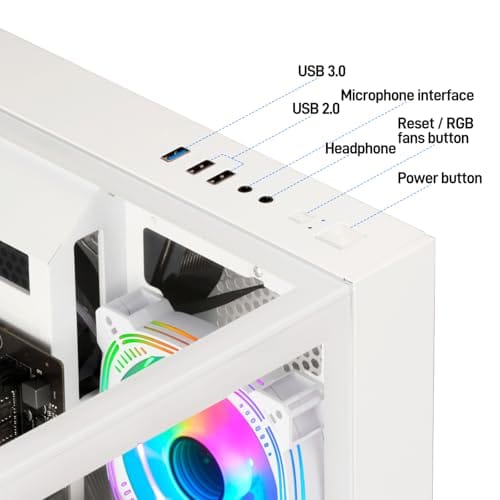
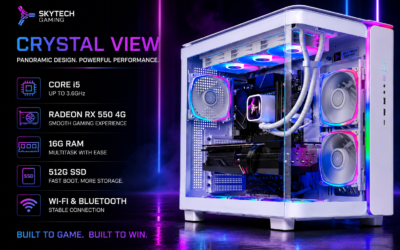
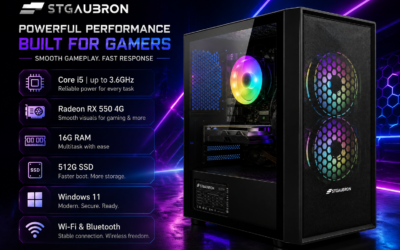
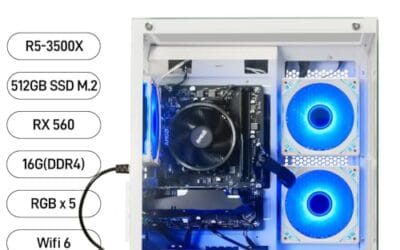
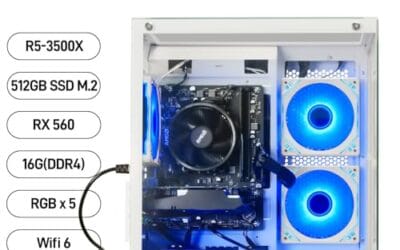
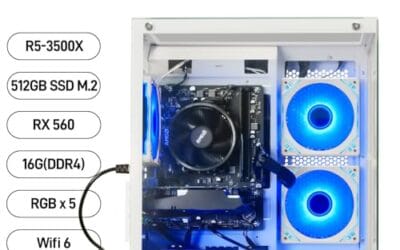
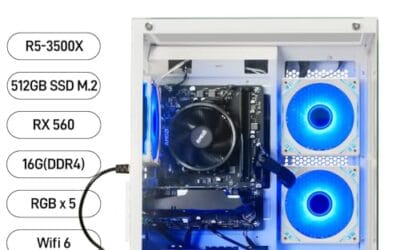
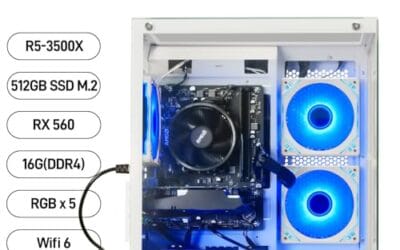
The WIWB prebuilt tower is a clean example of what an SI delivers. It’s a $569.99 desktop pairing a Ryzen 5 chip that clocks up to 4.1GHz with an RX 560 4G graphics card, 16GB of DDR4, a 512GB SSD, and Wi-Fi 6, all inside a white case. Owner reports give it a 4.7 rating. You didn’t have to match those parts yourself. The integrator did, and that’s the whole point.
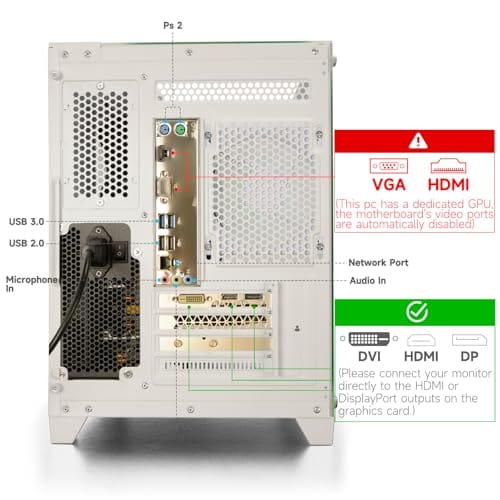

Pros
- Ryzen 5 3500X 6-core CPU bosts to 4.1GHz for smooth 1080p esports CPU load.
- Discrete RX 560 4GB handles DirectX 12 and Vulkan esports titles better than integrated graphics.
- 512GB SSD as bot drive keps Windows load times and app launches snappy out of box.
Cons
- Limited owner feedback at time of writing, no verified reviews to validate build quality.
- RX 560 is a legacy entry-tier GPU, skip if you want modern AAA at 1080p high.
- Ryzen 5 3500X sits on aging AM4, upgrade path is caped at Zen 3 with a BIOS update.
The WIWB is a budget prebuilt tower built around a Ryzen 5 3500X, RX 560 4GB, 16GB DDR4, and a 512GB SSD. It targets students, home office users, and casual gamers who want a plug-and-play box for esports at 1080p rather than a rig for current AAA titles.
The defining pairing here is the 3500X and RX 560. The 6-core, 6-thread CPU bosting to 4.1GHz is still competent for League, CS2, Valorant, and Overwatch, and typically pushes well above 100FPS at 1080p low-to-medium when paired with this GPU class. The RX 560 4GB is the bottleneck for anything heavier.
Trade-offs are typical at this tier. The RX 560 predates FSR frame generation and struggles with modern UE5 titles even at 1080p low. AM4 with a 3500X caps future CPU upgrades at Zen 3, and the case, PSU wattage, VRM phases, and included cooler are not specified, so headroom for a stronger GPU later is unclear.
Buy this if you need a cheap, pre-assembled Windows tower for schoolwork, browsing, and light esports at 1080p. Skip this if you plan to play current AAA releases, stream at 1080p60, or want a platform with a real multi-year upgrade path.
CPU workload: The Ryzen 5 3500X is a 6-core, 6-thread Zen 2 part with a 3.6GHz base and 4.1GHz boost. It stays viable for 1080p esports and light productivity like image editing and IDE work, but lacks SMT, which hurts streaming and modern CPU-bound AA titles.
GPU class and resolution fit: The RX 560 4GB GDDR5 is an entry esports card. Expect high frame rates in CS2, League, and Overwatch at 1080p low-to-medium, and playable frame rates in older AAA titles at 1080p low. 1440p and modern AA at medium are outside its envelope.
Memory and storage: 16GB DDR4 is the current baseline for gaming and multitasking, and the 512GB SSD covers Windows plus roughly 3 to 5 modern game installs. Exact DDR4 speed, dual-channel status, and SSD interface (SATA vs NVMe) are not specified.
Connectivity and upgrade path: WiFi 6 is included, and the board exposes an M.2 slot plus spare DDR4 slots for later expansion. PSU wattage, connector layout, case clearance, and waranty length beyond the stated 1-year coverage are not specified, so plan GPU upgrades cautiously.
The longer explanation
The word “integration” carries the real meaning. Any competent builder can screw parts into a case. A proper SI goes further. They confirm the power supply can feed the graphics card, that the cooler clears the RAM, that the BIOS is updated for the installed CPU, and that memory runs at its rated speed instead of a slow default. Then they load Windows, install drivers, and check that the machine holds a stable clock under load.
Scale matters too. Large integrators build thousands of near-identical units, so they buy parts in volume and standardize their assembly. Boutique shops build fewer machines but offer more customization and tidier cable work. Both are integrators. The difference shows up in price, lead time, and how much personality the final build has. A budget office-and-gaming tower like the abytespark Intel Core i7 desktop at $499.99, rated 4.4, represents the volume end, where the goal is a dependable machine at a sharp price rather than a showpiece.
There’s a software layer people forget about, and it’s a big part of the job. An integrator doesn’t just bolt parts together. They flash firmware, set memory profiles so your RAM runs at its advertised speed, install a clean operating system, and load the correct chipset and graphics drivers. Skip any of those and the machine either underperforms or won’t boot at all. When the WIWB tower arrives with Wi-Fi 6 working and its DDR4 running properly, that’s not luck. That’s an integrator doing the unglamorous configuration work so you don’t have to.
History: how we got here
System integration isn’t new. Back when computers were room-sized, specialist firms assembled mainframes and minicomputers from parts made by different vendors. The PC era shrank that model down. As standardized components spread in the 1990s, small local shops began building custom towers for anyone who didn’t want to assemble their own.
The modern gaming boom pushed integrators into the spotlight. GPUs got expensive and hard to buy alone, part shortages made compatibility a headache, and plenty of buyers just wanted a ready machine. Online SIs filled that gap, offering configurable builds that arrive assembled and warrantied. Today the label covers everyone from giant OEMs to two-person custom shops. They all sit in the same lane: parts in, finished PC out.
Why it works this way
The model exists because parts and expertise are two separate things. Silicon vendors design chips. Board partners make motherboards and graphics cards. But none of them hand you a working computer. Somebody has to bridge that gap, and it’s genuinely skilled work. Match a weak power supply to a hungry card and you get crashes. Skip a BIOS update and the system won’t post.
Integrators absorb that risk for you. They also consolidate warranty support, which is the quiet feature buyers underrate. If a self-built PC fails, you have to figure out which part died and file with that maker. When an SI-built machine fails, you call one number and they sort it out. That single throat to choke is worth real money, and it’s baked into what you pay.
When you’d want a system integrator
You’d want an SI when your time, or your nerves, are worth more than the markup. First-time buyers who’ve never seated a CPU benefit enormously. So do people who need a machine working now, with no risk of a dead-on-arrival part turning a weekend into a debugging session. If a warranty that covers the entire system matters to you, a prebuilt from an integrator is the straightforward answer.
Gamers on a fixed budget are a natural fit too. A tower like the abytespark Core i7 build at $499.99 gets a student or casual player up and running without part-picking. If you’re weighing options across price bands, our roundups of the best budget prebuilt PC picks and the best budget prebuilt for 1080p gaming lay out what different tiers actually deliver.
There’s also the niche-use crowd. If you’re building a quiet living-room box or an always-on machine that sits in a closet, an integrator can spec it for that job and hand you a working unit with one warranty. Buyers eyeing a compact media rig or a low-power always-on server often start with a prebuilt for exactly that reason, then tweak from there.
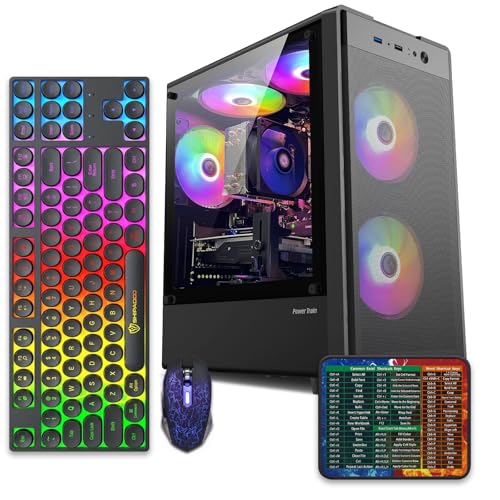
Pros
- 512GB SSD bot drive avoids the HDD bottleneck common in budget prebuilts
- RX 590 8GB VRAM buffer handles 1080p textures better than 4GB budget cards
- Complete bundle with RGB peripherals means no extra spend to start using
- Genuine Windows 11 Home 64-bit preinstalled, no activation hassle out of box
Cons
- Limited owner feedback at time of writing, verify seller reputation before purchase
- Core i7-4770 is Haswell era LGA150, no upgrade path and weak IPC versus modern CPUs
- Windows 11 on 4th-gen Intel is unsupported by Microsoft and may miss feature updates
- No CD/DVD-ROM support and RAM/GPU generation limits future workload headroom
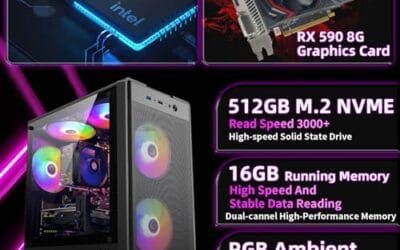
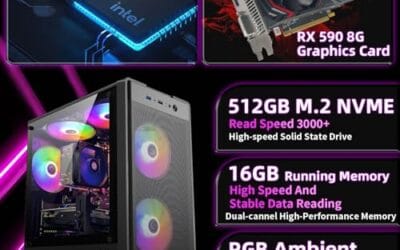
This is an entry-tier prebuilt tower built around an Intel Core i7-4770 Haswell CPU, 16GB RAM, a 512GB SSD, and an AMD Radeon RX 590 8GB GDDR5 GPU. It targets budget buyers who need a working office and light gaming PC with peripherals bundled, not enthusiasts chasing current-gen performance.
The defining feature is the RX 590 8GB paired with a 512GB SSD, an uncommon combo at this price band. Cards in this class typically handle 1080p esports titles at 60+ FPS on medium to high, matching the vendor claim for CS:GO, League of Legends, Apex, and Overwatch. Newer AA titles will need lowered settings.
Trade-offs are significant. The i7-4770 launched in 2013, so IPC, single-thread performance, and platform features like NVMe bot, PCIe Gen4, and modern USB are limited. Windows 11 runs here but sits outside Microsoft's official supported CPU list. There is no realistic CPU or socket upgrade path on LGA1150.
Buy this if you need a plug-and-play 1080p esports and office tower with keyboard, mouse, and RGB included at a low outlay. Skip this if you want current-gen platform support, sustained AA 1440p gaming, or a build with a meaningful upgrade runway.
GPU class: The AMD Radeon RX 590 8GB GDDR5 is a Polaris-refresh card roughly equivalent to a GTX 1060 6GB tier. Expect 1080p 60+ FPS in esports titles like CS:GO, Overwatch, Apex, League, and Fortnite on medium settings, matching the listing's claims.
AAA and modern titles: The vendor lists GTA V, Warzone, Hogwarts Legacy, and The Division 2. Realistically, these run at 1080p low to medium with FSR upscaling where suported.Ray tracing is unsupported on RX 590. No DLSS, no frame gen, no AV1 encode.
CPU bottleneck: The Core i7-4770 quad-core with 8threads at up to 3.9GHz will bottleneck the RX 590 in CPU-heavy titles like Warzone and Escape from Tarkov. Expect frame time inconsistency in large team fights even when average FPS looks aceptable.
Storage and RAM fit: 512GB SSD holds Windows plus 3 to 5 modern game installs before space pressure. 16GB DR3-era RAM is adequate for current esports but leaves no headroom for heavy streaming, browser tabs, and OBS NVENC alongside a game session.
What to look for in a system integrator
Judge an integrator on the parts you can’t see and the promises you can. Check whether they name every component, including the exact power supply and motherboard, not just the CPU and GPU. Vague spec sheets hide cheap boards and no-name PSUs. Look at the warranty length, whether it covers labor, and how returns are handled. A 4.7-rated builder with clear specs, like the Wi-Fi 6 WIWB tower, tells you more than a flashy render.
Also weigh cable management, cooling headroom, and upgrade room. A good SI leaves you a free RAM slot and a spare drive bay so the machine can grow. If you’re cross-shopping stronger configurations, our guides to the best AMD prebuilt gaming PCs and the best budget prebuilt for 1440p gaming show which specs to prioritize as you climb.
Common misconceptions
The biggest myth is that prebuilts always use garbage parts. That was truer a decade ago. Plenty of integrators now ship genuine name-brand components and publish full spec lists. The second myth is that you’re paying only for assembly labor. You’re also paying for validation, warranty consolidation, and support, which have real value even if they don’t show on a parts list.
Another mix-up: people assume “system integrator” means the same thing as a parts retailer. It doesn’t. A retailer sells you components to build yourself. An integrator sells you the finished, working machine. And no, buying from an SI doesn’t lock you out of upgrades. Most builds use standard parts you can swap later, exactly like a self-built rig.
One more worth clearing up: the assumption that all integrators are equal. They aren’t. Two shops can list the same CPU and GPU while differing wildly on the board, the power supply, the cooling, and the cable work you’ll live with. That’s why the spec sheet transparency matters so much. The brand name on the box tells you far less than the full parts list underneath it.
Frequently asked
Is a system integrator the same as an OEM?
They overlap but aren’t identical. An OEM typically designs and mass-produces its own standardized machines. A system integrator may use off-the-shelf, name-brand parts and often offers more customization. Big OEMs act as integrators, but not every integrator is a giant OEM.
Do I pay more buying from an integrator?
Usually a little, yes. The markup covers assembly, part validation, and unified warranty support. For a first-time buyer or anyone who values their time, that premium is often money well spent. A $569.99 build that arrives working can be cheaper than a botched DIY attempt.
Can I upgrade a PC from a system integrator?
Almost always. Most SI builds use standard ATX or micro-ATX parts, so you can add RAM, swap the GPU, or drop in more storage later. Just confirm the power supply has headroom and check that the warranty allows opening the case.
How do I know if an integrator is trustworthy?
Look for full component transparency, a clear warranty, and a solid owner rating. If a listing names the exact PSU, motherboard, and drive, that’s a good sign. Vague specs and mystery parts are the warning flags to avoid.
Should I just build my own instead?
If you enjoy the process, have time, and want maximum control, DIY saves money. If you’d rather skip the compatibility research and get one warranty covering everything, a system integrator is the smarter route. It’s a trade between cost and convenience, and there’s no wrong answer.




Write Your Review
No reviews yet. Be the first to share your experience!