

Pull up any competitive gaming forum and you’ll find the same argument on repeat: does a cable actually win you matches, or is modern WiFi finally good enough? The honest answer sits in the numbers. A wired connection typically holds ping variance under 1ms, while even a strong WiFi 6 signal can swing 5ms to 30ms during a busy evening. That jitter, not raw speed, is what gets you killed in a firefight. If you’re weighing your options, our roundup of the best mesh WiFi system for gaming covers the wireless side, and the best WiFi 6 router picks for 2026 break down what a good radio actually delivers.
Matchup at a glance
Ethernet is the boring, reliable veteran. It plugs in, it works, and it doesn’t care about your neighbor’s microwave or the 14 smart bulbs fighting for airtime. A Cat6 run to your rig gives you a dedicated lane with predictable latency and zero interference. The tradeoff is obvious. You have to physically get a cable from the router to your desk, and drilling through walls isn’t everyone’s idea of a fun Saturday.
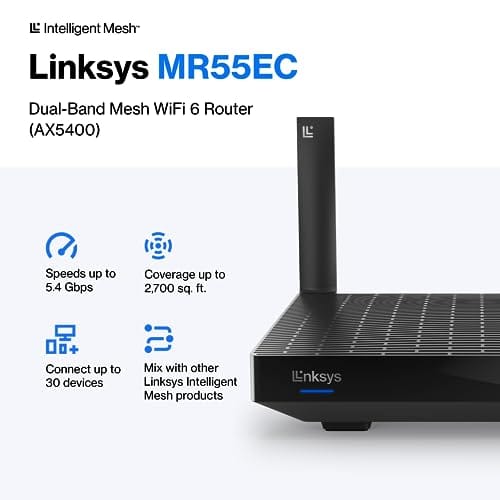
WiFi is the convenient challenger that’s gotten genuinely good. WiFi 6 and 6E cut congestion hard, and a router like the Linksys Hydra Pro 6 can juggle 30-plus devices across 2,700 square feet without choking. For a lot of players, that’s plenty. But radio waves are still radio waves. Walls, distance, and airborne traffic all nibble at your stability, and gaming punishes instability far more than it punishes slow downloads.

Here’s the framing that clears up most of the confusion. This isn’t a fight about download speed, and it never was. Both a cable and a decent router can pull enough bandwidth to run any online game with room to spare. The real contest is about consistency under pressure, and that’s where the two diverge sharply. Ethernet trades convenience for a flat, predictable line. WiFi trades a little stability for the freedom to put your rig anywhere. Once you stop comparing megabits and start comparing jitter, the whole debate makes a lot more sense.
Spec sheet showdown
| Factor | Wired Ethernet | WiFi 6 (5GHz) | WiFi 6E (6GHz) | Why it matters |
|---|---|---|---|---|
| Typical ping variance | Under 1ms | 5-30ms | 3-15ms | Jitter decides hit registration |
| Packet loss risk | Near zero | Low to moderate | Low | Lost packets = rubber-banding |
| Interference | None | High in busy homes | Lower (new band) | Neighbors crowd 2.4/5GHz |
| Setup effort | Cable run needed | Plug and play | Plug and play | Convenience vs consistency |
| Real-world speed | 1Gbps common | Up to ~1.2Gbps | Up to ~2Gbps | Speed rarely the bottleneck |
Ethernet strengths
The single biggest win for a cable is consistency. Your packets travel the same physical path every time, so latency stays flat and predictable. In fast shooters and fighting games, that flatness is everything. A steady 22ms ping beats a WiFi connection that averages 18ms but spikes to 60ms twice a minute, because your netcode is only as good as its worst moment. Owner reports across gaming communities consistently show wired setups holding rock-steady during peak-hours streaming, downloads, and household chaos.
Ethernet also sidesteps the interference lottery entirely. It doesn’t matter how many phones, tablets, and smart speakers are hammering your network. Your wired line has its own dedicated bandwidth. There’s no channel congestion, no signal fade through drywall, no mysterious 3am latency creep. For anyone running a fixed battlestation who takes ranked play seriously, a $10 Cat6 cable is the cheapest performance upgrade in the entire hobby. It’s not glamorous. It just works.
WiFi strengths
Modern WiFi’s real selling point is freedom, and the gap to wired has narrowed a lot. With WiFi 6E opening the clean 6GHz band, you get far less interference from legacy devices, and a capable router can keep latency low enough that most players won’t feel a difference in casual sessions. The Linksys Hydra Pro 6, priced around $199.99 with a 4.4 rating, is a solid example of the tier that makes wireless gaming viable. It’s a tri-stream WiFi 6 mesh router built to cover 2,700 square feet and connect 30-plus devices, which means your gaming rig isn’t fighting the whole house for scraps.
That coverage headroom is what separates a good gaming router from a bargain-bin box. Beamforming, OFDMA, and proper QoS prioritization let a router like this steer bandwidth toward your PC when it matters. You still won’t beat a cable on pure jitter, but for a bedroom two walls from the router, a strong WiFi 6 setup can hold a genuinely competitive connection. If your layout makes wiring impractical, this is the hardware that gets you close.

Pros
- AX5400 class dual-band throughput up to 574 plus 4804 Mbps on 5 GHz
- Six spatial streams with OFDMA reduce congestion for 30+ device homes
- Intelligent Mesh compatibility allows scaling coverage beyond the 2,700 sq ft rating
Cons
- Limited owner feedback at time of writing, so real-world reliability data is thin
- Dual-band only, no dedicated 6 GHz or wireless backhaul band at this tier
- Detailed specifications, WAN port sped, and waranty not specified in source listing
The Linksys Hydra Pro 6 (MR5500-AMZ) is a mid-range dual-band WiFi 6 mesh router aimed at households upgrading from an older AC1900 or extender-based setup. Linksys rates it for 2,700 sq ft and 30 plus devices, targeting medium apartments, condos, and small two-story homes with mixed smart home and streaming traffic.
The defining feature is six-stream AX5400 class WiFi 6 with quoted rates of 574 Mbps on 2.4 GHz and 4804 Mbps on 5 GHz. OFDMA and MU-MIMO help when many low-bandwidth clients share airtime, which is where WiFi 5 routers typically stall. Real-world 5 GHz throughput at range appears to land in the mid-hundreds of Mbps based on category norms.
Trade-offs are typical at this tier. It is dual-band, so there is no dedicated 6 GHz radio and no separate backhaul channel when you add mesh nodes, meaning throughput can halve on satellite hops. Linksys does not specify WAN port speed, USB, or processor details in the listing, so multi-gig ISP users should verify before buying.
Buy this if you want a single WiFi 6 router that can grow into a Linksys Intelligent Mesh system for a 2,000 to 3,000 sq ft home with 30 plus clients. Skip this if you need WiFi 6E, 2.5 GbE WAN, or a dedicated backhaul band for a large multi-story house.
Wireless class: AX5400 class dual-band WiFi 6 with quoted PHY rates of 574 Mbps on the 2.4 GHz band and 4804 Mbps on the 5 GHz band, totaling roughly 5378 Mbps aggregate across six spatial streams. No 6 GHz radio is listed, so WiFi 6E clients fall back to 5 GHz.
Coverage and capacity: Linksys rates the MR5500 for 2,700 sq ft and 30 plus simultaneous devices. OFDMA, MU-MIMO, and 1024-QAM are standard at this WiFi 6 tier and help maintain throughput as client count scales, though actual coverage depends heavily on wall material and node placement.
Mesh behavior: Intelligent Mesh lets you pair the MR5500 with other Linksys nodes to extend coverage. Because it is dual-band, backhaul shares the 5 GHz client band, so expect throughput to roughly halve one hop from the root node. A wired Ethernet backhaul between nodes avoids this penalty.
Not specified: WAN and LAN port speeds, USB ports, processor and RAM, warranty length, and physical dimensions are not disclosed in the source listing. Buyers pairing this with multi-gig fber or DOCSIS 3.1 plans above 1 Gbps should confirm port specs before purchase.
Real-world scenarios
Ranked competitive shooters
Go wired, full stop. Valorant, CS2, and Apex all punish jitter harder than latency. A cable’s flat ping is worth more here than any wireless convenience. If you can’t run a cable, at least sit on the 6GHz band and stay within a room of the router.
Casual co-op and single-player
WiFi is totally fine. Elden Ring co-op or a Fortnite squad night doesn’t need sub-1ms consistency. A good WiFi 6 router keeps you smooth enough that you’ll never think about it, and you keep your desk cable-free.
Streaming while you play
This is where wired pulls ahead again. Uploading 1080p60 to Twitch while gaming saturates the connection, and a cable’s dedicated bandwidth keeps your stream and your ping stable at the same time. WiFi can manage it with strong QoS, but you’re gambling on airtime.
Console in the living room
A powerline adapter or a long flat Cat6 under the rug often beats fighting a weak signal across the house. If wiring is truly impossible, a mesh node placed near the console does the trick.
Apartment with one crowded band
Live in a dense building and your 2.4GHz and 5GHz channels are packed with a dozen neighboring networks. That congestion is exactly what tanks WiFi gaming. Jumping to the 6GHz band on a 6E router helps enormously because almost nobody’s using it yet, but a cable still sidesteps the whole mess. If your router sits in the same room as your rig, wire it and skip the airwaves entirely.
Pricing and availability
Here’s the part that surprises people. Going wired is almost free. A quality Cat6 cable runs $8 to $15, and most gaming motherboards already include a 2.5Gbps port. WiFi is where you spend real money, since a proper gaming-grade router or mesh sits in the $150 to $300 range. So the value math is lopsided: Ethernet costs less and performs better, but only if your room layout cooperates.
One thing wired players forget is heat and dust. A rig that games hard for hours needs clean airflow, and clogged filters quietly raise your temps over months. A cheap magnetic dust filter keeps intake fans breathing and your components cool during those long wired sessions, which protects the very hardware you’re trying to squeeze frames out of. It’s a small buy with an outsized payoff for anyone running a fixed desk setup.

Pros
- Large 400x300mm sheets cover full-tower top or side panels after trimming.
- Magnetic strip and adhesive combo works on any ferrous steel case panel.
- 1mm mesh openings pass more air than tight foam filters at similar coverage.
- Two-pack plus eight strips gives enough material for multiple vents in one build.
Cons
- Limited owner feedback at time of writing, real-world durability is unverified.
- Requires ferrous steel panels, will not stick to aluminum or tempered glass cases.
- PVC and 3M adhesive strips can lose grip over time in warm, high-airflow builds.
This is a budget DIY dust filter kit, not a pre-cut case-specific filter. The package includes two 400x300mm PVC mesh sheets with a 1mm hole pattern plus eight 400mm magnetic frame strips. It targets builders with non-standard vents, modded cases, HTPC chassis, or console dust covers who want to fabricate their own filters.
The defining feature is the trim-to-fit format. You measure the vent, cut the PVC sheet with scissors, then frame the edges using the adhesive-backed magnetic strips so the assembly clamps to steel panels. The 1mm aperture is coarser than typical foam filters, which favors airflow over fine-dust capture, a reasonable trade for intake or exhaust with strong static pressure fans.
Trade-offs are typical at this tier. PVC is not as tear-resistant as nylon or stainless mesh, and 3M adhesive can soften near warm PSU or GPU exhaust zones. The magnetic attachment only works on ferrous steel, so tempered glass side panels or aluminum shells need alternative mounting. With no verified owner data yet, longevity and mesh consistency are unproven.
Buy this if you need to filter oddly shaped vents or console intakes and are comfortable cutting and framing your own mesh. Skip this if your case already ships with pre-fit magnetic filters, or if the panels are aluminum or glass where the magnets will not hold.
Sheet dimensions: Each sheet measures 400x300mm (15.75 x 11.81 inches) with a stated thickness of 0.01 inches. Two sheets ship per pack, enough surface area to cover a full-tower top vent plus a PSU shroud intake, or several smaller vents across a mid-tower build.
Mesh and material: PVC construction with a 1mm hole pattern. The 1mm aperture is coarser than fine foam or stainless woven filters, which prioritizes airflow over sub-micron dust capture. Expect it to catch pet hair, lint, and coarse household dust rather than fine particulates.
Mounting hardware: Eight 400mm magnetic strips are included, framed with 3M adhesive backing. Peel-and-stick application to the trimmed PVC edge lets the assembly clamp to any ferrous steel case panel. No screws or drilling needed, and the filter lifts off for shake-out or rinse cleaning.
Compatibility notes: Total kit weight is around 0.5 pounds. Magnetic mounting requires steel panels, it will not attach to aluminum shells, tempered glass, or plastic vents without a separate ferrous shim. Best suited to standard steel PC cases, older server chassis, HTPC builds, and console dust covers.
Which to buy
If your PC lives within cable reach of the router, wire it and don’t look back. The performance-per-dollar is unbeatable, and you’ll never troubleshoot a mysterious latency spike again. Run the cleanest Cat6 line you can manage, tuck it along the baseboard, and enjoy flat ping for years. That’s the recommendation for any serious competitive player, no debate.
If wiring genuinely isn’t an option, don’t settle for whatever router your ISP handed you. Invest in real WiFi 6 or 6E hardware with strong coverage and QoS, like the Linksys Hydra Pro 6, and place it with a clear line of sight to your rig. You won’t quite match a cable, but you’ll get within a few milliseconds, which is more than enough for the vast majority of games. Wireless has earned its spot. Just buy the right box. For deeper picks, our best mesh WiFi system guide for 2026 lays out the full field, and if you’re in a smaller space, the best WiFi 6 router for an apartment covers tighter layouts where signal has fewer walls to punch through.
One more thing worth saying plainly: don’t overthink the speed tier of your router. A gigabit connection is far more bandwidth than any single game will ever touch, so paying up for a 6Gbps mega-router won’t lower your ping by a single millisecond. What you’re actually buying with a better router is cleaner signal handling, smarter traffic prioritization, and enough antenna strength to hold a stable link across your home. That’s the spec that matters for gaming, and it’s the one cheap routers cut corners on.
Common questions
Does Ethernet actually lower my ping?
It lowers ping variance more than the raw number. You might only shave 2ms to 5ms off your average, but the real gain is stability. Wired connections don’t spike the way WiFi does, and steady latency is what makes hit registration feel fair.
Is WiFi 6E good enough for competitive gaming?
For most players, yes. The clean 6GHz band cuts interference dramatically, and a strong router keeps jitter low. Pro-level ranked grinders still prefer a cable, but casual and even semi-serious competitors will do just fine on 6E with good placement.
Can I use a powerline adapter instead of running cable?
Often, yes. Powerline adapters send your connection through your home’s electrical wiring and can deliver near-wired stability in older houses. Results vary with your circuit quality, but they’re a great middle ground when drilling walls isn’t practical.
Will a faster internet plan fix my WiFi lag?
Usually not. Gaming needs very little bandwidth, often under 1Mbps per session. Your lag almost always comes from jitter, interference, or a weak signal, not from a slow plan. Upgrading your router or going wired helps far more than paying for more speed.
How do I know if my WiFi is holding me back?
Run a continuous ping to a game server for a few minutes and watch the variance. If your numbers jump around by 20ms or more, or you see occasional packet loss, your wireless link is the culprit. A stable line barely moves.































Write Your Review
No reviews yet. Be the first to share your experience!