

Here’s the number that starts every storage argument: a SATA III SSD caps out near 550 MB/s, while a PCIe Gen4 NVMe drive can push past 7,000 MB/s on sequential reads. That’s roughly a 12x gap on paper. But paper and daily use aren’t the same thing, and the money you spend chasing that headroom doesn’t always show up when you’re loading a level or booting Windows. So the honest question isn’t which spec sheet wins. It’s which price tier actually buys you something you’ll notice.
We researched how NVMe and SATA drives behave across boot drives, gaming rigs, and bulk storage, and where the extra cash stops paying off. If you’re shopping by capacity, our guide to the best 2TB NVMe SSDs and the roundup of the best 4TB NVMe drives list specific picks. This piece is about the format fight sitting underneath all of them.
Matchup at a glance
SATA is the old guard. It rides the same interface hard drives used for years, which means it’s slow by modern standards but stupidly compatible. Almost any motherboard from the last decade has a SATA port, and a 2.5-inch SATA SSD drops into a laptop bay or a desktop cage without a second thought. It’s cheap, it’s cool-running, and it does not care how old your board is.
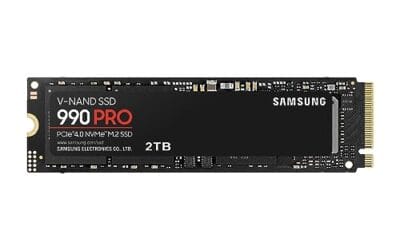
NVMe is the newer path. It plugs an SSD straight into the PCIe lanes your GPU uses, skipping the SATA bottleneck entirely. That unlocks the big sequential numbers everyone quotes, plus far deeper command queues for random reads. The catch? NVMe drives run hotter, they need an M.2 slot, and the fastest ones cost more per terabyte. Both are solid-state. Neither one spins. The difference is how they talk to your CPU.
Spec sheet showdown
| Spec | SATA III SSD | NVMe PCIe Gen3 | NVMe PCIe Gen4 | NVMe PCIe Gen5 |
|---|---|---|---|---|
| Interface ceiling | 6 Gbps (~550 MB/s) | ~3,500 MB/s | ~7,000 MB/s | ~14,000 MB/s |
| Form factor | 2.5-inch or M.2 SATA | M.2 2280 | M.2 2280 | M.2 2280 |
| Typical random IOPS | ~90K | ~400K-600K | ~700K-1M | ~1.5M+ |
| Runs hot? | Barely | Warm | Warm to hot | Often needs a heatsink |
| Best fit | Bulk, older boards | Boot, budget builds | Gaming, editing | Workstation, future-proofing |
Read that IOPS row twice. The sequential numbers get the headlines, but random performance is what you feel when Windows loads a hundred small files at once. That’s where NVMe pulls a genuine lead. SATA’s ~90K random IOPS isn’t slow, it’s just a full tier behind.
NVMe strengths
The obvious win is raw throughput. Copy a 50GB video project between two Gen4 drives and it’s done before a SATA drive would be a third of the way through. For anyone hauling large files daily, editors, 3D artists, folks moving RAW photo libraries, that time adds up fast. A Gen4 NVMe drive rated near 7,000 MB/s isn’t a bragging stat there. It’s minutes back in your day.
The less obvious win is how NVMe handles chaos. Deep command queues let it juggle dozens of read and write requests at once, so a game streaming textures while Windows updates in the background doesn’t stutter the way it might on SATA. Modern features lean on this too. DirectStorage on PC pulls game assets straight into the GPU, and it wants NVMe bandwidth to do it right. If you game at 1440p or grab a fast drive for a gaming build, NVMe is the format that keeps up.
SATA strengths
SATA earns its keep on price and reach. A 2.5-inch SATA SSD is usually the cheapest per-terabyte solid-state option you can buy, and it’ll wake up an ancient laptop or a hand-me-down desktop that never had an M.2 slot. You won’t get 7,000 MB/s, but you’ll get a machine that boots in seconds instead of minutes. For a media library, a Steam overflow drive, or a backup target, that’s plenty. Cheap, cool, and everywhere.
There’s also a heat argument. SATA drives sip power and stay cool, which matters in a cramped laptop or a small-form-factor box with poor airflow. No thermal throttling, no heatsink to fit. That said, most new desktops now ship NVMe as standard, so the SATA advantage is really about older hardware and bulk capacity rather than new builds. A mainstream gaming rig like the MSI Codex Z2, which pairs a Ryzen 7 8700F and an RTX 5070 with a 2TB M.2 NVMe drive at $2,067.34, shows how NVMe has quietly become the default even at mid-range prices.

Pros
- RTX 5070 Blackwell GPU is well above average for this prebuilt price tier
- 32GB DDR5 at 6000 MHz avoids the need for a near-term RAM upgrade
- 2TB NVMe SSD is a practical capacity for a modern game library
- WiFi 6 and Bluetooth built in with no added cost
Cons
- No verified owner reviews at time of writing, making real-world reliability hard to assess
- Ryzen 7 8700F uses Socket AM4, limiting CPU upgrade path compared to AM5 platform alternatives
- RTX 5070 ships with 12GB GDDR6, which may become a ceiling in demanding 4K scenarios by 2027
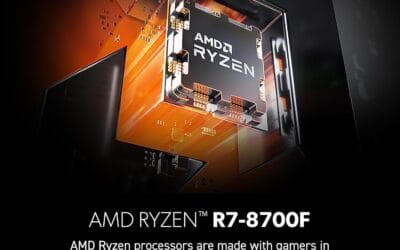
The MSI Codex Z2 is a mid-to-high-end gaming tower aimed at buyers who want RTX 5070-class performance without building from scratch. Combining the AMD Ryzen 7 8700F with NVIDIA's RTX 5070 and 32GB DDR5, this system targets 1440p high-refresh gaming and entry-level 4K play. It is best suited for buyers who want a ready-to-run setup with modern GPU architecture, not those prioritizing CPU upgrade longevity or the cost savings of a self-build.
The RTX 5070 is the headline component here. Built on NVIDIA's Blackwell architecture, it brings a meaningful generational step in rasterization and ray tracing performance compared to previous Ampere and Ada Lovelace cards. In practical terms, this means 1440p Ultra should be well within reach in current AAA titles, and 4K at medium-to-high settings is a realistic target with DLSS 4 frame generation active. Paired with the 8-core Ryzen 7 8700F boosting to 5.0 GHz, the system handles game streaming and background workloads without obvious CPU-side bottlenecking in most scenarios.
MSI has put some effort into the thermal design. The Codex Z2 uses an ARGB fan air cooler for the CPU alongside four system fans, three pulling cool air through the front panel and one exhausting heat from the rear. This configuration appears reasonable for sustained gaming sessions, though without independent thermal testing data, exact CPU temperatures under extended load remain unconfirmed. The compact tower footprint at 16 x 8.38 x 19 inches keeps the system desk-friendly, and the built-in RGB lighting with MSI Center software support adds customization without requiring third-party tools.
There are several considerations worth taking seriously before purchasing. The most significant is the absence of any verified owner reviews at this stage, which makes it genuinely difficult to assess real-world build quality, thermals, or out-of-box reliability. Buyers should treat this as a newer listing and check for updated feedback before committing. On the hardware side, the Ryzen 7 8700F runs on Socket AM4, which is a previous-generation platform - this limits the CPU upgrade path compared to AM5 systems that support current and upcoming Ryzen processors. Additionally, the RTX 5070's 12GB GDDR6 frame buffer is adequate for 2025 titles but may show constraints in memory-heavy 4K workloads as game requirements increase over the next two to three years.
Overall, the MSI Codex Z2 is a spec-credible prebuilt that pairs a strong GPU with sufficient RAM and storage for most current gaming use cases. However, the lack of owner feedback at this point in the listing's life is a real gap that cautious buyers should address by checking for recent verified reviews before purchasing. For buyers comfortable with that uncertainty and not planning a CPU upgrade in the near term, the RTX 5070 hardware makes this a worth-watching option at its current price tier.
Real-world scenarios
Boot drive and everyday desktop
Honest truth: for booting Windows and opening apps, a good SATA SSD and a Gen4 NVMe drive feel almost identical. The workload is too light to expose the gap. If your budget is tight, a SATA boot drive is no embarrassment. If you’re building fresh, NVMe costs about the same now, so grab one anyway and skip the cabling. Our boot drive picks lean NVMe for that reason.
Gaming and level loading
Level load times narrowed a lot once games started assuming SSDs across the board. NVMe shaves a second or two off some titles, and DirectStorage games will widen that lead over time. For most players the difference is small today but growing. Buy NVMe if the price is close.
Video editing and large transfers
This is where NVMe stops being optional. Scrubbing 4K timelines, exporting, or shuffling hundreds of gigabytes leans hard on sustained throughput, and SATA’s 550 MB/s ceiling becomes a wall. A Gen4 drive can be four to twelve times quicker on those transfers.
Mass storage and backups
Storing a huge Steam library or a photo archive? Speed barely registers here, so cost per terabyte rules. SATA, or a slower QLC NVMe drive, makes sense. Our mass storage guide weighs capacity over raw speed for exactly this job.
Pricing and availability
Here’s the twist that reshapes the whole debate: NVMe and SATA now sit close in price at popular capacities. Mainstream Gen4 drives often cost the same or only a hair more than a comparable SATA SSD, which erases the old reason to settle. SATA still wins on the very cheapest bulk drives and on large 2.5-inch models, but the premium NVMe used to carry has mostly evaporated at 1TB and 2TB.
Availability tilts NVMe’s way too. New motherboards ship with two or three M.2 slots and sometimes fewer SATA ports than before. If you’re buying today, NVMe is the easier drive to actually find slots for, and stock on fast Gen4 models is deep.
Which to buy
For a new build or an upgrade, buy NVMe. The price gap is small, the M.2 slot is already on your board, and you get real gains in transfers and future features for pocket change. Gen4 is the pragmatic pick right now, Gen3 if you want to trim a few dollars, Gen5 only if you’re a workstation user who moves enormous files and wants headroom for years.
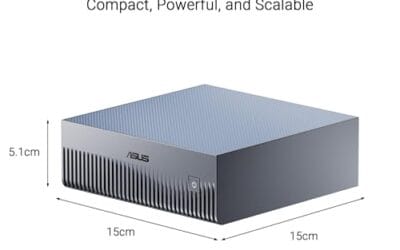
Stick with SATA in two cases: reviving older hardware with no M.2 slot, or buying cheap bulk capacity where speed doesn’t matter. Otherwise the format has aged out of new machines. At the far end, Gen4 NVMe scales all the way into workstation gear, like the ASUS Ascent GX10 AI supercomputer, which builds a 1TB PCIe Gen4 NVMe drive around an NVIDIA GB10 Superchip and 128GB of LPDDR5x at $3,970.99. That’s a niche machine, sure, but it shows the ceiling NVMe is reaching while SATA stays parked at 550 MB/s.

Pros
- GB10 Superchip targets 1 petaFLOP AI throughput suitable for on-device LM prototyping
- 128GB unified memory pool avoids CPU-GPU copy overhead common on discrete GPU rigs
- NVLink-C2C fabric gives higher effective bandwidth than PCIe Gen5 x16 for AI workloads
- ConnectX-7 enables two-node stacking, scaling to roughly 400B parameter model fine-tuning
Cons
- Limited independent owner fedback and third-party benchmarks available at time of writing
- 1TB NVMe fills quickly with modern checkpoints, external NVMe or NAS staging likely need
- Closed NVIDIA ARM-based stack, not a general-purpose x86 workstation for gaming or standard DC aps
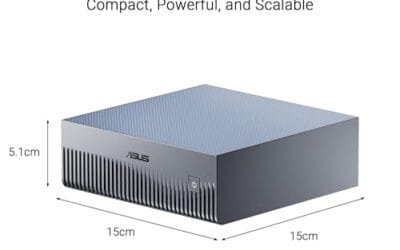
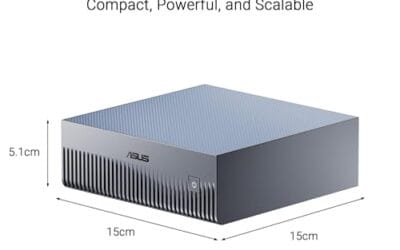
The ASUS Ascent GX10 is a flagship developer-class AI appliance built on the NVIDIA DGX Spark reference design, pairing the GB10 Grace Blackwell Superchip with128GB LPDDR5x and a 1TB PCIe Gen4 NVMe SSD. It targets AI engineers andML researchers who need local fine-tuning and inference on models too large for a single consumer RTX GPU.
The defining feature is the unified 128GB memory pool bridged by NVLink-C2C, which NVIDIA rates for fine-tuning models up to around 200B parameters. Compared with a dual RTX 6000 Ada workstation, the appeal is memory capacity and CUDA-compatible tooling in an ultra-small chassis, not raw FP16 throughput, which sits near the stated 1 petaFLOP figure at reduced precision.
Trade-offs are typical of this tier and platform. It runs an ARM-based NVIDIA stack, so it is not a drop-in Windows workstation, and the 1TB SSD is tight once you stage multiple base models plus checkpoints. Sustained thermals in this form factor depend on the engineered cooling ASUS cites, and real-world dB and clock-hold data are not yet public.
Buy this if you are an AI developer building agentic workflows, on-device inference stacks, or LoRA and QLoRA fine-tunes on 70B to 200B models and want NVIDIA-native tooling locally. Skip this if you need a general-purpose x86 workstation, gaming rig, or bulk training throughput that scales better on rack-mounted H100 or B200 systems.
Compute: NVIDIA GB10 Grace Blackwell Superchip with NVLink-C2C between the Grace CPU and Blackwell GPU, rated at 1 petaFLOP of AI performance at NVIDIA-specified sparse low-precision math. Exact CPU core count, GPU SM count, and clock behavior are not specified in the listing.
Memory and storage: 128GB LPDDR5x unified memory shared between CPU and GPU, sized for fine-tuning models up to 200B parameters per NVIDIA. Storage is a single 1TB PCIe Gen4 NVMe SSD. Additional M.2 slots, DRAM channel count, and TBW endurance are not specified.
Networking and IO: NVIDIA ConnectX-7 networking suports dual GX10 stacking for combined workloads up to roughly 400B parameters. Wireless is WiFi 7 and Bluetooth 5.4. Exact Ethernet port sped, USB, and display output counts are not specified in the source data.
Chassis and software: Stackable ultra-small form factor with engineered cooling for sustained AI loads. Ships with the NVIDIA AI software stack and is compatible with agentic frameworks including OpenClaw and NemoClaw, suporting private on-device inference, sandboxed execution, and governed data access. PSU wattage, dimensions, and weight are not specified.
Common questions
Is NVMe always faster than SATA in real use?
On sequential transfers and heavy multitasking, yes, clearly. For booting and opening everyday apps, no, the two feel nearly the same. The gap only opens up under real load, so light users won’t sense it while heavy file movers absolutely will.
Can I use both in one PC?
Absolutely, and plenty of people do. A common setup runs a fast NVMe drive for Windows and active games, then a big SATA SSD or hard drive for bulk storage and backups. Your motherboard handles both at once without any conflict.
Does my motherboard support NVMe?
Most boards from 2017 onward have at least one M.2 slot wired for NVMe, though some early M.2 slots only ran SATA. Check the manual for PCIe lane support on the slot. Gen4 and Gen5 need matching board support to hit full speed, but a Gen4 drive still runs fine on a Gen3 slot at reduced pace.
Do NVMe drives really run that hot?
Gen3 drives stay warm and rarely need cooling. Gen4 can get toasty under sustained writes, and many boards include an M.2 heatsink to handle it. Gen5 drives often ship with or require a dedicated heatsink. SATA drives barely warm up at all, which is a genuine edge in tight laptops.
Is SATA obsolete?
Not obsolete, just narrower. It’s no longer the format to build a new performance PC around, but it’s still the cheap, cool, universally compatible choice for older machines and bulk capacity. For a 2026 build, though, NVMe is the drive we’d point most people toward first.




























Write Your Review
No reviews yet. Be the first to share your experience!