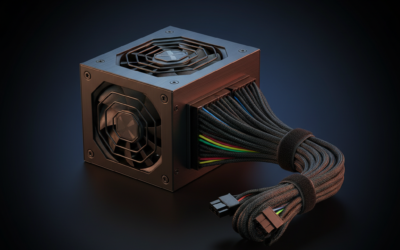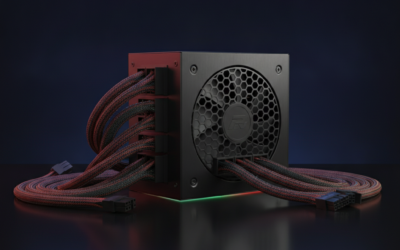

Power supply efficiency ratings get more confusing every year. 80 Plus Gold versus Platinum is the most common dilemma builders face when speccing a new rig. Both will run your PC just fine. Both deliver clean voltage. The difference shows up in your electric bill, in case temperatures, and in the price tag on day one. Here’s how the math actually shakes out.
Matchup at a glance
80 Plus is a voluntary certification that measures how efficiently a PSU converts AC wall power into DC power for your components. Higher tiers waste less energy as heat. Gold-rated units hit 87% to 90% efficiency at typical loads. Platinum bumps that to 89% to 92%. Sounds tiny on paper. The dollar gap is real over a five-year ownership window, though probably smaller than you’d guess.
In 2026, both tiers are common across the 650W to 1000W range that covers nearly every gaming build. Cybenetics’ newer ratings add nuance on noise and partial-load efficiency, but 80 Plus remains the headline number most retailers display.
Spec sheet showdown
| Metric | 80 Plus Gold | 80 Plus Platinum |
|---|---|---|
| Efficiency at 50% load | 90% | 92% |
| Efficiency at 20% / 100% load | 87% / 87% | 89% / 89% |
| Typical price (750W) | $80 to $110 | $130 to $180 |
| Annual power waste (400W avg) | ~44 kWh wasted | ~35 kWh wasted |
| Heat output difference | Baseline | ~10W lower at full load |
Where Gold pulls ahead
Value is the easy answer. The MSI MAG A750GL at $93 hits 80 Plus Gold with ATX 3.1 compliance, full modular cabling, and a 10-year warranty. That’s flagship-tier features for under $100. Platinum equivalents jump $40 to $80 over the Gold version of the same wattage class.
For a 6 to 8 hour daily gaming session at $0.16 per kWh (US average), the efficiency gap saves you roughly $1.50 to $3 per year. Real number, not hypothetical. That means the Platinum premium takes 15 to 25 years to pay back through electricity savings alone. Most PSUs don’t last that long, and you’ll probably upgrade your build twice before then.
Gold is also where the best modern features land first. ATX 3.1, PCIe 5.1 with the 12V-2×6 connector, semi-passive zero-RPM fan modes. The Montech Century II 850W at $80 has all of those. It punches well above its tier.
Where Platinum pulls ahead
Heat matters more than efficiency math suggests. A Platinum unit running a 600W gaming load dumps roughly 10 to 15 watts less heat into your case than a Gold one. Over a long Cyberpunk session, that’s a measurable case temperature delta. Components stay cooler. Fans spin slower. The system gets quieter overall.
Platinum also tends to come with better internal components. Japanese capacitors, beefier inductors, longer hold-up times. The CORSAIR SF750 at $160 packs 80 Plus Platinum into an SFX form factor, which is essentially a requirement for serious small-form-factor builds where every watt of heat counts.
If you’re running a 4090 / 5090 plus a 14900K all day for AI training or video rendering, the math flips. Higher sustained loads at higher electricity rates push the payback window down to 4 or 5 years. Worth it for power users who hammer their rig constantly.
Which to buy
For 90% of builders: get 80 Plus Gold. Pick a reputable brand with a 10-year warranty and ATX 3.1 if you’re running a current-gen GPU. The MSI MAG A750GL, NZXT C850 Gold Core, or Montech Century II are all stellar options under $110.
Go Platinum if you’re building SFF, running 24/7 workstation loads, or you specifically want the lowest noise floor possible. Otherwise that $50 premium buys you better RAM, a faster SSD, or a year of game subscriptions. The efficiency math just doesn’t favor Platinum for typical gaming use.
Common questions
Will a Gold PSU work with an RTX 5090?
Absolutely, assuming you’ve sized it correctly. NVIDIA recommends 1000W for 5090 builds, and there are plenty of 1000W Gold units under $150. Make sure it’s ATX 3.1 compliant with a native 12V-2×6 cable to handle the GPU’s transient spikes cleanly.
Does PSU efficiency vary by load?
Yes, and it’s a curve. Both Gold and Platinum hit peak efficiency around 50% load. They’re slightly less efficient below 20% and above 90%. That’s why oversizing a PSU isn’t always smart. A 1200W unit running a 300W system spends most of its time outside the efficient zone.
What’s the deal with Cybenetics ratings?
Cybenetics is a newer certification that measures efficiency across a wider range of loads plus noise output. Many modern PSUs carry both 80 Plus and Cybenetics labels, like “80 Plus Gold + Cybenetics Platinum.” The Cybenetics rating gives you a better read on real-world noise behavior.
Can I downgrade from Platinum to Gold and notice?
In daily use, no. Your PC will perform identically. You might see a 2 to 3 degree Celsius rise in case temperature under sustained heavy load. Your power bill will tick up by a few dollars a year. That’s the entire user-facing impact.