

In 2026, HDMI 2.1 is the baseline for pairing modern GPUs and current-gen consoles with a display that can keep up. It enables higher frame rates at mainstream resolutions, variable refresh, and cleaner HDR signaling, yet labels and spec sheets can be misleading. Between panel trade-offs, firmware quirks, and console handshakes, choosing the right Best HDMI 2.1 Monitors is not trivial. This guide offers a decision framework to match your use case instead of repeating spec lists. If value is your priority, also see our best gaming monitors under $500.

Pros
- Glossy QHD OLED panel delivers sharp detail, excellent perceived contrast, and standout HDR black levels
- 240Hz refresh with 0.03ms (GtG) response is purpose-built for competitive motion clarity
- Strong adaptive sync support, NVIDIA G-Sync Compatible and AMD FreeSync Premium Pro
- Modern connectivity: 2x HDMI 2.1, DisplayPort 1.4, and USB hub support
- Ergonomic stand with height, swivel, tilt, and pivot adjustments, plus VESA mounting
Cons
- Glossy screen finish can show reflections in bright rooms, positioning and lighting matter
- OLED panels can be susceptible to image retention over time, using OLED care features and varied content is recommended
- No DisplayPort 2.1 listed, so you are capped by DP 1.4 and HDMI 2.1 bandwidth for high refresh use cases
The LG 27GX704A-B UltraGear is a 27-inch QHD (2560x1440) glossy OLED gaming monitor built for the high-end 1440p segment, where players want both competitive speed and OLED-level contrast. It is a strong fit for esports-focused PC gamers chasing high refresh, plus single-monitor users who also care about cinematic HDR visuals.
For motion performance, the headline specs are a 240Hz refresh rate and a 0.03ms (GtG) response time, backed by VESA ClearMR 13000 certification. In practice, this class of OLED is excellent at keeping fast targets readable during flicks and tracking, especially when paired with a GPU that can push very high frame rates at 1440p.
Image quality is a major selling point: OLED contrast (rated 1,500,000:1), VESA DisplayHDR True Black 400, and up to 98.5% DCI-P3 color coverage combine for deep blacks, vibrant highlights, and wide-gamut color. The display is rated at 275 nits typical brightness and up to 1300 nits peak, which helps HDR highlights pop, although overall room lighting still matters with a glossy finish.
Connectivity is well-rounded for modern rigs, with 2x HDMI 2.1, DisplayPort 1.4, and a USB hub (USB upstream plus downstream ports). It also supports NVIDIA G-Sync Compatible and AMD FreeSync Premium Pro, helping reduce tearing and stutter when FPS varies, which is common in newer AAA games.
Trade-offs are typical for glossy OLED: reflections can be distracting in bright spaces, and long-term static HUD or desktop use requires sensible OLED care settings to reduce image retention risk. Overall, if you want a fast 1440p OLED for competitive play and high-contrast HDR gaming, this is a compelling choice, but users in very bright rooms or those who leave static UI elements on-screen all day should plan their setup accordingly.
| Category | Details |
|---|---|
| Model | LG 27GX704A-B.AUS |
| Panel | OLED, glossy finish, flat |
| Screen Size | 27 inches |
| Resolution | 2560 x 1440 (QHD) |
| Aspect Ratio | 16:9 |
| Refresh Rate | 240 Hz |
| Response Time | 0.03 ms (GtG) |
| Adaptive Sync | NVIDIA G-Sync Compatible, AMD FreeSync Premium Pro |
| HDR | VESA DisplayHDR True Black 400, HDR10 |
| Contrast Ratio | 1,500,000:1 |
| Color Gamut | Up to 98.5% DCI-P3 |
| Brightness | 275 nits typical (cd/m²) |
| Ports | 2x HDMI 2.1, 1x DisplayPort 1.4, USB (up to 3 total listed) |
| Ergonomics | Height, tilt, swivel, pivot |
| Mounting | VESA wall-mount support |
| Dimensions (D x W x H) | 8.7 x 23.8 x 21 inches |
| Weight | 15.9 lb |
| Color | Black |
| Warranty | 2-year parts and labor |
| In the Box | Monitor, DisplayPort cable, HDMI cable, power cable, USB A to B cable |
PC hookup for best results: Use DisplayPort 1.4 from a modern GPU for high refresh QHD gaming. HDMI 2.1 is also available and is convenient for multi-device setups.
VRR guidance: NVIDIA G-Sync Compatible VRR is supported on GeForce GTX 10-series and newer over DisplayPort, and on GeForce RTX 30-series and newer over HDMI 2.1. AMD FreeSync Premium Pro is supported for compatible Radeon GPUs.
Console pairing: The dual HDMI 2.1 ports make this a strong fit for current-gen consoles and a PC on the same display. Set the console to the monitor’s native 1440p output when available for the cleanest image.
Mounting and ergonomics: If you plan to arm-mount, confirm your VESA mount supports the monitor’s size and weight. The included stand already supports height, tilt, swivel, and pivot for easy desk ergonomics.
OLED best practices: For mixed gaming and desktop use, enable OLED protection features, avoid leaving static UI elements up for long periods, and use reasonable brightness levels to help mitigate image retention over time.

Pros
- 240Hz at native 2560x1440 with 1ms GtG suits competitive esports and mixed gameplay
- IPS panel targets 95% DCI-P3, giving richer color than sRGB-only panels at this tier
- Dual G-SYNC Compatible and FreeSync Premium validation avoids tearing on NVIDIA and AMD GPUs
Cons
- Limited owner feedback at time of writing, hard to gauge panel uniformity and QC lottery
- DisplayHDR 400 tier lacks local dimming zones, so HDR content shows minimal contrast uplift over SDR
- IPS glow and roughly 1000:1 native contrast typical at this tier hurt dark-room viewing
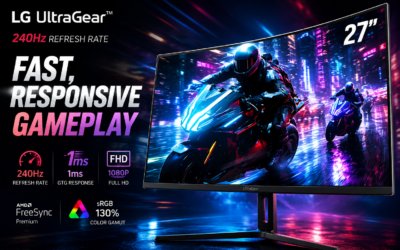
The LG 27GR83Q-B is a mid-range 27-inch 1440p IPS gaming monitor targeting high-refresh players who want a single display for both esports and single-player titles. The 240Hz panel with 1ms GtG response and QHD resolution slots it between 1080p esports screens and 4K displays for RTX 4070 or RX 7800 XT class GPUs.
The defining spec is 240Hz at native 2560x1440, driven over HDMI 2.1 or DisplayPort 1.4 without chroma subsampling. Paired with an RTX 4070 or RX 7800 XT, esports titles like Valorant and CS2 clear 240fps comfortably, while AAA games at high settings typically land in the 120 to 180fps range on this GPU class.
DisplayHDR 400 is the entry HDR tier and lacks local dimming, so HDR content shows limited contrast uplift over SDR. IPS glow and roughly 1000:1 native contrast are typical at this tier and hurt dark-room viewing. The stand offers tilt, height, and pivot, though source data does not specify swivel range or VESA pattern.
Buy this if you run an RTX 4070 or RX 7800 XT class GPU and want 1440p at 240Hz for mixed esports and single-player use. Skip this if you need proper HDR with local dimming, or if you sit closer than 60cm where 27-inch QHD pixel density starts to feel coarse.
Panel and resolution: LG specs a 27-inch IPS panel at native 2560x1440, with up to 95% DCI-P3 coverage typical. That translates to roughly 99% sRGB for web and productivity use, and gives noticeably richer color in HDR-graded games than sRGB-only panels at this size.
Refresh and response: 240Hz native refresh with 1ms GtG response, which vendors typically measure at the fastest overdrive setting. Overshoot artifacts often appear on aggressive OD in IPS panels at this refresh, so tuning the response setting per title is worth the effort.
HDR and brightness: DisplayHDR 400 certification implies a 400 nit peak with no local dimming zones. Treat this as SDR-plus rather than reference HDR. Source does not specify SDR sustained brightness or contrast ratio beyond the HDR400 baseline.
Connectivity and stand: One HDMI 2.1 and one DisplayPort 1.4 input, both capable of driving 240Hz at QHD. A 4-pole headphone jack carries DTS Headphone:X spatial audio. The stand supports tilt, height, and pivot; swivel range and VESA mount pattern are not specified in source data.

Pros
- 1440p 240Hz over DisplayPort 1.4 pairs well with current-gen 70-class GPUs at high settings.
- IPS panel with 99% sRGB coverage handles esports and content editing without visible color shift.
- Full ergonomicErgostand includes 4.7-inch height range, 360-degree swivel, and 90-degree pivot support.
- Three video inputs (1 DisplayPort 1.4, 2 HDMI) plus included cables cover most PC and console pairings.
Cons
- Limited owner fedback at time of writing makes long-term panel uniformity and QC hard to verify.
- HDMI ports cap at 2.0 and 144Hz despite the title referencing HDMI 2.1, so 240Hz requires DisplayPort.
- DisplayHDR 400 lacks local dimming, so HDR contrast is closer to bright SDR than true HDR.
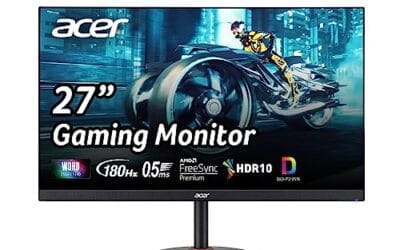
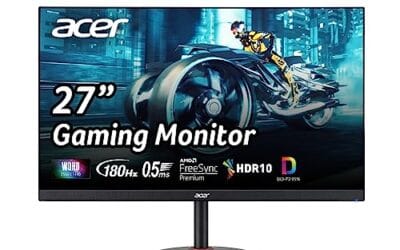
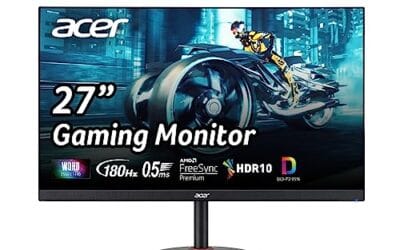
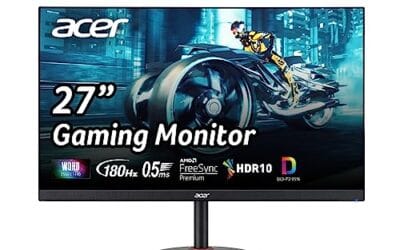
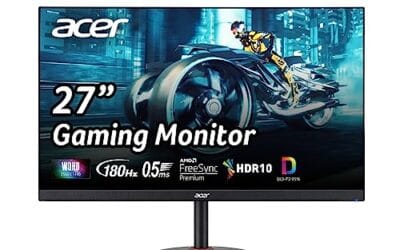
The Acer Nitro XV272U W2bmiiprx is a mid-range 27-inch 1440p IPS gaming monitor targeting high-refresh esports and mixed-use buyers. It runs up to 240Hz over DisplayPort 1.4, quotes a 0.5ms GtG response with overdrive, and carries DisplayHDR 400 plus AMD FreeSync Premium certification for adaptive sync.
The defining feature is the 1440p at 240Hz pipeline. That refresh ceiling matches an RTX 4070,X 4070 SUPER, or RX 7800 XT class GPU pushing competitive titles like Valorant, CS2, or Apex above 200FPS. IPS panels in this tier typically deliver 350 nits SDR brightness and roughly 1000:1 static contrast, based on category norms.
Trade-offs are typical at this price bracket. HDMI ports are limited to 2.0 and 144Hz, so consoles running 120Hz work fine but PC users must use DisplayPort for the full 240Hz. DisplayHDR 400 without local dimming means HDR content looks like elevated SDR rather than true high dynamic range. Speakers are 2W each, adequate for system sounds only.
Buy this if you want a 1440p 240Hz IPS panel with a full ergonomic stand for a competitive PC setup driven by a 70-class or better GPU. Skip this if you need genuine HDR performance, factory-calibrated DCI-P3 coverage for color-critical work, or 240Hz over HDMI for a PS5 Pro.
Panel and resolution: 27-inch IPS panel at 2560x1440 native, giving a 0.233m pixel pitch and roughly 109 PI. That density is the accepted sweet spot for 27-inch gaming without requiring desktop scaling, and IPS keps off-axis color shift minimal compared with VA alternatives at the same tier.
Refresh and response: 240Hz refresh over DisplayPort 1.4, dropping to 144Hz on either HDMI 2.0 input. Response time is rated 1ms GtG standard and0.5ms GtG with maximum overdrive, though aggressive overdrive on IPS panels in this tier typically introduces some inverse ghosting in darker transitions.
HDR and color: DisplayHDR 400 certification with 99% sRGB coverage. Without local dimming zones or a peak brightness above 400 nits, HDR mode functions closer to bright SDR. sRGB coverage is sufficient for web content and1080p video editing, but DCI-P3 gamut is not specified.
Connectivity and ergonomics: 1 DisplayPort 1.4, 2 HDMI 2.0, and a 3.5mm audio out. The Ergostand supports 4.7-inch height range, -5 to 15 degree tilt, 360-degree swivel, and 90-degree pivot in either direction. VESA 100x100 mounting is included for arm or wall installs.

Pros
- 300Hz refresh rate on an IPS panel is rare at this price tier
- Full ergonomic stand: height, tilt, swivel, and pivot included
- AMD FreeSync Premium and NVIDIA G-SYNC Compatible dual support
Cons
- Moderate review count limits long-term reliability confidence
- USB-C capped at 15W - insufficient for laptop power delivery
The LG 27G640A-B targets competitive PC gamers wanting QHD clarity at high refresh rates without moving to a premium-tier price point. Its IPS panel hits 300Hz with a 1ms GtG response time - a combination that remains uncommon at this segment - and covers 95% DCI-P3, which owner reports suggest looks noticeably richer than typical sRGB monitors. The ergonomic stand with full pivot and height adjustment is a genuine inclusion at this price. However, review volume is still building, so long-term panel uniformity data is thin. Skip if your GPU cannot sustain 300Hz at 1440p, as the refresh rate advantage shrinks significantly below that threshold.

Pros
- Dual-mode versatility
- 1ms motion clarity
- 95% DCI-P3 colors
- Full ergonomic adjustments
Cons
- 'UltraGear' gamer vibe
- GPU-hungry at 4K
The LG 27G810A-B stands out as a true hybrid gaming monitor with its Dual Mode feature. It fits FPS competitors who need 360Hz responsiveness for twitch shooters but crave 4K 180Hz detail for story-driven titles, skipping dual-monitor clutter. The IPS panel delivers 95% DCI-P3 coverage and VESA DisplayHDR 400 contrast that pops in Cyberpunk 2077 night scenes.
Compared to single-mode rivals like the Samsung Odyssey G7, this LG hotkey-switches effortlessly for genre hops. Dynamic Action Sync cuts input lag to spot Valorant flanks instantly. Skip it if your GPU chokes on 4K 180Hz loads, or if the black gamer bezels clash with a pro office setup.
Best HDMI 2.1 Monitors Buying Guide for 2026
Before you buy, align resolution targets with your GPU or console, pick a panel technology that suits your priorities, and verify HDMI 2.1 implementation details. For broader context on panel categories and tiers, browse our Gaming Monitors hub.
HDMI 2.1 implementation and console behavior
Not all HDMI 2.1 ports behave the same. Look for FRL support rather than legacy TMDS limits, VRR compatibility across consoles and PC GPUs, and proper EDID reporting so PlayStation and Xbox handshake correctly. Some displays only enable their full feature set on specific HDMI inputs, and firmware can change behaviors. Confirm that ALLM and VRR can be toggled independently, and that the monitor exposes full RGB 4:4:4 in PC mode for crisp text.
Resolution target and GPU pairing
Pick your native workload first. 1440p suits midrange GPUs where sustained high frame rate matters, while 4K rewards flagship-class cards and slower genres. Upscalers like DLSS or FSR help, but plan around native resolution headroom, not theoretical maximums. Console users should verify that the display exposes 120 Hz modes at both 1440p and 4K. Value-focused builders aiming at 1440p might gravitate toward the Acer Nitro XV272U W2bmiiprx. For more context, see our 1440p gaming monitor picks.
Panel technology and motion clarity
IPS offers balanced color accuracy and speed, VA boosts contrast but can smear in dark transitions, and OLED delivers per-pixel contrast with excellent response. GtG figures are best-case numbers, so evaluate overshoot at your target refresh and whether overdrive is well tuned. Strobing and BFI can improve MPRT but often disable VRR and reduce brightness. If per-pixel contrast is your top priority, an OLED like the LG 27GX704A-B is compelling.
HDR and color pipeline reality check
HDMI 2.1 does not guarantee meaningful HDR. True impact relies on peak luminance, local dimming method or self-emissive pixels, accurate EOTF tracking, and wide color coverage. Many displays accept an HDR signal without delivering real dynamic range. Check that the monitor handles 10-bit paths cleanly, manages tone mapping without clipping highlights, and avoids forced YCbCr subsampling in PC mode. Accurate sRGB clamping for desktop work is a plus. Worth reading alongside this: our guide to the how to calibrate a gaming monitor.
Why You Should Trust Us
Our picks synthesize spec sheet validation with third-party reviews, community measurements, and verified buyer feedback. We cross-reference firmware notes, HDMI 2.1 capabilities, VRR behavior, and panel characteristics, then stack-rank value per dollar against current GPU and console realities. Finally, we sanity-check compatibility for PC and console workflows to avoid handshaking or color pipeline pitfalls.
Final Thoughts
For most builders, the LG 27GX704A-B is our top pick thanks to its blend of motion clarity and cinematic image quality. For best value, the Acer Nitro XV272U W2bmiiprx makes smart compromises where they matter least. Competitive players who prioritize speed should consider the LG 27G640A-B for high-refresh 1440p play.
If your focus is 4K detail with flexible frame rate strategies, the LG 27G810A-B is a strong fit. Esports specialists can also compare options in our best 360 Hz gaming monitors.
FAQs
What does HDMI 2.1 actually change for gaming in 2026?
HDMI 2.1 raises bandwidth, enabling higher refresh at common resolutions, and adds features like VRR and ALLM that reduce tearing and latency. It also carries HDR formats more cleanly. The result is smoother motion on PC and consoles, provided the monitor’s firmware and EDID are implemented correctly.
Do PC gamers need HDMI 2.1 if DisplayPort is available?
If you primarily use a PC GPU, DisplayPort often delivers the same or better capabilities at 1440p and even 4K with DSC. HDMI 2.1 matters most for PlayStation and Xbox, or for multi-device setups. For budget-focused alternatives, explore our monitors under $300.
Which resolution pairs best with my GPU for Best HDMI 2.1 Monitors?
Match native resolution to your GPU class and game type. Midrange cards excel at 1440p with high refresh, while top-tier GPUs better sustain 4K in demanding titles. Upscalers help, but plan for your most common frame rate targets to avoid constant setting compromises.
What HDMI cable should I buy for a Best HDMI 2.1 Monitors?
Use a certified Ultra High Speed HDMI cable to ensure full bandwidth, stable VRR operation, and reliable HDR signaling. Avoid reusing older High Speed or Premium High Speed cables, which can cause dropouts, forced chroma subsampling, or failed 120 Hz modes on consoles.
Why HDMI 2.1 Matters in 2026
HDMI 2.1 is the modern standard for 4K 120Hz and 8K 60Hz video transmission. The 48 Gbps bandwidth supports current-generation consoles (PS5, Xbox Series X) and high-end PC builds without requiring DisplayPort. For monitors used with both PC and console, HDMI 2.1 is mandatory in 2026. DisplayPort 2.1 supports even higher refresh rates but most current GPUs and monitors still use DisplayPort 1.4. The practical setup: HDMI 2.1 for cross-platform monitors, DisplayPort 1.4 or 2.1 for PC-only setups with high-refresh panels.
Common Mistakes to Avoid
The first mistake is buying older monitors with only HDMI 2.0 to save $50. HDMI 2.0 caps at 4K 60Hz or 1440p 144Hz, locking you out of higher-refresh modes that the panel might support over DisplayPort. The second mistake is using cheap HDMI cables, HDMI 2.1 requires Ultra High Speed certified cables for full 48 Gbps bandwidth. Generic cables drop down to HDMI 2.0 speeds and cause artifacts. The third mistake is assuming all HDMI 2.1 ports support full features, some monitors include HDMI 2.1 ports but with reduced bandwidth (32 Gbps “FRL3” mode) that limits 4K refresh rate. Verify full bandwidth in the spec sheet.
More Frequently Asked Questions
Do I need HDMI 2.1 for PC gaming?
Only if you also connect a console or media device. PC-only setups work fine with DisplayPort 1.4 or 2.1 which delivers similar bandwidth.
Will HDMI 2.0 work for 1440p 144Hz?
Yes, HDMI 2.0 supports 1440p 144Hz comfortably. The limit is 4K above 60Hz where HDMI 2.1 becomes necessary.
How can I tell if my cable is HDMI 2.1?
Look for “Ultra High Speed HDMI” certification on the cable box. Without this certification, treat as HDMI 2.0 maximum.
HDMI 2.1 Standard Adoption Through 2026
HDMI 2.1 monitor availability expanded dramatically in 2025-2026 as panel manufacturers moved away from DisplayPort-only premium models. The standard now ships on most 4K 120Hz+ panels and the entry tier for HDMI 2.1 dropped to around $350 for 27-inch QHD 144Hz models. Console compatibility drove much of this growth, PS5 and Xbox Series X both rely on HDMI 2.1 for 4K 120Hz output. The 48 Gbps full bandwidth implementation is now standard rather than the reduced “FRL3” 32 Gbps mode that limited earlier panels. Buyers should still verify the spec sheet because some lower-tier monitors still ship with reduced-bandwidth HDMI 2.1.
Choosing the Right HDMI 2.1 Cable
Use Ultra High Speed HDMI cables certified for 48 Gbps for any HDMI 2.1 monitor. Generic “HDMI 2.1” cables sold under $15 frequently fail certification testing and drop bandwidth under sustained 4K 120Hz output. Cable Matters, Anker, and Belkin all ship verified Ultra High Speed cables in the $20-30 range. Cable length matters at this bandwidth, passive cables longer than 2m often drop to HDMI 2.0 speeds. For 3m+ runs, use active fiber-optic HDMI 2.1 cables ($60-100). Avoid daisy-chaining through receivers that lack HDMI 2.1 input.
Additional Questions
Does HDMI 2.1 matter for PC-only setups?
Less than for console-PC mixed use. PC monitors with DisplayPort 1.4 or 2.1 deliver equivalent bandwidth. HDMI 2.1 only becomes mandatory when you also connect a PS5 or Xbox Series X.
Can I tell if a monitor has real HDMI 2.1?
Check the spec sheet for “48 Gbps” or “TMDS / FRL6”. If listed as “HDMI 2.1 with FRL3” or 32 Gbps, the port is bandwidth-limited and may not support 4K 144Hz with HDR.
HDMI 2.1 Monitor Pricing Evolution
HDMI 2.1 monitor pricing dropped significantly through 2025-2026 as panel manufacturers shipped the standard universally across mid and high tiers. The entry tier hit $350 for 27-inch QHD 144Hz models from LG and AOC. The premium 4K 144Hz tier corrected from $800-1200 in 2024 to $600-900 by mid-2026 as competition tightened. OLED HDMI 2.1 panels at 1440p reached $900-1100 from LG, ASUS, and Samsung, meaningfully below the $1500+ pricing of 2023. The mainstream right tradeoff in 2026 is 32-inch 4K 144Hz IPS at $500-650 which delivers genuine HDR400 brightness and full HDMI 2.1 bandwidth. That decision gets its own treatment in our OLED vs mini LED monitor guide.
Real Monitor Owner Issues
Owner reports identify three recurring concerns. First, generic HDMI 2.1 cables from Amazon and AliExpress frequently fail bandwidth certification, symptoms include random black-screen drops at 4K 120Hz and visual artifacts during HDR content. Use certified Ultra High Speed cables from Cable Matters, Anker, or Belkin. Second, some 2025-era monitors shipped with “HDMI 2.1 FRL3” (32 Gbps) ports labeled simply as “HDMI 2.1”, verify 48 Gbps support in the spec sheet. Third, VRR implementation quality varies; budget HDMI 2.1 monitors sometimes flicker at low frame rates (40-60 FPS range) within the VRR window. Premium panels from LG, ASUS, and Samsung avoid this.




Write Your Review
No reviews yet. Be the first to share your experience!