

Thermal paste is the thin compound between a CPU or GPU and its cooler. It fills microscopic gaps so heat can move from the chip’s metal heat spreader into the heatsink or cold plate. Without it, even a good cooler can perform badly because metal surfaces aren’t perfectly flat. Tiny air pockets get trapped. Heat hates that.
If you’re choosing a cooler from our CPU cooler guide, comparing a tower option from the air cooler picks, or planning a liquid setup like the AIO cooler roundup, paste is the cheap layer that lets the expensive hardware do its job. It isn’t glamorous. It matters anyway.
The short answer
Thermal paste is a heat-transfer material used between a processor and a cooler. The CPU’s integrated heat spreader and the cooler base may look smooth, but under pressure they’re covered in tiny grooves and imperfections. Paste fills those gaps with material that conducts heat better than air.

The Thermal Grizzly Duronaut 6 Gram paste is a relevant example: it costs $24.99, carries a 4.4 rating, and the title positions it as enhanced-durability, high-performance paste for CPU, GPU, PS4, PS5, and Xbox use, with 12 cleaning wipes included. That’s the whole job in one small tube: fill the interface, improve contact, and make cleanup easier when you repaste later.


Pros
- Non-conductive chemistry safer for novices repasting near exposed CPU or GPU capacitors.
- 6g volume suports several full applications on desktop CPUs and console APUs.
- Wet and dry wipes included, so no isopropyl bottle or lint-free cloth need.
Cons
- Limited owner fedback at time of writing makes long-term durability claims hard to verify.
- Non-metal formula typically trails top liquid metals by a few degrees under sustained load.
- Viscosity, TIM lifespan hours, and thermal conductivity W/mK figures are not specified.
Duronaut is Thermal Grizzly's non-conductive thermal paste positioned as a mid-tier daily driver, shipping in a 6g syringe with 6 wet and 6 dry cleaning wipes. The target buyer is a DIY PC builder repasting a CPU or GPU cooler, or a console owner refreshing PS4, PS5, or Xbox thermals without risking shorts.
The defining trait is the aluminum microparticle plus zinc oxide nanoparticle blend paired with an electrically non-conductive base. Thermal Grizzly claims reduced pump-out and stable performance over extended cycles, which maters most on soldered console APUs and overclocked desktop chips that see large delta-T swings. Exact W/mK conductivity is not specified in the source.
Trade-offs are typical for non-conductive pastes at this tier. Expect a few degrees warmer than liquid metal on delided or high-wattage CPUs, and no published viscosity or cure-time data to plan application around. Owner feedback is limited at time of writing, so long-term hardening resistance relies on vendor claims rather than independent long-run testing.
Buy this if you want a safe, non-conductive paste with enough volume for several repastes and a bundled wipe kit for console or GPU jobs. Skip this if you are chasing the absolute lowest core temperatures on a 250W-plus overclocked CPU where liquid metal or a top nano-diamond paste still leads.
Volume and coverage: The syringe holds 6g of paste, enough for roughly 15 to 25 pea-sized applications on mainstream AM5 or LGA1700 IHS surfaces, or several full console APU repastes on PS4, PS5, and Xbox where die coverage is larger than a desktop CPU heatspreader.
Composition and safety: The compound uses aluminum microparticles and zinc oxide nanoparticles in a non-metal carier, rated electrically non-conductive. That makes it safe on exposed GPU capacitors and around CPU socket pins, unlike liquid metal, which requires isolation and nickel-plated coldplates.
Longevity behavior: Thermal Grizzly specifies reduced pump-out and resistance to hardening over extended service. Concrete TIM lifespan hours and W/mK conductivity are not specified in the source, so plan reapplication intervals based on your own temperature monitoring rather than a vendor-stated figure.
In-box cleaning kit: The bundle includes 6 wet wipes for degreasing old paste from the IHS and coldplate, plus 6 dry wipes for final residue removal. Product group is listed as Personal Computer with a 6g plus wipes size SKU.
The longer explanation
A processor produces heat in a small area, then spreads that heat through its package and into the cooler. The cooler, whether it’s a compact stock unit or a large tower heatsink, carries heat into fins where a fan can move it into the case airflow. The paste sits between those two hard surfaces. It shouldn’t be a thick blanket. It should be a thin filler.
That’s why more paste isn’t always better. Too little can leave dry spots, but too much can squeeze out around the socket or create a thicker layer than needed. Most builders use a pea-sized dot for mainstream desktop CPUs, then let cooler pressure spread it. Larger chips may need a line, an X pattern, or manual spreading, but the goal stays the same: full contact without excess.
History / how we got here
Early desktop PCs didn’t always make thermal paste feel like a hobby topic because power levels were lower and stock cooling was the normal path. As CPUs climbed in wattage and GPUs became serious heat sources, the interface between chip and cooler became more important. Enthusiasts started comparing compounds, mounting pressure, cure time, and cleanup methods because a few degrees could affect fan noise or boost behavior.
Today, paste ships pre-applied on many coolers, including stock and budget models. Aftermarket tubes still matter for repasting older systems, swapping coolers, building custom PCs, or servicing consoles and laptops. We’ve also seen pads, phase-change materials, and liquid metal become more common in niche uses. Paste remains popular because it’s affordable, forgiving, and easy to apply with normal care.
Why it works this way
Air is a poor conductor compared with the solids and filler materials used in thermal compounds. When two metal surfaces meet, they touch at high points while the low points can trap air. Thermal paste displaces that air. The compound’s particles and binder create a more consistent path for heat, even though the paste itself is usually less conductive than metal.
Pressure is part of the system. Cooler mounting hardware pushes the heatsink down so the paste spreads into a thin layer. Uneven pressure, a loose screw, plastic film left on the cooler base, or dried compound can all break that path. That’s why a paste problem can look like a cooler problem: high idle temperatures, fast fan ramping, or sudden thermal throttling under load.
When you’d want this
You’d want thermal paste when installing a new cooler, moving a cooler from one CPU to another, cleaning up a used PC, or fixing temperatures that rose after years of use. Many pastes last several years in a stable desktop, but heat cycles, dust, and repeated cooler removal can dry or disturb the layer. If the cooler comes off, repaste. Don’t reuse the old smear.
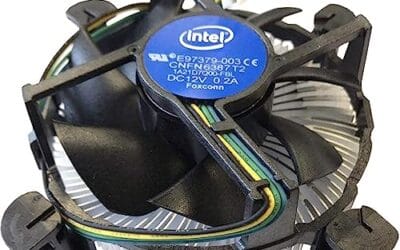
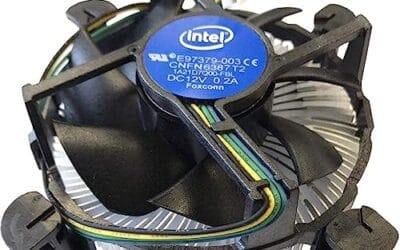
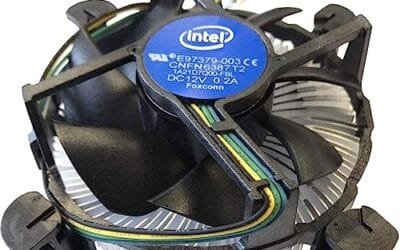
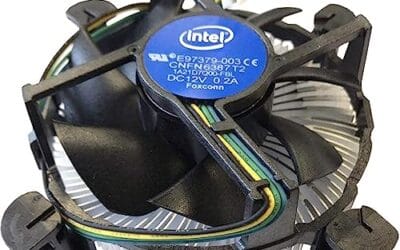
You may also need a complete cooler, not just paste, if the fan is failing or the heatsink doesn’t match the socket. The Intel E97379-003 cooler costs $15.99, has a 4.1 rating, and its title lists support for Core i3, i5, and i7 Socket 1150, 1155, and 1156 systems with a 4-pin connector, aluminum heatsink, and 3.5-inch fan. For an older compatible desktop, that’s the kind of basic replacement part that pairs naturally with fresh paste.

Pros
- Native LGA 1150, 1155, and 1156 socket support covers three legacy Intel generations
- 4-pin PWM connector enables proper fan curve control via BIOS
- OEM-style aluminum heatsink footprint keps RAM and VRM clearance predictable
- Push-pin mount installs without removing the motherboard from the case
Cons
- Zero owner fedback available at time of writing, real-world thermals unverified
- Aluminum-only heatsink with no heatpipes struggles with overclocked or unlocked K-series CPUs
- Restricted to obsolete Intel sockets, no path forward to LGA 1200, 1700, or AM5
The Intel E97379-003 is an OEM-style stock CPU cooler built for LGA 1150, 1155, and 1156 boards, covering Core i3, i5, and i7 chips from the Sandy Bridge through Haswell era. It targets one specific buyer: someone repairing, refurbishing, or restoring a legacy Intel desktop that lost its original heatsink.
The defining feature is compatibility, not performance. A 3.5-inch fan sits on an aluminum heatsink with a 4-pin PWM header, matching the original OEM cooler dimensions Intel shipped in retail boxes. Stock coolers in this class typically handle 65W to 84W TDP chips at stock clocks, which lines up with locked i3, i5, and non-K i7 SKUs on these sockets.
Trade-offs are typical for a boxed-style cooler. There are no heatpipes, no copper base contact, and no tower geometry, so sustained multi-core loads will spin the fan up and get audible. Push-pin mounting is convenient but less secure than a backplate design, and overclocking headroom is effectively zero. Owner feedback is not available at time of writing.
Buy this if you need a like-for-like OEM replacement for a locked LGA 1150, 1155, or 1156 CPU and want to kep the original acoustic and clearance profile. Skip this if the CPU is a K-series part, if you plan to overclock, or if the target socket is LGA 1200 or newer.
Socket coverage: Native mounting for LGA 150, 1155, and 1156 only. That spans 2nd, 3rd, and 4th generation Core i3, i5, and i7 desktop chips. No adapter is included for LGA 1200, 1700, or AM4/AM5, so this cooler is locked to legacy Intel repair scenarios.
Heatsink and fan: Aluminum radial-fin heatsink with a 3.5-inch axial fan on a 4-pin PWM connector. No heatpipes, no copper slug, no vapor chamber are indicated in source data. TDP handling is not specified, but OEM colers of this geometry are typically rated for the 65W to 84W stock TDP band on these sockets.
Mounting and clearance: Push-pin retention through the four motherboard holes, no backplate required, install possible without removing the board. Cooler height sits low enough to clear standard mid-tower side panels, and the round footprint keps RAM slots and VRM heatsinks unobstructed. Exact height in mm is not specified.
Acoustics and headroom: Noise level in dBA is not specified. Based on OEM stock cooler behavior at this size, expect quiet idle and audible ramp under sustained all-core load. Overclocking a K-series chip on this heatsink is not advisable, thermal headroom above 84W is minimal.
What to look for in thermal paste
Look for the right balance of ease, longevity, and safety. Non-conductive pastes are friendlier for most PC builders because a tiny spill near motherboard components is less scary than liquid metal. A tube size around 1 to 6 grams is plenty for several desktop applications, depending on the chip size and how much you waste during cleanup.
Also check what comes in the package. Cleaning wipes, a spreader, or a cap that seals well can make the job less annoying. For overclocked CPUs, GPUs, and consoles, higher-end compounds can be worthwhile, but the mount quality still matters. A neat application with firm, even pressure will beat fancy paste applied like cake frosting. Seriously. Thin layer.
Pay attention to compatibility with the surface, too. Conventional pastes are generally safe on copper and nickel-plated cooler bases, which covers the gear most desktop builders use. Liquid metal is different and needs much more caution, so it isn’t the default recommendation for a normal CPU cooler swap. If you’re servicing a laptop, console, or small-form-factor PC, plan the cleanup before opening anything because ribbon cables, tiny screws, and tight heatsink brackets don’t leave much room for improvising.
Storage matters more than people think. Keep the cap tight, avoid leaving the tube in a hot garage, and wipe the nozzle before sealing it. If paste comes out separated, crusty, or strangely oily after years in a drawer, replace it rather than gambling on a poor mount. A fresh tube is cheaper than chasing random thermal shutdowns for an afternoon.
Common misconceptions
One common misconception is that thermal paste cools the CPU by itself. It doesn’t. Paste only improves the connection between the chip and cooler. If the heatsink is undersized, the pump is dead, the fan curve is wrong, or the case has poor airflow, paste can’t save the whole system.
Another misconception is that you must replace paste every few months. Most normal desktops don’t need that. Repaste when you remove the cooler, when temperatures rise for no other clear reason, or when an old system is being rebuilt. People also worry too much about the exact pattern. Dot, line, or spread can all work if coverage is complete and the final layer is thin.
One more thing: paste can’t fix poor airflow. If the case intake is blocked, the rear exhaust fan is unplugged, or the cooler fan curve stays too low, temperatures can still climb with fresh compound. Check dust filters, fan direction, and motherboard fan headers before blaming the paste. The compound is one link in the cooling chain, not the entire chain alone.
The goal is a thin, complete interface, not a thick cushion. Too much paste can make cleanup messy, while too little leaves dry spots between the cooler and CPU lid.
Frequently asked
Can I run a CPU without thermal paste?
You shouldn’t. The cooler may still touch the CPU, but the gaps between the two surfaces will trap air and hurt heat transfer. Modern CPUs protect themselves by throttling or shutting down, but that isn’t a plan. Use paste every time a cooler is mounted.
How much thermal paste should I use?
For many mainstream desktop CPUs, a pea-sized dot in the center is a safe starting point. Larger heat spreaders may need a line or light manual spread. The goal is full coverage after mounting, not a thick visible layer. If paste spills far over the edges, you likely used too much.
Do new CPU coolers include paste?
Many do. Some have paste pre-applied to the cooler base, while others include a small tube. Check before you buy extra. Still, keeping a spare tube is useful if you need to reseat the cooler or rebuild the system later.
Is liquid metal the same as thermal paste?
No. Liquid metal is a different thermal interface material with higher conductivity and much higher handling demands. It can be electrically conductive and can react with certain metals, especially aluminum. Most builders should use conventional non-conductive paste unless they have a specific reason and know the precautions.
Why did my temperatures get worse after repasting?
The cooler may not be seated evenly, the mounting screws may be loose, or the protective film may still be on the cooler base. Too much paste can also make a messy, thick layer. Shut the system down, remove the cooler, clean both surfaces, and mount it again with steady cross-pattern pressure. It’s annoying, but fixable.




























Write Your Review
No reviews yet. Be the first to share your experience!