

You’re deep in a firefight, sprinting diagonally while reloading and hitting your ability key, and suddenly one of those inputs just doesn’t register. That dropped keystroke might not be your reflexes. It could be your keyboard hitting a limit called key rollover. N-key rollover, or NKRO, is the spec that promises every key you press registers at once, no matter how many you’re mashing. This explainer covers what it actually does for gaming, when it genuinely matters, and when it’s a marketing checkbox you can ignore. If you’re keyboard shopping alongside this, our guides to the best mechanical gaming keyboards and the best 65 percent keyboards pair well.
The short answer
N-key rollover means the keyboard can detect any number of simultaneous key presses and report every one of them correctly. The “N” stands for “any number.” A keyboard with full NKRO won’t drop or ignore inputs when you hold several keys down at once, which is exactly the situation gaming creates when you’re moving, crouching, and firing together. The opposite is a keyboard limited to, say, 6-key rollover, which handles most gaming fine but can choke in rare heavy-input moments.
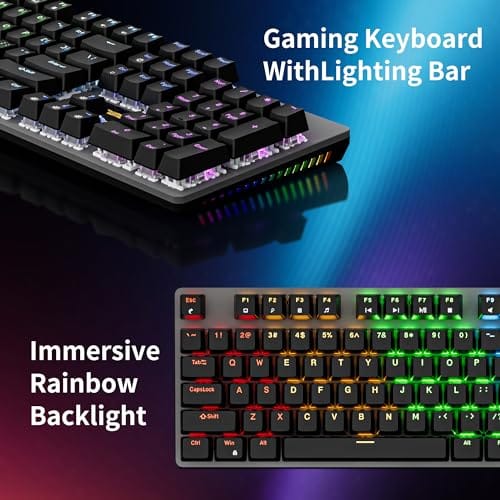
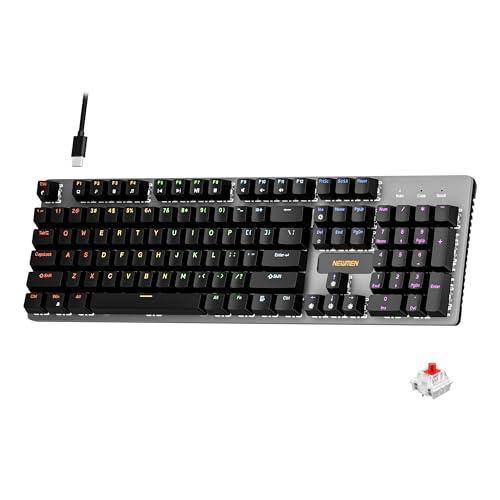
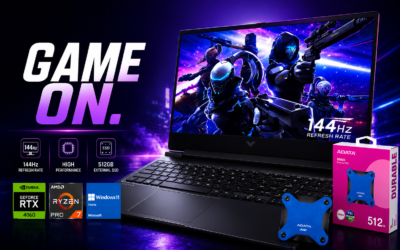
For a practical example, a keyboard built for gaming advertises this capability up front. The Newmen GM325Pro, a 104-key wired mechanical board at $20.89 with a strong 4.8 rating, is aimed squarely at gaming with hot-swap linear red switches and RGB backlighting, the kind of board where reliable multi-key registration is a core selling point. NKRO is what lets a board like that guarantee your combos land. That said, whether you’ll ever notice the difference depends heavily on how you play, which is worth understanding before you pay extra for it.
Pros
- Hot-swap sockets allow switch experimentation without soldering tools or PCB risk
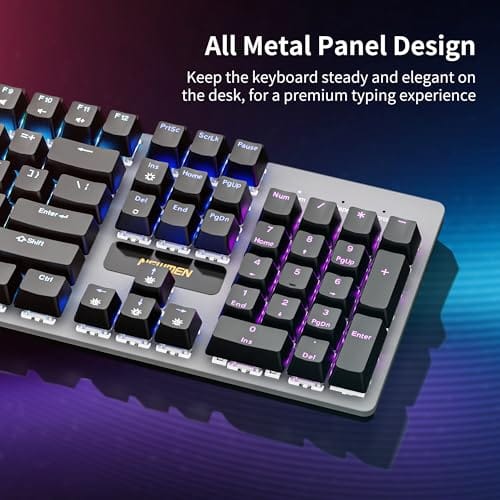
- Metal top plate delivers firmer typing feel than plastic budget boards at this tier
- Full-key rollover and linear red switches handle rapid inputs for casual gaming
Cons
- Limited owner feedback at time of writing, so long-term reliability is unproven
- RGB is restricted to side lighting only, per-key backlight is fixed rainbow patterns
- ABS keycaps typical at this tier tend to shine and wear faster than PBT
The Newmen GM325Pro is a budget full-size 104-key wired mechanical keyboard aimed at first-time mechanical buyers and casual gamers who want a hot-swap PCB without moving up to enthusiast pricing. It ships with linear red switches, a metal top plate, ABS keycaps, and side-edge RGB lighting.
The defining feature here is the hot-swap socket combined with linear red switches. That gives new users a low-friction path to swap inactile or silent switches later without soldering. Typing fel on metal-plate boards at this tier is usually firmer and less hollow than all-plastic budget pers, based on category norms.
Trade-offs are typical for the price class. Per-key RGB is not suported, only side lighting is true RGB while the top backlight runs 13 preset rainbow effects. ABS keycaps tend to develop shine within months of heavy use, and Newmen does not publish switch lifecycle, polling rate, or NKRO wired specs in the source data.
Buy this if you want a cheap full-size hot-swap platform to learn on and plan to upgrade switches or keycaps later. Skip this if you need per-key RGB, PBT caps, a documented polling rate, or a keyboard with a dep owner review history to validate QC.
Switches and layout: Linear red switches on a full 104-key ANSI layout, with full-key rollover claimed by the manufacturer. Actuation force, travel, and switch brand are not specified in the source. Linear reds typically sit near 45g actuation and 4m total travel in this category.
Hot-swap PCB: Sockets accept standard MX-style switches, so tactile, clicky, or silent linear options from third parties drop in without soldering. Pin compatibility (3-pin vs 5-pin) is not specified, buyers should confirm before ordering replacement switches.
Build and lighting: Metal top plate over ABS black keycaps. RGB is limited to the side edge, while the top backlight cycles through 13 preset rainbow patterns rather than per-key addressable RGB. Case material below the plate is not specified.
Connectivity and software: Wired only via a detachable 1.8m USB cable. FN combos cover F1 to F11 media and calculator shortcuts. Customization software suports key remap, macro recording, and lighting tweaks, though poling rate and software platform support are not specified.
The longer explanation
To grasp why rollover exists, picture the keyboard’s internals. Keys sit on a grid of rows and columns, and the controller scans that matrix to see which switches are closed. On cheaper membrane boards, certain combinations of pressed keys create ambiguous signals the controller can’t resolve, a phenomenon called ghosting, where a keypress you never made appears, or blocking, where a real press gets ignored. To prevent phantom inputs, basic keyboards limit how many keys they’ll read at once, which is where rollover limits come from.
N-key rollover solves this with hardware, typically by adding a diode behind each key so every switch is read independently. With that isolation, the controller can register all keys pressed at the same time without confusion. The result is that a full NKRO board reports exactly what your fingers are doing, even during a chaotic ten-finger moment. 6-key rollover, common on many boards, means up to six regular keys plus modifiers register together, which covers the overwhelming majority of real gaming inputs.
How it works
The distinction usually comes down to the switch technology and the connection. Mechanical keyboards with per-key diodes handle NKRO natively, which is one reason gamers gravitate toward mechanical boards. Membrane and cheaper designs often lack that isolation, so they cap rollover to avoid ghosting. There’s also a connection wrinkle worth knowing. Full NKRO traditionally relies on USB in a specific mode, and some boards default to 6-key rollover over USB for maximum compatibility, then offer a toggle to full NKRO.
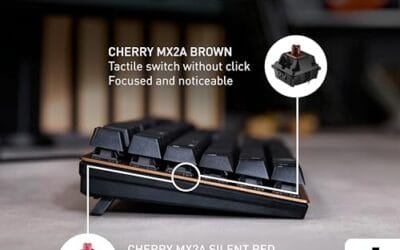
Mechanical office and productivity boards support solid rollover too, not just gaming models. The Cherry KC 200 MX, a mechanical office keyboard at $56.31 with new MX2A switches and a metal plate frame, is built for typing accuracy where reliable key registration keeps fast typists from dropping characters mid-sentence. So rollover isn’t purely a gaming feature. Anyone who types quickly with overlapping keystrokes benefits from a board that reads every press cleanly, whether the label calls it a gaming keyboard or an office one. The Cherry’s metal plate and quiet MX2A switches make it a comfortable pick for someone who splits time between coding and gaming.
Why it works this way
The reason boards ever limited rollover was cost and simplicity. Adding a diode per key raises manufacturing complexity, so budget keyboards skipped it and lived with the rollover cap. For decades that was an acceptable trade, since typing rarely presses more than a few keys at once and early games weren’t demanding. As gaming grew more input-heavy and mechanical keyboards became mainstream, per-key diodes and full NKRO moved from a niche feature to a common one, even on affordable boards.
Understanding this history explains why the spec feels overhyped today. On a modern mechanical keyboard, NKRO or at least generous rollover is often standard, so paying a big premium purely for the NKRO label makes little sense when the board already has it. The feature matters, but it’s baked into most decent mechanical boards now. The real question isn’t whether a board has enough rollover, it’s whether your play style ever pushes past the 6-key limit that most boards already comfortably clear.
When you’d want this
Full NKRO earns its keep in specific situations. Rhythm games, fighting games, and complex flight or racing sims with many bound keys can genuinely press more than six keys at once. Players who use a lot of simultaneous inputs, or who share a keyboard between a game and heavy productivity macros, get real value from a board that never drops a press. If you’ve ever felt an input vanish during a frantic moment, NKRO removes that as a possible culprit, which is peace of mind worth having.
For the average shooter or MOBA player, though, 6-key rollover is plenty, because you rarely hold more than three or four movement and action keys plus modifiers at once. So don’t let NKRO be the single deciding factor over switch feel, build quality, and layout. A budget board like the Newmen GM325Pro at $20.89 bundles gaming-grade features including reliable rollover with hot-swap switches, showing you don’t need to overspend to get it. Our guide to the best mechanical keyboard deals has more value picks.

Pros
- MX2A Silent Red linears actuate quietly, good fit for open-plan offices
- Metal plate frame keeps chassis stiff and reduces caseping under typing
- Cherry Gold-Crosspoint contacts rated for 50 million keystrokes on this variant
- Full-size layout with dedicated numpad suits data entry and spreadshet work
Cons
- Renewed unit with no owner fedback loged yet, cosmetic and wear condition varies
- Silent Red linears lack tactile bump, typists who prefer fedback should pick Brown
- Source data omits connectivity, cable type, polling rate, and dimensions
The Cherry KC 200 MX is a full-size office-focused mechanical keyboard sold here as a Renewed unit in Bronze with MX2A Silent Red linear switches. It targets office typists, developers, and finance or admin users who want Cherry switch fel and a metal plate frame without the RGB and gamer styling of enthusiast boards.
The defining feature is the MX2A Silent Red switch, Cherry's updated linear with dampened stems aimed at reducing bottom-out and return noise. Cherry rates this variant for 50 million keystrokes. Based on the linear profile, expect smooth actuation with no tactile bump, which suits fast touch typists and users on frequent video calls.
Trade-offs are typical at this tier and Renewed status. Silent Red linears are polarizing, users coming from Browns or Blues will miss the tactile feedback, and the source does not specify polling rate, connection type, cable, keycap material, or dimensions. As a Renewed listing, cosmetic condition and remaining switch life depend on the refurbisher rather than a factory-fresh baseline.
Buy this if you want a quiet full-size Cherry mechanical for office or shared-space use and value the metal plate build over RGB features. Skip this if you prefer tactile or clicky switches, need confirmed wireless or USB-C connectivity, or want a waranty profile equivalent to new stock.
Switches: Cherry MX2A Silent Red, linear with integrated dampeners, made in Germany with Gold-Crosspoint contacts. Rated for 50 million keystrokes on this variant, versus 100 million on MX2A Brown. Linear travel with no tactile bump favors light, fast keypresses over deliberate typing fedback.
Build: Metal plate frame under the switches, which stiffens the deck and cuts flex compared with plastic-only office boards. Cherry positions the KC 200 MX as a slim modern design, though exact case height, weight, and keycap material are not specified in the source data.
Layout and indicators: Full-size layout retains the dedicated numpad and function row, which maters for spreadsheet,ERP, and accounting workflows. White LED status indicators are built into Caps Lock, Scroll Lock, and Num Lock keys, avoiding a separate indicator strip and keeping the top edge clean.
Gaming fit: Silent Red linears work for casual gaming and MMO or productivity crossover use given their light linear fel, but the source does not list polling rate, N-key rollover, or onboard profiles, so competitive esports buyers should confirm specs before committing.
What to look for in a keyboard
When rollover is on your checklist, first confirm the board supports at least 6-key rollover, and full NKRO if you play input-heavy genres. But weigh it alongside the things you’ll feel every day. Switch type matters more for most people, linear reds for smooth gaming presses, tactile or clicky for typing feedback. Build quality counts too, and a metal plate frame like the Cherry KC 200 MX’s adds rigidity that cheaper plastic decks lack.
Look at connection and features next. A wired connection guarantees full rollover and the lowest latency, while some wireless modes revert to 6-key. Hot-swap sockets, like those on the Newmen board, let you change switches later without soldering, which extends a keyboard’s life. Layout size, from full 104-key to compact 65 percent, shapes desk space and reach. Rollover is one spec among several, so buy the board that feels right and clears your rollover needs, not the one with the flashiest NKRO sticker.
Common misconceptions
The biggest misconception is that you must have full NKRO or your gaming will suffer. For most players, 6-key rollover never gets exceeded, so the upgrade to full NKRO changes nothing they’ll notice. Another myth is that NKRO makes you faster or lowers input latency. It doesn’t. Rollover is about how many keys register at once, not how quickly a single press reaches the game. Those are separate specs, and conflating them leads people to buy for the wrong reason.
People also assume every expensive keyboard has full NKRO and every cheap one lacks it, but that’s not reliable either. Plenty of budget mechanical boards, like the $20.89 Newmen, advertise gaming-grade rollover, while some pricey boards default to 6-key over certain connections. Always check the spec and the connection mode rather than assuming price decides it. And remember ghosting and rollover limits mostly plague cheap membrane boards, so a decent mechanical board rarely leaves you wanting.
Frequently asked
Does N-key rollover actually matter for gaming?
It matters if your games press many keys at once, like rhythm titles, fighting games, or sims with lots of bindings. For typical shooters and MOBAs, you rarely exceed 6-key rollover, so full NKRO won’t change your experience. It’s genuine peace of mind that no input gets dropped, but it shouldn’t be your only buying criterion. Switch feel, build quality, and layout affect your daily experience more than the NKRO label does.
What’s the difference between NKRO and 6-key rollover?
6-key rollover registers up to six regular keys plus modifiers simultaneously, which covers almost all real gaming and typing. Full N-key rollover registers any number of keys at once with no cap. The practical gap is small for most players, since few people press more than six keys at the same time. Input-heavy genres are the exception where full NKRO removes any chance of a dropped press during a busy moment.
Do I need a mechanical keyboard for NKRO?
Usually, yes, because mechanical boards commonly include per-key diodes that make full NKRO possible, while many membrane boards cap rollover to avoid ghosting. That’s part of why gamers favor mechanical keyboards. Boards like the Newmen GM325Pro and Cherry KC 200 MX handle rollover well thanks to their mechanical switches. A few high-end membrane gaming boards offer strong rollover too, but mechanical is the reliable path to full NKRO.
Does NKRO reduce input lag?
No. NKRO controls how many keys register at once, not how fast a keypress reaches your game. Input latency depends on the board’s polling rate, connection, and firmware, which are separate specs. A keyboard can have full NKRO and still have mediocre latency, or great latency with only 6-key rollover. If low latency is your goal, look at polling rate and a wired connection rather than the rollover number.
Will wireless mode limit my rollover?
Sometimes. Some keyboards default to 6-key rollover over certain wireless or USB modes for compatibility, then let you toggle full NKRO, often only over a wired connection. If guaranteed full rollover matters for your games, use the wired mode or check that the board maintains NKRO wirelessly. For most players 6-key is fine regardless, so it’s only a concern if you truly press many keys at once.












Write Your Review
No reviews yet. Be the first to share your experience!