

If you weigh under 150 lbs or stand under 5’6″, most gaming chair reviews are useless to you. The market is built around chairs rated for 250-400 lbs , bucket seats designed for football-player frames, with rigid lumbar bolsters sitting too high, recline springs tensioned for 200+ lb bodies, and seat depths that cut off circulation behind your knees. The result: a $400 “ergonomic” chair that leaves your back aching after 2 hours because it was never engineered for your body in the first place. That decision gets its own treatment in our best gaming chair for back pain in 2026 guide.
For 2026, we narrowed the market down to 5 chairs that genuinely work for lightweight and petite users , not generic “small” chairs that are just budget versions of full-size models, but chairs specifically designed with lower seat heights, shorter seat depths, properly placed lumbar support, and lighter recline tension. We cross-referenced manufacturer specs against verified Amazon owner feedback and reviews from category specialists like ChairsFX and Ergonomic Trends to separate purpose-built petite chairs from marketing fluff.
TL;DR – Our 5 Picks at a Glance
| Award | Pick | Fits Height / Weight | Best For |
|---|---|---|---|
| 🏆 Best Overall | CabLady S2 Petite | 4’9″ – 5’11” / up to 330 lbs | Purpose-built petite ergonomics with full 4D adjustability |
| ⭐ Best Premium | Secretlab Titan Evo (Small) | Up to 5’6″ / under 200 lbs | Long-term durability, premium materials, gaming-focused |
| 💰 Best Value | CabLady S1 Petite | Petite frames / 300 lbs | Budget-conscious buyers wanting purpose-built petite fit |
| 🌬️ Best Mesh / Breathable | MUSSO E80 Petite | 4’8″ – 5’10” | Hot climates, users who run warm during long sessions |
| 🎯 Best for Pure Office Work | HOLLUDLE Ergonomic Mesh | Up to ~300 lbs | Petite users prioritizing office tasks over gaming |
Pros
- Compact geometry targets 4'9" to 5'11" users often left out by standard chairs.
- 3.15 inch foam seat and lumbar cushion improve pressure spread during long sessions.
- BIFMA certified design with 330 lb rated capacity on a nylon five-star base.
Cons
- Limited owner feedback at time of writing, long-term foam and caster durability unverified.
- Fixed low lumbar position will not support taller torsos outside the stated height range.
- White nylon base and light 62 lb build weight suggest less rigidity than steel-base chairs.
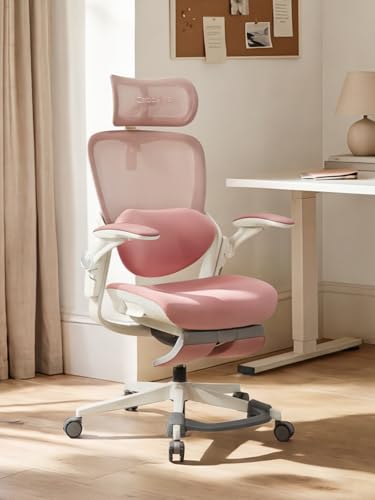
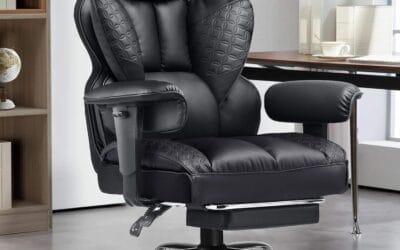
The CabLady S2 is a compact ergonomic office chair from CabeVibe, sized for petite and slim adults from 4'9" to 5'11". It targets buyers who find standard task chairs too deep in the seat pan, too tall at the seat height, and too wide across the armrests.
Its defining trait is reduced frame geometry: shorter seat depth, lower seat height, and a low-position adjustable lumbar. Based on the source spec, the 3.15 inch foam seat and matching lumbar cushion should offer moderate support across eight hour desk sessions, though foam density and seat pan dimensions are not specified.
Trade-offs are typical for foam padded compact chairs. Standard polyurethane foam compresses faster than cold cured molded foam, and the low lumbar pivot will not translate for anyone above the stated height range. The built-in footrest, 4D headrest, and 90 degree flip-up armrests add features rarely bundled at this size class.
Buy this if you are under 5'11", within the 330 lb capacity, and struggle with oversized chairs that leave your feet dangling. Skip this if you want mesh breathability, a taller lumbar range, or verified long-term durability data, since owner reports are not yet available for this listing.
Sizing envelope: The chair targets users from 4'9" to 5'11" with a 330 lb weight capacity. Seat depth and seat height are both reduced from category baseline, which typically fits users with thigh length under 17 inches. Exact seat pan dimensions are not specified in the source data.
Padding and lumbar: Seat and lumbar cushions use 3.15 inch foam. Foam type is not stated, so expect standard high resilience polyurethane rather than cold cured molded foam at this tier. Lumbar height is adjustable but sits in a low position, matched to the compact frame rather than taller torsos.
Adjustability: Features include a 4D headrest, adjustable armrests with 90 degree flip-up, a side-button one-touch recline, and a built-in footrest with leg support. Armrest spacing is narrower than standard task chairs, which helps the chair tuck under compact desks. Recline angle range is not specified.
Base and certification: The chair uses a white nylon five-star base with dual quiet casters, rated safe for all floor types. BIFMA compliance is stated for the design, though no specific standard number is listed. Shipping weight is 62 lbs, indicating a lighter build than steel-base task chairs.

Pros
- Seat depth slides from 16.9 to 19.2 inches, a genuine ergonomic differentiator for users under average height who are underserved by standard chairs.
- Fixed lumbar removes a common failure point; no dial to strip, no foam bladder to leak, and support position is consistent session to session.
- Detachable lumbar pillow gives two distinct back-feel options without requiring a second chair or aftermarket cushion purchase.
- BIFMA certification is listed, providing a baseline structural and durability assurance beyond unverified in-house claims.
Cons
- Lumbar support is fixed in position, so users whose ideal lumbar contact point falls outside the engineered location have no way to reposition it vertically.
- Nylon frame and base materials are standard at this tier but offer less long-term rigidity than aluminum or steel alternatives common in higher-priced ergonomic chairs.
- No mesh breathability rating, airflow specification, or material weave density is provided in the listing, making direct comparison to competitors difficult.

Pros
- Frame sized specifically for petite users 4'8" to 5'10", not a shrunk standard chair
- 4D headrest with height, depth, tilt, and rotation covers forward-lean and recline postures
- 135 degree recline plus retractable footrest suports naps without a separate ottoman
- Flip-up armrests allow full desk tuck for tight bedroom or studio setups
Cons
- Limited owner feedback at time of writing, long-term durability signal is unverified
- Weight capacity, seat depth, and gas lift class are not specified in source data
- No BIFMA or EN1335 certification listed, buyers wanting certified safety data should confirm with seller
The MUSSO E80 Muse is a mid-range ergonomic mesh task chair engineered around a petite frame envelope of 4'8" to 5'10". It targets home office users, students, and creators whose fet dangle in oversized executive chairs and who want proper lumbar contact without stking cushions or footrests.
The defining feature is the sizing plus the 4D headrest, which adjusts 6cm in height, 4cm in depth, 50 degrees of tilt, and 55 degrees of rotation. Combined with the three-level push-up 3D lumbar, it lets shorter torsos land the lumbar pad and neck support at the correct vertebrae, something fixed-headrest chairs at this tier rarely achieve.
Trade-offs are typical for smaller task chairs. Weight capacity, seat depth in millimeters, gas lift class, and BIFMA or EN1335 certification are not specified in the source, so buyers over 5'10" or heavier users should look elsewhere. Owner feedback is thin at time of writing, so long-term mesh sag and recline lock durability remain unverified signals.
Buy this if you are between 4'8" and 5'10", need a full-recline mesh chair with flip-up arms for a compact desk, and value adjustable headrest and lumbar. Skip this if you need documented BIFMA certification, a stated weight rating above average, or a taller-user seat pan.
Height range and fit envelope: MUSSO specifies a user height window of 4'8" to 5'10", with a lower seat height and shorter seat depth than standard task chairs. This keeps feet planted and the popliteal fold clear, avoiding the front-edge pressure petite users report on5'10" plus chairs.
Lumbar support: The3D lumbar uses a three-level push-up mechanism with a large-curve pad, resetting to the lowest position at top of travel. Adjustment is on the vertical axis only per source; depth and firmness are fixed, which is standard for mesh chairs at this tier.
Headrest and recline: The 4D headrest offers 6cm height, 4cm depth, 50 degree tilt, and 55 degree rotation. Recline extends to 135 degrees with a locking mechanism and a retractable footrest, covering upright work through zero-gravity break posture on a single chair.
Armrests and mobility: Armrests flip up 90 degrees so the chair slides fully under a desk. The base is described as anti-tip with silent dual casters for hard and soft floors. BIFMA certification, weight capacity, and gas lift class are not specified in source data.

Pros
- 3D lumbar with vertical, depth, and rotational adjustment fits varied torso lengths
- 3D armrests plus 2D headrest cover most desk and monitor height setups
- BIFMA and EN1335 certification signals independent durability and safety testing
- Mesh back and seat improve airflow versus foam-padded chairs for long sessions
- 20to 30 minute assembly time reported with included tools, no extras needed
Cons
- Limited owner feedback at time of writing, long-term durability signal unclear
- Seat depth, height range, and weight capacity not specified in source data
- V-shaped back is aesthetic only, no 4D armrests or synchro-tilt mechanism at this tier
The HOLLUDLE Ergonomic Mesh Office Chair is a mid-range task chair aimed at home office and hybrid workers who want granular adjustability without stepping up to Herman Miller or Stelcase pricing. Key hooks are a 3D lumbar, 3D armrests, 2D headrest, and a V-shaped mesh back finished in white and silver.
The defining feature is the 3D lumbar support, which moves vertically, tracks forward and back, and rotates to match spinal curvature. Chairs at this tier typically ship with fixed or1D lumbar, so full3-axis adjustment is meaningful for users between 5'4 and 6'2 who struggle with generic lumbar placement in cheaper mesh chairs.
Trade-offs are typical at this tier. The tilt mechanism is a 3-level lock rather than a weighted synchro-tilt, armrests are 3D rather than 4D (no pad swivel plus slide combined), and specific seat depth, height range, and static load rating are not specified in source data. BIFMA and EN1335 certification plus a 35mm steel mechanism suggest the frame itself is built to office-grade fatigue standards.
Buy this if you want 3D lumbar and 3D armrests in a mesh task chair certified to BIFMA and EN1335 for daily desk work. Skip this if you need documented seat depth, verified long-term owner reports, or a true synchro-tilt recline for heavier reclining use.
Certification and frame: The chair is rated to BIFMA and EN1335 standards, the two most cited office chair durability specs in North America and Europe. HOLLUDLE lists a 35mm steel tilt mechanism and cites 1136kg base strength, which points to a reinforced nylon or stel five-star base rather than budget plastic.
Lumbar adjustment: The 3D lumbar moves up and down, forward and backward, and rotates on its mount. That covers the three axes most commonly cited by physiotherapists for matching lumbar apex to L3-L4, useful for users whose torso length fals outside the fixed lumbar zone on cheaper mesh chairs.
Armrests and headrest: 3D armrests adjust in height, slide forward and back, and rotate inward or outward, but do not include lateral pad slide found on true 4D units. The 2D headrest moves vertically and tilts, targeting neck support during the 3-level tilt lock recline positions.
Not specified: Source data does not list seat height range in cm, seat depth, seat width, backrest height, recline angle in degrees, static weight capacity, or gas lift class rating. Confirm these with the seller before purchase if you are above 6feet or 250pounds.

Pros
- Small size targets shorter users up to 5'6", where full-size gaming chairs tend to fel oversized.
- 4D metal armrests with replaceable tops resist the flaking that plagues typical paded PU armrest caps.
- 4-way adjustable lumbar plus magnetic memory foam head pillow give dialed-in spine and neck support.
- 165° recline with multi-tilt mechanism covers desk work, gaming lean-back, and short nap positions.
Cons
- Limited owner feedback at time of writing, no aggregated review data available to validate long-term build.
- Leatherette upholstery runs warmer than mesh in hot rooms; buyers in humid climates may prefer NeoHybrid or SoftWeave.
- Under 5'6" and 200lbs fit envelope means taller or heavier users must step up to the regular or XL size.
The Secretlab Titan Evo Stealth in Size Small is a high-end leatherette gaming chair scaled for users up to 5'6" and under 200lbs. It targets shorter adults, younger users, and desk workers who find regular gaming chairs too tall in the backrest and too deep in the seat pan for proper thigh support.
The defining feature is the integrated 4-way lumbar support paired with the magnetic memory foam head pillow. Lumbar height and depth adjust independently, so the curve can sit against the actual lordosis rather than a fixed pad. Combined with a 165° recline and multi-tilt, the chair covers upright typing through mid-back gaming leans.
Trade-offs are typical for leatherette at this tier. The surface traps more heat than mesh or fabric under sustained sessions in warm rooms, and the small frame is a hard fit envelope, not a suggestion. Full-metal 4D armrests with replaceable tops address a common failure point, but the aluminum base and gas lift class are not specified in source.
Buy this if you are 5'6" or shorter, want dialed lumbar and4D armrests, and prefer wipe-clean leatherette. Skip this if you exceed the 200lbs limit, run hot and want mesh, or need documented owner feedback before committing at this tier.
Fit envelope: Secretlab rates Size Small for users up to 5'6" and under 200lbs. Users near the uper end of that height should verify seat depth for thigh clearance; users above either threshold should move to the regular or XL Titan Evo variant instead of forcing the small frame.
Lumbar and head support: The 4-way built-in lumbar adjusts in both height and depth, leting the pad track the natural spinal curve rather than a fixed contour. The magnetic memory foam head pillow snaps onto the backrest and slides across a wide range for neck alignment during recline.
Armrests and recline: Full-metal 4D armrests adjust across four axes with replaceable tops, a real fix for the flaking PU caps common on competitors. The full-length backrest reclines to 165° with a multi-tilt mechanism, covering upright work, gaming lean, and near-flat rest positions.
Materials and waranty: Cold-cure foam is used through the seat and back for shape retention. Secretlab rates the new-generation leatherette at 12x the durability of standard PU leather and offers a 5-year extended warranty. BIFMA certification, gas lift class, and exact seat dimensions are not specified in source.
Which Pick Makes Sense for You?
CabLady S2 Petite – Best Overall for Lightweight Users
The CabLady S2 Petite is the only chair in this group designed from the ground up for users between 4’9″ and 5’11” , not a scaled-down version of a regular chair, but a frame engineered specifically for petite proportions. That distinction matters more than any single spec. The lumbar support sits at the right height for shorter torsos, the seat depth adjusts down to fit shorter thigh length, and the armrest spacing is narrower so smaller frames aren’t forced to splay their elbows outward. Pick this over the Secretlab Titan Evo if budget is a real consideration and you want maximum petite-specific engineering. The 4D headrest, 3D flip-up armrests, retractable footrest, and adjustable seat depth combination is rare at this price point. Backed by BIFMA standards and a 3-year warranty from Cabevibe, a woman-led brand specializing in this niche. Skip this if you’re over 5’11” or want a true gaming aesthetic , the S2 has a clean office look, not a racing-style profile. Verify current pricing on Amazon before pulling the trigger.
Secretlab Titan Evo (Small) – Best Premium for Serious Daily Use
The Secretlab Titan Evo in Size Small is the premium choice for lightweight users who want a chair that will still feel new after 5 years. Pick this over the CabLady S2 if you sit in your chair 6+ hours daily, prioritize long-term build quality, and want a gaming-focused aesthetic. The 4D armrests, magnetic memory foam head pillow, and integrated 4-way lumbar support are best-in-class at this size tier. The cold-cured foam holds its shape under daily use far better than the budget high-density foam in cheaper chairs , that’s the spec that determines whether a chair is comfortable in year 3 or feels flat by month 8. Size Small fits up to 5’6″ and 200 lbs, which covers most lightweight users comfortably. The 5-year extended warranty backs Secretlab’s reputation, which is exceptional in the gaming chair category. Skip this if you need a footrest (Titan Evo doesn’t include one) or if your budget is under $500 , the Secretlab premium is real, and CabLady or MUSSO get you 70% of the experience for half the price.
CabLady S1 Petite – Best Value Purpose-Built Petite Chair
The CabLady S1 is the budget alternative to the S2, sharing the same petite-focused engineering philosophy at a lower price point. Pick this over the CabLady S2 if you want the brand’s petite design language but don’t need the full 4D headrest and seat depth adjustment of the S2. The S1 ships with a detachable lumbar pillow (rather than the built-in adjustable lumbar of the S2), which is a meaningful spec difference for users who want to fine-tune lumbar height precisely. The 300-lb capacity is more than adequate for lightweight users. Skip this if you specifically need adjustable seat depth , that’s an S2-only feature, and it matters for users on the shorter end of the petite range (under 5’2″). For most petite users, the S1 hits the smart middle pick of price, fit, and feature set.
MUSSO E80 Petite – Best for Hot Climates and Breathability
The MUSSO E80 Petite uses a full mesh back instead of the foam-and-fabric construction of the other petite chairs in this group, which fundamentally changes how the chair feels during long sessions. Pick this over the CabLady S2 if you live in a warm climate, your office runs hot, or you’ve struggled with sweat buildup on foam-back chairs. Mesh isn’t just a comfort feature for some users , it’s the difference between sitting for 5 hours and getting up to peel yourself off the chair. The fit range is 4’8″ to 5’10”, with 3D lumbar support that adjusts in three levels via a push mechanism. The flip-up arms and 135-degree recline are standard at this tier, but the mesh construction is what justifies the price. Skip this if you prefer the cushioned feel of foam-and-fabric , mesh has a firmer, more supportive feel that takes some adjustment if you’re switching from a traditional chair. Note that MUSSO’s branding language is somewhat unusual (“Goddess” terminology in some listings), but the engineering and category-specific design are solid. For a closer look, see our guide on the best gaming chair for comfort and support in 2026.
HOLLUDLE Ergonomic Mesh – Best for Pure Office Work Over Gaming
The HOLLUDLE Ergonomic Mesh is the right call for lightweight users whose primary use case is office work, not gaming. Pick this over the MUSSO E80 if you spend more time in spreadsheets than in Counter-Strike, and you want a chair that visually fits a professional office aesthetic. The 3D lumbar support adjusts in five directions (up, down, forward, backward, and rotation) , that’s more comprehensive lumbar adjustability than most chairs at this tier. The V-shaped back design is distinctive without being aggressive, and the BIFMA + EN1335 certifications confirm the build meets actual office furniture standards rather than just gaming chair marketing claims. The 5-year warranty is generous for this price point. Skip this if you want gaming-specific features (high backrest with bucket profile, racing-style stitching, magnetic head pillow) , the HOLLUDLE is decidedly an office chair, not a gaming chair, and that’s exactly why it’s on this list.
Side-by-Side Comparison
| Product | Fits | Material | Key Adjustments | Warranty | Skip If |
|---|---|---|---|---|---|
| CabLady S2 Petite | 4’9″ – 5’11” | Foam + woven fabric | 4D headrest, 3D arms, adj. lumbar, adj. seat depth, footrest | 3 years | Want gaming aesthetic or are over 5’11” |
| Secretlab Titan Evo (Small) | Up to 5’6″ / 200 lbs | Leatherette + cold-cured foam | 4D arms, magnetic head pillow, 4-way lumbar | 5 years | Budget under $500 or need footrest |
| CabLady S1 Petite | Petite / 300 lbs | Foam + fabric | Detachable lumbar pillow, recline, footrest | 3 years | Need adjustable seat depth |
| MUSSO E80 Petite | 4’8″ – 5’10” | Mesh back + cushion seat | 3D lumbar (3-level), 4D headrest, flip-up arms, footrest | Manufacturer warranty | Prefer cushioned foam-back feel |
| HOLLUDLE Ergonomic Mesh | Standard petite range | Full mesh | 3D lumbar (5-way), 3D arms, 2D headrest, 3-level tilt lock | 5 years | Want gaming chair aesthetic |
Gaming Chair for Lightweight Users Buying Guide: What Actually Matters
The market is flooded with chairs that look impressive on spec sheets but fail lightweight users in practical use. Here’s what to prioritize when shopping , and what manufacturers count on you not noticing.
Seat Depth Is the Single Most Important Spec
If you take one thing from this guide: seat depth matters more than weight capacity, more than RGB, more than recline angle. A standard gaming chair has a seat depth of 19-21 inches, designed for users with 18+ inch thigh length. If you’re under 5’6″ or have shorter legs, that depth cuts off circulation behind your knees and forces you to either slouch forward (destroying lumbar contact) or sit on the front edge of the seat (defeating the entire point of ergonomic design). Look for chairs with seat depths of 16-18 inches, or chairs with adjustable seat depth (a feature the CabLady S2 and many premium chairs offer). This is the single spec where “fit” becomes “torture” for lightweight users. Test your current chair: sit all the way back, knees bent at 90 degrees , if you can’t slide a fist between the back of your knee and the seat edge, your seat is too deep.
Lumbar Support Height Must Match Your Spine
Standard gaming chairs place lumbar support at 8-10 inches above the seat, calibrated for users 5’8″ and taller. For petite users under 5’4″, that height puts the lumbar bolster directly between your shoulder blades , which doesn’t support your lumbar at all, and actively pushes your upper back forward. Look for chairs with height-adjustable lumbar support that can drop to 5-7 inches above the seat. Fixed lumbar pillows can sometimes be repositioned with strap adjustments, but built-in adjustable lumbar (like the 3D systems on the MUSSO E80 and HOLLUDLE) is the better solution. Avoid chairs marketed as “fits all” , they don’t, and lightweight users are the first to find out.
Recline Tension Calibration Matters More Than Recline Angle
Most chair listings emphasize recline angle (135°, 155°, 180°), but tension calibration is what determines whether you can actually use the recline. Recline springs are typically calibrated for 180+ lb bodies. Lightweight users often can’t compress the spring enough to rock comfortably, leaving them stuck either fully upright or fully reclined with no middle position. Look for chairs with adjustable tilt tension (a knob underneath the seat that adjusts spring resistance) , this is standard on premium chairs like the Secretlab Titan Evo and increasingly common on mid-range options. Avoid chairs marketed for “big and tall” users at all costs. Those recline mechanisms are deliberately stiff, and no amount of adjustment will make them comfortable for a 120-lb body.
Armrest Height and Width Range
Standard armrest spacing is 18-20 inches apart, designed for shoulder widths of average-to-large frames. For users under 5’4″, that spacing forces elbows out at an unnatural angle, leading to shoulder and neck strain over time. Look for chairs with adjustable armrest width (3D or 4D arms that can move inward) or chairs specifically designed with narrower frames (the CabLady S2 is engineered with narrower arm spacing specifically for petite frames). Flip-up arms are a bonus , they let you tuck the chair fully under your desk, which lightweight users often need because their desks are positioned higher relative to their seated height.
Materials Matter Differently for Lightweight Users
Two materials considerations specific to lightweight users: foam density and surface material. Lightweight users sink into foam differently than heavier users , high-density foam stays supportive, while soft foam compresses unevenly and creates pressure points. Look for “cold-cured foam” (premium, found in Secretlab) or “high-density foam” (mid-range, found in MUSSO and CabLady). Surface material matters because lightweight users often run warmer in foam-backed chairs (less mass to absorb body heat). Mesh chairs like the MUSSO E80 and HOLLUDLE are inherently cooler, while leatherette and fabric chairs hold heat. Choose based on your climate and how warm you typically run.
Build Quality Tells You How Long the Chair Will Actually Last
This is where the budget vs. premium gap matters most for lightweight users. Counterintuitively, lightweight users are often harder on chairs than heavier users , because the chair is oversized for their frame, they shift position more frequently, which stresses the mechanisms. Look for BIFMA certification (the U.S. office furniture standard) or EN1335 (European equivalent) , these are real durability tests, not marketing claims. Steel base, gas lift class 4, and metal mechanisms (not plastic) are the build elements that determine whether a chair lasts 2 years or 8 years. The HOLLUDLE meets BIFMA + EN1335 with a 5-year warranty, the Secretlab carries the same 5-year coverage backed by a brand with millions of users, and the CabLady carries BIFMA + 3-year warranty.
The biggest mistake lightweight users make: chasing high weight capacity ratings (300+ lbs) thinking it means “better build quality.” It doesn’t , it means the chair is engineered for a body 2-3x your size, with proportions and tensions that will fight you every time you sit down. A purpose-built petite chair rated for 250 lbs will outperform a “big and tall” chair rated for 400 lbs for your body. Fit first, capacity second.
Why You Should Trust Us
We’ve spent years analyzing ergonomic seating, with particular attention to how chairs perform for body types underserved by mainstream design , petite users, lightweight users, and those with non-average proportions. That perspective shapes how we read product listings: separating “marketed for women/petite users” from “actually engineered for petite proportions.”
For this guide, we cross-referenced manufacturer specifications with verified Amazon owner reviews, expert reviews from category specialists (ChairsFX, Ergonomic Trends, GearDiary), and BIFMA/EN1335 certification data. We focused specifically on chairs with adjustable seat depth, low-position lumbar support, narrower armrest spacing, and lighter recline tension , the four specs that determine whether a chair actually fits a lightweight body or just claims to.
To be transparent: we did not physically test every chair on this list. What we did do is build a multi-source picture from published specifications, expert reviews from sites that specialize in petite ergonomics, and verified buyer feedback patterns. We flagged where owner reviews are limited or where brand reputation carries elevated risk, rather than papering over uncertainty with marketing language.
Final Take
If you’re a lightweight user shopping for a chair that will actually fit your body , not just claim to , the CabLady S2 Petite is the pick I’d point most buyers toward. It’s the only chair in this group designed from the ground up for the 4’9″ to 5’11” range, with the adjustability range (4D headrest, 3D arms, adjustable lumbar, adjustable seat depth, footrest) to dial in a precise fit. Cabevibe’s BIFMA certification and 3-year warranty are backed by genuine category specialization rather than generic OEM sourcing.
If your daily use is heavy (6+ hours), budget allows, and you want a chair that will still feel new in year 5, the Secretlab Titan Evo (Size Small) is the premium choice. The cold-cured foam, 4D armrests, and 5-year warranty justify the premium for serious daily users. For budget-conscious buyers wanting the petite-specific engineering at a lower price, the CabLady S1 delivers most of the S2’s benefits without adjustable seat depth. The MUSSO E80 Petite is the right call for hot climates or users who run warm , mesh back changes the comfort equation more than spec sheets suggest. The HOLLUDLE Ergonomic Mesh is the office-focused choice for petite users who spend more time in spreadsheets than in games, with BIFMA + EN1335 certification and a 5-year warranty.
Above all: verify pricing before clicking through, and check current Amazon owner feedback. Petite chairs occupy a smaller market segment where prices and stock fluctuate more than mainstream gaming chairs. Bookmark this guide, watch for price drops, and pull the trigger when the chair that fits your body hits a price that fits your budget. The right chair at the right price beats the right chair at the wrong price every time.
FAQs
What weight range counts as “lightweight” for gaming chair fit?
Generally, users under 150 lbs experience fit issues with standard gaming chairs designed for 180+ lb frames. The issues compound for users under 130 lbs , recline tension that won’t compress, lumbar support that sits too aggressively, seat foam that doesn’t conform properly. Height matters as much as weight: a 145-lb user at 5’10” fits most chairs fine, while a 145-lb user at 5’2″ will struggle with the same chair. If you’re under 150 lbs AND under 5’6″, purpose-built petite chairs like the CabLady S2 or Secretlab Titan Evo Small will fit dramatically better than mainstream gaming chairs.
Do I really need a chair designed specifically for petite users, or is a “small” version of a regular chair enough?
There’s a meaningful difference between purpose-built petite chairs and “size small” variants of regular chairs. The Secretlab Titan Evo Small, for example, is a genuinely re-engineered chair for users up to 5’6″ , different frame dimensions, different lumbar placement, different seat depth. Many “size small” chairs from other brands are just the same chair with different marketing. Look for specific dimensional callouts (seat depth in inches, lumbar height in inches, armrest spacing) rather than vague “designed for smaller users” language. Purpose-built petite chairs will state their height range explicitly (4’9″ to 5’11”, 4’8″ to 5’10”) rather than just “small size.”
Are mesh chairs better than foam-backed chairs for lightweight users?
It depends on climate and personal preference. Mesh chairs (MUSSO E80, HOLLUDLE) are inherently cooler because they allow airflow through the back , this matters more for lightweight users who often run warmer in foam chairs due to less body mass to absorb heat. The trade-off is that mesh has a firmer, more supportive feel rather than the cushioned plush feel of foam. If you live in a warm climate, sit for 4+ hours at a time, or have struggled with sweat on previous chairs, mesh is worth trying. If you prefer a softer, more enveloping feel, foam-backed chairs like the CabLady S2 or Secretlab Titan Evo are better fits.
How important is BIFMA or EN1335 certification?
These certifications matter because they’re independent durability tests, not marketing claims. BIFMA testing includes cycling the chair through 100,000+ load cycles to simulate years of daily use, plus drop tests, tilt tests, and stability tests under load. EN1335 is the European equivalent. A chair carrying both certifications has been verified to meet real-world office furniture durability standards. For lightweight users specifically, certified chairs tend to have better-tuned mechanisms (more refined gas lifts, smoother tilt mechanisms) because they’re engineered for repeat testing under varying loads. Of the chairs in this guide, the HOLLUDLE and CabLady carry BIFMA + EN1335 explicitly, and Secretlab’s reputation is backed by 3M+ users and 50+ industry awards.
What’s the difference between the CabLady S1 and S2?
The S2 is the flagship with adjustable seat depth, 4D headrest, full 3D armrests, and a 330-lb capacity. The S1 is the budget version with a detachable lumbar pillow (rather than built-in adjustable lumbar), simpler armrests, and a 300-lb capacity. For users on the shorter end of the petite range (under 5’2″), the S2’s adjustable seat depth is genuinely useful , being able to shorten the seat by 2.4 inches makes a noticeable difference for circulation and posture. For users in the 5’3″ to 5’8″ range, the S1’s fixed seat depth is generally fine, and the price savings are meaningful. Both carry the same brand backing and 3-year warranty.
How long should a gaming chair for lightweight users last?
Lightweight users actually tend to be harder on chairs than heavier users in one specific way: they shift position more frequently because the chair is oversized for their body, which stresses the mechanisms (gas lift, tilt, armrests) more than expected. A properly fitted chair from a brand with real engineering (Secretlab, Cabevibe) should last 5-8 years of daily use without mechanism failure. A poorly fitted chair from a generic brand will show wear at 1-2 years regardless of how light the user is. The single best predictor of longevity is whether the chair carries BIFMA certification and a warranty of 3+ years , these two signals together indicate the manufacturer has actually tested the chair to last. We cover the specifics separately in our mac mini vs gaming PC 2026 guide.
























Write Your Review
No reviews yet. Be the first to share your experience!