

A 32GB RAM kit is the default target for a serious 2026 desktop, but the best choice depends on platform, speed, latency, capacity, and whether the listing is truly a 32GB kit. In this group, the prices stretch from $229.99 to $924.99, the ratings range from 4.0 to 4.8, and the specs include DDR4 3600MT/s, DDR5 5200MHz, DDR5 6000MHz, CL30, CL36, and even one 64GB kit that belongs in a different buyer lane.
We researched five memory kits for builders who want a cleaner parts list, not a wall of RGB names and timing codes. If you’re planning the whole platform, our guides to the best RAM, best CPU, and best 2TB NVMe SSD are useful companions because memory only feels fast when the CPU, board, and storage make sense together. Tiny numbers. Real impact.

Pros
- DDR4-3600 XMP at 1.35V is the Ryzen AM4 sweet spot, aligning FCLK 1:1 at 1800MHz for best latency.
- Matched 2x16GB kit is factory-tested as a pair, reducing dual-channel instability compared to mixing sticks.
- Compatible with both Intel XMP and AMD DOCP/A-XMP BIOS profiles without manual sub-timing adjustments.
- Ships with JEDEC SPD fallback so the system always boots safe at default clocks before XMP is enabled.
Cons
- CL18 primary latency is mid-range; DDR4-3600 CL16 kits exist for buyers prioritizing tighter timings.
- No ECC support, so workstation or Threadripper ECC builds need a different kit entirely.
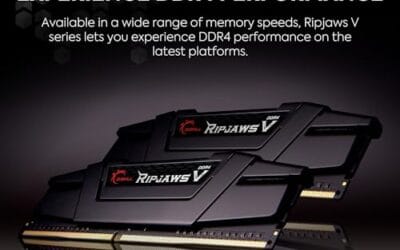
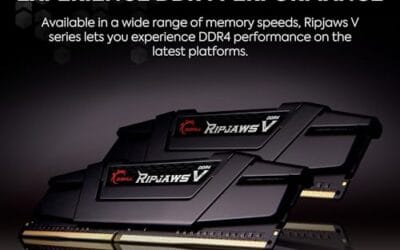
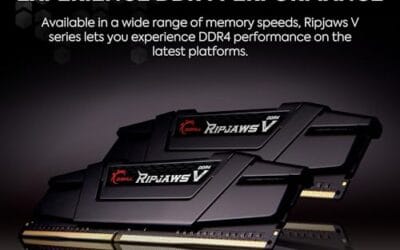
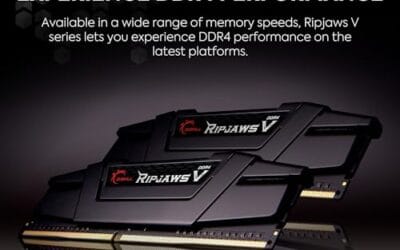
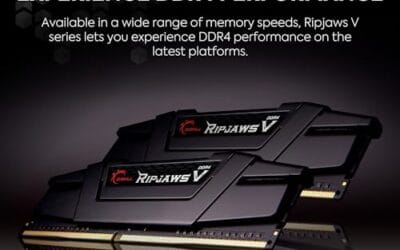
The G.SKILL RipjawsV F4-3600C18D-32GVK is a mid-range DDR4 desktop kit targeting Intel and AMD mainstream platform builders who want 32GB capacity at DDR4-3600 without overpaying for CL14 or CL16 enthusiast kits. It ships as a matched 2x16GB dual-channel pair in the standard 288-pin U-DIMM form factor.
The defining spec here is the XMP profile: DDR4-3600 at CL18-22-22-42, 1.35V. On AMD AM4 Ryzen systems, 3600MHz is the well-documented sweet spot for achieving a 1:1 FCLK ratio at 1800MHz, which keeps infinity fabric latency in check and translates to measurable gains in lightly-threaded workloads and gaming frame times compared to DDR4-3200 or lower.
CL18 is a genuine trade-off at this speed. Competing DDR4-3600 kits with CL16 or CL14 exist and offer lower absolute latency, though they typically carry a price premium. Owners report stable XMP operation across a wide range of B450, X570, and Z490/Z590 boards, but reaching rated speed on some budget AM4 boards may require manual sub-timing adjustments or AGESA microcode updates.
Buy this if you are building or upgrading an AM4 Ryzen or Intel LGA1700 desktop and want reliable 32GB DDR4-3600 dual-channel performance without tuning. Skip this if you need CL16 or tighter for competitive latency, or if your board has a limited QVL and you have not verified compatibility via G.SKILL's configurator tool first.
Platform Support: This kit uses 288-pin DDR4 U-DIMM and is compatible with Intel LGA1700 (Z690/Z790) and AMD AM4 (B450/X470/B550/X570) platforms. AM5 uses DDR5 exclusively, so this kit is not compatible with Ryzen 7000/9000 series builds on AM5 boards.
XMP and DOCP Activation: Rated speed of DDR4-3600 CL18-22-22-42 at 1.35V requires enabling XMP (Intel) or DOCP/A-XMP (AMD) in BIOS. Default JEDEC SPD boots at DDR4-2133 or DDR4-2400. On AM4, DDR4-3600 aligns FCLK at 1800MHz for a 1:1 ratio, which is the recommended operating point for Ryzen 3000 and 5000 series CPUs.
Slot Population and Mixing: Install both sticks in the recommended dual-channel slots per your motherboard manual, typically A2 and B2 in a 4-slot board. G.SKILL explicitly warns against mixing this kit with other modules; doing so voids the matched-pair guarantee and risks instability at XMP speeds.
Cooler Clearance: Exact heatspreader height is not specified in the source data, but RipjawsV modules are noted for a lower profile than Trident Z or RGB variants, reducing conflicts with wide tower coolers. Verify clearance if using a low-clearance cooler on a tight ITX board.

Pros
- AMD EXPO profile activates 5200MHz CL40-40-40-77 with a single BIOS toggle on Ryzen 7000 boards.
- Low 35mm module height clears virtually any AM5 or LGA1700 tower cooler without physical conflict.
- 1.25V operating voltage sits within DDR5 spec, reducing thermal stress on integrated PMIC under sustained load.
- Aluminum heatspreader aids passive heat dissipation in open-air cases without requiring active cooling.
Cons
- 16GB total capacity is increasingly marginal for content creation workflows and modern open-world titles running texture packs.
- 5200MHz CL40 offers modest latency compared to DDR5-6000 CL30 kits that hit the Ryzen 7000 FCLK 1:1 ratio sweet spot.
The CORSAIR Vengeance DDR5 16GB 2x8GB is a mid-range DDR5 kit targeting AMD Ryzen 7000 series and Intel 12th-generation-or-newer desktop builds. It ships with both AMD EXPO and Intel XMP 3.0 profiles, making it broadly compatible across AM5 and LGA1700 or LGA1851 platforms without manual timing configuration.
The standout feature is dual-profile support at a frequency that loads with a single BIOS toggle. At 5200MHz CL40-40-40-77 and 1.25V, it sits within DDR5 JEDEC specification territory, and onboard voltage regulation on the module itself reduces dependency on motherboard power delivery for the memory rail, which matters on budget AM5 boards with fewer VRM phases dedicated to DRAM.
The honest trade-off at this tier is frequency positioning. Ryzen 7000 performs best at DDR5-6000 with CL30 timings, where FCLK and memory controller run at a clean 1:1 ratio. This kit at 5200MHz places it below that threshold, meaning buyers on AM5 leave some CPU bandwidth on the table. The 16GB total capacity is also worth scrutinizing for any workload beyond gaming or light productivity.
Buy this if you are building a budget-to-mid AM5 or Intel DDR5 system and need reliable plug-and-play EXPO or XMP activation without manual overclocking. Skip this if your platform is AM5 and you plan to run a Ryzen 7000 CPU near its performance ceiling, where DDR5-6000 CL30 kits deliver measurably better throughput and latency at comparable pricing.
Platform Requirements: DDR5 requires AMD 600-series or newer motherboards paired with Ryzen 7000 series or newer CPUs, or Intel 600-series or 700-series boards with 12th-generation Core or newer. DDR5 is not backward compatible with DDR4 slots. Verify your motherboard QVL lists this kit before purchasing.
EXPO and XMP Activation: The rated 5200MHz speed requires enabling AMD EXPO or Intel XMP 3.0 in BIOS. Without activation, the kit defaults to DDR5-4800 JEDEC. On Ryzen 7000, DDR5-6000 is the accepted 1:1 FCLK sweet spot; this kit at 5200MHz runs below that threshold, which carries a small but measurable bandwidth and latency penalty versus a tuned DDR5-6000 kit.
Physical Clearance: Module height is 35mm, which clears nearly all air coolers without conflict. The 1.25V operating voltage and onboard PMIC mean power comes from the module itself rather than solely from the motherboard, reducing stress on budget boards with lighter DRAM power stages.
Capacity and Channel Config: The 2x8GB configuration fills two slots in dual-channel. CORSAIR explicitly advises against mixing kits, so expansion to 32GB requires replacing both modules with a validated 2x16GB kit rather than adding a second 2x8GB pair.

Pros
- DDR5-6000 CL36 is the documented Ryzen 7000 FCLK 1:1 sweet spot, maximizing memory controller efficiency.
- Both AMD EXPO and Intel XMP profiles ship on the same module, so one kit covers AM5 and LGA1700/LGA1851 builds.
- Onboard voltage regulation supports finer frequency tuning without depending entirely on motherboard VRM quality.
- iCUE software enables real-time frequency monitoring alongside RGB control from a single interface.
Cons
- Limited owner feedback at time of writing; performance and stability data is thin across diverse board configurations.
- 2x8GB totals 16GB, which is below the 32GB floor increasingly expected for content creation and modern AAA titles.
- DDR5-only platform requirement means no use in existing DDR4 systems; pin layout is physically incompatible.
The CORSAIR Vengeance RGB RS DDR5 is a mid-range dual-channel RAM kit targeting AM5 and Intel 700/800 series desktop builds. Running DDR5-6000 at CL36-44-44-96 and 1.35V, it is positioned for Ryzen 7000 and 9000 series users who want rated speeds without manual tuning.
The defining feature here is dual EXPO and XMP profile support on a single PCB, which removes platform guesswork. On AM5, DDR5-6000 with a 1:1 FCLK ratio is the documented performance sweet spot for Ryzen memory controllers, and CL36 primary latency is competitive at this frequency tier. Onboard voltage regulation provides additional stability at 1.35V for users exploring tighter subtimings.
The 2x8GB configuration is a real constraint. At 16GB total, this kit falls short for workloads like DaVinci Resolve, large game asset streaming, or running a browser alongside a game. RGB via iCUE adds software overhead if you are not already in that ecosystem. Owner feedback volume is currently low, so long-term stability across diverse board and AGESA combinations is not well documented yet.
Buy this if you are building a budget-to-mid AM5 or Intel DDR5 rig and want EXPO/XMP plug-and-play RGB RAM without overprovisioning capacity. Skip this if you need more than 16GB for your workload, or if you plan to populate all four DIMM slots, where multi-kit DDR5 compatibility becomes significantly more complex.
Platform Compatibility: Validated for AMD 600 and 800 series chipsets paired with Ryzen 7000 or newer on AM5, and Intel 700 and 800 series chipsets on LGA1700 and LGA1851. DDR5 is not backward compatible with DDR4 motherboards; the 288-pin DDR5 notch position is physically distinct from DDR4.
Speed and Latency Profile: Rated DDR5-6000 at CL36-44-44-96 requires enabling EXPO on AMD or XMP on Intel in BIOS. Without profile activation, the kit defaults to JEDEC DDR5-4800, which is standard out-of-box behavior for all DDR5 modules. The 1.35V operating voltage is within normal DDR5 overclocked spec and should not stress compliant motherboard PMICs.
Slot Placement and Dual-Channel: For dual-channel operation with this 2x8GB kit, insert modules in the paired A2/B2 slots as indicated in your motherboard manual, not A1/B1. Incorrect slot placement is the most common reason DDR5 kits fail to post at rated speed or fall back to JEDEC.
Capacity Ceiling: At 16GB total across two 8GB modules, upgrading to 32GB later requires replacing this kit entirely. CORSAIR explicitly advises against mixing kits, as validation is performed per-kit only. Plan capacity upfront if 32GB may be needed.

Pros
- AMD EXPO and Intel XMP 3.0 dual-certified
- Patented IR sync eliminates lighting desync between sticks
- Plug-and-play auto-OC via BIOS on compatible boards
Cons
- Review count sits just below 500, limiting long-term reliability data
- Premium pricing versus comparable CL30 DDR5 kits from competing brands
The Kingston FURY Beast RGB DDR5 32GB (2x16GB) kit targets AMD Ryzen builders who want fast RAM without manual tuning. Running at 6000MT/s CL30 with AMD EXPO certification, it hits the widely recommended DDR5 sweet spot for Ryzen 7000 and 9000 series platforms, where memory bandwidth meaningfully affects gaming frame rates. Kingston's patented Infrared Sync Technology keeps both sticks' RGB lighting in phase without physical connectors. Based on owner reports, installation and EXPO activation are straightforward on most X670 and B650 boards. Skip if your budget is tight and RGB aesthetics are not a priority.

Pros
- Hand-screened DDR5 ICs for consistent speed binning
- AMD EXPO profile simplifies overclock setup
- Customizable RGB via G.SKILL or third-party motherboard software
Cons
- AMD-platform only - no Intel XMP optimization
- Premium pricing limits appeal for budget Ryzen builds
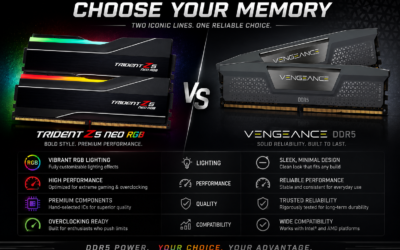
The G.SKILL Trident Z5 Neo RGB is a 64GB DDR5 kit targeting AMD Ryzen builders who want high-capacity, overclocked RAM without manual tuning. Running at DDR5-6000 CL30-40-40-96 with AMD EXPO, it achieves rated speeds via a single BIOS toggle on compatible X870, X670, and B650 boards. Owner feedback is highly positive, with reports of stable operation at rated speeds on Ryzen 7000 and 9000 CPUs. The main limitation is platform exclusivity - Intel builders should look elsewhere. Skip if your build uses a budget B650 board that may struggle to validate DDR5-6000 stability.
Who this guide is for
This guide is for desktop builders who want enough memory for gaming, streaming, school, office work, browser-heavy multitasking, and light creator workloads without constantly watching task manager. For many PCs, 16GB still runs basic apps, but 32GB gives you breathing room when a game, Discord, a browser, RGB software, and capture utilities are all open. You’ll especially notice the difference if you keep projects open for hours instead of rebooting between tasks.
It’s also for upgraders trying to avoid the DDR4 versus DDR5 trap. The G.SKILL Ripjaws V kit here is DDR4, while the Corsair, Kingston, and G.SKILL Trident Z5 Neo listings are DDR5. Those aren’t interchangeable. We skipped laptop SO-DIMMs, server ECC memory, and random single sticks because this article is about desktop kits. You’ll still need to match the kit to your motherboard’s memory slots, supported generation, and overclocking profile options.
What to look for in a 32GB RAM kit
Capacity comes first. A true 32GB desktop kit is usually 2x16GB, which keeps dual-channel operation simple on mainstream boards. In this product set, the G.SKILL Ripjaws V is 32GB (2x16GB), and the Kingston FURY Beast RGB is also 32GB (2x16GB). Two Corsair listings are 16GB (2x8GB), so they’re not 32GB kits even though they’re still relevant if you’re pricing DDR5 speed tiers. The G.SKILL Trident Z5 Neo RGB is 64GB (2x32GB), which is better viewed as an upsell for heavier workloads.
After capacity, check memory generation, speed, and latency. DDR4 3600MT/s CL18 is a familiar, stable target for older platforms. DDR5 6000MT/s CL30 is a stronger enthusiast spec for compatible AMD EXPO builds, while DDR5 5200MHz CL40 is more basic. Voltage matters too: the Ripjaws V lists 1.35V, the Corsair RGB RS lists 1.35V, and the Trident Z5 Neo lists 1.40V. Don’t buy based on RGB alone. Buy for the board and CPU you’re actually using.
How we evaluated
We researched the five provided listings by comparing capacity, module layout, memory generation, advertised speed, primary timings, voltage, platform profile language, price, and rating. The data includes prices from $229.99 to $924.99 and ratings from 4.0 to 4.8. Review counts weren’t available, so we didn’t treat popularity or owner volume as evidence. We only used specs stated in the product titles and item data.
The ranking favors correct fit over raw speed. A 6000MT/s CL30 kit can be excellent, but it’s the wrong purchase for a DDR4 motherboard. A 64GB kit can be powerful, but it doesn’t answer a strict 32GB shopping question for every buyer. We also considered how painful a mistake would be: wrong generation means no install, wrong capacity means no budget control, and chasing the priciest kit can starve the GPU or SSD budget. We’ve all seen that build list.
Our top picks
Best Overall: Kingston FURY Beast RGB 32GB DDR5 6000 CL30
The Kingston FURY Beast RGB 32GB kit is the cleanest overall pick for a modern DDR5 desktop. At $499.99 with a 4.2 rating, it’s not cheap, but the title gives the right headline specs: 32GB (2x16GB), 6000MT/s DDR5, CL30, AMD EXPO, and a kit-of-2 layout. For a new AMD-focused gaming or productivity build, that’s the combination many builders are actually trying to find.
The weakness is price. This Kingston kit costs more than the DDR4 G.SKILL Ripjaws V and more than both Corsair 16GB DDR5 kits in this set, so it only makes sense if your motherboard supports DDR5 and you specifically want 32GB at 6000MT/s with CL30. If you’re building a budget PC, it’s too much. If you’re building a current platform and want the right capacity plus strong timings without jumping to 64GB, it’s the best-aligned 32GB option here.
Best Budget: G.SKILL Ripjaws V 32GB DDR4 3600 CL18
The G.SKILL Ripjaws V 32GB kit is the budget pick for anyone staying on DDR4. At $229.99 with a 4.6 rating, it gives you 32GB as 2x16GB modules, 3600MT/s speed, CL18-22-22-42 timings, 1.35V, XMP support, and broad Intel AMD desktop wording in the title. That’s a strong spec set for older mainstream gaming PCs, especially if the motherboard already supports DDR4 and you don’t want a platform rebuild.
The catch is simple: it won’t fit a DDR5-only board. DDR4 and DDR5 use different platforms, so the lower price doesn’t help if you’re building around a current DDR5 motherboard. It also skips RGB, which some showcase builders may care about. We’d rather have the cleaner price and proven 2x16GB layout for a practical upgrade, though. If your board is DDR4, this is the kit that makes the most sense without paying for capacity you don’t need.
Best Entry DDR5: Corsair Vengeance DDR5 5200 CL40
The Corsair Vengeance DDR5 5200 kit is best viewed as an entry DDR5 option, not as the best 32GB kit by capacity. At $234.99 with a 4.4 rating, it lists 16GB (2x8GB), up to 5200MHz, CL40, and support language for AMD EXPO and Intel XMP 3.0. That makes it useful for a starter DDR5 desktop where cost is tight and the user is comfortable with 16GB for now.
The obvious downside is capacity. This is a 16GB kit, so it doesn’t satisfy the 32GB target unless you buy more memory later, and mixing kits can create compatibility headaches. The CL40 timing is also looser than the CL30 Kingston and G.SKILL Trident Z5 Neo options. Still, if you’re comparing the bottom of the DDR5 price ladder, this Corsair kit shows what you give up to stay near the DDR4 kit’s price: less capacity and a more basic timing spec.
Best RGB Starter DDR5: Corsair Vengeance RGB RS DDR5 6000 CL36
The Corsair Vengeance RGB RS DDR5 kit is the better-looking starter DDR5 option in this group. It costs $254.99, carries a 4.0 rating, and lists 16GB (2x8GB), up to 6000MHz, CL36-44-44-96 timings, 1.35V, AMD EXPO, and Intel XMP support. Compared with the other Corsair entry kit, you’re paying about $20 more for faster advertised speed, tighter CL36 primary latency, and RGB styling.
Again, the limitation is that this isn’t 32GB. Two 8GB modules can work for light gaming and everyday use, but they’re not the roomy 2026 target we’d choose for a new midrange PC. The 4.0 rating is also the lowest in this set. If you want RGB and a DDR5 6000 spec on a limited budget, it’s worth considering. If you came here specifically for a 32GB kit, the Kingston 2x16GB option is the more direct answer.
Best Heavy-Capacity Upgrade: G.SKILL Trident Z5 Neo RGB 64GB DDR5 6000 CL30
The G.SKILL Trident Z5 Neo RGB is the premium capacity pick, though it’s technically beyond the 32GB brief. At $924.99 with a 4.8 rating, it lists 64GB (2x32GB), DDR5, 6000MT/s, CL30-40-40-96 timings, 1.40V, AMD EXPO, and a matte black U-DIMM design. For workstation-leaning desktops, heavy browser sessions, large creative projects, and long multitasking workloads, 64GB can be comforting.
The problem is value for a normal gaming build. This kit costs far more than the 32GB Kingston kit, and many users won’t feel the extra capacity if their workload sits well under 32GB. It’s also branded in the data as GSkillInternationalEnterpriseCoLtd, but the product itself is clearly a G.SKILL Trident Z5 Neo RGB listing. Buy it only if 64GB is the plan from day one. Otherwise, don’t let the shiny high rating talk you into overspending.
Buying mistakes to avoid
The biggest mistake is buying the wrong memory generation. DDR4 kits don’t fit DDR5 boards, and DDR5 kits don’t fit DDR4 boards. Check the motherboard model before you compare prices. The second mistake is ignoring the module layout. A 2x16GB kit is usually the simple 32GB route for mainstream desktops, while a 2x8GB kit is only 16GB, even if the speed looks attractive.
Another common mistake is chasing speed while ignoring latency and platform profiles. DDR5 6000 CL30 is very different from DDR5 5200 CL40, and AMD EXPO or Intel XMP support can affect how easily the advertised profile applies in BIOS. Also watch total budget. Spending $924.99 on 64GB memory can be logical for a workstation, but it’s a strange choice if the same money would fix a weak graphics card or tiny SSD.
Bottom line
For a modern 32GB DDR5 build, the Kingston FURY Beast RGB 32GB 6000MT/s CL30 kit is the best overall match in this set. It gives you the target capacity, a 2x16GB layout, AMD EXPO support, and a strong latency spec. It costs $499.99, so it isn’t for bargain builds, but it’s the cleanest answer for a current desktop that actually needs 32GB.
For DDR4 systems, buy the G.SKILL Ripjaws V 32GB 3600MT/s CL18 kit at $229.99. For starter DDR5, the Corsair kits are cheaper but only 16GB, so know what you’re giving up. And if you need more than 32GB, the G.SKILL Trident Z5 Neo RGB 64GB kit is the capacity upgrade, not the default recommendation. Simple rule: match generation first, capacity second, speed and timings third.
One more point for 32GB kits: leave room for the platform you actually own. Two sticks are usually easier on the memory controller than four, especially when EXPO or XMP speeds climb, so a 2x16GB kit is the cleanest upgrade path for most gaming and creator builds.
Common questions
Is 32GB RAM enough for gaming in 2026?
Yes, 32GB is a comfortable target for most gaming PCs in 2026. It gives you room for the game, launcher, chat apps, browser tabs, and background utilities without making the system feel cramped. Some budget builds can still use 16GB, but we’d choose 32GB for a new midrange desktop. It’s the safer long-term pick.
Should I buy DDR4 or DDR5?
Buy the generation your motherboard supports. DDR4 and DDR5 are not interchangeable, so this isn’t a preference you can decide after the board is chosen. The G.SKILL Ripjaws V kit here is DDR4, while the Corsair, Kingston, and Trident Z5 Neo kits are DDR5. Check the board manual before ordering.
Is DDR5 6000 CL30 better than DDR5 5200 CL40?
On paper, yes. DDR5 6000 with CL30 is a stronger enthusiast-style spec than DDR5 5200 with CL40, assuming your motherboard and CPU handle the profile well. The Kingston 32GB kit and G.SKILL 64GB kit both list 6000MT/s CL30 specs. The Corsair 5200 kit is more of an entry DDR5 option.
Can I buy two 16GB kits later to reach 32GB?
You can, but it’s not the cleanest plan. Mixing kits can create profile issues, even if the brand and speed look similar. A matched 2x16GB kit is usually easier because the modules are sold together for that configuration. If you know you want 32GB, buy 32GB up front.
Is 64GB worth it over 32GB?
Only if your workload can use it. Heavy creation projects, virtual machines, large datasets, and extreme multitasking can make 64GB worthwhile. For normal gaming, 32GB is usually enough, and the money may be better spent elsewhere. The G.SKILL Trident Z5 Neo RGB 64GB kit is powerful, but it’s not the default value choice.
If you edit video or keep heavy games open beside browser tabs, that extra headroom prevents the system from leaning on slower storage.
For most buyers, two matched sticks remain the cleanest choice.




Write Your Review
No reviews yet. Be the first to share your experience!