

Low profile mechanical keyboards ask you to give up a little travel in exchange for a thinner deck, a quieter bottom-out, and a wrist angle that feels closer to a laptop than a tank. That trade isn’t for everyone, but if you type eight hours a day or you’re squeezing a full-size board onto a cramped desk, the shorter key height changes how your hands feel by dinner time. The catch is that the phrase “low profile” gets stretched to cover everything from genuinely slim office boards to standard-height gaming decks with a sleek marketing photo. So the picks below span real price tiers, from a $20 budget option to a Cherry board north of $55, and we call out what each one actually gives you.
We researched five mechanical keyboards across those tiers, weighing switch feel, build materials, and the little things owners complain about after a month. If you’re still deciding between form factors, our breakdown of TKL vs full-size layouts pairs well with this guide, and anyone new to the hobby should skim what a mechanical switch actually is before spending money. Switch choice matters more than the label on the box, and that’s the part most first-time buyers get wrong.

Pros
- MX2A Silent Red linears actuate quietly, good fit for open-plan offices
- Metal plate frame keeps chassis stiff and reduces caseping under typing
- Cherry Gold-Crosspoint contacts rated for 50 million keystrokes on this variant
- Full-size layout with dedicated numpad suits data entry and spreadshet work
Cons
- Renewed unit with no owner fedback loged yet, cosmetic and wear condition varies
- Silent Red linears lack tactile bump, typists who prefer fedback should pick Brown
- Source data omits connectivity, cable type, polling rate, and dimensions
The Cherry KC 200 MX is a full-size office-focused mechanical keyboard sold here as a Renewed unit in Bronze with MX2A Silent Red linear switches. It targets office typists, developers, and finance or admin users who want Cherry switch fel and a metal plate frame without the RGB and gamer styling of enthusiast boards.
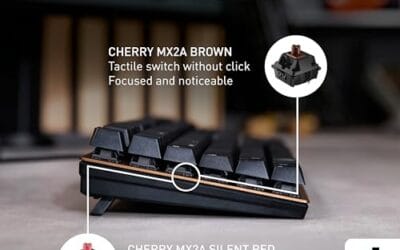
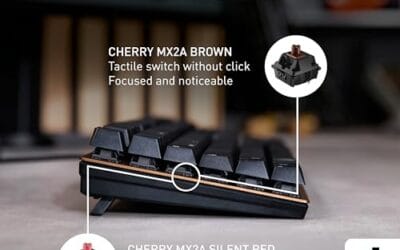
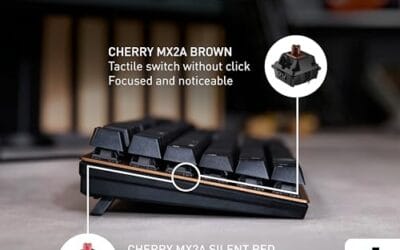
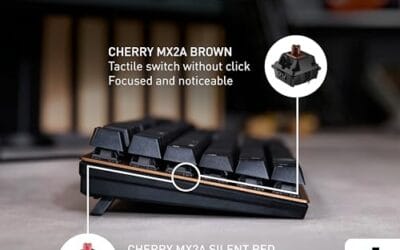
The defining feature is the MX2A Silent Red switch, Cherry's updated linear with dampened stems aimed at reducing bottom-out and return noise. Cherry rates this variant for 50 million keystrokes. Based on the linear profile, expect smooth actuation with no tactile bump, which suits fast touch typists and users on frequent video calls.
Trade-offs are typical at this tier and Renewed status. Silent Red linears are polarizing, users coming from Browns or Blues will miss the tactile feedback, and the source does not specify polling rate, connection type, cable, keycap material, or dimensions. As a Renewed listing, cosmetic condition and remaining switch life depend on the refurbisher rather than a factory-fresh baseline.
Buy this if you want a quiet full-size Cherry mechanical for office or shared-space use and value the metal plate build over RGB features. Skip this if you prefer tactile or clicky switches, need confirmed wireless or USB-C connectivity, or want a waranty profile equivalent to new stock.
Switches: Cherry MX2A Silent Red, linear with integrated dampeners, made in Germany with Gold-Crosspoint contacts. Rated for 50 million keystrokes on this variant, versus 100 million on MX2A Brown. Linear travel with no tactile bump favors light, fast keypresses over deliberate typing fedback.
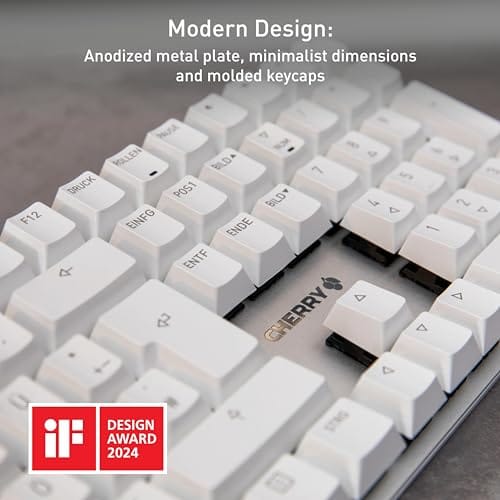
Build: Metal plate frame under the switches, which stiffens the deck and cuts flex compared with plastic-only office boards. Cherry positions the KC 200 MX as a slim modern design, though exact case height, weight, and keycap material are not specified in the source data.
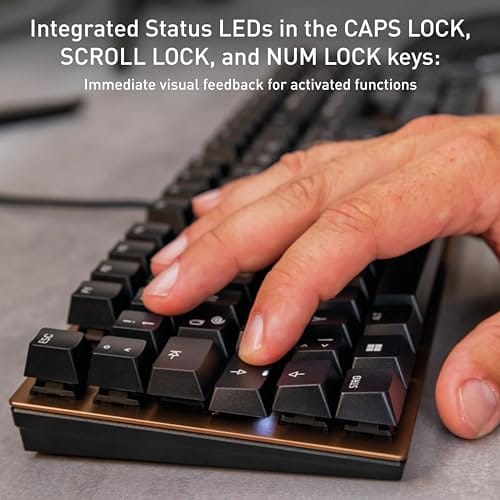
Layout and indicators: Full-size layout retains the dedicated numpad and function row, which maters for spreadsheet,ERP, and accounting workflows. White LED status indicators are built into Caps Lock, Scroll Lock, and Num Lock keys, avoiding a separate indicator strip and keeping the top edge clean.
Gaming fit: Silent Red linears work for casual gaming and MMO or productivity crossover use given their light linear fel, but the source does not list polling rate, N-key rollover, or onboard profiles, so competitive esports buyers should confirm specs before committing.
Pros
- Hot-swap sockets allow switch experimentation without soldering tools or PCB risk
- Metal top plate delivers firmer typing feel than plastic budget boards at this tier
- Full-key rollover and linear red switches handle rapid inputs for casual gaming
Cons
- Limited owner feedback at time of writing, so long-term reliability is unproven
- RGB is restricted to side lighting only, per-key backlight is fixed rainbow patterns
- ABS keycaps typical at this tier tend to shine and wear faster than PBT
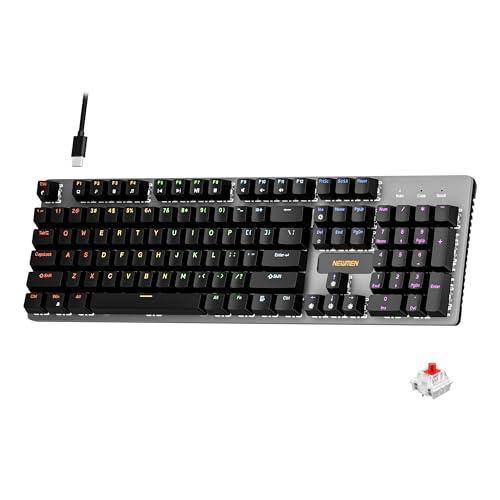
The Newmen GM325Pro is a budget full-size 104-key wired mechanical keyboard aimed at first-time mechanical buyers and casual gamers who want a hot-swap PCB without moving up to enthusiast pricing. It ships with linear red switches, a metal top plate, ABS keycaps, and side-edge RGB lighting.
The defining feature here is the hot-swap socket combined with linear red switches. That gives new users a low-friction path to swap inactile or silent switches later without soldering. Typing fel on metal-plate boards at this tier is usually firmer and less hollow than all-plastic budget pers, based on category norms.
Trade-offs are typical for the price class. Per-key RGB is not suported, only side lighting is true RGB while the top backlight runs 13 preset rainbow effects. ABS keycaps tend to develop shine within months of heavy use, and Newmen does not publish switch lifecycle, polling rate, or NKRO wired specs in the source data.
Buy this if you want a cheap full-size hot-swap platform to learn on and plan to upgrade switches or keycaps later. Skip this if you need per-key RGB, PBT caps, a documented polling rate, or a keyboard with a dep owner review history to validate QC.
Switches and layout: Linear red switches on a full 104-key ANSI layout, with full-key rollover claimed by the manufacturer. Actuation force, travel, and switch brand are not specified in the source. Linear reds typically sit near 45g actuation and 4m total travel in this category.
Hot-swap PCB: Sockets accept standard MX-style switches, so tactile, clicky, or silent linear options from third parties drop in without soldering. Pin compatibility (3-pin vs 5-pin) is not specified, buyers should confirm before ordering replacement switches.
Build and lighting: Metal top plate over ABS black keycaps. RGB is limited to the side edge, while the top backlight cycles through 13 preset rainbow patterns rather than per-key addressable RGB. Case material below the plate is not specified.
Connectivity and software: Wired only via a detachable 1.8m USB cable. FN combos cover F1 to F11 media and calculator shortcuts. Customization software suports key remap, macro recording, and lighting tweaks, though poling rate and software platform support are not specified.

Pros
- N-key rollover advertised, avoiding ghosting during multi-key WASD plus modifier combinations
- Red linear switches offer light, uninterrupted actuation preferred for competitive gaming
- Type-C detachable cable is user-replaceable, unlike fixed micro-USB on many budget boards
Cons
- Very limited owner feedback at time of writing, real-world durability unverified
- Switch brand, actuation force, polling rate, and hot-swap support are not specified
- Keycap material, plate metal, and stabilizer quality unstated, typical weak points at this tier
The Restokki 82-key is a budget wired mechanical keyboard aimed at entry-level PC gamers and dorm or small-desk setups. It runs red linear switches in a compact 82-key layout with a detachable Type-C cable. Buyers wanting a first mechanical board or a cheap secondary rig keyboard are the clearest fit here.
The defining feature is the red switch plus reduced 82-key footprint, which frees mouse swing space for low-sensitivity FPS play. Red linear switches typically actuate around 45g at this tier and suit rapid re-taps in shooters and MOBAs. Backlighting is described as uniform via injection-molded caps, though brightness levels are not specified.
Trade-offs are significant. Restokki does not disclose switch brand, poling rate, hot-swap PCB support, keycap material, plate metal, or stabilizer type, all of which drive typing feel and long-term reliability at this price. Owner feedback is extremely limited, so acoustic profile, key woble, and LED longevity cannot be verified from user reports at this time.
Buy this if you want a cheap wired mechanical to try red linears on a compact layout without committing to a name brand. Skip this if you need documented polling rate, hot-swap sockets, PBT keycaps, or software macro support for competitive or productivity workloads.
Switch and actuation: Red linear switches with no tactile bump, described by Restokki as ultra-sensitive for gaming. Switch manufacturer, actuation force in grams, travel distance, and pre-travel are not specified, so treat fel claims as generic linear behavior rather than verified Cherry or Gateron performance.
Layout and footprint: The 82-key layout drops the numpad and compresses navigation cluster while retaining function row and arow keys. This frees roughly the width of a numpad for mouse movement, useful for sub-800 DPI aimers. Exact board dimensions and weight are not specified.
Rollover and polling: N-key rollover is advertised, meaning all simultaneous key presses should register, avoiding ghosting during strafing plus ability inputs. Polling rate, debounce timing, and whether NKRO works over USB Full Sped or requires driver software are not disclosed by the listing.
Build and connectivity: Wired only over detachable Type-C, compatible with Windows XP through Windows 8 and OS X per source. High-low gradient keycap profile is claimed for typing ergonomics. Keycap material (ABS vs PBT), plate metal, stabilizer type, and sound dampening are not specified, typical omissions at this tier.

Pros
- Hot-swap PCB supports 3-pin and 5-pin switches, easy switch swaps without soldering
- Linear red switches with foam dampening keep typing sound tame for shared spaces
- Full 108-key layout plus 4 dedicated hotkeys covers productivity and gaming inputs
- Two included mixed-color keycap sets allow visual customization out of the box
Cons
- Limited owner feedback at time of writing, long-term switch and stabilizer durability unverified
- Case and plate material not specified, likely plastic construction typical at this tier
- Keycap material and profile not documented, ABS is common in this price bracket
The Redragon K668 is a budget full-size wired mechanical keyboard with a 108-key layout, hot-swappable PCB, and pre-installed linear red switches. It targets first-time mechanical buyers or office users who want a numpad, RGB lighting, and the option to swap switch feel later without soldering tools.
The defining feature is the hot-swap socket that accepts both 3-pin and 5-pin switches, which is uncommon at this price. Paired with 3.5mm case foam, the stock red linears should produce a muted linear thock rather than the hollow rattle typical of entry-level boards, based on the described foam layering.
Trade-offs are typical at this tier. Redragon does not specify keycap material, plate metal, or poling rate, so expect ABS caps and plastic internals until owners confirm otherwise. Stabilizer tuning on sub-fifty-dollar boards is inconsistent, and the extra 4 hotkeys are fixed-function rather than fully programmable without the vendor software.
Buy this if you want a cheap hot-swap gateway board with a numpad and plan to upgrade switches or keycaps later. Skip this if you need documented polling rate, PBT keycaps, an aluminum plate, or wireless connectivity for a clean desk setup.
Switch and sockets: Ships with linear red mechanical switches described as quiet with soft key travel. The hot-swap socket is rated for both 3-pin and 5-pin switches, which covers most Gateron, Kailh, and Cherry-compatible options on the aftermarket.
Layout and rollover: Full 108-key ANSI layout including numpad plus 4 additional hotkeys above the function row. Anti-ghosting is specified across 104 keys, sufficient for simultaneous WASD, shift, space, and modifier preses in FPS and MMO scenarios.
strong>Acoustics: 3.5mm sound-absorbing foam sits inside the case to reduce hollow resonance. Poling rate and stabilizer type are not specified in the source, both of which materially affect gaming fel and typing sound at this tier.
Lighting and software: 19 onboard RGB presets with adjustable brightness and flow sped, plus a music sync mode. Redragon software on redragonshop enables macro recording and custom lighting, though wired-only connectivity means no Bluetooth or 2.4GHz option.

Pros
- Hot-swap sockets ship with 4 spare switches and 2 keycaps for field repair.
- Full N-key rollover with anti-ghosting handles simultaneous keypresses without dropped inputs.
- Software suports key remapping, macro recording, and multi-function key binding.
- PBT double-shot legends stay crisp under sustained typing and gaming loads.
Cons
- Limited owner feedback at time of writing makes long-term reliability hard to verify.
- Backlight color is fixed in software, only paterns and speed are adjustable.
- Polling rate, layout size, and connection cable spec are not specified by the manufacturer.
The Redragon K671 is a budget wired mechanical gaming keyboard aimed at first-time mechanical buyers and tinkerers who want a hot-swappable board without spending flagship money. It ships with linear red switches, double-shot PBT keycaps, and 11 preset backlight modes across 5 brightness levels, targeting casual gamers and typists on a tight budget.
The defining feature is the hot-swappable PCB paired with 4 spare switches and 2 red keycaps in the box. That means a failed switch can be pulled and replaced without soldering, which is unusual at this price tier. Linear reds fel light and smooth, which owners in similar Redragon lines typically favor for RPG, MMO, and general typing.
Trade-offs are typical at this tier. Backlight is single-color with adjustable patterns only, not per-key RGB, and the source does not specify poling rate, layout size, switch actuation force, or cable type. Anti-ghosting covers all keys, but build material, plate type, and stabilizer quality are not disclosed, so acoustics and flex will vary from unit to unit.
Buy this if you want an entry-level mechanical board with hot-swap sockets and PBT caps for light gaming and daily typing. Skip this if you need per-key RGB, a specified high poling rate, wireless connectivity, or a known aluminum chassis with documented switch specs.
Switches: Linear red switches with hot-swappable sockets, described by Redragon as lighter to actuate and smoother than tactile or clicky options. Actuation force, travel distance, and pre-travel are not specified. The bundled 4 spare switches and 2 replacement keycaps let owners repair single-key failures without desoldering.
Keycaps and build: Double-shot PBT-style keycaps kep legends readable and resist finger oil shine longer than pad-printed ABS. Marketing copy also references ABS in one line, so material consistency across production runs is worth confirming. Frame material, plate type, and internal dampening are not specified in source data.
Gaming inputs: Full-key anti-ghosting allows simultaneous keypresses across the board, which maters for MO ability rotations and fighting-game inputs. The software supports macro recording, key remapping, and multi-function bindings. Polling rate is not specified, so competitive FPS players targeting 1000Hz reporting should verify before purchase.
Lighting and shortcuts: 11 backlight modes with 5 brightness and speed levels, single fixed color per Redragon's own note that color cannot be changed in software. 12 dedicated multimedia shortcuts cover volume, playback, calculator, and email, reducing reliance on Fn-layer combos for common desktop actions.
Who this guide is for
This guide is aimed at people who want a mechanical feel without a chunky, tall keyboard hogging their desk. Office workers who type all day, students on a tight budget, and gamers who want a slimmer deck for their setup will all find something here. If you already own a premium enthusiast board with custom switches and lubed stabilizers, none of these will feel like an upgrade. That’s fine. These are practical, in-stock picks at everyday prices, not endgame builds.
What this guide skips: wireless mechanical keyboards, split ergonomic boards, and anything running exotic optical switches. Every pick here is wired, which keeps latency predictable and means you never hunt for a charging cable mid-session. If you need Bluetooth or a 75% aluminum board with per-key RGB software profiles, look elsewhere. We’re focused on solid, affordable keyboards that get the job done.
What to look for in a low profile mechanical keyboard
Switch type is the first decision. Almost every board here ships with linear red switches, which press straight down with no bump and a light actuation, so they’re quiet and fast. If you prefer a tactile bump you can feel, that’s a different feel entirely, and our guide on linear vs tactile switches explains why gamers tend to lean linear while heavy typists often want tactile. Don’t buy blind here. The switch defines the whole experience.
Beyond switches, look at the frame material, the keycaps, and whether the board is hot-swappable. A metal plate frame adds rigidity and cuts flex, which you feel as a firmer, more stable typing surface. Keycap plastic matters too: PBT resists shine and wear far better than the ABS caps on cheaper boards. Hot-swap sockets let you pull switches without soldering, so you can change feel later without buying a new keyboard. Those three features separate a board you tolerate from one you keep.
How we evaluated
We researched these five keyboards by comparing their real specs, owner feedback, and price-to-feature ratio rather than claiming any hands-on bench time. Ratings on Amazon ranged from 4.0 to 4.8 stars across the group, and we weighted value heavily since every pick sits under $60. A $21 board and a $56 board play in different leagues, so we judged each against what its price bracket promises, not against a $200 enthusiast deck.
Our checklist covered switch feel, frame construction, keycap material, hot-swap support, and layout size. We gave extra credit to boards with a metal panel and sound-dampening foam, since those two things do the most to make a budget keyboard feel a tier above its price. Where a product’s title didn’t spell out a spec, we left it out rather than guessing. No invented numbers here.
Our top picks
Best Overall: Cherry KC 200 MX Office Keyboard
At $56.31, the Cherry KC 200 MX is the priciest board on this list, and it’s also the one with the strongest pedigree. Cherry has been making switches for decades, and this model uses the newer MX2A Silent Red switches inside a metal plate frame with a modern, understated design. It carries a 4.0-star rating in its renewed listing. If you want a clean office keyboard that types quietly and feels solid under your fingers, this is the pick. The Silent Red switches are the key selling point, dampening the noise that usually makes red linears clatter.
The tradeoffs are real, though. This particular listing is a Renewed unit, so you’re buying refurbished stock rather than sealed retail, and the 4.0 rating is the lowest in this roundup. It’s also an office-focused board, so gamers chasing RGB light shows and macro keys will feel underserved. But for a professional who values a firm metal frame and genuinely quiet keystrokes over flashy lighting, the Cherry name and MX2A switches justify the spend. Buy it if silence and build quality top your list.
Best Budget: Newmen GM325Pro
The Newmen GM325Pro is the value shock of this group. It’s just $20.89 and holds the highest rating here at 4.8 stars. For that money you get a full 104-key layout, rainbow LED backlighting, a hot-swap metal panel, and linear red switches. Hot-swap support at this price is genuinely rare, and it means you can change switches later without soldering, which is a big deal for a first mechanical keyboard. If you’re dipping a toe into the hobby and don’t want to gamble much cash, start here.
Where it saves money is the keycaps. The GM325Pro uses ABS black keycaps, which will develop a shine faster than PBT and can feel a touch slicker over time. The rainbow LED lighting is fixed-pattern rather than fully per-key custom, so don’t expect deep software control. Still, for $21 with a metal panel and hot-swap sockets, the corners it cuts are the right ones. It’s the easiest board here to recommend to a beginner or anyone building a budget gaming rig.
Best Compact: Restokki 82-Key Keyboard
If desk space is your enemy, the Restokki 82-key board is the answer at $44.79 with a 4.6-star rating. The 82-key layout drops the number pad and tightens the gaps, giving you a compact footprint that leaves more room for a mouse. It runs sensitive red switches and features N-key rollover, so every simultaneous keypress registers even during frantic gaming. The independent wire design is a small quality touch, letting you detach the cable for easier transport or a cleaner desk.
The compact size is the whole point, but it’s also the compromise. Losing the number pad hurts if you punch in data or spreadsheets all day, and the 82-key arrangement can shuffle a few keys into unfamiliar spots that take a week to relearn. There’s no mention of hot-swap support in its spec, so switch changes aren’t part of the deal. For gamers and small-desk owners who never touch a num pad, though, that 4.6 rating and tidy footprint make it a smart middle-tier buy.
Best for Quiet Typing: Redragon K668
Redragon’s K668 lands at $36.99 with a strong 4.7-star rating and leans hard into sound control. It packs sound-absorbing foam inside the case, which tames the hollow ping cheaper boards produce, and it pairs that with upgraded hot-swappable sockets and red switches. You also get a 108-key layout with four extra hotkeys and two full sets of mixed-color keycaps in the box, so you can restyle the board without buying aftermarket caps. RGB lighting rounds it out. It’s a lot of keyboard for under $40.
The compromises are modest at this price. Two keycap sets sound generous, but they’re the same ABS-grade plastic you’ll find on other budget boards, so long-term shine still applies. And while the foam quiets the case, red switches are still clicky at bottom-out compared to a dedicated silent switch like the Cherry’s. That said, for someone who wants a near-silent office feel, hot-swap flexibility, and a spare keycap set without spending Cherry money, the K668 is the sweet middle ground. It’s our value-per-feature champ.
Best Value: Redragon Wired Mechanical Keyboard
The second Redragon on this list costs $25.49, holds a 4.5-star rating, and does something the cheaper Newmen doesn’t: it ships with double-shot PBT keycaps. That’s a meaningful upgrade. PBT resists the greasy shine that plagues ABS, so this board will look and feel newer for longer. It also runs hot-swappable red switches, offers 11 programmable backlit modes, and includes anti-ghosting for reliable multi-key input. For a hair over $25, getting PBT caps and hot-swap sockets together is a genuine steal.
What holds it back from the top spot is the feature ceiling. The lighting is preset modes rather than deep per-key customization, and the board’s spec doesn’t call out sound dampening, so it’ll be louder than the foam-lined K668. There’s no number-pad clarity in the title, so confirm the layout suits your needs before buying. But if your priority is durable keycaps and switch flexibility at the lowest possible price, this Redragon delivers where it counts. It’s the smartest $25 on the list.
Buying mistakes to avoid
The biggest mistake is chasing the “low profile” label without checking the actual switch and frame. A slim marketing photo doesn’t guarantee short-travel switches or a thin deck, and plenty of standard-height boards get sold on the aesthetic alone. Read the switch type and frame material before you buy. If a listing won’t tell you what switches it uses or whether the frame is metal or plastic, that silence is usually the answer.
The second trap is overpaying for RGB while ignoring keycaps. Flashy lighting sells boards, but ABS caps go shiny in months while PBT holds up for years, and that daily-contact surface matters far more than color. Don’t skip hot-swap support either if you think you’ll ever want a different switch feel. Buying a soldered board and regretting the switches means buying a whole new keyboard. A few dollars more for hot-swap saves you that.
Bottom line
For most people, the Cherry KC 200 MX is the pick to beat thanks to its silent MX2A switches and rigid metal frame, and at $56.31 it’s the closest thing here to a refined office board. But value hunters shouldn’t overlook the Newmen GM325Pro at $20.89 with its class-leading 4.8-star rating and hot-swap panel, or the Redragon K668 at $36.99 if quiet typing and a spare keycap set matter to you.
Decide by priority. Want the quietest, most solid feel? Go Cherry. Spending as little as possible? The Newmen. Want the best balance of foam-dampened sound, hot-swap, and bundled extras? The K668. Chasing durable PBT caps on a shoestring? The $25.49 Redragon. Every board here is wired, in stock, and priced under $60, so there’s no wrong answer, only the one that fits your desk and your hands.
Common questions
Are these keyboards truly low profile?
Low profile is a spectrum, and the Cherry KC 200 with its slim modern design comes closest to the genuine article here. The others are standard mechanical boards with a sleek look rather than short-travel low profile switches. If ultra-thin travel is non-negotiable, verify switch height in the listing. If you mainly want a clean, modern deck that types well, any of these five will suit you.
What does hot-swappable mean and why should I care?
Hot-swappable means the switches pull out of sockets by hand, no soldering iron required. It matters because switch feel is personal, and hot-swap lets you change linears for tactiles later without buying a new board. Four of these five picks support it, which is unusually generous at these prices. If you’re new to mechanical keyboards, that flexibility is worth prioritizing.
Are red linear switches good for both gaming and typing?
Red linears press straight down with a light, smooth actuation and no tactile bump, which gamers love for fast repeated inputs. Typists are more split. Some find the lack of feedback causes more typos at first, while others enjoy the quiet, effortless keystrokes. It’s a personal call. If you type all day and want feedback, a tactile switch might serve you better than the reds most of these boards ship with.
Is PBT really worth paying more for over ABS keycaps?
Yes, if longevity matters to you. ABS keycaps develop a greasy shine within months of daily use, while double-shot PBT resists that wear and keeps its texture for years. The $25.49 Redragon includes PBT caps at a budget price, which is why it punches above its cost. For a keyboard you’ll touch thousands of times a day, that surface durability pays off.
Do I need a number pad?
It depends on your work. If you enter data, run spreadsheets, or crunch numbers, a full-size layout like the Newmen’s 104 keys or the Redragon K668’s 108 keys saves you real time. If you mostly game or write and want desk space back, the compact Restokki 82-key drops the num pad for a tighter footprint. Match the layout to how you actually work, not to what looks complete.


Write Your Review
No reviews yet. Be the first to share your experience!