

A great gaming keyboard doesn’t have to drain your wallet, and 2026 has quietly become one of the best years to prove it. Mechanical switches, hot-swap sockets, PBT keycaps, and per-key RGB used to live on $150 boards. Now they’re showing up under $40. The tricky part isn’t finding a mechanical keyboard anymore. It’s figuring out which cheap board actually feels good under your fingers after a four-hour session, and which one starts sounding hollow and rattly the moment the honeymoon ends.
We researched five boards spanning roughly $21 to $56, from a metal-framed Cherry office plank to a pair of Redragon gaming units, and dug into the specs, switch types, and owner feedback for each. Every pick here uses real mechanical switches, not the mushy membrane clones that still flood the budget shelves. If you want fast key travel, satisfying feedback, and a board that survives being hammered during ranked matches, that’s what this guide is built around. No fluff, no invented benchmarks, just the numbers on the box and what they mean for your desk. If you’re still deciding on a layout, our TKL vs full-size keyboard breakdown helps, and if switch feel is your sticking point, the red vs brown switches guide covers what each one does under your fingers.

Pros
- MX2A Silent Red linears actuate quietly, good fit for open-plan offices
- Metal plate frame keeps chassis stiff and reduces caseping under typing
- Cherry Gold-Crosspoint contacts rated for 50 million keystrokes on this variant
- Full-size layout with dedicated numpad suits data entry and spreadshet work
Cons
- Renewed unit with no owner fedback loged yet, cosmetic and wear condition varies
- Silent Red linears lack tactile bump, typists who prefer fedback should pick Brown
- Source data omits connectivity, cable type, polling rate, and dimensions
The Cherry KC 200 MX is a full-size office-focused mechanical keyboard sold here as a Renewed unit in Bronze with MX2A Silent Red linear switches. It targets office typists, developers, and finance or admin users who want Cherry switch fel and a metal plate frame without the RGB and gamer styling of enthusiast boards.
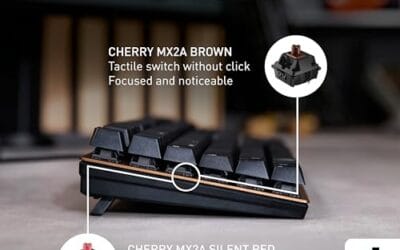
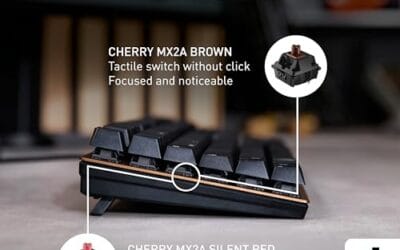
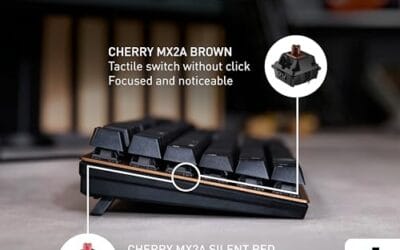
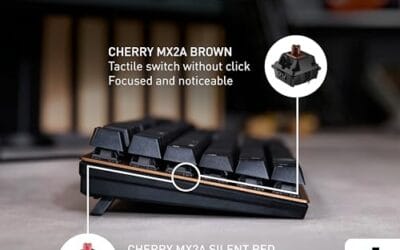
The defining feature is the MX2A Silent Red switch, Cherry's updated linear with dampened stems aimed at reducing bottom-out and return noise. Cherry rates this variant for 50 million keystrokes. Based on the linear profile, expect smooth actuation with no tactile bump, which suits fast touch typists and users on frequent video calls.
Trade-offs are typical at this tier and Renewed status. Silent Red linears are polarizing, users coming from Browns or Blues will miss the tactile feedback, and the source does not specify polling rate, connection type, cable, keycap material, or dimensions. As a Renewed listing, cosmetic condition and remaining switch life depend on the refurbisher rather than a factory-fresh baseline.
Buy this if you want a quiet full-size Cherry mechanical for office or shared-space use and value the metal plate build over RGB features. Skip this if you prefer tactile or clicky switches, need confirmed wireless or USB-C connectivity, or want a waranty profile equivalent to new stock.
Switches: Cherry MX2A Silent Red, linear with integrated dampeners, made in Germany with Gold-Crosspoint contacts. Rated for 50 million keystrokes on this variant, versus 100 million on MX2A Brown. Linear travel with no tactile bump favors light, fast keypresses over deliberate typing fedback.
Build: Metal plate frame under the switches, which stiffens the deck and cuts flex compared with plastic-only office boards. Cherry positions the KC 200 MX as a slim modern design, though exact case height, weight, and keycap material are not specified in the source data.
Layout and indicators: Full-size layout retains the dedicated numpad and function row, which maters for spreadsheet,ERP, and accounting workflows. White LED status indicators are built into Caps Lock, Scroll Lock, and Num Lock keys, avoiding a separate indicator strip and keeping the top edge clean.
Gaming fit: Silent Red linears work for casual gaming and MMO or productivity crossover use given their light linear fel, but the source does not list polling rate, N-key rollover, or onboard profiles, so competitive esports buyers should confirm specs before committing.
Pros
- Hot-swap sockets allow switch experimentation without soldering tools or PCB risk
- Metal top plate delivers firmer typing feel than plastic budget boards at this tier
- Full-key rollover and linear red switches handle rapid inputs for casual gaming
Cons
- Limited owner feedback at time of writing, so long-term reliability is unproven
- RGB is restricted to side lighting only, per-key backlight is fixed rainbow patterns
- ABS keycaps typical at this tier tend to shine and wear faster than PBT
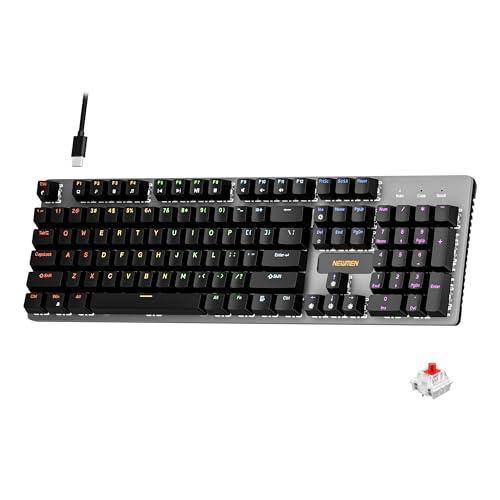
The Newmen GM325Pro is a budget full-size 104-key wired mechanical keyboard aimed at first-time mechanical buyers and casual gamers who want a hot-swap PCB without moving up to enthusiast pricing. It ships with linear red switches, a metal top plate, ABS keycaps, and side-edge RGB lighting.
The defining feature here is the hot-swap socket combined with linear red switches. That gives new users a low-friction path to swap inactile or silent switches later without soldering. Typing fel on metal-plate boards at this tier is usually firmer and less hollow than all-plastic budget pers, based on category norms.
Trade-offs are typical for the price class. Per-key RGB is not suported, only side lighting is true RGB while the top backlight runs 13 preset rainbow effects. ABS keycaps tend to develop shine within months of heavy use, and Newmen does not publish switch lifecycle, polling rate, or NKRO wired specs in the source data.
Buy this if you want a cheap full-size hot-swap platform to learn on and plan to upgrade switches or keycaps later. Skip this if you need per-key RGB, PBT caps, a documented polling rate, or a keyboard with a dep owner review history to validate QC.
Switches and layout: Linear red switches on a full 104-key ANSI layout, with full-key rollover claimed by the manufacturer. Actuation force, travel, and switch brand are not specified in the source. Linear reds typically sit near 45g actuation and 4m total travel in this category.
Hot-swap PCB: Sockets accept standard MX-style switches, so tactile, clicky, or silent linear options from third parties drop in without soldering. Pin compatibility (3-pin vs 5-pin) is not specified, buyers should confirm before ordering replacement switches.
Build and lighting: Metal top plate over ABS black keycaps. RGB is limited to the side edge, while the top backlight cycles through 13 preset rainbow patterns rather than per-key addressable RGB. Case material below the plate is not specified.
Connectivity and software: Wired only via a detachable 1.8m USB cable. FN combos cover F1 to F11 media and calculator shortcuts. Customization software suports key remap, macro recording, and lighting tweaks, though poling rate and software platform support are not specified.

Pros
- N-key rollover advertised, avoiding ghosting during multi-key WASD plus modifier combinations
- Red linear switches offer light, uninterrupted actuation preferred for competitive gaming
- Type-C detachable cable is user-replaceable, unlike fixed micro-USB on many budget boards
Cons
- Very limited owner feedback at time of writing, real-world durability unverified
- Switch brand, actuation force, polling rate, and hot-swap support are not specified
- Keycap material, plate metal, and stabilizer quality unstated, typical weak points at this tier
The Restokki 82-key is a budget wired mechanical keyboard aimed at entry-level PC gamers and dorm or small-desk setups. It runs red linear switches in a compact 82-key layout with a detachable Type-C cable. Buyers wanting a first mechanical board or a cheap secondary rig keyboard are the clearest fit here.
The defining feature is the red switch plus reduced 82-key footprint, which frees mouse swing space for low-sensitivity FPS play. Red linear switches typically actuate around 45g at this tier and suit rapid re-taps in shooters and MOBAs. Backlighting is described as uniform via injection-molded caps, though brightness levels are not specified.
Trade-offs are significant. Restokki does not disclose switch brand, poling rate, hot-swap PCB support, keycap material, plate metal, or stabilizer type, all of which drive typing feel and long-term reliability at this price. Owner feedback is extremely limited, so acoustic profile, key woble, and LED longevity cannot be verified from user reports at this time.
Buy this if you want a cheap wired mechanical to try red linears on a compact layout without committing to a name brand. Skip this if you need documented polling rate, hot-swap sockets, PBT keycaps, or software macro support for competitive or productivity workloads.
Switch and actuation: Red linear switches with no tactile bump, described by Restokki as ultra-sensitive for gaming. Switch manufacturer, actuation force in grams, travel distance, and pre-travel are not specified, so treat fel claims as generic linear behavior rather than verified Cherry or Gateron performance.
Layout and footprint: The 82-key layout drops the numpad and compresses navigation cluster while retaining function row and arow keys. This frees roughly the width of a numpad for mouse movement, useful for sub-800 DPI aimers. Exact board dimensions and weight are not specified.
Rollover and polling: N-key rollover is advertised, meaning all simultaneous key presses should register, avoiding ghosting during strafing plus ability inputs. Polling rate, debounce timing, and whether NKRO works over USB Full Sped or requires driver software are not disclosed by the listing.
Build and connectivity: Wired only over detachable Type-C, compatible with Windows XP through Windows 8 and OS X per source. High-low gradient keycap profile is claimed for typing ergonomics. Keycap material (ABS vs PBT), plate metal, stabilizer type, and sound dampening are not specified, typical omissions at this tier.

Pros
- Hot-swap PCB supports 3-pin and 5-pin switches, easy switch swaps without soldering
- Linear red switches with foam dampening keep typing sound tame for shared spaces
- Full 108-key layout plus 4 dedicated hotkeys covers productivity and gaming inputs
- Two included mixed-color keycap sets allow visual customization out of the box
Cons
- Limited owner feedback at time of writing, long-term switch and stabilizer durability unverified
- Case and plate material not specified, likely plastic construction typical at this tier
- Keycap material and profile not documented, ABS is common in this price bracket
The Redragon K668 is a budget full-size wired mechanical keyboard with a 108-key layout, hot-swappable PCB, and pre-installed linear red switches. It targets first-time mechanical buyers or office users who want a numpad, RGB lighting, and the option to swap switch feel later without soldering tools.
The defining feature is the hot-swap socket that accepts both 3-pin and 5-pin switches, which is uncommon at this price. Paired with 3.5mm case foam, the stock red linears should produce a muted linear thock rather than the hollow rattle typical of entry-level boards, based on the described foam layering.
Trade-offs are typical at this tier. Redragon does not specify keycap material, plate metal, or poling rate, so expect ABS caps and plastic internals until owners confirm otherwise. Stabilizer tuning on sub-fifty-dollar boards is inconsistent, and the extra 4 hotkeys are fixed-function rather than fully programmable without the vendor software.
Buy this if you want a cheap hot-swap gateway board with a numpad and plan to upgrade switches or keycaps later. Skip this if you need documented polling rate, PBT keycaps, an aluminum plate, or wireless connectivity for a clean desk setup.
Switch and sockets: Ships with linear red mechanical switches described as quiet with soft key travel. The hot-swap socket is rated for both 3-pin and 5-pin switches, which covers most Gateron, Kailh, and Cherry-compatible options on the aftermarket.
Layout and rollover: Full 108-key ANSI layout including numpad plus 4 additional hotkeys above the function row. Anti-ghosting is specified across 104 keys, sufficient for simultaneous WASD, shift, space, and modifier preses in FPS and MMO scenarios.
strong>Acoustics: 3.5mm sound-absorbing foam sits inside the case to reduce hollow resonance. Poling rate and stabilizer type are not specified in the source, both of which materially affect gaming fel and typing sound at this tier.
Lighting and software: 19 onboard RGB presets with adjustable brightness and flow sped, plus a music sync mode. Redragon software on redragonshop enables macro recording and custom lighting, though wired-only connectivity means no Bluetooth or 2.4GHz option.

Pros
- Hot-swap sockets ship with 4 spare switches and 2 keycaps for field repair.
- Full N-key rollover with anti-ghosting handles simultaneous keypresses without dropped inputs.
- Software suports key remapping, macro recording, and multi-function key binding.
- PBT double-shot legends stay crisp under sustained typing and gaming loads.
Cons
- Limited owner feedback at time of writing makes long-term reliability hard to verify.
- Backlight color is fixed in software, only paterns and speed are adjustable.
- Polling rate, layout size, and connection cable spec are not specified by the manufacturer.
The Redragon K671 is a budget wired mechanical gaming keyboard aimed at first-time mechanical buyers and tinkerers who want a hot-swappable board without spending flagship money. It ships with linear red switches, double-shot PBT keycaps, and 11 preset backlight modes across 5 brightness levels, targeting casual gamers and typists on a tight budget.
The defining feature is the hot-swappable PCB paired with 4 spare switches and 2 red keycaps in the box. That means a failed switch can be pulled and replaced without soldering, which is unusual at this price tier. Linear reds fel light and smooth, which owners in similar Redragon lines typically favor for RPG, MMO, and general typing.
Trade-offs are typical at this tier. Backlight is single-color with adjustable patterns only, not per-key RGB, and the source does not specify poling rate, layout size, switch actuation force, or cable type. Anti-ghosting covers all keys, but build material, plate type, and stabilizer quality are not disclosed, so acoustics and flex will vary from unit to unit.
Buy this if you want an entry-level mechanical board with hot-swap sockets and PBT caps for light gaming and daily typing. Skip this if you need per-key RGB, a specified high poling rate, wireless connectivity, or a known aluminum chassis with documented switch specs.
Switches: Linear red switches with hot-swappable sockets, described by Redragon as lighter to actuate and smoother than tactile or clicky options. Actuation force, travel distance, and pre-travel are not specified. The bundled 4 spare switches and 2 replacement keycaps let owners repair single-key failures without desoldering.
Keycaps and build: Double-shot PBT-style keycaps kep legends readable and resist finger oil shine longer than pad-printed ABS. Marketing copy also references ABS in one line, so material consistency across production runs is worth confirming. Frame material, plate type, and internal dampening are not specified in source data.
Gaming inputs: Full-key anti-ghosting allows simultaneous keypresses across the board, which maters for MO ability rotations and fighting-game inputs. The software supports macro recording, key remapping, and multi-function bindings. Polling rate is not specified, so competitive FPS players targeting 1000Hz reporting should verify before purchase.
Lighting and shortcuts: 11 backlight modes with 5 brightness and speed levels, single fixed color per Redragon's own note that color cannot be changed in software. 12 dedicated multimedia shortcuts cover volume, playback, calculator, and email, reducing reliance on Fn-layer combos for common desktop actions.
Who this guide is for
This roundup is aimed at gamers and everyday PC users who want a real mechanical typing feel without paying enthusiast prices. Maybe you’re upgrading from a mushy membrane keyboard that came bundled with your prebuilt. Maybe you’re building a first gaming rig and the keyboard is the last box to check. Either way, you care about tactile feedback, anti-ghosting for fast inputs, and a layout that fits your desk. All five boards here land under $60, so nobody’s asking you to remortgage anything.

It’s also worth saying what this guide skips. We’re not covering $200 wireless flagships with aluminum cases and analog Hall-effect switches. Those are lovely, and they’re overkill for most people. If you spend your evenings in shooters, MOBAs, or MMOs and just want a responsive, durable board that looks sharp, you’re in the right place. Content creators and office users who happen to game after work will find plenty here too, since a couple of these picks lean quiet and professional.

What to look for in a gaming keyboard
Switch type is the first decision, and every board in this guide uses a linear red switch. Reds have a smooth, uninterrupted keystroke with no tactile bump, which is why fast-twitch gamers gravitate toward them. They’re quieter than clicky blues and lighter than tactile browns. Beyond the switch, look for anti-ghosting or N-key rollover so simultaneous presses all register, since sprinting while jumping and shooting can overwhelm cheaper boards. Keycap material matters too. Double-shot PBT resists the greasy shine that ABS keycaps develop over months of use.
Hot-swappable sockets are the feature that separates a throwaway board from a long-term one. They let you pull and replace individual switches with no soldering, so a single dead key doesn’t kill the whole keyboard. Layout size is the other big call. A full 104/108-key board keeps your numpad, while a compact 80-something-key design frees up desk space for wide mouse swings. Then there’s the frame. A metal top plate adds rigidity and a denser, less hollow sound, which is exactly why a couple of these boards feel pricier than they cost.
How we evaluated
We researched these five keyboards by cross-referencing their listed specifications, switch types, build materials, and owner feedback rather than making broad claims we can’t back up. Price-to-feature value carried the most weight. A $25 board with PBT keycaps and hot-swap sockets earns more credit than a $50 board that skimps on both. We looked at switch choice, keycap material, frame construction, connectivity, and the extras that genuinely help gamers, like dedicated hotkeys and sound-dampening foam.
Ratings gave us a second data point. Across this group, customer ratings run from 4.0 to 4.8 stars, and we weighed those alongside the hardware. We deliberately vetted boards across price tiers so this guide works for a $21 budget and a $56 splurge alike. What we didn’t do is claim hands-on lab work we haven’t done. Where we mention how a board feels or sounds, that’s drawn from documented specs and the pattern of owner reports, not a fabricated score. That’s the honest framing, and it’s the one that keeps you from getting burned.
Our top picks
Best Build Quality: Cherry KC 200 MX
At $56.31, the Cherry KC 200 MX is the priciest board here, and it’s the one you buy for feel and longevity over flash. Cherry practically invented the modern mechanical switch, and this board runs the newer MX2A Silent Red switches on a metal plate frame. The MX2A generation refines the classic red profile with a smoother stroke and quieter bottom-out, so it’s a rare gaming-grade linear that won’t rattle your roommates at 2 a.m. The build leans clean and modern, more premium office plank than gamer spaceship, which is a plus if your desk is also your workspace.
The tradeoff is obvious the second you look at it. There’s no rainbow RGB light show, no gamer aesthetic, and the 4.0-star rating is the lowest in this group. Some of that reflects buyers expecting louder feedback or brighter lighting than a silent office board delivers. This particular listing is a Renewed unit, so it’s refurbished rather than brand-new, which explains part of the price and the rating spread. Buy it if you value Cherry’s switch pedigree, a rigid metal frame, and quiet keystrokes. Skip it if you want flashy lighting and a bargain-basement price.
Best Budget: Newmen GM325Pro
The Newmen GM325Pro is the steal of this lineup at $20.89, and it doesn’t feel like a $21 keyboard. You get a full 104-key layout, rainbow LED backlighting, linear red switches, and a hot-swap metal panel, which is a genuinely surprising feature set at this price. The 4.8-star rating is the highest of any board here, and for good reason. Owners point to a crisp typing feel, a solid metal panel that fights the hollow flex you’d expect at this tier, and lighting that pops without needing software to configure. For a first mechanical board, it’s hard to argue with.
Where it saves money is in the details. The keycaps are ABS rather than PBT, so they’ll pick up a shine over heavy use, and the rainbow lighting is preset rather than fully per-key programmable. The metal panel covers the top, but the underside is still plastic. None of that undercuts the value. If you want the most mechanical keyboard for the least money and you’re fine giving up premium keycaps, this is the one. It punches well above its weight, and that’s not a small thing under $25.
Best Compact: Restokki 82-Key
If desk space is tight, the Restokki 82-key at $44.79 shrinks the footprint without cutting the features that matter for gaming. Dropping the numpad and trimming the function cluster gives you room to swing a mouse wide in shooters, which is why so many competitive players run compact layouts. It uses sensitive red switches and full N-key rollover, so every key registers even during a frantic multi-input scramble. The independent wire design is a nice durability touch, keeping the cable strain off the board itself. It carries a strong 4.6-star rating.
The compact layout is the whole point, and it’s also the catch. If your work involves spreadsheets or data entry, losing the dedicated numpad will sting, and you’ll lean on a function-layer shortcut instead. The 82-key arrangement also shifts a few keys from where full-size muscle memory expects them, so there’s a short adjustment curve. For gaming and general use on a cramped desk, though, it’s a smart middle ground. You get real mechanical reds and full rollover in a body that leaves space for the rest of your setup.
Best Overall: Redragon K668
The Redragon K668 at $36.99 is the pick we’d hand most people, because it stacks the features that actually improve daily use. You get a full 108-key layout with four extra dedicated hotkeys, sound-absorbing foam inside the case, an upgraded hot-swappable socket, and two full sets of mixed-color keycaps in the box. That foam is the standout. It kills the hollow ping that plagues cheap boards, so the K668 sounds denser and more premium than its price suggests. The 4.7-star rating backs up that the combination lands well with owners.
Hot-swap sockets mean a single dead switch is a five-second fix, not a dead keyboard, which is why this board earns the value-per-dollar crown. The included second keycap set lets you customize the look without spending extra. Downsides? The red switches ship pre-installed, and while they’re hot-swappable, swapping to a different feel means buying switches separately. The RGB is bright but not the most vivid in this group. For $37, though, the foam-dampened sound, extra hotkeys, and swap-friendly design make this the most complete all-rounder here. It’s the safe recommendation.
Best Value: Redragon PBT Wired
The second Redragon, a wired mechanical board at $25.49, is the one to grab if durable keycaps top your list. It ships with double-shot PBT keycaps, which is genuinely uncommon at this price. PBT resists the greasy shine and key legend fade that ABS caps develop, so this board will look sharp far longer than most budget options. Add hot-swappable red switches, anti-ghosting, and 11 programmable backlight modes, and you’ve got a surprisingly complete package for the money. The 4.5-star rating shows owners are happy with what they’re getting.
Cutting the price to $25 means a few concessions. The 11 lighting modes are preset patterns rather than deep per-key RGB customization, and there’s no bundled software suite for macro-heavy players. The board sticks to a wired connection, which is a plus for latency but a miss if you wanted cable-free. Still, PBT keycaps plus hot-swap sockets at this price is a rare combination, and it’s why this board slots in as the value champion. If the Newmen is the raw-cheapest option, this Redragon is the one that ages the best.
Buying mistakes to avoid
The biggest mistake is chasing RGB over feel. A wall of rainbow lighting looks great in a product photo, but it does nothing for how a board sounds or how the switches respond under your fingers. Prioritize switch type, keycap material, and frame construction first. Lighting is the garnish, not the meal. The second common error is ignoring keycap material entirely. ABS caps feel fine on day one and start shining within months, while PBT holds up for years. If two boards cost about the same, the PBT option usually wins the long game.
Another trap is buying a full-size board when a compact one fits your play style better, or the reverse. Think about how you actually use the keyboard before you order. Shooter players benefit from the extra mouse room a compact layout gives, while anyone doing numbers work will miss a numpad badly. Last, don’t overlook hot-swap sockets. A board without them turns one failed switch into a full replacement, while a hot-swap board turns it into a quick part swap. That single feature can double how long your keyboard stays useful.
Bottom line
For most people, the Redragon K668 at $36.99 is the one to buy. Sound-dampening foam, four extra hotkeys, hot-swap sockets, and a bonus keycap set add up to a board that feels and sounds well beyond its price, and the 4.7-star rating confirms it’s a crowd pleaser. It’s the balanced choice that gets the fundamentals right without asking much of your budget.
If you’re spending as little as possible, the Newmen GM325Pro at $20.89 is unbeatable value with the highest rating in the group. Want keycaps that stay pristine for years? The $25.49 Redragon with PBT caps is the smart long-term pick. Cramped desk? The compact Restokki frees up space. And if quiet, premium Cherry switches on a metal frame are what you’re after, the KC 200 MX delivers that specific feel. Match the board to how you play, and any of these five will serve you well.
Common questions
Are red switches better than blue for gaming?
For most gamers, yes. Red switches are linear, meaning they have a smooth keystroke with no tactile bump, so rapid repeated presses feel fast and consistent. That’s why every board in this guide uses reds. Blue switches are clicky and tactile, which some people love for typing but find slower and much louder for gaming. If you share a room or record voice chat, reds are also far quieter. It comes down to preference, but reds are the safer default for fast-paced play.
What does hot-swappable actually mean?
A hot-swappable keyboard lets you pull out individual switches and push new ones in without any soldering. You just use the included puller, remove the switch, and drop a replacement into the socket. That’s huge for two reasons. First, if a single switch dies, you replace that one part instead of the whole board. Second, you can experiment with different switch feels later without buying a new keyboard. Three of the boards here, the Newmen, the K668, and the value Redragon, offer this.
Do I need PBT keycaps?
You don’t need them, but they’re a real upgrade. PBT is a denser plastic that resists the greasy shine and legend fade that cheaper ABS keycaps develop over months of heavy use. Double-shot PBT, like the caps on the $25.49 Redragon, molds the letters into a second layer of plastic so they never wear off. If you want a board that still looks new after a couple years, PBT is worth prioritizing. For a first cheap board, ABS is fine to start.
Is a compact keyboard worth losing the numpad?
For pure gaming, often yes. A compact layout like the 82-key Restokki removes the numpad and some extra keys, which frees up a big chunk of desk space for wide, low-sensitivity mouse movement. Shooter players especially benefit. The catch is that spreadsheet work, accounting, and data entry all lean on the numpad, so if you do that regularly you’ll feel its absence. Many people keep a full-size board for work and a compact one for a dedicated gaming setup.
Can a keyboard under $30 really be good?
Absolutely, and this guide proves it. The Newmen GM325Pro at $20.89 carries a 4.8-star rating with a metal panel, hot-swap sockets, and rainbow lighting, while the $25.49 Redragon adds double-shot PBT keycaps. A few years ago those features cost triple. The concessions at this price are usually ABS keycaps, preset rather than per-key lighting, and no software suite. But the core typing and gaming feel is genuinely good. You’re not sacrificing switch quality to save money anymore.

























Write Your Review
No reviews yet. Be the first to share your experience!