

Ask ten people which keyboard connection they trust and you’ll get a near even split, but the numbers tell a sharper story. A modern 2.4GHz wireless board now reports latency around 1ms in gaming polls, close enough to wired that most players can’t feel the gap. Yet wired boards still dominate esports desks, and budget wired mechanicals like the Newmen GM325Pro sell for as little as $20.89. So the real question isn’t which is faster on paper. It’s which one fits how you actually work, game, and clean up your desk. We researched both sides across price tiers, and the winner depends on the cable more than you’d think. If you’re already leaning wireless, our roundup of the best wireless mechanical keyboard 2026 and the best wireless mechanical keyboard for office covers proven picks.
Matchup at a glance
Wired keyboards win on simplicity. Plug in the USB cable, and you get instant power, zero pairing, and no battery to babysit. Signal travels down copper, so there’s no interference from a crowded 2.4GHz band or a Bluetooth handoff hiccup. The trade is a tethered cable that clutters your desk and limits how far you can lean back. A wired mechanical like the Cherry KC 200 MX at $56.31 shows the appeal: consistent input, solid metal frame, no firmware juggling.
Wireless keyboards win on freedom. You can shove the board aside, type from the couch, or run a clean desk with one less cable snaking to the tower. Premium 2.4GHz dongles have closed most of the latency gap, and Bluetooth lets one board hop between a laptop, tablet, and phone. The catch? Batteries die, dongles get lost, and the good low-latency models cost more than a comparable wired unit. That’s the core tension, and it plays out differently at every budget.
Spec sheet showdown
| Factor | Wired | Wireless (2.4GHz) | Wireless (Bluetooth) | Best for |
|---|---|---|---|---|
| Typical latency | ~1ms | ~1-4ms | ~8-30ms | Wired for reaction |
| Power source | USB cable | Battery + dongle | Battery | Wired never dies |
| Desk clutter | Cable present | One dongle | None | Bluetooth cleanest |
| Multi-device | Replug only | Usually one | 3+ devices | Bluetooth switching |
| Entry price | From $20.89 | From ~$40 | From ~$35 | Wired cheapest |
The table makes the pattern obvious. Wired holds the floor on price and reliability. Bluetooth owns portability. And 2.4GHz sits in the middle, buying back most of the speed while keeping the desk tidy. Notice that a wired board’s latency doesn’t drift as a battery drains, which matters more in long sessions than a single benchmark number suggests.
Wired keyboard strengths
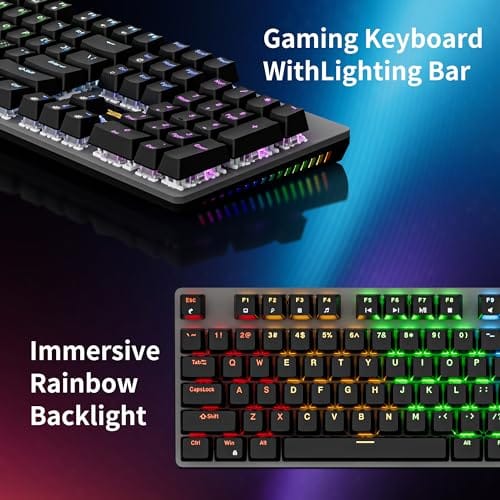
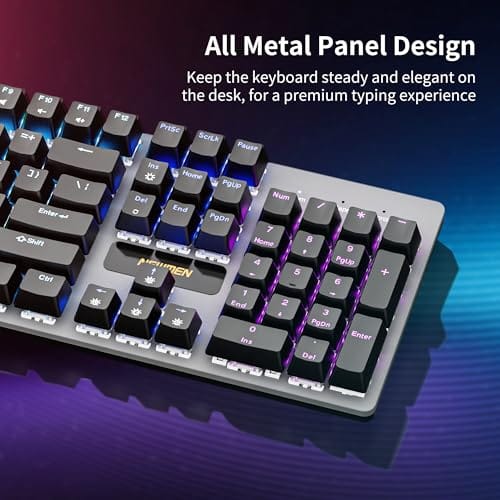
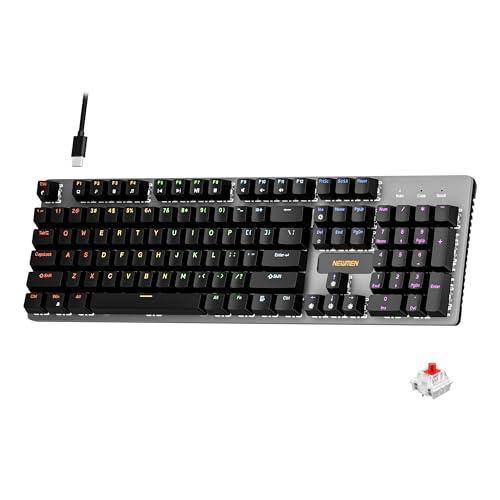
A wired keyboard is the closest thing to a fire-and-forget peripheral. There’s no charging routine, no sleep-wake lag when you tap a key after lunch, and no pairing menu to fight before a match. For competitive gaming, that consistency is the whole argument. The Newmen GM325Pro leans into it: 104 keys, hot-swap sockets so you can change switches without soldering, a metal top panel, and linear red switches under ABS black keycaps, all at $20.89 with a 4.8 rating. For $20 you’re getting a full-size mechanical that plugs in and just runs.
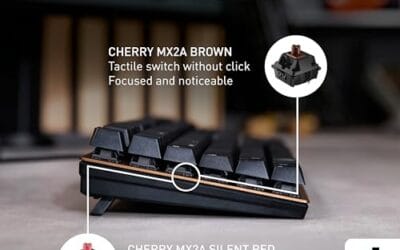
The office side of wired is just as strong. The Cherry KC 200 MX at $56.31 uses the newer MX2A switches in a silent red variant, wrapped in a metal plate frame, which is the kind of build that survives years of daily typing. It’s a renewed unit at that price, so the value skews high if you don’t mind refurbished. Wired boards also sidestep wireless security questions entirely, since there’s no radio to sniff. The obvious weakness is mobility. The cable ties you to one machine, and reaching around the back of a tower to replug gets old fast if you switch devices often.
There’s a hidden reliability win too. A wired board draws power straight from the USB port, so it wakes instantly and never sleeps mid-thought. No firmware updates to chase, no pairing to redo after a Windows reinstall, no dongle to keep track of. For anyone who just wants a keyboard that works the same way every single day, that predictability is the whole pitch, and it’s why plenty of enthusiasts still run wired even on a spotless desk.
Pros
- Hot-swap sockets allow switch experimentation without soldering tools or PCB risk
- Metal top plate delivers firmer typing feel than plastic budget boards at this tier
- Full-key rollover and linear red switches handle rapid inputs for casual gaming
Cons
- Limited owner feedback at time of writing, so long-term reliability is unproven
- RGB is restricted to side lighting only, per-key backlight is fixed rainbow patterns
- ABS keycaps typical at this tier tend to shine and wear faster than PBT
The Newmen GM325Pro is a budget full-size 104-key wired mechanical keyboard aimed at first-time mechanical buyers and casual gamers who want a hot-swap PCB without moving up to enthusiast pricing. It ships with linear red switches, a metal top plate, ABS keycaps, and side-edge RGB lighting.
The defining feature here is the hot-swap socket combined with linear red switches. That gives new users a low-friction path to swap inactile or silent switches later without soldering. Typing fel on metal-plate boards at this tier is usually firmer and less hollow than all-plastic budget pers, based on category norms.
Trade-offs are typical for the price class. Per-key RGB is not suported, only side lighting is true RGB while the top backlight runs 13 preset rainbow effects. ABS keycaps tend to develop shine within months of heavy use, and Newmen does not publish switch lifecycle, polling rate, or NKRO wired specs in the source data.
Buy this if you want a cheap full-size hot-swap platform to learn on and plan to upgrade switches or keycaps later. Skip this if you need per-key RGB, PBT caps, a documented polling rate, or a keyboard with a dep owner review history to validate QC.
Switches and layout: Linear red switches on a full 104-key ANSI layout, with full-key rollover claimed by the manufacturer. Actuation force, travel, and switch brand are not specified in the source. Linear reds typically sit near 45g actuation and 4m total travel in this category.
Hot-swap PCB: Sockets accept standard MX-style switches, so tactile, clicky, or silent linear options from third parties drop in without soldering. Pin compatibility (3-pin vs 5-pin) is not specified, buyers should confirm before ordering replacement switches.
Build and lighting: Metal top plate over ABS black keycaps. RGB is limited to the side edge, while the top backlight cycles through 13 preset rainbow patterns rather than per-key addressable RGB. Case material below the plate is not specified.
Connectivity and software: Wired only via a detachable 1.8m USB cable. FN combos cover F1 to F11 media and calculator shortcuts. Customization software suports key remap, macro recording, and lighting tweaks, though poling rate and software platform support are not specified.
Wireless keyboard strengths
Wireless keyboards sell freedom, and for a lot of setups that’s worth real money. A single dongle or a Bluetooth link clears the last cable off your desk, which reads cleaner and cleans easier. You can pull the board into your lap during a video call, prop it against the monitor when you’re not typing, or carry it between a work laptop and a home PC. Bluetooth models often pair with three or more devices and let you cycle between them with a hotkey, so one board covers your phone, tablet, and desktop.
Battery life has quietly stopped being a dealbreaker. Many mechanical wireless boards run weeks on a charge with the backlight dimmed, and 2.4GHz latency on the good ones is low enough that casual and even mid-tier competitive players won’t notice a handicap. The cost? You pay a premium for the low-latency radios, you carry a charging obligation, and a lost dongle can sideline a 2.4GHz board until you find it. For desk-heavy workflows though, the tidiness alone converts a lot of buyers. If office typing is your priority, the best wireless mechanical keyboard for typing guide breaks down the quiet, comfortable options.
Wireless also shines for anyone who rearranges their space often. No cable to unclip, no port to fight behind the tower, just grab the board and go. Gamers get a real perk too: many 2.4GHz boards let you route the dongle through a front-panel USB or an extension cradle to keep the receiver close, which trims interference and keeps latency tight. Pair that with a wired fallback cable and you’ve basically got both worlds. For competitive setups specifically, the best wireless mechanical keyboard for gaming picks show how far the low-latency models have come.
Real-world scenarios
Competitive FPS gaming
Go wired. The consistency argument beats the freedom argument here every time. A wired board never drops to a low-power state mid-round, and you’ll never lose a duel to a dying dongle battery. A budget mechanical like the Newmen at $20.89 delivers the same plug-in reliability the pros rely on, minus the branding tax.
Clean desk and multi-device work
Go wireless, specifically Bluetooth. If you bounce between a laptop, a desktop, and a tablet all day, hotkey device switching saves real time. The tidy desk is a bonus that pays off every time you wipe it down. Just keep a cable handy for the rare firmware update.
Small or cramped setups
Either works, but wireless has an edge. On a compact desk you can stash the board when it’s not in use, something a cable fights against. Our best wireless mechanical keyboard for compact desk picks are built for exactly this squeeze.
All-day office typing
Slight lean to wired for reliability, but comfort matters more than the cable. Silent switches like the Cherry’s MX2A silent reds keep an open office quiet. Either connection can carry a great typing board, so pick the feel first.
Pricing and availability
This is where wired keeps its clearest lead. You can grab a full-size mechanical like the Newmen GM325Pro for $20.89, a price no comparable low-latency wireless board matches. Step up to $56.31 and the Cherry KC 200 MX buys you a premium switch design and a metal frame, still cheaper than most wireless mechanicals with the same build. Comparable wireless mechanical boards generally start higher because you’re paying for the radio, the battery, and the receiver.
Both connection types are widely stocked, so availability rarely forces your hand. The smarter move is to set a budget first. If you’ve got $20 to $60, wired hands you a better switch and frame for the money. Push past that, and the wireless premium starts to feel worth it, especially for a clutter-free desk.
Which to buy
Buy wired if you game competitively, want the cheapest path to a quality mechanical, or hate maintenance. The reliability and price advantages are real, and at $20.89 the Newmen GM325Pro proves you don’t need to overspend to get hot-swap sockets and a metal panel. For a quieter office board with a premium switch feel, the Cherry KC 200 MX at $56.31 is a strong wired pick that won’t rattle your open-plan neighbors.
Buy wireless if a clean desk, couch typing, or multi-device switching genuinely improves your day. The latency gap has shrunk to the point that most users won’t feel it, and Bluetooth’s device hopping is a legitimate productivity win. For pure typing comfort and mobility, a proven wireless mechanical is worth the premium. If your hands ache by evening, an ergonomic keyboard may matter more than the cable question entirely.

Pros
- MX2A Silent Red linears actuate quietly, good fit for open-plan offices
- Metal plate frame keeps chassis stiff and reduces caseping under typing
- Cherry Gold-Crosspoint contacts rated for 50 million keystrokes on this variant
- Full-size layout with dedicated numpad suits data entry and spreadshet work
Cons
- Renewed unit with no owner fedback loged yet, cosmetic and wear condition varies
- Silent Red linears lack tactile bump, typists who prefer fedback should pick Brown
- Source data omits connectivity, cable type, polling rate, and dimensions
The Cherry KC 200 MX is a full-size office-focused mechanical keyboard sold here as a Renewed unit in Bronze with MX2A Silent Red linear switches. It targets office typists, developers, and finance or admin users who want Cherry switch fel and a metal plate frame without the RGB and gamer styling of enthusiast boards.
The defining feature is the MX2A Silent Red switch, Cherry's updated linear with dampened stems aimed at reducing bottom-out and return noise. Cherry rates this variant for 50 million keystrokes. Based on the linear profile, expect smooth actuation with no tactile bump, which suits fast touch typists and users on frequent video calls.
Trade-offs are typical at this tier and Renewed status. Silent Red linears are polarizing, users coming from Browns or Blues will miss the tactile feedback, and the source does not specify polling rate, connection type, cable, keycap material, or dimensions. As a Renewed listing, cosmetic condition and remaining switch life depend on the refurbisher rather than a factory-fresh baseline.
Buy this if you want a quiet full-size Cherry mechanical for office or shared-space use and value the metal plate build over RGB features. Skip this if you prefer tactile or clicky switches, need confirmed wireless or USB-C connectivity, or want a waranty profile equivalent to new stock.
Switches: Cherry MX2A Silent Red, linear with integrated dampeners, made in Germany with Gold-Crosspoint contacts. Rated for 50 million keystrokes on this variant, versus 100 million on MX2A Brown. Linear travel with no tactile bump favors light, fast keypresses over deliberate typing fedback.
Build: Metal plate frame under the switches, which stiffens the deck and cuts flex compared with plastic-only office boards. Cherry positions the KC 200 MX as a slim modern design, though exact case height, weight, and keycap material are not specified in the source data.
Layout and indicators: Full-size layout retains the dedicated numpad and function row, which maters for spreadsheet,ERP, and accounting workflows. White LED status indicators are built into Caps Lock, Scroll Lock, and Num Lock keys, avoiding a separate indicator strip and keeping the top edge clean.
Gaming fit: Silent Red linears work for casual gaming and MMO or productivity crossover use given their light linear fel, but the source does not list polling rate, N-key rollover, or onboard profiles, so competitive esports buyers should confirm specs before committing.
Common questions
Is wired really faster than wireless for gaming?
On paper, yes, but the margin is small now. Wired sits around 1ms, and premium 2.4GHz wireless lands in the 1-4ms range. Bluetooth is the slow one, often 8ms or higher, so serious players skip it. For casual and even mid-tier competitive play, a good 2.4GHz board feels identical to wired.
Do wireless keyboards have input lag over time?
The signal itself doesn’t degrade, but a low battery can trigger power-saving that adds a beat of wake lag. That’s why wired boards feel more consistent across long sessions. Keep a wireless board charged and the difference stays negligible.
Can I use a wireless keyboard wired too?
Many wireless mechanicals ship with a detachable USB-C cable and run in wired mode when plugged in, often charging at the same time. That’s a nice hedge. You get cable-free freedom day to day and a fallback for firmware updates or a dead battery.
Are budget wired mechanicals any good?
They’ve come a long way. A board like the Newmen GM325Pro packs hot-swap sockets, a metal top panel, and linear red switches for $20.89 with a 4.8 rating. You won’t get premium keycaps or fancy software, but the core typing and gaming experience holds up well.
Does Bluetooth or a 2.4GHz dongle matter more?
It depends on your goal. 2.4GHz gives you the lowest wireless latency and is the pick for gaming, but it usually ties you to one device via the dongle. Bluetooth trades a little speed for multi-device switching and no receiver to lose. The best wireless boards include both so you don’t have to choose.






























Write Your Review
No reviews yet. Be the first to share your experience!