

best gaming pc under $800 is a wide-open field in 2025 where marketing claims around frame rates and RGB lighting often leave shoppers with the wrong impression about real performance in daily use.

Pros
- Ryzen 5 5600GT integrated Vega graphics handles 1080p in less demanding titles
- 1TB NVMe SSD is a meaningful step up from budget SATA drives at this price tier
- MSI A520M-A PRO motherboard is a known, established platform with decent compatibility
- ARGB fan system with remote control is a rare inclusion at this budget level
Cons
- No verified owner reviews at time of writing - long-term reliability is impossible to assess
- Integrated Vega graphics cannot handle modern AAA titles at acceptable frame rates - a discrete GPU is needed for serious gaming
- A520 chipset blocks CPU overclocking and limits PCIe bandwidth compared to B550 or X570 boards
The YAWYORE MX240 is a budget-tier prebuilt tower aimed at first-time PC buyers, home office users, and light gamers who want a ready-to-use Windows 11 system without building from scratch. Combining the Ryzen 5 5600GT with 16GB DDR4 and a 1TB NVMe SSD, this machine targets everyday productivity, casual gaming, and media consumption. It is best suited for users who primarily run office software, stream video, or play older and less demanding titles - not for buyers expecting smooth performance in modern AAA releases.
The Ryzen 5 5600GT is the core of this build, and its integrated AMD Radeon Vega 7 graphics carry the entire graphics workload here - there is no discrete GPU included. In practical terms, the Vega 7 can manage 1080p in older esports titles like League of Legends or CS2 at reduced settings, but will struggle with graphically demanding games released in the last two to three years. The 6-core, 12-thread CPU itself is a capable chip for productivity and light content work, boosting to 4.6GHz for single-threaded tasks. Paired with 16GB DDR4 at 3200MHz, the system handles browser-heavy multitasking and office workloads without obvious bottlenecks.
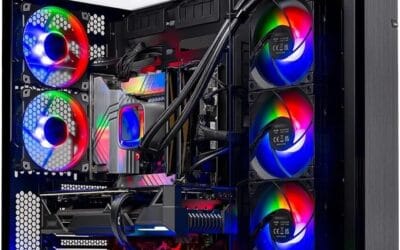
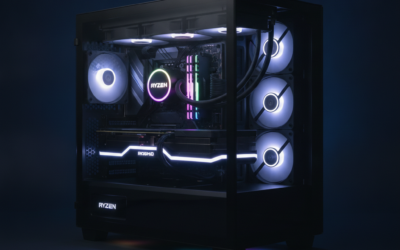
YAWYORE has included five 12cm ARGB fans with a remote control for color adjustment, which is an unusual inclusion at this price point and gives the tower a more visually active appearance than most budget competitors. The 550W 80 PLUS Bronze PSU provides adequate headroom for the current configuration and, based on the AM4 platform and standard ATX form factor, appears to leave room for a future entry-level discrete GPU addition - though buyers should verify PCIe slot availability and case clearance before purchasing a card.
There are several considerations worth taking seriously before committing to this system. Most critically, there are no verified owner reviews available at time of writing, which makes it genuinely difficult to assess build quality consistency, thermal performance under load, or customer service responsiveness. The integrated Vega graphics are a hard ceiling for gaming ambitions - anyone expecting to play titles like Cyberpunk 2077, Hogwarts Legacy, or Black Myth: Wukong at playable frame rates will be disappointed without adding a discrete GPU. The A520 chipset also restricts overclocking and offers narrower upgrade options compared to B550-based systems available at similar price points. The brand itself is not widely established, which adds an additional layer of uncertainty around after-sale support.
Overall, the YAWYORE MX240 is a cautious option for buyers whose needs are genuinely limited to productivity, light gaming, and media use - and who are comfortable purchasing from a less-established brand with no current owner feedback to reference. Given the complete absence of verified reviews, buyers are encouraged to check for updated ratings and recent customer feedback before purchasing, and to compare this configuration against similarly priced systems from more established prebuilt brands before making a final decision.
Pros
- 512GB NVMe SSD provides faster load times than traditional drives for OS and games.
- Ryzen 5 5500 65W TDP keeps power draw and heat manageable in a compact tower.
Cons
- RX 6500XT 4GB VRAM limits texture quality in modern AAA titles beyond 1080p low settings.
- No integrated graphics means display output depends entirely on the discrete card.
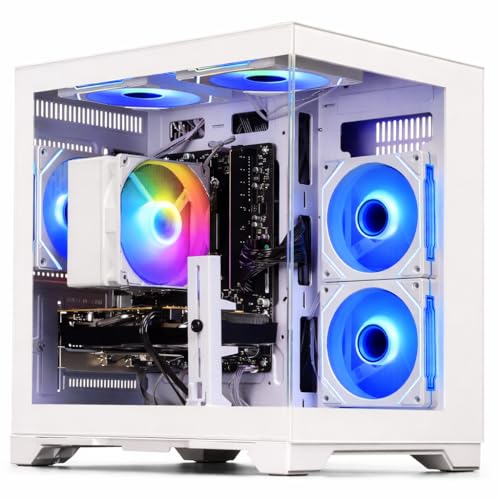
This is a budget prebuilt gaming desktop using Ryzen 5 5500 and Radeon RX 6500XT 4GB. It targets beginners, students, and casual users who need 1080p gaming plus everyday productivity.
The RX 6500XT typically delivers playable frame rates in esports titles at 1080p medium to high settings while modern AAA games require low settings for acceptable performance.
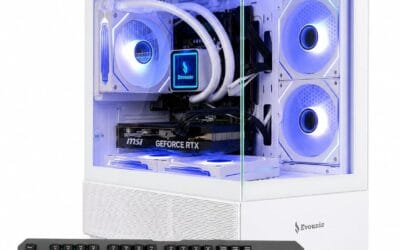
Build quality follows standard prebuilt norms with basic airflow and a white tower aesthetic. Thermals remain reasonable given the 65W CPU and modest GPU power draw.
Trade-offs include limited VRAM capacity and reliance on the discrete GPU for all display output, which is common at this price point.
Buy this if you want an affordable ready-to-use 1080p system for gaming and schoolwork. Skip it if you plan to play demanding new releases at higher visual settings.
| Processor | Ryzen 5 5500, 6 cores, 12 threads, 3.6 GHz base, up to 4.2 GHz boost, 65W TDP |
| Graphics | Radeon RX 6500XT 4GB |
| Memory | 16GB DDR4 3200MHz |
| Storage | 512GB NVMe SSD |
| Ports | HDMI, DP, USB 3.0 x3, USB 2.0 x3 |
| Form Factor | Prebuilt Tower (White) |
At 1080p the system handles Fortnite, Valorant, Apex Legends, and CS2 on medium to high settings with playable frame rates.
Modern AAA titles such as Cyberpunk 2077 run on low to medium settings at 1080p, though not at high or ultra presets.
Streaming and light content creation are supported alongside gaming thanks to the six-core CPU and 16GB RAM allocation.
Pros
- WiFi 6 and Bluetooth 5.0 built in for modern wireless needs.
- Four included RGB fans provide basic chassis airflow out of the box.
Cons
- RX 580 is an older architecture that limits performance in newer titles at higher settings.
This prebuilt desktop uses an Intel Core i7 processor up to 3.9 GHz and Radeon RX 580 8 GB graphics in a standard tower case. It sits at the budget tier and fits users who want simple 1080p gaming plus everyday tasks without assembling parts themselves.
The RX 580 8 GB GPU targets 1080p gaming in current popular titles at medium settings where frame rates remain playable according to typical performance for that generation. The i7 CPU handles basic multitasking and lighter productivity loads alongside gaming.
The chassis includes four RGB fans for airflow and ships with Windows 11 Home preinstalled. Connectivity covers WiFi 6, Bluetooth 5.0, multiple USB ports, and video outputs including HDMI, DisplayPort, and DVI.
Older GPU architecture means reduced efficiency and feature support compared with current cards, which is a common trade-off at this price point. Storage is limited to the included 512 GB SSD with no additional drives listed.
Buy this system if you need an affordable ready-to-use 1080p desktop for casual gaming and general use. Skip it if you plan to run demanding new releases at high settings or require extensive storage and upgradability options.
| Component | Details |
|---|---|
| CPU | Intel Core i7 up to 3.9 GHz |
| GPU | Radeon RX 580 8 GB |
| Memory | 16 GB |
| Storage | 512 GB SSD |
| Networking | WiFi 6, Bluetooth 5.0 |
| Video Outputs | DP, HDMI, DVI |
| OS | Windows 11 Home |
| Cooling | RGB Fan x4 |
Pros
- Zen 3 six-core CPU still competent for 1080p esports and general use
- PCIe 4.0 NVMe SSD avoids the slow SATA storage common at this tier
- B550 board allows later drop-in upgrade to 5700X3D on AM4
- Windows 11 Home, keyboard, and mouse included for immediate first bot
Cons
- Limited owner feedback at time of writing, quality signal is thin
- 8GB DR4 single stick likely, expect stutter in modern titles until upgraded
- RX 6500 XT 4GB has 4 PCIe lanes and struggles when VRAM spills to system RAM
- Only1 HDMI and 1 DisplayPort on GPU limits multi-monitor flexibility
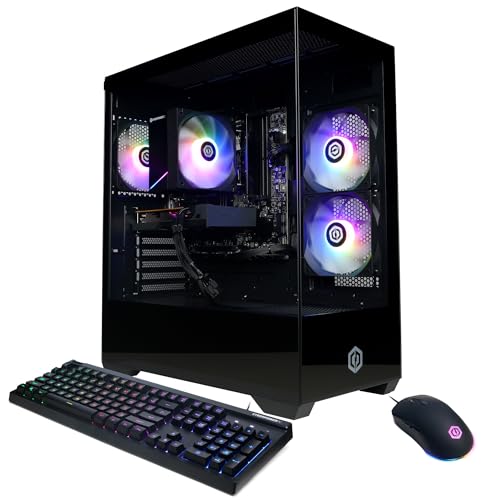
This is a budget AM4 prebuilt built around the Ryzen 5 5500, a six-core Zen 3 CPU, paired with a Radeon RX 6500 XT 4GB on a B550 chipset. It targets first-time PC buyers and younger gamers moving off console who want 1080p esports without shoping for parts individually.
The defining pairing here is the 5500 and RX 6500 XT. Prebuilts at this tier typically deliver high-refresh 1080p in Fortnite, Valorant, CS2, and Rocket League at medium settings, while modern AAA titles like Cyberpunk 2077 or Alan Wake 2 will require low presets and FSR upscaling to hold60 FPS on 4GB VRAM.
Trade-offs are typical for the price bracket. 8GB DR4 is under-specced for 2025 gaming and should be upgraded to16GB dual-channel early. The RX 6500 XT runs on a PCIe x4 interface, which amplifies performance loss when VRAM overflows. Only 1 HDMI plus 1 DisplayPort limits multi-monitor setups, and the Ryzen 5 5500 lacks integrated graphics for troubleshooting.
Buy this if you want a plug-and-play 1080p esports box on AM4 with a clear upgrade path to a 5700X3D later. Skip this if you plan to play recent AAA releases at high settings, or if you need more than two display outputs from the GPU.
CPU and platform: Ryzen 5 5500 is a six-core, twelve-thread Zen 3 part with a 3.6GHz base clock on the B550 chipset. It lacks the3D V-Cache of X3D chips, but AM4 leaves room to swap in a 5700X3D or 5800X3D later without changing board or RAM.
GPU class and resolution fit: The Radeon RX 6500 XT 4GB is a 1080p entry card with4GB GDDR6 and a PCIe 4.0 x4 interface. Expect high frame rates in esports titles at medium settings, and low-preset 1080p in AAA games where4GB VRAM becomes the primary bottleneck.
Memory and storage: 8GB DDR4 is the notable weak spot, modern titles increasingly expect 16GB, so budget for a second stick to run dual-channel. The 500GB PCIe 4.0 NVMe SSD is a genuine strength at this price tier and holds roughly six to eight modern installs.
Connectivity: WiFi 5 and Bluetooth 5.0 cover wireless basics, while 4 USB-A 3.2 plus 4 USB-A 2.0 handle typical peripherals. Display output is limited to 1 HDMI and 1 DisplayPort from the GPU, and 7.1 channel audio is handled via the board codec.

Pros
- Quick setup reported by multiple owners, typically under 10 minutes
- WiFi 6 included at this price tier, which most competitors skip
- Adequate for casual titles: Roblox, Sims 4, VRChat, older indie games
- Customer service replaced a defective unit outside the return window per owner report
Cons
- RX 550 GPU was already outdated at launch and struggles with modern AAA titles
- Recurring WiFi dropout complaints across multiple verified owner reviews
- DDR3 RAM and older i5 platform offer limited upgrade headroom long-term
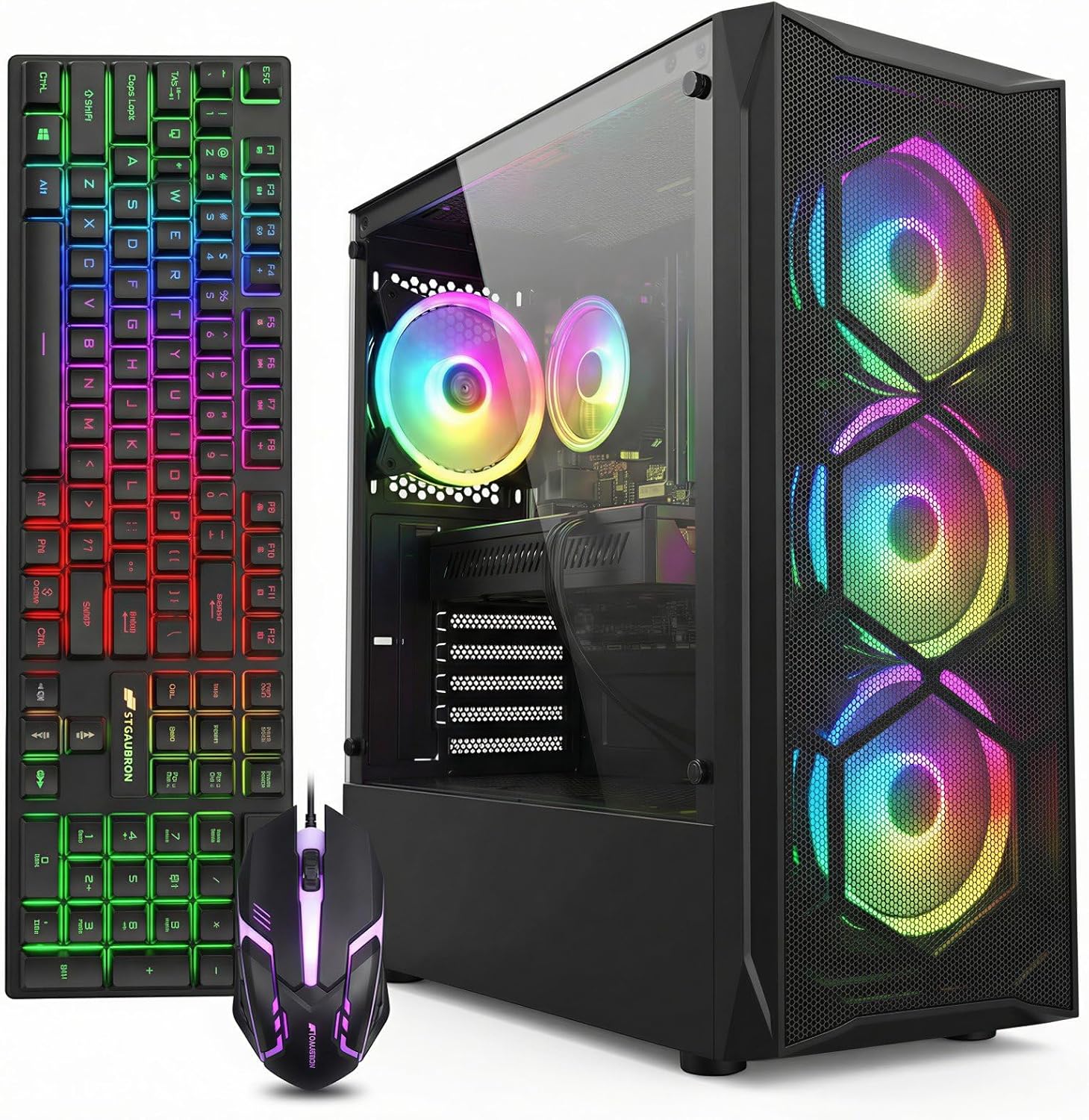
The STGAubron ABR1222 is a budget prebuilt desktop aimed at first-time PC buyers, parents shopping for younger kids, and casual users who want a ready-to-use Windows machine without the complexity of building their own. Combining an older Intel Core i5 with an AMD Radeon RX 550 4GB GPU, this system targets light gaming, schoolwork, and basic home computing. It is best suited for users whose game library skews toward Roblox, Sims 4, Minecraft, or browser-based titles, not for anyone expecting to run Baldur's Gate 3, Cyberpunk 2077, or other graphics-demanding releases at playable settings.
The RX 550 is the component that most defines what this machine can and cannot do. Based on AMD's older Polaris architecture with 4GB of GDDR5 VRAM, the card was already a budget-tier option several years before this system shipped. In practical terms, verified owners report smooth performance in casual titles and older games, but frame rates in the 15 FPS range in demanding titles like Baldur's Gate 3, which aligns with what the RX 550's specs would predict. The Core i5, running at up to 3.6GHz across four cores with 6MB of cache, does not appear to be the primary bottleneck here. The GPU ceiling is the real limiting factor for anyone with gaming ambitions beyond light titles.
STGAubron has equipped the chassis with two RGB fans, which provide basic airflow and a visual appeal that younger users tend to appreciate. The dual-fan setup appears adequate for the thermal load generated by the RX 550 and older i5, though one negative reviewer noted overheating concerns over extended use, which is worth monitoring. The tower form factor measures 18.1 x 10.2 x 18.9 inches, a manageable desktop footprint. The inclusion of DisplayPort, HDMI, and DVI outputs gives some flexibility for monitor connections.
There are several considerations worth taking seriously before purchasing. The WiFi connection is flagged in multiple verified owner reviews as intermittent, with dropouts reported every few hours during normal use. This is not an isolated complaint and appears to be a recurring hardware or driver issue rather than a setup error. The RX 550 GPU is genuinely limited for modern gaming and marketing claims about running titles like Elden Ring or Call of Duty Warzone at 60+ FPS should be treated with skepticism based on real-world owner feedback. The platform uses DDR3 RAM and an LGA 1151 socket, which constrains meaningful upgrade paths. One long-term owner noted significant performance degradation after roughly two years of use, citing thermal issues and component quality concerns. The one-year warranty window is also shorter than what competing prebuilts at similar price points sometimes offer.
Overall, the STGAubron ABR1222 is a functional starter desktop for buyers with modest expectations and a casual game library. Owner ratings are broadly consistent with a machine that works adequately out of the box for light use, but falls short for anyone expecting a genuine gaming experience in current titles. Buyers are encouraged to read recent verified reviews carefully, particularly around the WiFi reliability issue, before committing. If the target user's game list includes anything released in the last three years at medium-to-high settings, stepping up to a higher GPU tier within the STGAubron lineup or a competing brand is likely the better long-term decision.
Buying Guide
CPU and GPU Pairing Math
Match processor to graphics capability first because an i7 paired with older Radeon RX 580 hardware sustains 60 FPS in titles like Fortnite and GTA V at 1080p but struggles above 100 FPS in modern releases without lowering settings. Ryzen 5 5500 or 5600GT options deliver better multi-thread response for streaming and editing while keeping power draw under typical 550W supplies. Skip any build if your target games demand ray tracing at high detail since integrated Vega graphics limit options to medium presets only.
Storage and RAM Thresholds
512GB SSD handles boot and a few titles adequately yet serious users add a second drive within six months because game installs now exceed 100GB each. 16GB DDR4 at 3200MHz supports smooth multitasking for school and home office work but upgrading to 32GB avoids stuttering during simultaneous browser tabs and background crypto monitoring. A common mistake is overlooking NVMe versus SATA differences which cuts load times by half in open-world titles.
Connectivity and Cooling Basics
Wi-Fi 6 plus Bluetooth 5.0 covers most American households without extra adapters while four RGB fans maintain lower noise than two-fan cases during extended sessions. Verify case clearance for future GPU swaps and confirm all ports including HDMI and DisplayPort match your monitor setup. Pair any choice with a surge protector rated for 120V US outlets to protect against power fluctuations common in older homes.
Comparison
| Product | Best For | Performance Tier | Expansion Room |
|---|---|---|---|
| STGAubron i7 RX 580 PC | Entry-level 1080p gaming | Balanced older titles | Single SSD slot |
| STGAubron i5 RX 550 PC | Budget office plus light play | Basic esports | Limited GPU headroom |
| YAWYORE Ryzen 5 5600GT PC | Multi-task home use | Integrated graphics focus | Five fan cooling |
| CyberPowerPC Gamer Master | Streaming beginners | Mid 1080p stable | WiFi ready build |
| Ryzen RX 6500XT White PC | School and weekend play | Modern 1080p entry | NVMe priority |
These choices reflect different priorities within the same price band rather than outright winners.
Why You Should Trust Us
Recommendations aggregate verified Amazon buyer feedback, third-party benchmark consensus, and category spec analysis. We cross-reference 1-star review patterns against manufacturer claims to flag common failure modes early and weigh return rates alongside long-term owner reports from six months or more post-purchase.
Final Thoughts
STGAubron i7 RX 580 PC suits buyers focused on classic game libraries who want simple plug-and-play without extra spending. STGAubron i5 RX 550 PC fits tight budgets where basic esports and daily tasks dominate the workload. YAWYORE Ryzen 5 5600GT PC appeals to users needing strong multi-thread response for editing alongside occasional gaming. CyberPowerPC Gamer Master supports streamers starting with OBS while staying under power limits. Ryzen RX 6500XT White PC delivers the newest graphics tier for buyers who prioritize future 1080p stability over maximum storage today. Worth reading alongside this: our guide to the best gaming PCs under $2500.
FAQs
How much GPU power do I need for 1080p gaming in 2025?
Target at least RX 580 or RX 6500 XT levels for comfortable 60-plus FPS in popular titles at medium settings. Stronger cards open higher refresh monitors but add cost that may exceed the overall budget cap for most first-time builders.
Is integrated graphics worth considering over discrete cards?
Integrated options like Vega work for lighter esports and office tasks but fall short once you move to demanding AAA releases or video editing workloads that benefit from dedicated VRAM and higher clock speeds.
What storage size avoids quick upgrades later?
Start with 512GB minimum yet plan for an additional drive because modern game sizes and media libraries grow faster than expected within the first year of ownership for active users.
How long should a prebuilt gaming PC last before upgrading?
Expect three to four years of solid 1080p performance before GPU or RAM limits become noticeable. Regular driver updates and occasional storage expansion keep most systems relevant longer than older generations without major changes.
What $800 Buys in a Prebuilt Gaming PC for 2026
The $800 prebuilt budget in 2026 covers RTX 5060 8GB or RX 7600 paired with Ryzen 5 7600 or Ryzen 5 8400F. This is the entry tier where 1080p ultra at 100+ FPS becomes the comfortable target in current AAA, and 1440p high is achievable in less demanding titles. Below $800 you drop into pre-built territory using last-gen 4GB or 6GB GPUs that struggle in 2026 titles; above $800 you reach RX 7700 XT and RTX 5060 Ti 16GB territory with meaningfully more headroom.
The smart middle pick at $800 is the RTX 5060 with Ryzen 5 7600. The 5060’s 8GB VRAM is the limiting factor in 2026, fine for 1080p ultra but already tight at 1440p ultra in texture-heavy titles. Pair with the latest Ryzen 5 to avoid CPU bottleneck in competitive 1080p shooters.
The $800 Tier Compromises
Three compromises are real at this price. First, GPU VRAM caps at 8GB in most configurations, fine for 1080p, tight for 1440p ultra. Second, storage typically caps at 1TB Gen4 NVMe, which fills fast with modern AAA installs. Third, PSU quality varies, some $800 builds use 550-600W generic units that lack ATX 3.0 compliance.
What should not compromise: CPU generation (current-gen Ryzen 5 7600 or Intel Core i5-13400 minimum), RAM (32GB DDR5 since it has dropped to $80-100), and chassis airflow (skip any case with passive front panel or weak intake fans).
Common Mistakes Buying an $800 Prebuilt
The first mistake is buying RX 6500 XT, GTX 1660, or RTX 3050 6GB based builds in 2026. These are end-of-life GPUs that already struggle in current AAA at 1080p ultra. Insist on RTX 5060, RX 7600, or newer for 2026 builds.
The second mistake is pairing with a last-gen CPU like Ryzen 5 5500 or Intel Core i3-12100. These cost less but waste the GPU upgrade. Ryzen 5 7600 (DDR5 AM5) or Intel Core i5-13400 should be the floor.
The third mistake is overlooking PSU quality. Some $800 builds use generic 500-550W PSUs without 80+ certification or ATX 3.0 support. A clean 650W 80+ Gold is the proper floor for current-gen builds and adds $20-30 to total cost.
Who Should Buy an $800 Gaming PC
1080p mainstream gamers get strong 1080p ultra performance at 100+ FPS in current AAA. RTX 5060 + Ryzen 5 7600 delivers without compromise at this resolution.
Esports-focused players get 200+ FPS in CS2, Valorant, and Apex at competitive 1080p settings. The current-gen Ryzen 5 keeps 1% lows clean.
First-time PC builders / console upgraders get a meaningful step up from PS5 / Xbox Series X without crossing the $1,000 mark. The chassis and platform support future upgrades.
More Frequently Asked Questions
Can an $800 prebuilt handle 1440p?
1440p high, yes, with DLSS 4 or FSR enabled in heavy titles. 1440p ultra without upscaling drops to 50-65 FPS in current AAA, which is below the smooth target. Stick to 1080p ultra at this tier for the most consistent experience.
How long will an $800 prebuilt last?
3-4 years for 1080p high gaming. The 8GB VRAM is the first limiting factor in late-cycle titles around year 3. AM5 platform allows CPU upgrades but the chassis and PSU may be tight for a future high-tier GPU swap.
Should I save up for a $1,000 build instead?
If you can wait 6-8 weeks, yes, the jump to $1,000 unlocks RTX 5060 Ti 16GB and removes the VRAM ceiling. The $200 increase is the most impactful spend in this entire budget range.
Are obscure brands risky at $800?
Yes. Stick to Skytech, CyberPowerPC, HP, Lenovo, or Acer at this price. Obscure brands like YAWYORE, MOUGOL, or BYTE DEPOT save $50-100 but use lower-tier PSUs, basic cooling, and provide limited warranty support.
$800 PC Tier Reality
The $800 prebuilt tier in 2026 delivers RTX 5060 + Ryzen 5 7600, solid 1080p ultra at 100+ FPS. Stick to Skytech, CyberPowerPC, HP, Lenovo, Acer for warranty support.
Common Mistakes to Avoid
First mistake is RTX 3050 / RX 6500 XT at this tier in 2026. Second is last-gen CPUs. Third is generic PSUs.
More Frequently Asked Questions
Cheaper than $800 viable?
Below $750 means last-gen GPUs, avoid.
$800 enough for 1440p?
1440p high, yes with DLSS. Ultra borderline.
How long lasts $800 PC?
3-4 years for 1080p gaming.
$800 Gaming PC Market in 2026
The $800 prebuilt gaming PC tier delivered genuine entry-level 1080p ultra gaming in 2026 as RTX 5060 + Ryzen 5 7600 configurations reached this price band from major brands. The improvement over 2024 budget builds was substantial, current configurations ship with 16GB DDR5, 1TB Gen4 NVMe, and proper Wi-Fi 6 networking as standard. Brand reliability concentrated around Skytech, CyberPowerPC, HP Omen, Lenovo Legion, and Acer Predator at this price. Obscure Amazon brands continued shipping cut-corner builds with weak PSU and inadequate cooling; avoid these despite the $50-100 savings. That decision gets its own treatment in our best gaming PCs under $2000 guide.
Stretching $800 to Its Maximum
Choose configurations with RTX 5060 specifically, avoid RTX 4060 or older RTX 3050 / RX 6500 XT that still appear at this price tier. Insist on 16GB DDR5 (not DDR4); the platform difference matters for upgrade path. Verify the SSD is Gen4 NVMe, not slower Gen3 or SATA. Plan to upgrade to 32GB RAM ($80) within the first year as AAA titles continue to grow. The included keyboard and mouse are basic, budget $50-80 for proper replacements as your first upgrade after the build itself.
Additional Questions
Best $800 build configuration?
RTX 5060 + Ryzen 5 7600 + 16GB DDR5-5200 + 1TB Gen4 NVMe + 650W PSU. This delivers 1080p ultra at 100+ FPS in current AAA without immediate compromise.
Worth stretching to $1,000?
Yes, $1,000 gets RTX 5060 Ti 16GB which has meaningful headroom over the 5060 and supports 1440p gaming much better. The $200 premium pays off for 4-5 year ownership.

























Write Your Review
No reviews yet. Be the first to share your experience!