

Your CPU runs at billions of cycles per second, but the RAM feeding it data can’t keep pace. That mismatch would cripple performance if there weren’t a fix, and CPU cache is that fix. It’s a small pool of ultra-fast memory living right on the processor, holding the data your cores are most likely to need next so they don’t sit idle waiting on slower system RAM.
Cache is one of those specs that shows up on every product page, yet almost nobody explains what it actually does for real workloads. If you’re comparing chips for a new build, understanding cache will help you read past the marketing and pick the right processor. Our guide to the best gaming CPU picks leans heavily on this concept, and it’s worth knowing why before you buy.
The short answer
CPU cache is a small amount of very fast memory built into the processor itself. Its whole job is to store copies of frequently used data and instructions so the cores can grab them in a few nanoseconds instead of making the long trip out to system RAM, which takes far longer. More cache, and smarter cache, usually means fewer stalls and higher real-world speed.

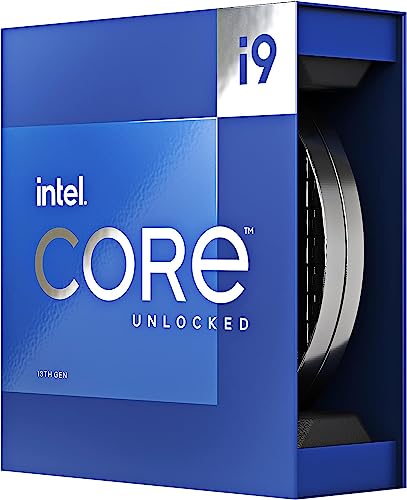
You’ll see it listed in megabytes on spec sheets. The Intel Core i9-13900K, for example, advertises 36M of cache alongside its 24 cores and 5.8 GHz boost, priced at $587.77 with a 4.8 rating. That number isn’t marketing fluff. It directly affects how often the chip has to wait on slower memory.

Pros
- Massive multi-threaded performance for 4K video editing, 3D rendering, and complex data science workloads.
- High 5.8 GHz peak frequency provides excellent single-core performance for gaming and CAD applications.
- Integrated UHD Graphics 770 serves as a reliable backup for troubleshooting or non-gaming productivity setups.
- Broad platform compatibility across two motherboard generations and two different memory standards.
Cons
- High 125W base power and significant peak wattage require a high-end 360mm AIO or custom loop cooling.
- Requires a BIOS update on many Intel 600 series motherboards before the system will POST.
- Platform longevity is limited as LGA1700 is an established socket nearing the end of its release cycle.
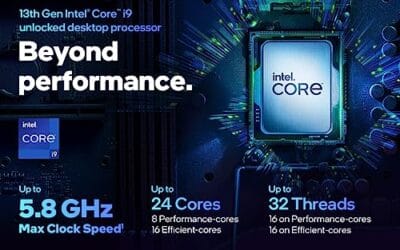
The Intel Core i9-13900K represents the pinnacle of the 13th Gen Raptor Lake lineup, positioned as a flagship solution for users who refuse to compromise. With a total of 24 cores and 32 threads, it is specifically engineered for enthusiast gamers, streamers, and heavy content creators who frequently run demanding applications like Adobe Premiere Pro, DaVinci Resolve, or Blender.
The standout technical achievement here is the refined hybrid architecture. By pairing 8 high-frequency Performance-cores with 16 Efficiency-cores, the 13900K manages heavy compute loads without sacrificing the responsiveness of background applications. In real-world gaming, this typically translates to higher 1% low frame rates and smoother overall performance, especially when multitasking with OBS or Discord in the background.
Thermal management is a critical consideration for this chip. While the 125W base power seems manageable, the processor is designed to scale its power consumption significantly to maintain the 5.8 GHz boost clock. Users should expect high operating temperatures under sustained all-core loads, necessitating a robust cooling solution and a high-airflow case to prevent thermal throttling.
An honest trade-off for this level of performance is the power draw and the resulting heat output. This is not a 'set and forget' chip for budget cooling or small form factor builds without careful undervolting or power limiting. Additionally, while the support for DDR4 is a welcome cost-saving measure, the highest performance tiers are only unlocked when paired with high-frequency DDR5 memory.
Buy this if you are building a top-tier workstation or gaming rig and already have a 360mm liquid cooler and a high-wattage power supply. Skip this if you are primarily gaming at 4K where the GPU is the bottleneck, or if you prefer a more power-efficient system with lower cooling requirements.
| Feature | Specification |
|---|---|
| Core Count | 24 (8 P-cores + 16 E-cores) |
| Thread Count | 32 |
| Max Turbo Frequency | 5.8 GHz |
| P-core Base Frequency | 3.0 GHz |
| E-core Base Frequency | 2.2 GHz |
| Intel Smart Cache (L3) | 36 MB |
| Total L2 Cache | 32 MB |
| Processor Base Power | 125 W |
| Memory Support | DDR5 5600 / DDR4 3200 |
| PCIe Revision | 5.0 and 4.0 |
| Total CPU PCIe Lanes | 20 |
| Socket Support | LGA1700 |
| Integrated Graphics | Intel UHD Graphics 770 |
Socket and Chipset: This processor uses the LGA1700 socket. It is natively compatible with Intel 700 series motherboards (Z790, H770, B760). While it works with 600 series boards (Z690, H670, B660, H610), a BIOS update is almost certainly required for the system to boot if the board was manufactured before the 13th Gen launch.
Cooling Requirements: Given the 5.8 GHz boost clock and high core count, a premium 360mm or 420mm All-In-One (AIO) liquid cooler is strongly recommended. High-end dual-tower air coolers may suffice for gaming but will likely lead to thermal throttling during intensive multi-threaded rendering or stress testing.
Memory Selection: The i9-13900K supports both DDR4 and DDR5, but this is determined by your motherboard choice. For a flagship build, pairing this CPU with DDR5 5600MT/s or higher is recommended to avoid bandwidth bottlenecks in memory-sensitive applications and modern games.
Power Supply Guidance: Due to the high transient power spikes typical of i9 processors, ensure your PSU has sufficient headroom. For a build featuring this CPU and a high-end GPU like an RTX 4080 or 4090, a minimum of an 850W or 1000W 80 Plus Gold power supply is advised.
Operating System: To properly utilize the Intel Thread Director for efficient task scheduling between P-cores and E-cores, Windows 11 is highly recommended. While Windows 10 is supported, it may not always assign tasks to the optimal core type, potentially impacting performance.
The longer explanation
Cache isn’t one big block. It’s organized into levels, usually L1, L2, and L3, arranged like a set of nested drawers. L1 is tiny and blisteringly fast, sitting closest to each core, split between instructions and data. L2 is larger and a bit slower, still dedicated per core or per core cluster. L3 is the big shared pool, several megabytes, that all cores can tap. When a core needs data, it checks L1 first, then L2, then L3, then finally system RAM if nothing hit.
That search order matters. A “cache hit” means the data was found on-chip and the core keeps working at full speed. A “cache miss” means it has to go fetch from RAM, and the core waits. Good CPU design maximizes hit rates through clever prediction about what you’ll need next. That’s why two chips with identical core counts and clocks can perform differently. The one that keeps its cores fed wins.
The speed differences between levels are dramatic. L1 might answer in a handful of cycles, L2 in a couple dozen, and L3 in a few dozen more. System RAM, by comparison, can cost the core hundreds of cycles of waiting. That’s an enormous gap. Every time the cache catches a request before it reaches RAM, you’re saving the core from twiddling its thumbs. Stack up millions of those savings per second and you understand why cache design is such a big deal for real performance.
How we got here
The problem cache solves is old and gets worse every year. Processor speeds climbed dramatically over the decades while memory latency improved much more slowly. That growing gap, often called the memory wall, meant faster cores were increasingly wasted waiting on data. Engineers needed a buffer.
Early cache lived on the motherboard as separate chips. As manufacturing shrank, designers moved it onto the CPU die itself, first L1, then L2, then a shared L3. Each step cut latency. Modern chips like the $469 Intel Core i9-14900K carry tens of megabytes on-die, something that would’ve been unthinkable a couple of decades ago. The trend keeps pushing more cache closer to the cores because that’s still where a lot of performance hides.
Why it works this way
Cache works because of a simple truth about how programs behave: they reuse the same data and revisit nearby memory constantly. Programmers call this locality. A loop hammers the same variables thousands of times. A game revisits the same chunks of world data frame after frame. If you keep that hot data close, most requests get answered instantly.
There’s a hard tradeoff, though. Fast memory is expensive and physically large per bit, so you can’t just make cache huge. Bigger cache also takes slightly longer to search. That’s why the layered design exists. Small and instant at L1, big and shared at L3, each level balancing speed against size. It’s a compromise engineered to catch the most requests as early as possible without blowing up cost or die space.
This is also where different chip designs diverge in interesting ways. Some processors stack extra cache vertically on top of the cores to pack in more without widening the die, a trick that’s proven especially potent for gaming. Others spread a large shared pool across core clusters. Each approach changes how quickly cores can share data with one another, which matters a lot for heavily threaded work. Two chips can list similar cache totals yet behave differently based on how that cache is wired together.
When you’d want more of it
Some workloads love cache more than others. Gaming is a standout, since large L3 pools keep game logic and assets on-chip and reduce stutter, which is why cache-heavy chips often top gaming charts. Compression, code compilation, simulation, and certain productivity tasks also benefit when their working data fits inside the cache. If your work bounces around a big dataset, more cache pays off.
If you’re chasing that edge, a high-end part is worth the spend. The Intel Core i9-14900K at $469, rated 4.7, packs the cores, clocks, and cache to feed demanding games and heavy multitasking without choking. For a streaming and gaming combo, it holds up well, and our roundup of the best CPU for streaming covers where that headroom matters most. Budget builders shouldn’t panic, though. Even affordable chips carry enough cache for everyday use.

Pros
- Industry-leading 6.0GHz out-of-the-box boost clock for single-threaded applications.
- Massive 32-thread capacity excels in multi-threaded workloads like 4K video rendering and 3D modeling.
- Compatible with existing LGA 1700 motherboards via BIOS updates, extending the life of 600-series boards.
- Integrated Intel UHD Graphics 770 provides a fallback for troubleshooting and QuickSync hardware acceleration.
- Highly binned silicon offers significant tuning potential for users with high-end cooling solutions.
Cons
- High 253W maximum turbo power requires premium 360mm or 420mm AIO liquid cooling for sustained loads.
- Aggressive stock voltage curves can lead to thermal throttling on standard air coolers or entry-level AIOs.
- Final generation for the LGA 1700 socket, limiting future CPU upgrade paths without a motherboard change.
- Significant power draw necessitates a high-quality PSU with sufficient 12V EPS overhead.
The Intel Core i9-14900K represents the enthusiast-tier peak of the Raptor Lake Refresh lineup, targeting professional creators and gamers who require the highest possible clock speeds. With 24 cores and 32 threads, it is designed to handle simultaneous gaming, streaming, and recording without the performance degradation typically seen on lower-core-count processors.
Technical performance is defined by its 6.0GHz Thermal Velocity Boost, a milestone frequency that pushes the limits of the LGA 1700 platform. In real-world gaming, this translates to high frame ceilings in 1080p and 1440p scenarios, while the 16 Efficient-cores provide the necessary throughput for background tasks and heavy multi-threaded productivity suites like Adobe Premiere Pro and DaVinci Resolve.
Build quality and reliability are consistent with Intel's high-end silicon, though the chip is notoriously demanding regarding thermals. The integrated heat spreader (IHS) must dissipate significant heat during 250W+ bursts, making the choice of thermal interface material and mounting pressure critical for maintaining stability under full load.
The primary trade-off for this level of performance is power consumption and heat. Users should expect the processor to hit its thermal junction maximum (TjMax) quickly during synthetic stress tests if paired with inadequate cooling. It is a processor that requires manual tuning of power limits (PL1 and PL2) to balance efficiency and performance effectively.
Final verdict: Buy this processor if you are an enthusiast with a high-end Z790 motherboard and a 360mm+ liquid cooler who needs the absolute fastest gaming and multitasking performance currently available on the Intel platform. Skip this if you prefer a plug-and-play experience with low power draw or are building in a small form factor case with limited cooling clearance.
| Cores / Threads | 24 (8P + 16E) / 32 |
| Max Turbo Frequency | 6.0 GHz |
| Intel Smart Cache (L3) | 36 MB |
| Total L2 Cache | 32 MB |
| Processor Base Power | 125 W |
| Max Turbo Power | 253 W (Listed as 250W in specs) |
| Socket Support | LGA 1700 |
| Memory Support | DDR5 5600 / DDR4 3200 |
| PCIe Lanes | 20 Total (Up to Gen 5.0) |
| Integrated Graphics | Intel UHD Graphics 770 |
Motherboard and Chipset: The i9-14900K requires an LGA 1700 socket. While it is compatible with older Z600-series motherboards, a BIOS update is mandatory for the system to POST. For optimal power delivery and PCIe 5.0 support, a high-end Z790 motherboard with robust VRMs is strongly recommended to handle the 250W+ power excursions.
Cooling Requirements: Due to the 6.0GHz boost clock and high TDP, air cooling is generally not recommended for this tier unless using a flagship dual-tower cooler with a contact frame. A 360mm or 420mm All-In-One (AIO) liquid cooler is the standard recommendation to prevent thermal throttling during intensive rendering or compilation tasks.
Memory Selection: This CPU supports both DDR4 and DDR5, but the motherboard determines which one you must use. For maximum performance in modern titles and professional apps, pairing this with a DDR5-7200+ kit on a Z790 platform is the ideal configuration, though DDR4 remains a viable cost-saving path for those upgrading from 12th gen.
Power Supply Guidance: Given the potential for 300W+ spikes from the CPU alone, especially when overclocked, a high-quality 850W or 1000W 80 Plus Gold PSU is recommended. Ensure your PSU has at least two 8-pin EPS (CPU) connectors to provide stable voltage to the motherboard's power phases.
Operating System: To properly utilize the Intel Thread Director and the hybrid core architecture, Windows 11 is the recommended operating system. Windows 10 may not efficiently schedule tasks between the P-cores and E-cores, potentially leading to inconsistent performance in multitasking scenarios.
What to look for in a CPU’s cache
Don’t shop on cache size alone. It’s one variable among core count, clock speed, architecture, and price. A big L3 number is only meaningful if the rest of the chip and your workload can use it. That said, when two processors are otherwise close, the one with more cache often edges ahead in gaming and data-heavy tasks. Look at total L3 especially, since that shared pool does the heavy lifting for multi-core work.
Pay attention to architecture generation too, because newer designs use cache more efficiently even at the same size. The 13900K’s 36M and the 14900K’s on-die cache are examples of that ongoing refinement. Match the chip to what you actually do. Gamers and creators lean toward more cache. Light users get plenty from mid-range parts. Reviews and benchmarks tell the real story better than any single number, so check how a chip performs in the specific games or apps you run rather than trusting the spec box alone. If you’re on a tighter budget, our best budget CPU guide balances cache against price sensibly.
Common misconceptions
The most common myth is that more cache always means a faster CPU. It doesn’t, not on its own. Cache only helps when your workload actually reuses data that fits inside it, and a weak core with lots of cache still loses to a strong one. Size is a supporting stat, not the headline.
Another misconception treats cache like RAM you can upgrade. You can’t. It’s fused onto the processor die and fixed for the life of the chip. People also confuse the levels, assuming a huge L3 makes up for tiny L1 or L2. Each level does a distinct job, and a balanced hierarchy beats one bloated number. Bigger isn’t automatically better here. Smarter is.
There’s also confusion between cache and system RAM in general. They’re not competing, they’re cooperating. RAM holds everything your programs currently need, measured in gigabytes, while cache holds a tiny slice of the hottest data, measured in megabytes. Adding more system RAM won’t shrink your reliance on cache, and a big cache won’t let you skimp on RAM. They solve different problems at different scales, and a good build respects both.
Frequently asked
Is more CPU cache always better?
Not always. Cache helps when your programs reuse data that fits inside it, which is common in gaming and compilation. But core strength, clock speed, and architecture matter just as much. A powerful chip with moderate cache can easily beat a weak one with lots of it.
What’s the difference between L1, L2, and L3 cache?
L1 is the smallest and fastest, sitting right beside each core. L2 is larger and slightly slower. L3 is the big shared pool all cores can access. The processor checks them in order, falling back to system RAM only when none of them hold the data.
Does cache size matter for gaming?
Yes, quite a bit. Games constantly revisit the same data, so a large L3 cache keeps that information on-chip and cuts down on stutter and stalls. It’s one reason cache-heavy processors frequently lead gaming benchmarks even against chips with higher clocks.
Can I upgrade my CPU’s cache?
No. Cache is built directly into the processor die and can’t be added or expanded after manufacturing. The only way to get more is to buy a different CPU that ships with a larger cache. It’s a fixed part of the chip you choose at purchase.
How much cache do I actually need?
For everyday browsing and office work, mid-range chips carry plenty. Gamers and creators handling large datasets benefit from more, which is where parts like the 36M-cache 13900K or the 14900K shine. Match the cache to your workload rather than buying the biggest number you can find.































Write Your Review
No reviews yet. Be the first to share your experience!