

You hit the keyboard, expect a wave of color, and get nothing. Dark keys, dead lighting, maybe one stubborn zone that still glows while the rest stays off. It’s frustrating, especially on a board you bought partly for the RGB. The good news is that most cases of keyboard RGB not working trace back to a handful of ordinary causes, and the fixes rarely involve a soldering iron. Before you assume the hardware’s dead, we’ve laid out the likely culprits in order, from the 30-second checks to the point where a replacement makes sense. If you end up shopping, our picks for the best mechanical gaming keyboard and the best 65 percent keyboard for gaming are worth a look.
First check the obvious (the 30-second check)
Start with the quickest possibilities before you touch software. Most keyboards have a brightness toggle, usually Fn plus one of the arrow keys or a function key with a little sun icon. It’s shockingly common to knock brightness to zero by accident. Cycle it up a few steps and watch for any glow. While you’re there, try the lighting-mode shortcut, often Fn plus a letter or number, since some boards have an off state in their effect rotation.
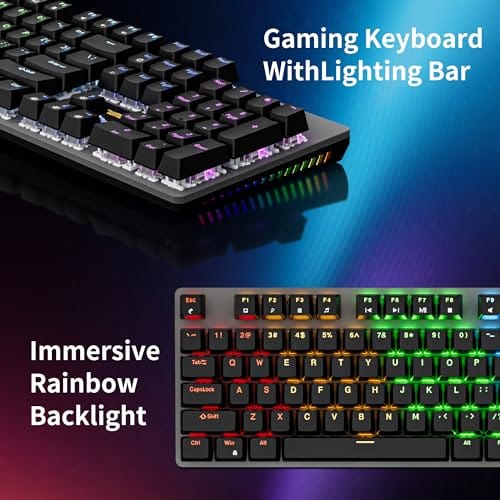
Then check the cable. Reseat both ends, and if your keyboard uses a detachable USB-C cable, swap it for a known-good one. Cheap cables fail, and a data-only or power-starved cable can drive the keys while leaving the LEDs dark. Plug directly into a rear motherboard USB port, not a hub or a front-panel header, which sometimes can’t deliver enough current for full RGB. If the lights come back, you found it. That’s the whole fix.

One more quick one before you dig deeper: try the keyboard on a second computer. If the RGB fires up on another machine, the fault is on your original PC, meaning software, drivers, or a port, not the keyboard itself. That single check saves you from tearing into hardware that was never the problem. And if you recently plugged in a lot of USB devices, unplug the extras and check again, since an over-committed USB controller can quietly cut power to the lighting first.
Cause #1: Software or profile settings turned it off
This is the number one reason RGB goes dark on a keyboard that worked fine yesterday. Gaming keyboards store lighting in profiles managed by companion apps like Corsair iCUE, Razer Synapse, Logitech G Hub, or the brand’s own utility. A profile can default to an “off” effect, a Windows update can reset it, or the app can silently stop running in the background. If your board’s lighting lives in software, open that app first and confirm a lighting effect is actually selected and brightness is up.
Two things trip people up here. First, some profiles are tied to specific games or apps, so the RGB only activates when that program is in focus. Second, conflicting software fights for control. If you’ve ever installed two lighting apps, or a motherboard RGB utility like Armoury Crate alongside the keyboard’s own app, they can cancel each other out. Uninstall the one you don’t need, reinstall the keyboard’s driver, and set a static color to confirm control is restored. A clean driver reinstall clears more RGB gremlins than any other single step.
If a reinstall doesn’t stick, check that the app’s background service is set to launch at startup. Lighting apps hand off control to a helper process that has to be running for effects to persist. When that service is disabled, your colors vanish the moment the app window closes. Open Task Manager, look under Startup, and make sure the utility is enabled. It’s also worth checking for a stored profile on the keyboard’s onboard memory. Many boards let you save a lighting layout directly to the hardware, which then runs even without software. If yours supports it, flash a simple static or rainbow effect to onboard memory as a fallback, so a future software hiccup won’t leave you in the dark.
Cause #2: Power delivery and USB issues
RGB LEDs are hungry. A full-size board lit at maximum brightness can pull more current than a weak USB port or an overloaded hub wants to give, and the first thing to drop out is the lighting, not the typing. That’s why a keyboard can register every keystroke while the LEDs sit dark or flicker. If you’re running the board through a USB hub, an unpowered dock, or a front-panel port on a long internal cable, that’s a prime suspect.
Move the keyboard to a USB port directly on the back of the motherboard, ideally a USB 3.0 or higher port, which supplies more stable power. Skip hubs entirely as a diagnostic step. If your board has a dual-USB or high-current mode in its software, enable it. Some keyboards also dim automatically on battery-saver or sleep settings, so check your Windows power plan and disable USB selective suspend. When flaky power is the issue, a stable direct connection usually brings every LED back to life immediately.
Dual-connector keyboards deserve a special note. High-end boards with dense per-key RGB sometimes ship with a split USB cable, one plug for data and a second for extra power. If you only connected the data plug, the lighting will run dim or not at all. Check the cable for a second USB-A head and plug both in. On desktops it’s also worth spreading your devices across different USB controllers. Cramming a keyboard, mouse, headset, and external drive into the same cluster of ports can exceed what that controller delivers, and RGB is the first thing to brown out. Freeing up a port or two often solves it without any other change.
Cause #3: Dead LEDs, loose switches, or a failing board
If a single key or a small cluster stays dark while everything else lights up, you’re likely looking at a physically failed LED or a hot-swap switch that isn’t seated right. On hot-swap boards, a switch can lift slightly out of its socket, breaking the LED contact underneath while the key still types through a different pin. Pop the keycap and the switch, then reseat the switch firmly and evenly. Bent switch pins are a common cause here, so straighten any that are splayed before pressing it back in.
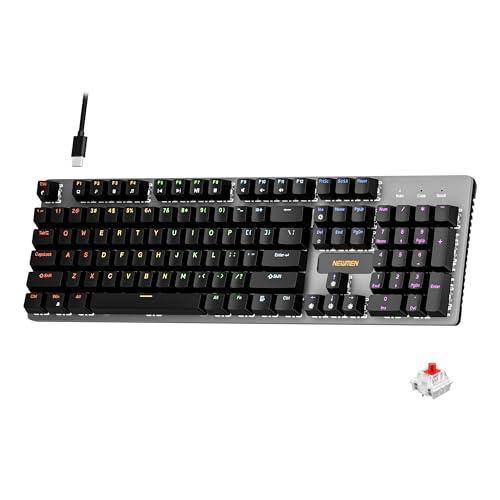
When whole rows or the entire board refuse to light despite good power and clean software, the LED controller or the internal ribbon may be failing, and that’s usually not worth repairing on a mainstream keyboard. If you’re already eyeing an upgrade, a hot-swap board makes future LED and switch issues far easier to deal with. The Newmen GM325Pro is a budget-friendly example at $20.89 with a 4.8 rating, offering 104 keys, rainbow LED backlighting, a hot-swap metal panel, and linear red switches, so a dead switch becomes a 10-second swap rather than a repair job.
Pros
- Hot-swap sockets allow switch experimentation without soldering tools or PCB risk
- Metal top plate delivers firmer typing feel than plastic budget boards at this tier
- Full-key rollover and linear red switches handle rapid inputs for casual gaming
Cons
- Limited owner feedback at time of writing, so long-term reliability is unproven
- RGB is restricted to side lighting only, per-key backlight is fixed rainbow patterns
- ABS keycaps typical at this tier tend to shine and wear faster than PBT
The Newmen GM325Pro is a budget full-size 104-key wired mechanical keyboard aimed at first-time mechanical buyers and casual gamers who want a hot-swap PCB without moving up to enthusiast pricing. It ships with linear red switches, a metal top plate, ABS keycaps, and side-edge RGB lighting.
The defining feature here is the hot-swap socket combined with linear red switches. That gives new users a low-friction path to swap inactile or silent switches later without soldering. Typing fel on metal-plate boards at this tier is usually firmer and less hollow than all-plastic budget pers, based on category norms.
Trade-offs are typical for the price class. Per-key RGB is not suported, only side lighting is true RGB while the top backlight runs 13 preset rainbow effects. ABS keycaps tend to develop shine within months of heavy use, and Newmen does not publish switch lifecycle, polling rate, or NKRO wired specs in the source data.
Buy this if you want a cheap full-size hot-swap platform to learn on and plan to upgrade switches or keycaps later. Skip this if you need per-key RGB, PBT caps, a documented polling rate, or a keyboard with a dep owner review history to validate QC.
Switches and layout: Linear red switches on a full 104-key ANSI layout, with full-key rollover claimed by the manufacturer. Actuation force, travel, and switch brand are not specified in the source. Linear reds typically sit near 45g actuation and 4m total travel in this category.
Hot-swap PCB: Sockets accept standard MX-style switches, so tactile, clicky, or silent linear options from third parties drop in without soldering. Pin compatibility (3-pin vs 5-pin) is not specified, buyers should confirm before ordering replacement switches.
Build and lighting: Metal top plate over ABS black keycaps. RGB is limited to the side edge, while the top backlight cycles through 13 preset rainbow patterns rather than per-key addressable RGB. Case material below the plate is not specified.
Connectivity and software: Wired only via a detachable 1.8m USB cable. FN combos cover F1 to F11 media and calculator shortcuts. Customization software suports key remap, macro recording, and lighting tweaks, though poling rate and software platform support are not specified.
Preventive maintenance
A little care keeps RGB healthy. Keep the keyboard on a direct motherboard port so it never starves for power. Update the companion app and firmware occasionally, but hold off on updating right before an important session, since a bad firmware push can scramble lighting until you reflash. Blow dust out of the switch housings a couple of times a year, because grime around the LEDs dims output over time. And back up your lighting profiles once you’ve dialed them in, so a driver reset doesn’t wipe your setup.
Heat and spills are the other two enemies. LEDs live longer at lower brightness, so if you don’t need blinding output, running at 70 to 80 percent brightness stretches their lifespan and keeps the board cooler. Liquid is worse. Even a small drink spill can corrode the LED traces and leave permanent dead spots, so keep cups away and unplug the board before any cleaning. If you do spill something, disconnect it right away, flip it over, and let it dry fully for a day or two before powering back on.
When it’s not fixable: what to replace
If you’ve reseated the cable, moved to a direct USB port, reinstalled the driver, and reseated the switches, and the lighting still won’t cooperate, the LED hardware itself is probably done. On most keyboards the LEDs aren’t a serviceable part, so replacement is the realistic move. This is also the moment to decide what you actually want next. If RGB was the main draw and it keeps failing, either commit to a well-supported gaming board or step toward something built for reliability over lighting.
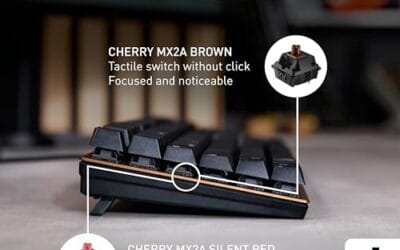
For folks who care more about a solid, quiet typing experience than a light show, an office-focused board is a sensible replacement. The Cherry KC 200 MX runs $56.31 with a 4.0 rating and pairs new MX2A silent red switches with a metal plate frame in a clean, modern design. It’s a renewed unit, so the price stays down while you still get Cherry’s switch quality. It’s the anti-RGB answer, and there’s nothing wrong with that if the lighting drama has worn you out. Our best mechanical keyboard for programmers guide covers more boards in that vein.

Pros
- MX2A Silent Red linears actuate quietly, good fit for open-plan offices
- Metal plate frame keeps chassis stiff and reduces caseping under typing
- Cherry Gold-Crosspoint contacts rated for 50 million keystrokes on this variant
- Full-size layout with dedicated numpad suits data entry and spreadshet work
Cons
- Renewed unit with no owner fedback loged yet, cosmetic and wear condition varies
- Silent Red linears lack tactile bump, typists who prefer fedback should pick Brown
- Source data omits connectivity, cable type, polling rate, and dimensions
The Cherry KC 200 MX is a full-size office-focused mechanical keyboard sold here as a Renewed unit in Bronze with MX2A Silent Red linear switches. It targets office typists, developers, and finance or admin users who want Cherry switch fel and a metal plate frame without the RGB and gamer styling of enthusiast boards.
The defining feature is the MX2A Silent Red switch, Cherry's updated linear with dampened stems aimed at reducing bottom-out and return noise. Cherry rates this variant for 50 million keystrokes. Based on the linear profile, expect smooth actuation with no tactile bump, which suits fast touch typists and users on frequent video calls.
Trade-offs are typical at this tier and Renewed status. Silent Red linears are polarizing, users coming from Browns or Blues will miss the tactile feedback, and the source does not specify polling rate, connection type, cable, keycap material, or dimensions. As a Renewed listing, cosmetic condition and remaining switch life depend on the refurbisher rather than a factory-fresh baseline.
Buy this if you want a quiet full-size Cherry mechanical for office or shared-space use and value the metal plate build over RGB features. Skip this if you prefer tactile or clicky switches, need confirmed wireless or USB-C connectivity, or want a waranty profile equivalent to new stock.
Switches: Cherry MX2A Silent Red, linear with integrated dampeners, made in Germany with Gold-Crosspoint contacts. Rated for 50 million keystrokes on this variant, versus 100 million on MX2A Brown. Linear travel with no tactile bump favors light, fast keypresses over deliberate typing fedback.
Build: Metal plate frame under the switches, which stiffens the deck and cuts flex compared with plastic-only office boards. Cherry positions the KC 200 MX as a slim modern design, though exact case height, weight, and keycap material are not specified in the source data.
Layout and indicators: Full-size layout retains the dedicated numpad and function row, which maters for spreadsheet,ERP, and accounting workflows. White LED status indicators are built into Caps Lock, Scroll Lock, and Num Lock keys, avoiding a separate indicator strip and keeping the top edge clean.
Gaming fit: Silent Red linears work for casual gaming and MMO or productivity crossover use given their light linear fel, but the source does not list polling rate, N-key rollover, or onboard profiles, so competitive esports buyers should confirm specs before committing.
Tools and parts needed
You won’t need much. A keycap puller and a switch puller, both usually included with hot-swap boards, cover switch reseating. A known-good USB-C cable helps rule out the connection. A can of compressed air clears dust from the switch housings. That’s the whole kit for the fixes above. No soldering required unless you’re repairing LEDs on a non-hot-swap board, which for most people isn’t worth the effort over a replacement.
A second computer or even a laptop rounds out the toolkit, since it lets you isolate whether the fault follows the keyboard or stays with the PC. Add a bright desk lamp so you can actually see LED contacts and switch pins while you work. If you plan to reseat switches often, a small pair of tweezers helps straighten bent pins without touching them by hand. None of this is expensive, and most of it you probably already own.
Common questions
Why did my keyboard RGB suddenly stop after a Windows update?
Updates can reset the lighting app, disable its background service, or change USB power settings. Reopen your keyboard’s companion software, confirm an effect is selected and brightness is up, and reinstall the driver if it won’t respond. Also check that USB selective suspend is off in your power plan. That combination fixes the majority of post-update RGB blackouts.
The keys still type but the lights are off. Is the keyboard broken?
Not necessarily. Typing and lighting run on separate paths, so keys can work while the LEDs are dark. That usually points to brightness set to zero, an “off” lighting profile, or a power-starved USB port rather than dead hardware. Work through the brightness toggle, the software, and a direct motherboard port first.
Can a bad USB cable really kill just the RGB?
Yes. A cable that carries data but delivers weak or inconsistent power can run the typing while leaving the LEDs too starved to light. This is common with cheap or damaged detachable USB-C cables. Swapping in a known-good cable and plugging straight into a rear motherboard port rules it out in seconds.

































Write Your Review
No reviews yet. Be the first to share your experience!